Lake of secrets

 77
77

Lake of secrets
Lael Littke’s "Lake of Secrets" offers a commendable, if somewhat dense, dive into the symbolic language that permeates esoteric thought. The book's strength lies in its systematic approach, dissecting concepts like the "Inner Labyrinth" with a clarity that belies their complexity. Littke avoids the pitfalls of vague spiritual pronouncements, grounding abstract ideas in tangible allegorical structures. However, the prose can become overly academic at times, occasionally hindering the very accessibility it strives for. A particular passage detailing the "Seven Veils of Perception" effectively illustrates the book's analytical rigor, though a more evocative description might have better conveyed the experiential dimension of these layers. Despite its occasional stiffness, "Lake of Secrets" serves as a valuable reference for serious seekers.
📝 Description
77
Lael Littke's 2002 book, "Lake of Secrets," examines the symbolic language of esoteric philosophy.
This book is a structured analysis of concepts central to various mystical traditions, rather than a narrative. It aims to help readers perceive deeper meanings often hidden from everyday awareness. Littke focuses on the symbolic frameworks and interpretive methods that allow for a more thorough understanding of esoteric ideas. The work encourages the development of personal interpretive skills for practical application in spiritual growth.
"Lake of Secrets" is designed for students of occult philosophy and comparative religion. It is particularly useful for those who wish to move past simple spiritual interpretations and engage with fundamental symbolic systems. The book connects ancient wisdom traditions with contemporary metaphysical thought, offering a bridge between historical esoteric currents and modern understanding.
Published in 2002, "Lake of Secrets" appeared during a time of renewed interest in esoteric traditions, distinct from earlier New Age trends. The book engages with the intellectual currents that influenced figures like Manly P. Hall and Dion Fortune. It seeks to synthesize diverse esoteric streams and offer a modern perspective on enduring mystical concepts and their underlying symbolic language.
💡 Why Read This Book?
• Gain a structured understanding of esoteric symbolism, moving beyond anecdotal interpretations, specifically through the analysis of the "Lake of Whispers" allegory. • Develop critical interpretive skills for deciphering mystical texts by examining Littke's method for correlating symbols across traditions, as demonstrated in the chapter on "The Alchemical Marriage." • Explore the foundational concepts of consciousness and archetypes as presented in "Lake of Secrets," offering a unique framework for personal spiritual development distinct from contemporary self-help literature.
⭐ Reader Reviews
Honest opinions from readers who have explored this book.
❓ Frequently Asked Questions
When was "Lake of Secrets" by Lael Littke first published?
"Lake of Secrets" by Lael Littke was first published in 2002, placing it within the early 21st-century resurgence of interest in esoteric philosophy.
What kind of esoteric tradition does "Lake of Secrets" primarily draw from?
While "Lake of Secrets" synthesizes elements from various traditions, it particularly engages with Hermetic principles and Gnostic symbolism, focusing on the nature of hidden knowledge and inner transformation.
Is "Lake of Secrets" a narrative story or a philosophical text?
The book functions primarily as a philosophical and symbolic text, dissecting esoteric concepts rather than following a traditional plot or character arc.
What is the "Inner Labyrinth" mentioned in "Lake of Secrets"?
The "Inner Labyrinth" in Littke's work represents the complex, often hidden, pathways of consciousness and self-discovery that individuals must navigate to attain deeper spiritual understanding.
Who is Lael Littke and what is their background?
Lael Littke is an author focused on esoteric studies and comparative mysticism. Their work, including "Lake of Secrets" (2002), aims to elucidate complex philosophical and symbolic systems for serious students.
Does "Lake of Secrets" offer practical exercises or just theoretical concepts?
While primarily theoretical, "Lake of Secrets" encourages practical application by guiding readers to develop their own interpretive skills and apply symbolic understanding to their personal journey.
🔮 Key Themes & Symbolism
The Nature of Hidden Knowledge
Littke explores the concept of gnosis, or direct experiential knowledge, as it is concealed within symbolic language and archetypal patterns. The "Lake" itself serves as a metaphor for the subconscious or the collective unconscious, holding truths accessible only through specific methods of inquiry. The book suggests that true understanding is not passively received but actively uncovered through disciplined contemplation and symbolic interpretation.
Symbolic Architecture of Reality
A central theme is the idea that reality possesses an underlying symbolic structure, a "language" through which the cosmos communicates. "Lake of Secrets" examines how various esoteric traditions have interpreted this architecture, from Hermetic correspondences to Gnostic cosmologies. Littke emphasizes that mastering this symbolic grammar is key to perceiving the deeper currents of existence and one's place within them.
The Inner Labyrinth of Consciousness
The work presents the human psyche as a complex, multi-layered "Inner Labyrinth." Littke maps out potential paths and obstacles within this internal landscape, drawing parallels to mythological journeys and alchemical processes. The exploration encourages readers to view their own consciousness not as a fixed entity but as a dynamic, evolving space ripe for exploration and transformation.
Archetypal Forces and Manifestation
Littke studies the power of archetypes as fundamental patterns that shape both inner experience and outer reality. The book discusses how these primal forces, often represented by symbols and myths, can be understood and potentially harnessed. This theme connects the individual’s inner world to the universal forces that drive creation and evolution, as explored in the concept of the "Seven Veils of Perception."
💬 Memorable Quotes
Direct passages from the work, attributed to the author.
“The surface ripples obscure the depths, but the currents below hold the true knowledge.”
— This aphorism captures the core idea that superficial appearances or conventional understanding often hide profound truths. It suggests that true wisdom requires looking beyond the obvious and engaging with deeper, often hidden, symbolic or energetic layers of reality.
“Every symbol is a key, but only the right lock will yield to its turning.”
— This highlights the nuanced nature of esoteric symbolism. It implies that symbols are not universally decipherable; their meaning and efficacy depend on the context, the interpreter's preparedness, and the specific symbolic system being referenced.
“The Inner Labyrinth is not a place to be mapped, but a state to be inhabited.”
— This interpretation emphasizes that the journey of self-discovery and understanding is not about achieving a final destination or perfect knowledge, but about embracing the ongoing process of exploration within one's own consciousness.
“To see the reflection is to begin to understand the source.”
— This suggests a principle of esoteric perception: that by studying the manifested world, its symbols, and its reflections, one can gain insights into the underlying, unmanifested principles or divine source from which it originates.
“The silence between the notes carries the melody's true essence.”
— This metaphor speaks to the importance of what is unsaid or unseen in esoteric traditions. It suggests that the spaces, silences, and negative definitions are as crucial, if not more so, than the explicit pronouncements for grasping the deeper meaning.
🌙 Esoteric Significance
Tradition
The work aligns closely with the Hermetic tradition, emphasizing correspondence, symbolism, and the pursuit of hidden knowledge (gnosis). It also draws heavily from Gnostic themes concerning the nature of reality, illusion, and the path to liberation through understanding. Littke's approach synthesizes these streams, presenting a cohesive model for interpreting esoteric principles applicable across various mystical paths.
Symbolism
Key symbols include the "Lake" itself, representing the unconscious or the source of hidden truths, and the "Inner Labyrinth," symbolizing the complex journey of self-discovery. The "Seven Veils" are crucial, signifying layers of perception or illusion that must be penetrated to reach ultimate reality, a motif found in various mystical cosmologies.
Modern Relevance
Contemporary practitioners of Western esotericism, particularly those involved in Hermetic orders or Gnostic-inspired groups, find value in Littke's systematic approach. Thinkers exploring consciousness studies and comparative mythology also reference the book's sophisticated analysis of symbolic language and archetypal patterns.
👥 Who Should Read This Book
• Students of Hermeticism and Gnosticism seeking a structured analysis of core symbols and concepts beyond introductory texts. • Comparative religion scholars interested in the intersection of mythology, psychology, and esoteric philosophy in the early 21st century. • Individual seekers aiming to deepen their understanding of symbolic language and its application to personal growth and spiritual insight.
📜 Historical Context
Published in 2002, "Lake of Secrets" emerged during a period where esoteric studies were gaining renewed academic and popular traction, moving beyond the more generalized New Age spirituality of prior decades. The early 2000s saw a burgeoning interest in rigorous textual analysis of Hermetic, Gnostic, and Kabbalistic traditions, often seeking to differentiate these from more syncretic or occult practices. Lael Littke's work fits within this intellectual current, aiming to provide a structured framework for understanding complex symbolic systems. This era also saw a greater engagement with the psychological underpinnings of esoteric belief, influenced by figures like Carl Jung. While not directly engaging in polemics, Littke's approach implicitly offered a counterpoint to more simplistic or dogmatic interpretations, contributing to a more nuanced discourse on Western esotericism.
📔 Journal Prompts
The symbolic significance of the "Lake of Whispers" in your personal understanding.
Reflecting on the "Seven Veils of Perception" and where they manifest in your life.
How does the concept of the "Inner Labyrinth" relate to your current spiritual path?
The practical application of discerning between surface ripples and deeper currents.
Mapping potential connections between the book's symbolism and your own esoteric studies.
🗂️ Glossary
Gnosis
Direct, intuitive, and experiential knowledge of spiritual truths, often contrasted with intellectual or dogmatic understanding. Central to Gnostic traditions and sought through esoteric practices.
Hermeticism
A philosophical and religious tradition based on writings attributed to Hermes Trismegistus. Emphasizes principles like "As Above, So Below" and the pursuit of hidden knowledge through symbolic interpretation and divine union.
Archetype
In esoteric and psychological contexts (particularly Jungian), a universal, archaic pattern or image that derives from the collective unconscious and is inherited and common to all humanity.
Symbolic Language
A system of communication that uses symbols (images, signs, metaphors) to convey deeper meanings, often related to spiritual, psychological, or cosmic principles, as explored in "Lake of Secrets."
The Inner Labyrinth
A concept within Littke's work representing the complex, often hidden, pathways and structures of human consciousness and the journey of self-realization.
Esoteric
Intended for or likely to be understood by only a small number of people with a specialized knowledge or interest; inner teachings of a tradition.
Correspondence
The Hermetic principle stating that there is a relationship between different levels of reality (e.g., macrocosm and microcosm), where understanding one can illuminate the other.
🔮 Readers Also Liked
Browse all →









More by Lael Littke
All books →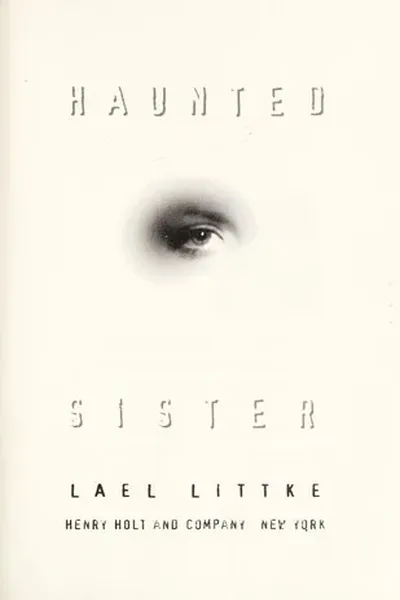
More Free Occult Philosophy Books
View all →