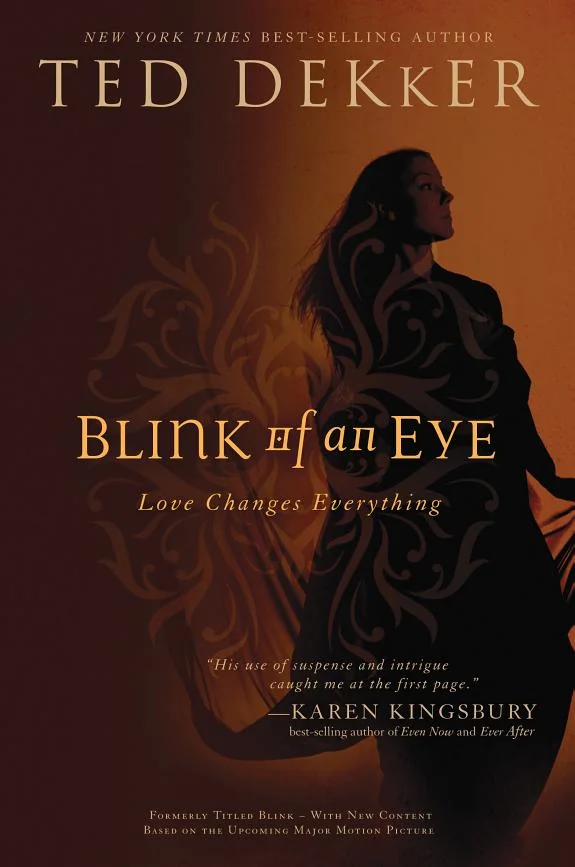
Blink of an Eye
 83
83

Blink of an Eye
Ted Dekker’s 2007 novel, Blink of an Eye, offers a premise that is both ambitious and, at times, uneven. The initial setup, pitting a Saudi Arabian princess against a graduate student named Seth in a fight for power, promises a geopolitical thriller with a spiritual edge. Dekker is adept at crafting accessible narratives that touch upon profound questions, and here he attempts to explore the intersection of destiny and human action. A notable strength lies in the novel's pacing, which generally keeps the reader engaged with its escalating stakes.
However, the integration of the more esoteric elements sometimes feels underdeveloped, particularly in contrast to the thriller aspects. While the conflict is clear, the deeper spiritual or philosophical underpinnings could have been more thoroughly explored to match the initial thematic promise. The character of Seth, while central, occasionally serves more as a conduit for the plot than a fully realized individual grappling with the immense forces at play. Despite these limitations, the work provides a diverting exploration of power dynamics seen through a lens that hints at greater, unseen forces at work.
Read more ↓
Ultimately, Blink of an Eye delivers a moderately compelling narrative that balances political intrigue with spiritual contemplation.
📝 Description
83
Ted Dekker's 2007 novel, Blink of an Eye, presents a Saudi Arabian princess and a graduate student in a global power struggle.
Published in 2007, Blink of an Eye follows a Saudi Arabian princess and a graduate student named Seth as they become entangled in a high-stakes conflict for global influence. The narrative weaves together threads of political intrigue with spiritual undertones, examining the hidden forces that shape world events. Dekker challenges conventional views on authority and destiny through the characters' struggle.
The book appeals to readers who enjoy thrillers with philosophical depth. It is suited for those who appreciate stories where faith, destiny, and political maneuvering intertwine. Readers interested in the interplay of free will and predestination, and how individuals handle power within complex social systems, will find its premise resonant. The story offers a mix of action and contemplative themes.
Blink of an Eye reflects early 21st-century trends in literature that explored spiritual interpretations of world events and conspiracy theories. The novel taps into a desire to understand hidden forces influencing society, a theme common in esoteric circles. It questions the extent to which external spiritual forces or individual choices shape destiny, aligning with discussions found in occult and supernatural fiction regarding agency within a seemingly predetermined framework.
💡 Why Read This Book?
• Gain insight into the spiritual underpinnings of power struggles, as depicted through the conflict between the Saudi Arabian princess and Seth, exploring how unseen forces might influence worldly events. • Understand the tension between fate and free will within a high-stakes narrative, examining how characters confront seemingly predetermined outcomes in 2007. • Experience a thriller that blends geopolitical intrigue with theological questions, offering a unique perspective on authority and control that challenges conventional interpretations.
⭐ Reader Reviews
Honest opinions from readers who have explored this book.
❓ Frequently Asked Questions
What is the central conflict in Ted Dekker's Blink of an Eye?
The central conflict involves a Saudi Arabian princess and a graduate student named Seth engaged in a high-stakes struggle for power, exploring themes of influence and control within a complex political and potentially spiritual landscape.
When was Blink of an Eye first published?
Blink of an Eye was first published on October 2, 2007, placing it within the context of early 21st-century global political and spiritual discourse.
What are the main themes explored in Blink of an Eye?
The novel explores themes of power, destiny versus free will, spiritual influence on worldly events, and the nature of authority, set against a backdrop of political intrigue.
Who are the main characters in Blink of an Eye?
The primary characters are a Saudi Arabian princess and a graduate student named Seth, who are central to the struggle for power depicted in the narrative.
Does Blink of an Eye delve into esoteric or spiritual concepts?
Yes, the book incorporates esoteric and spiritual concepts, examining how these might influence or intertwine with political power and human destiny.
What kind of reader would enjoy Blink of an Eye?
Readers who enjoy thrillers with philosophical depth, those interested in the intersection of politics and spirituality, and individuals who appreciate narratives exploring fate and agency will likely find this book engaging.
🔮 Key Themes & Symbolism
Destiny and Agency
The narrative questions whether events are preordained or shaped by individual choices, particularly evident in the intense struggle for power between the princess and Seth. It probes how characters react when confronted with what appears to be inescapable fate, pushing the boundaries of their perceived free will. This theme invites contemplation on the cosmic forces that might guide human affairs, as suggested by the book's esoteric undertones, contrasting with the characters' active pursuit of control.
The Nature of Power
Blink of an Eye examines power not just as political control but as a subtler force, potentially influenced by spiritual or unseen dynamics. The conflict highlights the difference between overt authority and hidden influence, suggesting that true power may lie beyond conventional structures. This exploration speaks to esoteric traditions that discuss levels of power and their manipulation, presenting a worldview where earthly dominion is intertwined with higher or deeper forces.
Spiritual Influence in Geopolitics
The book suggests that geopolitical events and power struggles are not solely the result of human machinations but can be influenced by spiritual or esoteric dimensions. The Saudi Arabian princess's narrative arc, alongside Seth's involvement, hints at a larger, possibly divinely orchestrated, conflict. This perspective aligns with certain esoteric philosophies that see world events as manifestations of spiritual battles or cosmic plans unfolding.
Hidden Agendas and Truth
A core element involves uncovering hidden agendas and seeking truth amidst deception, a common trope in thrillers but given an esoteric twist here. The struggle for power implies that those involved are not revealing their full motives or the true nature of the forces at play. This aspect encourages readers to look beyond the surface, mirroring the hermeneutic approach often found in mystical studies where deeper meanings are sought.
💬 Memorable Quotes
Direct passages from the work, attributed to the author.
“Seth found himself caught in currents far larger than he could comprehend.”
— This interpretation of a concept suggests Seth's journey involves confronting forces and events that transcend his understanding, hinting at predestination or cosmic influence shaping his path.
“Every choice, no matter how small, rippled outward into destiny.”
— This interpretation emphasizes the theme of agency within a potentially predetermined framework, suggesting that individual actions have significant, far-reaching consequences on the course of events.
“The princess navigated a labyrinth of deception where truth was a dangerous commodity.”
— This interpretation focuses on the narrative's intrigue, portraying the princess's journey as one of navigating complex conspiracies where discerning reality from falsehood is paramount and perilous.
💡 Key Ideas
Editorial paraphrase of the work's core concepts — not direct quotes.
The struggle for power was not merely political; it was a battle for the soul of nations.
This paraphrased concept highlights the book's core idea that the conflicts depicted extend beyond earthly dominion, suggesting a spiritual dimension to geopolitical struggles and the fate of peoples.
True authority stemmed not from a throne, but from an unseen source.
This paraphrased concept posits that the novel explores different forms of power, distinguishing between conventional political rule and a more profound, possibly spiritual or esoteric, source of influence.
🌙 Esoteric Significance
Tradition
While not explicitly aligning with a single esoteric lineage, Blink of an Eye draws upon Gnostic themes concerning the nature of power and the illusion of worldly authority. It echoes Gnostic ideas about a hidden spiritual reality influencing the material world and the struggle against forces that obscure truth. The narrative's exploration of unseen influences and a higher destiny aligns with broader Hermetic principles of correspondence and the idea that macrocosmic forces affect microcosmic events, though it frames these within a contemporary thriller context.
Symbolism
The novel employs the symbol of the 'princess' not just as a political figure but potentially representing a divine or spiritual essence seeking to reclaim its rightful place or expose deception. Seth, as a seemingly ordinary graduate student, might symbolize the awakened seeker or the individual called to a higher purpose. The 'struggle for power' itself can be interpreted esoterically as a manifestation of the eternal battle between light and shadow, or spiritual order versus chaotic material forces, playing out on a geopolitical stage.
Modern Relevance
Contemporary interest in spiritual warfare, destiny manipulation, and the hidden architecture of global power structures finds resonance in Blink of an Eye. Thinkers and practitioners exploring the intersection of consciousness, geopolitics, and societal control, particularly those within New Age or esoteric circles who examine symbolic narratives for deeper meaning, can find parallels. The book's premise speaks to modern anxieties about unseen forces shaping our reality and the individual's role within grander cosmic or political designs.
👥 Who Should Read This Book
• Readers of contemporary thrillers who appreciate narratives that subtly incorporate philosophical and spiritual questions beyond standard suspense fare. • Students of comparative religion and esoteric studies interested in how themes of destiny, power, and hidden influences are explored in modern fiction. • Individuals intrigued by geopolitical intrigue who also enjoy narratives that hint at unseen forces or a higher purpose guiding world events, particularly from a 2007 perspective.
📜 Historical Context
Published in 2007, Ted Dekker's Blink of an Eye emerged within a cultural milieu increasingly fascinated by the interplay of global politics, spirituality, and hidden forces. The early 21st century witnessed a surge in popular literature that explored conspiracy theories and esoteric interpretations of world events, a trend exemplified by works like Dan Brown's 'The Da Vinci Code' (2003). Dekker's novel taps into this zeitgeist, presenting a narrative where political machinations are intertwined with deeper, possibly spiritual, currents. The specific focus on a Saudi Arabian princess reflects the heightened geopolitical attention on the Middle East during this period, following events like 9/11 and subsequent global realignments. While not directly engaging with a specific esoteric school of thought in its marketing, the book's themes of destiny, unseen influence, and power struggles align with broader currents in Western esotericism and Gnosticism that question the nature of worldly authority and seek hidden truths. Its reception was within the thriller and speculative fiction market, appealing to readers seeking narratives that offered more than just conventional suspense.
📔 Journal Prompts
The spiritual battleground of global power as depicted through the princess and Seth.
Seth's perception of being caught in currents larger than himself.
The contrast between overt political authority and 'unseen sources' of power.
Ripples of destiny: how small choices affect grand outcomes in the narrative.
Deception and truth in the labyrinth of power during the 2007 geopolitical climate.
🗂️ Glossary
Saudi Arabian Princess
A royal figure from Saudi Arabia, here serving as a central character in a narrative that explores political power and potentially deeper spiritual struggles beyond typical geopolitical fiction.
Graduate Student (Seth)
Seth, a character in the book, represents an individual unexpectedly drawn into high-stakes power dynamics, possibly symbolizing the ordinary person confronted by extraordinary, perhaps spiritual, forces.
Struggle for Power
The core conflict of the novel, extending beyond simple political ambition to encompass a battle of wills, beliefs, and potentially spiritual influences shaping global events.
Destiny vs. Free Will
A philosophical theme explored in the book, questioning the extent to which characters' lives and global events are predetermined or shaped by their own choices and actions.
Unseen Influence
The concept that forces beyond conventional understanding, possibly spiritual or esoteric, play a role in shaping political outcomes and individual destinies within the narrative.
Geopolitical Intrigue
The complex web of political maneuvering, international relations, and hidden agendas that form the backdrop for the characters' struggle for power.
Spiritual Undertones
Elements within the narrative that suggest a deeper, non-material reality or influence at play, elevating the conflict beyond a purely secular or political interpretation.
This book appears in 1 collection
🔮 Readers Also Liked
Browse all →









From the “Precognition” Collection
View all →




![EBOOK COLLECTION ( PART 8) [ CSI][h 33t]](/img/thumb/ebook-collection-part-8-csi-h-33t.webp)


More Free Occult Philosophy Books
View all →