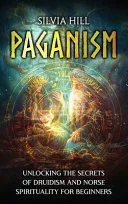
Paganism
 73
73

Paganism
Silvia Hill's "Paganism" attempts a dual introduction to Druidism and Norse Spirituality, a commendable but ambitious undertaking. The strength lies in its accessibility; it presents complex subjects without overwhelming neophytes. The section on Norse Spirituality, in particular, offers a clear, if brief, sketch of the Aesir pantheon and the Nine Worlds, a useful starting point. However, the book struggles with depth. The Druidic sections, while informative, feel somewhat generalized, lacking the specific historical nuance found in dedicated scholarly works on Celtic religion. The primary limitation is the inherent challenge of covering two vast traditions comprehensively within a single volume. A more detailed exploration of ritualistic practices or specific mythological cycles would have elevated the material. The work’s exploration of *wyrd* in Norse tradition is a strong point, hinting at the complex interplay of fate and agency. Overall, "Paganism" serves as a functional primer, best suited for absolute beginners seeking a broad overview.
📝 Description
73
Silvia Hill's 2023 volume consolidates two distinct manuscripts on pre-Christian European spiritual paths.
This book brings together two separate works focusing on ancient European spiritual traditions. The first manuscript serves as an introduction to Druidism, detailing its core principles and practices based on historical and current scholarship. It aims to clarify a tradition often misunderstood, offering a straightforward approach for newcomers.
The second manuscript examines Norse Spirituality. It covers the cosmology, pantheon, and ethical systems of the ancient Germanic peoples of Scandinavia. This volume is for those interested in the origins of Western esoteric paths and nature-based spiritualities. It is particularly suited for individuals beginning their study of Druidism or Norse Paganism, providing clear overviews.
Readers interested in comparative mythology, the academic study of pagan revivals, and the philosophical ideas of ancient European cultures will find this book valuable. It acts as a starting point for understanding these related spiritual traditions, assuming no prior specialized knowledge.
Published in 2023, this work reflects a modern engagement with pre-Christian European heritage, a trend amplified in the late 20th and early 21st centuries. This period saw renewed academic and popular interest in ancient religions, following earlier revivals in traditions like Wicca and increased study of Indo-European faiths. Hill's book appears at a time when these older spiritual paths have gained wider recognition, moving from niche movements to more established communities. It benefits from decades of accumulated scholarship and a broader acceptance of diverse belief systems.
💡 Why Read This Book?
• Gain a foundational understanding of two distinct European Pagan paths, learning about the symbolic significance of sacred groves in Druidism and the concept of *wyrd* in Norse Spirituality, concepts introduced in the book's core sections. • Discover practical entry points for personal practice, such as exploring correspondences with natural cycles mentioned in the Druidism sections, enabling a tangible connection to ancient practices. • Appreciate the historical context of modern Pagan revivals, understanding how works like this, published in 2023, draw upon and contribute to ongoing traditions.
⭐ Reader Reviews
Honest opinions from readers who have explored this book.
❓ Frequently Asked Questions
What is the primary difference between Druidism and Norse Spirituality as presented in this book?
Druidism, as explored in the book, focuses on Celtic traditions, emphasizing nature, ancestral reverence, and wisdom. Norse Spirituality centers on the Germanic peoples of Scandinavia, their pantheon (Aesir and Vanir), cosmology (Nine Worlds), and concepts like *wyrd*.
Is this book suitable for someone with no prior knowledge of Paganism?
Yes, the book is explicitly designed for beginners. It aims to demystify both Druidism and Norse Spirituality, providing foundational overviews of their principles, deities, and worldviews without assuming prior expertise.
What historical period does the Norse Spirituality section cover?
The Norse Spirituality section primarily draws from the Viking Age and earlier Germanic traditions, exploring the mythology and spiritual beliefs prevalent in Scandinavia before and during that era.
Does the book discuss modern Pagan practices or focus solely on historical aspects?
While rooted in historical understanding, the book connects these ancient traditions to contemporary Paganism, particularly in its framing of the modern resurgence of interest and offering accessible entry points for practice.
What is the concept of 'sacred groves' in Druidism according to the book?
The book describes sacred groves as places of spiritual significance and worship within Druidic traditions, often associated with nature spirits, deities, and the veneration of trees, particularly the oak, as conduits of wisdom and life.
Are deities like Odin or Thor discussed in the Norse Spirituality section?
Yes, the Norse Spirituality section introduces key figures from the Aesir pantheon, which includes prominent deities such as Odin, Thor, and Frigg, explaining their roles and significance within the Norse cosmology.
🔮 Key Themes & Symbolism
Nature as Sacred Text
Both Druidism and Norse Spirituality, as presented in Hill's work, underscore a profound connection to the natural world. This theme explores how ancient European peoples perceived the environment not merely as a resource, but as a living entity imbued with spirit and divine presence. For Druidism, this manifests in the veneration of sacred groves and the symbolic language of trees, while Norse Spirituality finds it in the cycles of seasons, the power of natural forces, and the elemental deities. The book frames this reverence as a core tenet for understanding these paths, suggesting its relevance for contemporary ecological consciousness.
Cosmology and Worldview
The book delineates the distinct cosmological frameworks of Druidism and Norse traditions. For Norse Spirituality, this includes the intricate structure of the Nine Worlds, interconnected by the world tree Yggdrasil, and the pantheons of the Aesir and Vanir. Druidism's cosmology, while perhaps less rigidly defined in popular understanding, is presented through its cyclical view of life, death, and rebirth, and its relationship with the Otherworld. Understanding these worldviews is presented as crucial for grasping the spiritual and ethical orientations of their adherents.
Ancestral and Divine Connection
A significant theme is the relationship between humanity, the divine, and the ancestors. The work explores how both Druidic and Norse practitioners sought connection with their gods and the spirits of their forebears. This involves understanding the roles of various deities, from the Norse Aesir to potentially lesser-known figures in Celtic traditions, and the importance placed on lineage and honoring those who came before. The book suggests that this ancestral connection provides a vital link to identity and spiritual continuity.
Mythology and Symbolism
Central to both traditions are their rich mythologies and symbolic languages. The book touches upon key myths, such as the creation stories or the tales of divine interactions in Norse lore, and the symbolic meanings embedded in Celtic art and natural elements for Druidism. It highlights how these narratives and symbols serve not just as stories, but as vehicles for understanding fundamental truths about existence, the divine, and human experience, offering a framework for interpretation and spiritual growth.
💬 Memorable Quotes
Direct passages from the work, attributed to the author.
“Wyrd binds all beings, a thread of fate woven through the cosmos, yet individual actions shape its unfolding.”
— This interpretation captures the essence of the Norse concept of *wyrd*, emphasizing its all-encompassing nature and the intricate relationship between destiny and free will. It suggests that while fate exists, personal agency plays a role in its manifestation.
“The sacred grove was not merely a forest, but a threshold to the divine.”
— This sentiment underscores the sacred nature of groves in Druidism, portraying them as liminal spaces where the physical world meets the spiritual, serving as sites for worship and communion with the divine.
“Odin sought wisdom through sacrifice, demonstrating the profound cost of knowledge.”
— This refers to the mythological accounts of Odin's quest for knowledge, particularly his self-sacrifice at Yggdrasil, illustrating a core theme in Norse mythology where profound wisdom often requires significant personal cost or suffering.
💡 Key Ideas
Editorial paraphrase of the work's core concepts — not direct quotes.
The oak stands as a bridge between the earth and the heavens, a symbol of enduring strength and wisdom.
This paraphrased concept highlights the symbolic significance of the oak tree in Druidic lore, representing its connection to both the terrestrial and celestial realms, embodying resilience and ancient knowledge central to the tradition.
Understanding the cycles of nature is key to understanding the divine rhythm.
This paraphrase reflects a fundamental principle shared by many nature-based spiritualities, including Druidism, suggesting that observing and harmonizing with natural rhythms—seasonal changes, celestial movements—is a pathway to spiritual insight and connection.
🌙 Esoteric Significance
Tradition
This work sits within the broad umbrella of Western Esotericism, specifically focusing on Pagan Reconstructionism and Neo-Paganism. It draws from, and contributes to, a modern movement seeking to revive and practice pre-Christian European spiritual paths. While not strictly Hermetic or Gnostic, it shares their emphasis on direct experience, nature, and ancient wisdom. It departs from purely academic historical accounts by offering practical insights and spiritual frameworks, aiming to make these traditions accessible for contemporary practitioners, thus continuing a trend seen in various esoteric lineages since the 19th century.
Symbolism
Key symbols explored include the oak tree in Druidism, representing strength, longevity, and connection to the divine, often linked to the deity or spirit of the forest. In Norse Spirituality, Yggdrasil, the world tree, is central, symbolizing the interconnectedness of all realms—the Nine Worlds—and the cosmic order. Another significant motif is the runic alphabet, where each rune possesses not only phonetic value but also symbolic and divinatory meaning, representing various forces and concepts within the Norse worldview.
Modern Relevance
Contemporary thinkers and practitioners in Neo-Paganism, Heathenry (modern Norse Paganism), and Druidic revival movements frequently draw upon works like this for foundational understanding and inspiration. It speaks to a modern desire for nature-based spirituality, ancestral connection, and alternatives to mainstream religions. Modern animistic philosophies and ecological spirituality movements also find resonance in its exploration of the sacredness of the natural world, bridging ancient perspectives with contemporary ecological and ethical concerns.
👥 Who Should Read This Book
• Aspiring practitioners of Druidism and Norse Spirituality seeking an accessible introduction to core beliefs, deities, and concepts. • Students of comparative religion and mythology interested in the historical and modern expressions of pre-Christian European faiths. • Individuals drawn to nature-based spirituality and ancestral traditions looking for a grounded overview of these paths and their foundational principles.
📜 Historical Context
The late 20th and early 21st centuries witnessed a significant re-emergence of interest in ancient European spiritual traditions, often termed Neo-Paganism. This period followed the mid-20th century revival of Wicca, spearheaded by figures like Gerald Gardner, and a growing academic engagement with Indo-European comparative mythology. Silvia Hill's work, published in 2023, arrives in an era where these revived traditions have gained more mainstream recognition and scholarly attention. It engages with a lineage that includes earlier esoteric writers and modern academic research into Celtic and Germanic religions. Unlike the more fringe or secretive movements of earlier decades, the modern context allows for broader dissemination and comparative study. This book operates within a landscape shaped by earlier reconstructionist efforts and a public appetite for pre-Christian European heritage, benefiting from decades of scholarship that were unavailable to earlier revivalists.
📔 Journal Prompts
Reflect on the symbolic meaning of the oak tree and its connection to wisdom.
Consider the Norse concept of *wyrd* and its potential influence on personal choices.
Meditate on the idea of sacred groves as thresholds to the divine.
Explore the relationship between the Aesir pantheon and the forces of nature.
How does the cyclical view of life presented in Druidism differ from linear conceptions?
🗂️ Glossary
Druidism
An ancient Celtic religious and spiritual tradition, historically associated with the priestly class in ancient Gaul, Britain, and Ireland. Modern Druidry is a revival and reinterpretation of these traditions, often emphasizing nature, wisdom, and reverence for ancestors.
Norse Spirituality
The spiritual and religious beliefs of the ancient Germanic peoples of Scandinavia, commonly known as the Viking Age. It encompasses a pantheon of gods (Aesir and Vanir), a complex cosmology (Nine Worlds), and a worldview centered on fate, honor, and the forces of nature.
Aesir
One of the two main tribes of gods in Norse mythology, associated with power, war, and governance. Prominent Aesir include Odin, Thor, and Frigg.
Vanir
The second major tribe of gods in Norse mythology, associated with fertility, prosperity, and magic. Figures like Freyr and Freya belong to the Vanir.
Nine Worlds
The cosmological concept in Norse mythology, representing the different areas of existence, all connected by the world tree Yggdrasil. These include Midgard (Earth), Asgard (home of the Aesir), and Jotunheim (land of the giants).
Wyrd
An Old English and Old Norse concept referring to fate or destiny. It is often depicted as a cosmic force that binds all beings and events, though personal agency can influence its unfolding.
Sacred Grove
A natural area, typically a forest or cluster of trees, considered holy or sacred within ancient Celtic and other nature-based traditions. Often used for worship, ritual, and communion with nature spirits or deities.