Hinduism Basics
 73
73

Hinduism Basics
K. Natarajan’s Hinduism Basics arrives with a stated purpose: to demystify the faith for a generation that feels increasingly distant from its roots. The author's direct address to this need, particularly for the Indian diaspora, sets a commendable tone of earnestness. The book succeeds in distilling complex ideas, such as the interconnectedness of karma and samsara, into digestible prose. For instance, the explanation of *moksha* as liberation from the cycle of birth and death is presented without unnecessary jargon. However, the book's primary limitation lies in its brevity; while clarity is a strength, it sometimes sacrifices the depth required to fully appreciate the philosophical nuances of traditions that have evolved over millennia. A more extensive exploration of the various philosophical schools (darshanas) within Hinduism, beyond a cursory mention, would have provided a richer understanding. Nonetheless, for its intended audience, Hinduism Basics serves as a useful starting point, offering a clear, if introductory, view of a vast spiritual landscape.
📝 Description
73
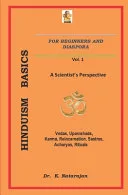
K. Natarajan's Hinduism Basics, published in 2020, clarifies core Hindu beliefs for a modern audience.
Hinduism Basics, by K. Natarajan, was first published in 2020. The book aims to explain the essential ideas and customs of Hinduism in a straightforward way. Natarajan perceived a need for this kind of introduction, especially for younger people and those in the Indian diaspora who might feel distant from the tradition. The book is intended for anyone wanting to grasp the basics of Hinduism, particularly those who find existing academic texts too dense or feel a gap in their understanding of this varied faith.
It addresses a continuing requirement for clear religious instruction. The rise in interest in older spiritual practices, alongside global cultural exchange, has increased the desire for works like this. Natarajan's book responds to a present-day need for clarity among the many scholarly and devotional writings available.
This book introduces fundamental concepts within Hinduism, a tradition often studied within esoteric circles. It explains ideas such as Brahman, the supreme being, and samsara, the cycle of birth and rebirth, alongside moksha, the ultimate goal of liberation. The discussion of dharma, or righteous conduct, and the roles of various deities and sacred texts like the Vedas and Upanishads, situates the work within broader discussions of spiritual philosophy and practice.
💡 Why Read This Book?
• Gain a foundational grasp of Brahman, the ultimate reality, and its presence in all existence, as explained in Natarajan's accessible introduction to Hindu cosmology. • Understand the mechanics of karma and samsara, learning how actions and consequences shape the cycle of rebirth, a core concept clearly elucidated in the text. • Explore the concept of dharma, not just as duty, but as righteous living and cosmic order, providing a practical ethical framework discussed within the book's early chapters.
⭐ Reader Reviews
Honest opinions from readers who have explored this book.
❓ Frequently Asked Questions
What is the primary goal of K. Natarajan's Hinduism Basics?
The primary goal is to provide a simple, understandable overview of Hinduism for young people and the Indian diaspora who may lack knowledge of their own religion, making complex concepts accessible.
When was Hinduism Basics first published?
Hinduism Basics was first published in September 2020.
Who is the intended audience for this book?
The book is intended for young Hindus, members of the Indian diaspora, and anyone seeking a basic comprehension of Hinduism's core beliefs and practices.
Does the book cover Hindu deities?
Yes, the book touches upon the pantheon of Hindu deities as part of its overview of the religion's diverse expressions and beliefs.
What are some key philosophical concepts discussed?
Key concepts include Brahman, karma, samsara, moksha, dharma, and the significance of scriptures like the Vedas and Upanishads.
Is Hinduism Basics suitable for academic study?
While it provides a good introduction, its primary aim is accessibility for a general audience rather than in-depth academic analysis.
🔮 Key Themes & Symbolism
The Path to Moksha
This work explains moksha not merely as an abstract goal, but as the ultimate liberation from samsara, the endless cycle of birth, death, and rebirth. It details how understanding one's dharma and acting within its framework are crucial steps. The book emphasizes that this liberation is achievable through various paths, including knowledge (jnana yoga), devotion (bhakti yoga), and action (karma yoga), providing a multi-faceted approach to spiritual freedom that speaks to the diverse practices within Hinduism.
Understanding Brahman
Natarajan clarifies Brahman as the singular, all-pervading, ultimate reality that underlies the universe. The text explores how the myriad forms of gods and goddesses within Hinduism can be seen as manifestations or aspects of this singular divine essence. This concept is fundamental to grasping the non-dualistic philosophical underpinnings present in much of Hindu thought, offering a perspective that unifies the diverse devotional practices.
Karma and Samsara Explained
The book provides a clear exposition of the law of karma, detailing how actions (karma) inevitably lead to consequences that influence one's present and future lives. This is intrinsically linked to samsara, the cycle of reincarnation. The work illustrates how this principle governs existence, driving the soul through various lifetimes until it achieves liberation, a concept central to the Hindu worldview and its ethical framework.
The Role of Dharma
Dharma is presented as more than just religion; it encompasses righteousness, duty, natural law, and the inherent order of the cosmos. Natarajan explains how understanding and fulfilling one's dharma is essential for maintaining balance, both individually and societally. The text highlights that dharma varies based on one's stage of life, social role, and individual disposition, providing a flexible yet profound ethical guide.
💬 Memorable Quotes
Direct passages from the work, attributed to the author.
“Every action creates a reaction that shapes your destiny.”
— This interpretation captures the essence of karma, illustrating the principle that one's choices and deeds directly influence their future experiences and rebirths.
“Liberation from the cycle of birth and death is the ultimate aim.”
— This signifies the concept of moksha, the final release from samsara, which is presented as the supreme spiritual objective within the Hindu tradition.
“Living according to dharma maintains cosmic and personal order.”
— This interpretation underscores the importance of dharma as a guiding principle for ethical conduct and fulfilling one's role in the world, essential for spiritual progress.
“Youth often seek connection to their spiritual heritage.”
— This reflects the author's motivation for writing the book, pointing to a contemporary need for accessible religious education among younger generations.
💡 Key Ideas
Editorial paraphrase of the work's core concepts — not direct quotes.
Brahman is the one reality, and all else is its manifestation.
This paraphrased concept highlights the monistic or panentheistic core of Hinduism, emphasizing that the diverse universe ultimately stems from a single, unified divine source.
🌙 Esoteric Significance
Tradition
While Hinduism itself is a vast and diverse religious system, this introductory work touches upon elements that resonate with broader esoteric traditions focused on liberation and cosmic order. It aligns with perennialist philosophies that see common threads in world religions, particularly regarding concepts of cyclical time (samsara), cause and effect (karma), and ultimate reality (Brahman), which are also explored in traditions like Gnosticism and Hermeticism.
Symbolism
The book implicitly references key symbols like 'Om' (Aum), representing the primordial sound and the ultimate reality, and the lotus flower, often symbolizing purity, spiritual enlightenment, and detachment from the material world. These symbols, central to Hindu iconography, serve as visual anchors for complex metaphysical ideas, pointing towards a deeper, unified consciousness.
Modern Relevance
Contemporary practitioners of yoga and mindfulness, often seeking spiritual grounding beyond secular interpretations, find resonance in the concepts of dharma and karma presented here. Thinkers exploring comparative religion or seeking practical ethical frameworks for modern life may also draw upon the foundational principles of righteous living and universal interconnectedness that Hinduism Basics aims to illuminate.
👥 Who Should Read This Book
• Young Hindus and members of the Indian diaspora seeking to reconnect with their religious and cultural heritage, gaining a clear understanding of core beliefs and practices. • Individuals new to comparative religion who wish to grasp the fundamental tenets of Hinduism without becoming overwhelmed by academic jargon. • Seekers of spiritual knowledge interested in the concepts of karma, dharma, and the nature of ultimate reality (Brahman) from an accessible, introductory perspective.
📜 Historical Context
Published in 2020, K. Natarajan's Hinduism Basics emerges in an era marked by renewed global interest in Eastern spiritual traditions, often termed the "New Age" movement, which gained traction significantly from the 1970s onwards. This period saw Western thinkers and spiritual seekers engaging deeply with Indic philosophies, sometimes through the lens of Theosophy, which had popularized concepts like karma and reincarnation decades earlier. While Natarajan aims for directness, his work implicitly engages with a long tradition of Western scholarship and popularization of Hinduism, from Sir Edwin Arnold's 19th-century translations of the Bhagavad Gita to later works by scholars like Wendy Doniger. Unlike academic treatises that might analyze the Advaita Vedanta philosophy of Adi Shankara or the critiques offered by schools like Mimamsa, Natarajan's text prioritizes accessibility for those feeling disconnected from their heritage, rather than engaging in scholarly debate or esoteric exegesis.
📔 Journal Prompts
The concept of Brahman as the singular reality.
Your understanding of dharma and its application in daily life.
The interconnectedness of karma and samsara.
Reflecting on the paths to moksha presented.
The role of deities as manifestations of Brahman.
🗂️ Glossary
Brahman
The ultimate, unchanging reality or absolute consciousness that is the source and sustainer of the universe in Hindu philosophy.
Karma
The principle of cause and effect, where actions (physical, mental, verbal) determine future consequences and influence rebirths.
Samsara
The continuous cycle of birth, death, and rebirth, driven by karma and ignorance, from which liberation (moksha) is sought.
Moksha
Liberation or release from the cycle of samsara, achieving a state of eternal peace and union with the divine or ultimate reality.
Dharma
One's duty, righteousness, ethical conduct, and the natural law that upholds the universe; can be individual or cosmic.
Vedas
The oldest and most revered scriptures of Hinduism, considered divine revelations containing hymns, rituals, and philosophical insights.
Upanishads
Philosophical texts within the Vedas that explore the nature of Brahman, Atman (the soul), and the path to liberation.