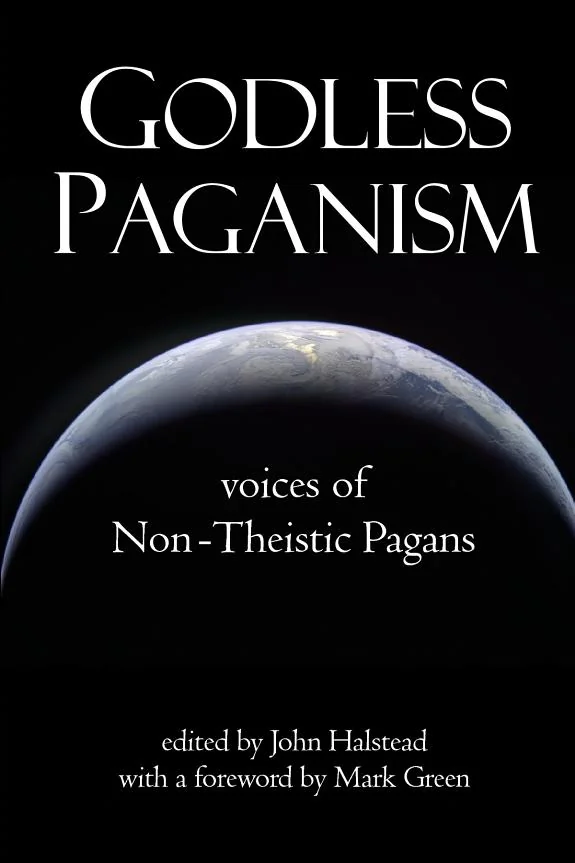
Godless Paganism: Voices of Non-Theistic Pagans
 79
79

Godless Paganism: Voices of Non-Theistic Pagans
John Halstead’s edited collection, "Godless Paganism," arrives as a necessary counterpoint to the often deity-centric discourse within contemporary Paganism. The strength of this volume lies in its diverse voices, each articulating a coherent and compelling case for non-theistic spiritual paths. One particularly impactful section details the pragmatic approach to ritual, demonstrating how meaning can be derived from shared human experience and symbolic action rather than divine invocation. However, the collection occasionally suffers from a degree of overlap in arguments, with some essays reiterating points made by others. A more robust engagement with the potential criticisms from polytheistic Pagans, beyond a brief mention in the historical context, might have further strengthened the work's argumentative scope. Despite this, the book offers a vital perspective for those seeking spiritual grounding outside traditional religious dogma.
📝 Description
79
Published in 2018, 'Godless Paganism' collects essays from non-theistic Pagans.
"Godless Paganism: Voices of Non-Theistic Pagans" brings together a range of essays that address non-theistic and atheistic viewpoints within contemporary Paganism. The collection challenges the idea that Paganism must involve belief in gods. Instead, it shows how people find spiritual meaning, ethical guides, and social connections through nature, humanism, and philosophical thought without relying on divine beings.
This book is for Pagans who do not believe in gods, or who are questioning the religious structures common in the movement. It will also interest secular humanists drawn to nature spirituality, academics who study modern religious groups, and anyone curious about the different ways people express belief and non-belief today. The volume examines the identity of the 'godless pagan' within the changing spiritual environment after Christianity.
This book examines a current within Paganism that traces philosophical roots back to ancient thinkers who engaged with myth and ritual without literal faith. It stands apart from the mid-20th century Neo-Pagan revival, which largely focused on polytheism. By highlighting these non-theistic perspectives, 'Godless Paganism' addresses a lineage of questioning and reinterpreting divinity that has persisted through various spiritual traditions.
💡 Why Read This Book?
• Understand the historical precedent for non-theistic spirituality, exploring how figures like the ancient Greek philosopher Epicurus engaged with religious concepts without literal deity belief, offering a nuanced view of Pagan history. • Discover practical approaches to ritual and community building for those who do not believe in gods, learning how meaning is constructed through humanistic and naturalistic frameworks as discussed in the essays. • Engage with the contemporary evolution of Paganism beyond its popular polytheistic image, recognizing the significance of the "godless pagan" identity as a distinct and valid spiritual path.
⭐ Reader Reviews
Honest opinions from readers who have explored this book.
❓ Frequently Asked Questions
What is the primary argument of "Godless Paganism: Voices of Non-Theistic Pagans"?
The book argues that Paganism can be a meaningful spiritual path without requiring belief in literal gods. It showcases how individuals find connection, ethics, and ritual through nature, humanism, and philosophical inquiry.
When was "Godless Paganism" first published?
"Godless Paganism: Voices of Non-Theistic Pagans" was first published on March 18, 2016.
Who is the author or editor of this book?
The book was edited by John Halstead, who also contributed essays to the collection.
What historical periods does the book reference regarding godless spirituality?
The book references ancient Pagan antiquity, noting individuals who participated in communal religious life without literal belief in gods, and the post-Christian era where the term "godless pagan" emerged.
Is this book suitable for someone new to Paganism?
Yes, it offers a unique perspective for newcomers, especially those interested in nature spirituality or humanistic approaches, challenging common assumptions about what Paganism entails.
What kind of community does the book represent?
It represents a community of Neo-Pagans and others who, since the 1960s, have sought to reclaim "Pagan" from historical opprobrium, focusing on nature spirituality and polytheism, while also including those who identify as non-theistic.
🔮 Key Themes & Symbolism
Reclaiming Pagan Identity
The collection addresses the historical and contemporary reclamation of the "Pagan" label. It highlights how individuals, particularly since the 1960s Neo-Pagan revival, sought to connect with pre-Christian European traditions. This theme emphasizes the agency of modern practitioners in defining their spiritual identity, moving beyond historical accusations of "godlessness" to forge a coherent, non-theistic path rooted in nature and human experience.
Immanence and Nature Spirituality
A core concept is the focus on immanence – finding the sacred within the natural world and human consciousness, rather than in a transcendent deity. Essays explore how the cycles of nature, the interconnectedness of ecosystems, and the human experience of awe and wonder can serve as the basis for profound spiritual engagement, replacing traditional theological frameworks with earth-centered reverence.
Ethical Naturalism and Meaning-Making
This theme examines how non-theistic Pagans derive their ethical frameworks and create personal meaning. Instead of divine commandments, morality is often grounded in reason, empathy, and the observable consequences of actions within the natural and social world. The book demonstrates how ritual, community, and personal philosophy can provide a rich sense of purpose and belonging without recourse to supernatural belief.
Diversity within Paganism
The volume underscores the broad spectrum of beliefs and practices encompassed by modern Paganism. It challenges the monolithic perception of Paganism as solely polytheistic, presenting non-theistic, atheistic, and agnostic perspectives as integral components. This theme promotes inclusivity and understanding within the wider Pagan community, acknowledging the validity of diverse spiritual journeys.
💬 Memorable Quotes
Direct passages from the work, attributed to the author.
“Even in pagan antiquity, there were those who, while participating in the community's religious life, did not believe in literal gods.”
— This statement highlights that non-theistic or skeptical approaches to divinity are not solely a modern phenomenon. It provides historical grounding for contemporary godless Paganism, suggesting a continuity of thought and practice across different eras.
“In the centuries that followed the Christian domination of the West, the epithet "godless pagan" was leveled at a wide variety of people.”
— This points to the historical weaponization of the term "godless pagan" as a pejorative. The book seeks to reclaim and redefine this label, transforming a historical insult into an identifier for a legitimate spiritual path.
“In the 1960s, there emerged a community of people who sought to reclaim the name "Pagan" from its history of opprobrium.”
— This marks the emergence of Neo-Paganism as a conscious movement. It frames the book's exploration within a specific socio-historical context of spiritual revival and identity formation in the late 20th century.
“These Neo-Pagans were interested in nature spirituality and polytheism, and identified with the misunderst...”
— This highlights the dominant trends within early Neo-Paganism. The ellipsis suggests the book will explore how "godless Paganism" relates to, and perhaps diverges from, these initial interests in nature and polytheism.
“The work explores a spectrum of non-theistic and atheistic perspectives within contemporary Paganism.”
— This interpretation captures the essence of the book's content: a compilation of diverse viewpoints that collectively demonstrate the breadth and depth of non-theistic spiritual expression within the Pagan movement today.
🌙 Esoteric Significance
Tradition
While not strictly adhering to a single esoteric lineage like Hermeticism or Gnosticism, "Godless Paganism" appeals to philosophical traditions that emphasize immanence, naturalism, and human potential. It shares ground with secular humanism and certain interpretations of animism and pantheism, focusing on the sacredness inherent in the natural world and human consciousness rather than external divine forces. It represents a departure from theistic magic and devotional practices common in many Western Esoteric traditions, offering a framework for meaning and practice grounded in empirical reality and personal experience.
Symbolism
Key symbols often revolve around nature: the cycles of the seasons, the earth, trees, and celestial bodies. These are not viewed as representations of anthropomorphic deities but as embodiments of natural processes and universal forces. The human form itself, and the community, can also become symbolic focal points, representing the culmination of natural evolution and the locus of shared meaning and ethical responsibility. Rituals, stripped of divine petition, focus on symbolic actions that reinforce connection to nature, self, and community.
Modern Relevance
This work is highly relevant to contemporary thinkers and practitioners exploring secular spirituality, humanistic Paganism, and earth-centered ethics. It informs discussions within groups like the Pagan Federation or various Heathen and Wiccan associations that grapple with theological diversity. Modern philosophical trends emphasizing naturalism, atheistic existentialism, and eco-spirituality find common cause with the perspectives presented, making it a valuable resource for understanding the evolving field of non-traditional spiritual and ethical systems.
👥 Who Should Read This Book
• Individuals identifying as Atheopagan, Humanistic Pagan, or Secular Pagan, seeking validation and community discourse for their non-theistic spiritual path. • Academics and students of religion studying the evolution of modern Paganism and the diversity of contemporary spiritual expressions beyond traditional theism. • Those interested in ethical frameworks derived from nature and humanism, looking for models of meaning-making and ritual practice that do not rely on supernatural beliefs.
📜 Historical Context
Published in 2016, "Godless Paganism" emerged during a period of significant diversification within the broader Pagan and New Age movements. It directly engages with the Neo-Pagan revival that gained momentum in the 1960s, a movement often characterized by its interest in polytheism and nature spirituality, as mentioned in the original blurb. However, this collection intentionally diverges from the dominant theistic currents, seeking to legitimize non-theistic and atheistic perspectives that had been present, though less visible, since antiquity. It implicitly contrasts with the more overtly supernatural interpretations of Paganism championed by figures like Gerald Gardner in the mid-20th century. The work's appearance can be seen as a response to the ongoing discourse within Paganism about the nature of belief and practice, particularly as the movement matured and attracted individuals from secular backgrounds or those questioning traditional religious dogma.
📔 Journal Prompts
The concept of "godless Paganism" as a reclaimed identity.
Natural cycles as a source of spiritual meaning.
Ethical frameworks derived from observable consequences.
The construction of meaningful ritual without divine invocation.
The historical presence of non-believers in ancient religious communities.
🗂️ Glossary
Non-Theistic Paganism
A branch of modern Paganism that does not require belief in literal gods or deities. Practitioners may identify as atheists, agnostics, humanists, or find spiritual meaning in nature and human experience without supernatural frameworks.
Neo-Paganism
A modern religious movement that emerged in the mid-20th century, drawing inspiration from pre-Christian European beliefs and practices, often focusing on nature spirituality and polytheism.
Immanence
The belief that the divine or sacred is present within the natural world and the universe, as opposed to being transcendent or existing outside of it.
Ethical Naturalism
A philosophical view that moral values and duties are grounded in the natural world and can be understood through reason and observation, without reference to supernatural beings or commands.
Atheopaganism
A specific term used by some non-theistic Pagans to describe their practice, emphasizing both atheistic principles and Pagan traditions, particularly nature spirituality.
Secular Spirituality
A broad category of practices and beliefs that offer a sense of meaning, connection, and purpose without adherence to traditional religious dogma or supernatural claims.
Opprobrium
Harsh criticism or censure; public disgrace. In the context of the book, it refers to the historical negative judgment associated with the term 'pagan'.
This book appears in 1 collection
🔮 Readers Also Liked
Browse all →








From the “Neopaganism” Collection
View all →








More Free Witchcraft & Paganism Books
View all →