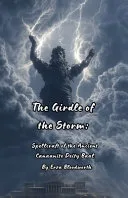
The Girdle of The Storm
 80
80

The Girdle of The Storm
Erza Bloodworth's "The Girdle of the Storm" offers a bold, albeit speculative, reconstruction of Canaanite religious practice for modern occultists. Its strength lies in its direct engagement with archaeological data from Ugarit, grounding its magical system in a specific historical and cultural milieu. The reimagining of Baal-Hadad as an archetype for mastering chaos is compelling, particularly the concept of the "Girdle of the Storm" as a focal point for power. However, the leap from historical reconstruction to practical spellcraft involves significant interpretative leaps. While Bloodworth is meticulous in referencing Ugaritic texts, the adaptation to contemporary magical theory sometimes feels strained, particularly when invoking Baal-Hadad's storm-god aspect for personal psychological order. A limitation is the lack of detailed ritualistic scripts for beginners, relying more on theoretical frameworks. The section on Baal's association with fertility and kingship, while historically relevant, could be more deeply integrated into the practical magical advice. Bloodworth's work is a serious, scholarly effort to bridge ancient Near Eastern religion and modern occultism, but requires a practitioner comfortable with significant interpretive license.
📝 Description
80
Published in early 2026, The Girdle of the Storm reconstructs ancient Canaanite practices around Baal-Hadad.
Erza Bloodworth's work focuses on reconstructing and adapting the religious practices of ancient Canaan, specifically centering on the deity Baal-Hadad. Originally a prominent figure in the pantheon of Ugarit, a significant Bronze Age city-state, Baal-Hadad is presented here through a modern framework for engaging with his archetypal energies. These energies are particularly tied to storm, thunder, and the imposition of order against primal chaos. The book draws heavily on archaeological findings from Ugarit, including cuneiform tablets detailing Canaanite religious life, myths, and rituals.
The text is for occult practitioners, scholars of ancient Near Eastern religions, and those interested in comparative mythology who wish to engage with pre-Abrahamic deities. It speaks to individuals who find contemporary magical systems disconnected from older, earth-based spiritualities and who are prepared for dedicated study and practice. The work reconstructs rituals and invocations for Baal-Hadad, viewing him as a potent archetype rather than just a historical figure. A central concept is 'Baal's Girdle,' a symbolic and energetic locus of power used to channel the deity's dominion over weather and cosmic instability, emphasizing practical application for personal mastery and imposing order on chaotic situations.
This book situates itself within the modern polytheistic reconstructionist movement, specifically focusing on ancient Near Eastern occultism. It moves beyond earlier interpretations of Canaanite religion, engaging with figures like Baal through lenses of comparative religion and esoteric philosophy. The work attempts to revive practices related to Baal-Hadad, framing him as a powerful archetype for practitioners seeking connection to pre-Abrahamic deities and earth-based spiritualities. The research is grounded in archaeological discoveries from Ugarit, aiming to offer a practical, contemporary approach to ancient magical traditions.
💡 Why Read This Book?
• Gain direct access to reconstructed ritual practices for Baal-Hadad, offering a unique approach to channeling storm and order archetypes, far beyond generic deity work. • Understand the symbolic significance of "Baal's Girdle" as presented in the text, providing a concrete focal point for magical operations derived from Ugaritic lore. • Explore the esoteric adaptation of ancient Canaanite religious practices, offering insights into pre-Abrahamic spiritual systems not commonly found in contemporary occult literature.
⭐ Reader Reviews
Honest opinions from readers who have explored this book.
❓ Frequently Asked Questions
What specific ancient texts does The Girdle of the Storm draw upon for its magical practices?
The book extensively references Ugaritic texts discovered at the site of Ugarit, including mythological cycles and ritual fragments, to reconstruct its spellcraft. These ancient sources provide the foundation for Bloodworth's adaptation of Baal-Hadad's worship.
Who was Baal-Hadad in ancient Canaanite religion?
Baal-Hadad was the supreme god of the Canaanite pantheon in the city-state of Ugarit. He was venerated as the god of storms, thunder, lightning, and fertility, often depicted as a warrior king who vanquished chaos.
Is this book suitable for beginners in occultism?
While it provides historical context, the book is dense and requires a foundational understanding of occult theory and comparative religion. It is best suited for intermediate to advanced practitioners interested in historical reconstruction.
What is the primary goal of the spellcraft presented in the book?
The primary goal is to adapt ancient Canaanite practices for modern use, focusing on harnessing Baal-Hadad's archetypal energies for mastery over chaos and the manifestation of order in the practitioner's life.
When was The Girdle of the Storm first published?
The Girdle of the Storm was first published on February 9, 2026, making it a recent addition to the field of contemporary occult literature.
Does the book contain actual spells or just theoretical discussions?
The book contains reconstructed spells and ritual frameworks derived from historical research into Ugaritic religious practices, intended for practical application by modern occultists.
🔮 Key Themes & Symbolism
Baal-Hadad Archetype
The work posits Baal-Hadad, the "Rider of the Clouds" from Ugaritic mythology, as a potent archetype for asserting order against chaos. It moves beyond historical worship to present him as a force accessible for modern practitioners seeking mastery over disruptive energies. The book details how to invoke this archetype for personal empowerment and the establishment of structure, drawing parallels between ancient cosmologies and contemporary psychological needs.
Ugaritic Reconstruction
Bloodworth engages directly with archaeological findings from the Bronze Age city-state of Ugarit, particularly the cuneiform tablets detailing religious practices and myths. The book reconstructs these ancient rituals, adapting them for contemporary occult use. This approach grounds the magic in historical evidence, offering a distinct alternative to more abstract or modern-developed magical systems.
The Girdle of Power
Central to the book is the concept of the 'Girdle of the Storm,' interpreted as a symbolic and energetic locus of Baal's power. This element serves as a practical tool within the grimoire, representing the practitioner's ability to contain and direct potent forces. It is presented as a means to manage overwhelming energies, akin to a divine belt of control and authority.
Order Against Chaos
A persistent theme is the struggle between cosmic order and primordial chaos, a motif central to Baal's mythology. The book frames the practice of Baal's spellcraft as a means for the practitioner to embody this divine struggle, transforming internal and external disorder into structured manifestations. This involves ritualistic actions designed to impose clarity and control.
💬 Memorable Quotes
Direct passages from the work, attributed to the author.
“The Girdle of the Storm is the locus of terrestrial and celestial command.”
— This interpretation emphasizes the symbolic 'Girdle' as a focal point for channeling Baal's power, representing control over both earthly matters and broader cosmic influences for the adept.
“From the ruins of Ugarit, the voice of Baal echoes for the modern mage.”
— This suggests that the ancient deity's power and wisdom, lost for millennia, are being revived and made accessible through Bloodworth's work for contemporary magical practice.
💡 Key Ideas
Editorial paraphrase of the work's core concepts — not direct quotes.
Baal-Hadad, the Lord of Thunder, offers dominion over the tempest of existence.
This paraphrased concept highlights Baal's role not just as a storm deity, but as a force capable of granting the practitioner authority over life's turbulent challenges and chaotic forces.
Reclaiming the ancient storm god for contemporary spiritual mastery.
This summarizes the book's core project: taking a figure from ancient Near Eastern religion and adapting his archetypal energies for practical use in modern occultism and personal development.
Chaos yields to the thunderous will of the Rider of the Clouds.
This paraphrased idea underscores Baal's function as a force that actively confronts and overcomes disorder, a principle the book aims to empower practitioners to emulate.
🌙 Esoteric Significance
Tradition
This work fits within the broader resurgence of 'traditional witchcraft' and polytheistic reconstructionism. While not strictly Hermetic, Gnostic, or Kabbalistic, it draws from the deep wellspring of ancient Near Eastern religious expression, offering a distinct lineage for practitioners seeking pre-Abrahamic spiritual roots. It departs from Western Esotericism by focusing on a non-Greco-Roman, non-Abrahamic pantheon, emphasizing earth-based and elemental forces.
Symbolism
Key symbols include Baal-Hadad himself, representing divine authority, storm power, and the assertion of order. The 'Girdle of the Storm' functions as a potent talisman or energetic focus, symbolizing containment, mastery, and the channeling of immense natural forces. The 'Rider of the Clouds' motif emphasizes Baal's dominion over meteorological phenomena, translating into practical control over disruptive influences.
Modern Relevance
Contemporary occultists and scholars interested in comparative religion are increasingly looking beyond established Western esoteric traditions. Bloodworth's work provides a practical methodology for engaging with a deity and pantheon that influenced early Mediterranean religious thought. Thinkers and practitioners focused on elemental magic, storm sorcery, and the reconstruction of ancient cults find resonance in its approach.
👥 Who Should Read This Book
• Practitioners of polytheistic reconstructionism seeking to engage with ancient Near Eastern deities, offering a specific focus on Canaanite Baal-Hadad. • Occult scholars and comparative religion enthusiasts interested in the practical adaptation of historical religious practices for modern magical use. • Mages and sorcerers drawn to elemental forces, particularly storm phenomena and the archetype of imposing order on chaos.
📜 Historical Context
Published in 2026, Erza Bloodworth's "The Girdle of the Storm" emerges within a contemporary milieu fascinated by ancient Near Eastern religions and polytheistic reconstructionism. Its focus on Ugarit and the deity Baal-Hadad taps into a scholarly and esoteric interest piqued by archaeological discoveries from the 20th century onwards. The city-state of Ugarit, flourishing in the Late Bronze Age, yielded extensive cuneiform archives that revolutionized understanding of Canaanite culture and religion, including the Baal Cycle epics. Bloodworth's work engages directly with this material, presenting a modern occult interpretation that diverges from earlier, more purely academic or Orientalist perspectives. While figures like James Frazer's "The Golden Bough" (1890-1915) explored similar ancient mythologies, Bloodworth's project is specifically focused on practical magical application, distinguishing it from comparative mythology or religious studies alone. The 2026 publication date situates it amidst a global resurgence of interest in pre-Abrahamic deities and indigenous spiritual traditions.
📔 Journal Prompts
Baal's dominion over the tempest of existence: how does this concept relate to personal challenges?
Reflect on the symbolic meaning of the "Girdle of the Storm" in your own life.
Consider the archetype of imposing order on chaos, as embodied by Baal-Hadad.
What aspects of Ugaritic religious practice can be meaningfully integrated into contemporary life?
Analyze the "Rider of the Clouds" motif as a metaphor for spiritual authority.
🗂️ Glossary
Baal-Hadad
The supreme deity of the Canaanite pantheon in ancient Ugarit, associated with storms, thunder, lightning, and fertility. He is often depicted as a warrior who conquers chaos.
Ugarit
A major Bronze Age city-state located in ancient Syria, renowned for its extensive archaeological discoveries of cuneiform tablets revealing Canaanite religion, literature, and administration.
Girdle of the Storm
A symbolic and energetic locus of power discussed in the book, representing Baal-Hadad's authority and ability to control chaotic forces, adapted for modern magical practice.
Rider of the Clouds
An epithet for Baal-Hadad, emphasizing his mastery over meteorological phenomena, particularly storms and thunder, and his role as a powerful, mobile deity.
Canaanite Religion
The indigenous religious beliefs and practices of the Canaanites, a Semitic people inhabiting the Levant during the Bronze Age, centered around a pantheon of deities including Baal, El, and Asherah.
Grimoire
A textbook of magic or witchcraft, containing instructions on how to cast spells, perform rituals, and invoke supernatural entities, often compiled from older magical traditions.
Archetype
In esoteric and psychological contexts, a primordial pattern or model of the psyche that influences human behavior and understanding, often represented by deities or mythical figures.