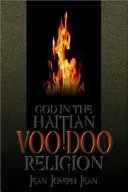
God in the Haitian Voodoo Religion
 75
75

God in the Haitian Voodoo Religion
Jean Joseph Jean’s "God in the Haitian Voodoo Religion" provides a welcome corrective to much of the sensationalism that has long surrounded Vodou. The author’s direct engagement with Vodou theology, particularly in distinguishing the roles of Bondye and the Loa, offers clarity. A strength lies in its systematic approach to the spirit pantheon, moving beyond simplistic categorizations. However, the book occasionally feels dense, assuming prior knowledge that might not be present in all readers, particularly concerning the historical syncretism with Catholicism. The section discussing the Petro spirits, while informative, could benefit from further contextualization regarding their perceived ferocity and the societal conditions that may have influenced their veneration. Despite this, the work serves as a valuable, scholarly examination of Vodou's divine structure. It is an essential resource for those seeking to understand Vodou as a complex spiritual system, not merely a collection of rites.
📝 Description
75
Jean Joseph Jean's 2004 book details the spiritual architecture of Haitian Vodou.
First published in 2004, Jean Joseph Jean's "God in the Haitian Voodoo Religion" offers an insider's view of Vodou's spiritual framework. The work aims to clarify the complex theology that supports this religion, moving past common misunderstandings. It explains how divinity is understood in Vodou, separating the Supreme Being, Bondye, from the many spirits, known as Loa, who act as intermediaries in human lives. The book examines the historical roots of Haitian Vodou, showing its development from West African traditions and Roman Catholicism under slavery. It discusses how external portrayals have often misrepresented the religion.
The text differentiates between the distant Bondye and the pantheon of Loa. It distinguishes between classes of Loa, such as the Rada and Petro spirits, and describes their influence on human affairs, covering areas from healing to justice. The book also touches on the importance of ritual practices. It is written for those interested in comparative religion, African diaspora studies, and a more informed understanding of Vodou, particularly those seeking academic rigor or sincere spiritual insight beyond sensationalized accounts. Readers should have an interest in theology and cosmology.
This work engages with the complex spiritual system of Haitian Vodou, a tradition born from the forced syncretism of West African cosmologies and European Catholicism. It addresses the cosmology of Bondye and the Loa, placing it within the broader context of African diaspora religions. The book's focus on the internal theological structure and the mediation of spirits offers a view into a system that has historically been misunderstood and sensationalized by external observers, highlighting its unique approach to the divine and the spiritual world.
💡 Why Read This Book?
• Gain a structured understanding of the Vodou pantheon, differentiating the roles of Bondye and the Loa, as detailed in the book's theological exposition. • Apprehend the historical roots of Vodou, understanding its syncretic development in Haiti during the 19th century and its relationship with Catholicism. • Explore the specific functions and characteristics of different classes of Loa, such as the Rada and Petro spirits, moving beyond generalized notions of spirit veneration.
⭐ Reader Reviews
Honest opinions from readers who have explored this book.
❓ Frequently Asked Questions
What is the primary distinction between Bondye and the Loa in Haitian Voodoo?
In Haitian Vodou, Bondye is the Supreme Being, the creator God who is remote and generally does not intervene directly in human affairs. The Loa are spirits, intermediaries who serve Bondye and interact with humans, acting as guides, protectors, and sometimes as sources of power or judgment.
When was "God in the Haitian Voodoo Religion" first published?
The book "God in the Haitian Voodoo Religion" by Jean Joseph Jean was first published in 2004.
Does the book discuss the role of priests and priestesses in Vodou?
Yes, the work explores the functions of the Houngan (priest) and Mambo (priestess) within Haitian Vodou, detailing their roles in leading ceremonies and mediating between the human and spirit worlds.
What historical influences shaped Haitian Vodou, according to the text?
The text indicates that Haitian Vodou was shaped by a syncretic fusion of West African spiritual traditions, particularly from the Fon and Kongo peoples, with elements of Roman Catholicism imposed during the French colonial era.
Are there different types of Loa mentioned in the book?
Indeed, the book distinguishes between various classes of Loa, notably mentioning the Rada spirits, often associated with benevolence, and the Petro spirits, known for their more assertive or fierce characteristics.
Is "God in the Haitian Voodoo Religion" suitable for beginners in Vodou studies?
While informative, the book is geared towards serious students and scholars due to its theological depth. Beginners might find it beneficial to have some prior exposure to religious studies or African diaspora traditions.
🔮 Key Themes & Symbolism
The Dual Nature of Divinity
This book elucidates the Vodou concept of a Supreme Being, Bondye, distinct from the active spirit intermediaries known as Loa. It emphasizes that Bondye is the ultimate creator, yet it is the Loa who are invoked and interacted with in daily spiritual life and ritual. Understanding this hierarchy is crucial to grasping Vodou's theological framework, moving beyond the misconception of Vodou as solely spirit-worship. The text details how different Loa embody various aspects of life, nature, and human experience, serving as conduits for divine energy and guidance.
The Loa Pantheon: Rada and Petro
A significant focus is placed on the categorization and characteristics of the Loa. The work meticulously outlines the Rada spirits, often depicted as benevolent and originating from Africa, and the Petro spirits, which are generally considered more potent or fierce and are believed to have emerged in Haiti. This distinction is vital for comprehending the diverse energies and influences within Vodou practice. The book explores the specific domains, temperaments, and historical associations of these spirit families.
Ritual and Mediation
The book examines the practical application of Vodou theology through its ritual practices. It highlights the central role of ceremonies, offerings, and the spiritual leadership of the Houngan and Mambo. These figures are presented not merely as officiants but as essential mediators between the human community and the spirit world, facilitating communication, healing, and spiritual balance. The text underscores how ritual serves to maintain cosmic order and address human needs through divine intervention.
Syncretism and Historical Development
Jean Joseph Jean's work implicitly addresses the syncretic nature of Haitian Vodou, acknowledging its West African roots alongside the influence of Roman Catholicism. While not solely a historical text, its theological exposition is informed by this fusion. The book offers insight into how indigenous African spiritual concepts were preserved and reinterpreted, often through Catholic imagery, during the colonial period, leading to the unique spiritual range of Haiti.
💬 Memorable Quotes
Direct passages from the work, attributed to the author.
“The Petro spirits carry the fire of the land's suffering and resilience.”
— This interpretation highlights the fierce nature often attributed to the Petro Loa, suggesting their connection to the historical struggles and enduring spirit of the Haitian people.
“The Houngan's voice bridges the earthly and the divine.”
— This interpretation underscores the mediatory role of Vodou priests, positioning them as crucial conduits for communication and spiritual practice between human beings and the spirit realm.
💡 Key Ideas
Editorial paraphrase of the work's core concepts — not direct quotes.
Bondye reigns in the heavens, but the Loa walk the earth among us.
This paraphrased concept emphasizes the theological structure of Vodou, distinguishing the transcendent Supreme Being from the immanent spirits who actively engage with humanity.
To serve the Loa is to serve the life force that animates existence.
This paraphrased statement points to the vitalistic aspect of Vodou, framing devotion to the spirits as an engagement with the fundamental energies of the universe.
Understanding the Loa requires acknowledging their diverse temperaments, from the gentle Rada to the formidable Petro.
This paraphrased concept stresses the importance of recognizing the varied personalities and powers within the Vodou pantheon, advocating for a nuanced approach to spirit veneration.
🌙 Esoteric Significance
Tradition
Haitian Vodou, as explored in this text, occupies a unique space within esoteric traditions. While drawing heavily from West African spiritual systems (particularly Fon and Kongo), its syncretism with Roman Catholicism places it at a fascinating crossroads. It can be seen as a form of practical Gnosticism, emphasizing direct experience and knowledge of the divine through intermediaries, and as a potent manifestation of earth-based spirituality with deep ancestral connections.
Symbolism
Key symbols include the *veve*, intricate designs drawn to invoke specific Loa, acting as spiritual gateways and maps of divine energy. The *asson*, a ritual rattle, symbolizes authority and the connection to the spirit world for a priest or priestess. Water, fire, and earth are fundamental elements, representing life, transformation, and grounding, respectively, each associated with different Loa and aspects of existence.
Modern Relevance
Contemporary practitioners of African diaspora religions, comparative theology students, and those interested in shamanic or animistic traditions find value in this work. Thinkers exploring post-colonial spirituality and the resilience of indigenous belief systems often reference Vodou's sophisticated cosmology. Its detailed examination of spirit mediation speaks to modern interest in consciousness, energetic pathways, and non-dualistic approaches to the sacred.
👥 Who Should Read This Book
• Students of comparative religion seeking to understand the theological frameworks of African diaspora traditions, moving beyond ethnographic descriptions. • Researchers into Haitian history and culture interested in the spiritual underpinnings of identity and social cohesion in post-colonial societies. • Esoteric practitioners looking to broaden their knowledge of non-Western spiritual systems and their sophisticated pantheons and ritual practices.
📜 Historical Context
Published in 2004, Jean Joseph Jean's work emerged in an era where academic and public interest in Vodou was growing, yet still often clouded by sensationalism. The late 20th and early 21st centuries saw scholars like Karen McCarthy Brown (whose work on Haitian women and Vodou was influential) and Wade Davis (whose early research, though controversial, brought attention to the subject) engaging with Vodou. Vodou's development in Haiti from the late 18th century onwards represents a potent example of religious syncretism, blending West African traditions with Roman Catholicism under the oppressive conditions of French colonialism. This fusion was a deliberate act of cultural preservation and spiritual innovation. Competing schools of thought often viewed Vodou through a lens of demonology or mere superstition, a perception Jean Joseph Jean's text implicitly seeks to counter by presenting its complex theological underpinnings.
📔 Journal Prompts
The distinct roles of Bondye and the Loa as described in the text.
The symbolic significance of the Rada versus Petro spirits.
The function of the Houngan and Mambo in Vodou ceremonies.
The historical development of Vodou from its West African and Catholic roots.
The concept of divine mediation as presented through the Loa.
🗂️ Glossary
Bondye
The Supreme Being in Haitian Vodou, understood as the remote creator God who does not directly intervene in human affairs.
Loa
Spirits or deities in Haitian Vodou that serve as intermediaries between Bondye and humans. They embody various aspects of life and nature.
Rada
A family of Loa in Haitian Vodou, generally considered benevolent and originating from Africa. They are often associated with wisdom and healing.
Petro
A family of Loa in Haitian Vodou, often perceived as more fiery, powerful, or assertive. They are believed to have emerged in Haiti and are associated with protection and justice.
Houngan
A male priest in Haitian Vodou, responsible for leading ceremonies, spiritual guidance, and mediating with the Loa.
Mambo
A female priestess in Haitian Vodou, holding similar responsibilities to the Houngan in leading rituals and spiritual practice.
Veve
Intricate symbolic drawings created on the ground or floor to invoke and honor specific Loa during ceremonies.