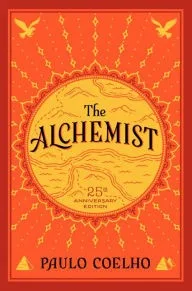
O Alquimista
 75
75

O Alquimista
Paulo Coelho's 'The Alchemist' presents a deceptively simple fable that has captivated millions. Its core strength lies in the clarity of its allegorical message: the pursuit of one's 'Personal Legend.' The narrative of Santiago's journey from Andalusia to the pyramids serves as a powerful metaphor for self-discovery and the conviction that the universe aids those dedicated to their true path. The concept of the 'Soul of the World' and the interpretation of omens offers a gentle introduction to ideas of universal interconnectedness. However, the book's very accessibility can also be a limitation. Its earnestness and straightforward delivery of spiritual concepts sometimes border on the didactic, leaving little room for ambiguity or critical interpretation. A passage that exemplifies this is Santiago's reliance on the interpretations of omens, which, while central to his quest, can feel overly prescribed. Ultimately, 'The Alchemist' functions best as an inspirational parable rather than a complex philosophical text.
📝 Description
75
Paulo Coelho's 'O Alquimista' was published in 1988, telling the story of a shepherd boy's quest for treasure.
Published in 1988, Paulo Coelho's 'O Alquimista' follows Santiago, an Andalusian shepherd boy who travels from Spain to the Egyptian desert in search of a hidden treasure near the pyramids. The novel is often seen as esoteric literature because of its allegorical nature and its focus on spiritual themes. It appeals to readers interested in philosophical fiction, spiritual journeys, and stories that explore destiny and the interconnectedness of existence. Those drawn to adventure tales with deeper symbolic meanings, particularly concerning self-discovery and the pursuit of one's dreams, will find resonance here. The book emerged during a time of increased interest in spiritual and self-help literature. Its themes of destiny and hidden knowledge connected with a broader cultural search for meaning. The book achieved significant international success, becoming a global bestseller.
While not directly tied to specific occult systems, 'O Alquimista' taps into a broader esoteric current that gained traction in the late 20th century. Its emphasis on a 'Personal Legend' and the universe conspiring to aid those who follow their destiny echoes concepts found in various spiritual traditions that posit a guiding force or interconnected consciousness. The idea of interpreting omens and understanding the 'language of the world' aligns with divinatory practices and the belief in hidden meanings accessible through intuition. It offers a narrative approach to these ideas, distinct from more academic or ritualistic esoteric texts, making them accessible through a story of adventure and self-discovery.
💡 Why Read This Book?
• You will learn to identify and pursue your 'Personal Legend' by understanding how the universe might signal opportunities, as depicted in Santiago's journey across Spain and North Africa. • You will gain insight into the concept of the 'Soul of the World,' recognizing how interconnectedness can guide your decisions and actions toward fulfillment. • You will explore the significance of listening to your heart and interpreting omens, a practice central to Santiago's quest, which can foster greater intuition in your own life.
⭐ Reader Reviews
Honest opinions from readers who have explored this book.
❓ Frequently Asked Questions
When was Paulo Coelho's 'The Alchemist' originally published?
'The Alchemist' was first published in 1988 by Brazilian author Paulo Coelho, marking its initial release in his native country.
What is the central allegory in 'The Alchemist'?
The central allegory follows Santiago, a shepherd boy, on his quest for a treasure, symbolizing the pursuit of one's 'Personal Legend' and the spiritual journey of self-discovery.
What are the main esoteric concepts explored in 'The Alchemist'?
The book explores concepts like the 'Personal Legend,' the 'Soul of the World,' and the interpretation of omens, suggesting a universe that conspires to help those pursuing their destiny.
Where does the story of 'The Alchemist' primarily take place?
The narrative begins in Andalusia, Spain, and follows Santiago's journey eastward through Tangier, Morocco, across the Sahara Desert, towards the pyramids of Egypt.
Is 'The Alchemist' based on any specific historical or mythological figures?
While drawing on universal themes of quests and spiritual awakening, the character of Santiago is not directly based on a single historical or mythological figure but embodies archetypal seeker qualities.
What is the 'language of the world' as described in 'The Alchemist'?
The 'language of the world' refers to the non-verbal communication of the universe through omens, intuition, and synchronicities, which Santiago learns to understand on his journey.
🔮 Key Themes & Symbolism
The Personal Legend
Central to the narrative is the concept of the 'Personal Legend' (Lenda Pessoal), an individual's unique destiny or life purpose. The book posits that discovering and pursuing this legend is the ultimate goal of existence. Santiago's journey is a literal manifestation of this pursuit, illustrating that the universe supports those who bravely follow their calling, often through a series of synchronicities and challenges that refine their understanding and resolve.
Omens and the Language of the World
The work places significant emphasis on omens as the universe's way of communicating with individuals, guiding them toward their Personal Legend. Santiago learns to perceive these signs – from the flight of hawks to the patterns of stones – interpreting them as vital messages. This highlights an esoteric belief in a divinely ordered cosmos that actively participates in human lives, offering a subtle yet constant stream of guidance for those attuned to its 'language.'
The Soul of the World
Coelho introduces the 'Soul of the World' (Alma do Mundo) as a unifying spiritual force that connects all living beings and the elements of the universe. This concept suggests a form of animism or panentheism, where the divine permeates creation. Santiago's ultimate realization involves understanding his connection to this universal consciousness, enabling him to perform seemingly miraculous feats and comprehend the interconnectedness of all existence.
Alchemy as Transformation
While not a literal guide to material alchemy, the book uses the alchemical process as a metaphor for spiritual and personal transformation. The alchemist character explains that true alchemy involves purifying oneself and achieving spiritual perfection, mirroring Santiago's internal growth. The pursuit of the treasure becomes secondary to the wisdom gained and the self-mastery achieved throughout the arduous journey.
💬 Memorable Quotes
Direct passages from the work, attributed to the author.
“The secret of life, though, is to fall seven times and to get up eight.”
— This proverb highlights the importance of resilience and perseverance. It frames life's challenges not as endpoints but as opportunities for growth, emphasizing that true success lies in the ability to overcome adversity repeatedly.
“It's the possibility of having a dream come true that makes life interesting.”
— This statement underscores the vital role of hope and aspiration. The mere prospect of achieving one's deepest desires injects meaning and excitement into existence, even before the dream is realized.
“Every occurrence along the road was a manifestation of one way or another of the Soul of the World, and of the Personal Legends that were seeking to fulfill themselves.”
— This concept illustrates the interconnectedness of events and destinies. It suggests that every experience, whether seemingly mundane or extraordinary, is part of a grander design, guiding individuals toward their unique life path.
“The desert is a treacherous place. It does not reveal its secrets easily.”
— This refers to the literal and metaphorical challenges of the journey. The desert represents obstacles, tests, and the hidden wisdom that must be earned through patience, observation, and a willingness to confront the unknown.
💡 Key Ideas
Editorial paraphrase of the work's core concepts — not direct quotes.
When you want something, all the universe conspires in helping you to achieve it.
This quote captures the core philosophy of the 'Personal Legend.' It suggests a benevolent cosmos that actively aligns its forces to support individuals who are clear about their deepest desires and pursue them with unwavering commitment.
🌙 Esoteric Significance
Tradition
While not strictly adhering to a single lineage, 'The Alchemist' draws heavily from Hermetic and Gnostic principles, particularly the idea that the universe is imbued with a divine intelligence ('Soul of the World') and that individuals possess a unique destiny ('Personal Legend'). It carries the Hermetic axiom 'As Above, So Below' by suggesting a cosmic correspondence that guides human affairs. The narrative frames spiritual growth as an alchemical process of purification and self-realization, moving beyond literal interpretations to a symbolic understanding of transformation.
Symbolism
The journey itself serves as a potent symbol of the soul's pilgrimage toward enlightenment. The sheep represent comfort and conformity, while the desert symbolizes the trials and purification necessary for spiritual awakening. The treasure, initially sought externally, ultimately symbolizes inner wisdom and the fulfillment of one's destiny. The alchemist figure embodies the wise guide, initiating Santiago into the deeper, symbolic understanding of existence and the universe's interconnectedness.
Modern Relevance
Contemporary thinkers and practitioners in fields like positive psychology, manifestation coaching, and spiritual mentorship frequently reference 'The Alchemist.' Its concepts of the 'Personal Legend' and universal conspiracy align with modern self-help narratives focused on goal-setting, law of attraction principles, and finding one's life purpose. The book's enduring popularity indicates its continued relevance for individuals seeking accessible frameworks for spiritual exploration and personal growth in the 21st century.
👥 Who Should Read This Book
• Aspiring seekers of purpose: Individuals questioning their life path and seeking a narrative that validates the pursuit of dreams and personal destiny. • Students of symbolic literature: Readers interested in allegorical tales that explore universal themes of self-discovery, fate, and spiritual interconnectedness. • Those new to esoteric concepts: Individuals intrigued by ideas of synchronicity, universal consciousness, and inner transformation presented in an accessible, story-driven format.
📜 Historical Context
Published in 1988, Paulo Coelho's 'O Alquimista' arrived during a period when spiritual and self-discovery literature was gaining significant traction globally, partly influenced by the lingering New Age movement. While not overtly tied to specific occult orders like the Golden Dawn or Theosophy, its allegorical exploration of destiny and universal interconnectedness tapped into a broader cultural search for meaning beyond materialism. The book's subsequent international success, translating into dozens of languages and selling tens of millions of copies, positioned it as a unique phenomenon in contemporary literature. Its accessible narrative style contrasted with more academic or esoteric texts, making profound spiritual concepts available to a wide audience. Coelho's work became a touchstone for discussions on fate, purpose, and the power of belief, resonating with readers seeking guidance in a rapidly changing world.
📔 Journal Prompts
Santiago's 'Personal Legend' – what signs has the universe offered you?
Reflect on the 'Soul of the World' and its potential connection to your daily life.
The meaning of omens: How might you interpret the 'language of the world' more consciously?
The alchemical process of transformation: What inner changes are signaled by your recent challenges?
The significance of listening to your heart: What is your heart urging you towards?
🗂️ Glossary
Personal Legend
An individual's unique destiny or life purpose, the pursuit of which is considered the ultimate goal of existence according to the book's philosophy.
Soul of the World
A unifying spiritual force or consciousness that connects all things in the universe, influencing events and guiding individuals toward their destiny.
Omens
Signs or indications from the universe, often subtle, that guide individuals toward their Personal Legend or warn them of potential pitfalls.
Alchemy
In the context of the book, alchemy symbolizes the process of personal and spiritual transformation, purification, and the realization of one's true potential.
Language of the World
The non-verbal communication of the universe, understood through intuition, omens, and synchronicities, which reveals the workings of the Soul of the World.
Urim and Thummim
Two stones, one black and one white, used by Santiago as tools for divination, representing 'yes' and 'no' answers to aid in decision-making.
Maktub
An Arabic word meaning 'It is written,' signifying fate or destiny, emphasizing acceptance of what is meant to be.
🔮 Readers Also Liked
Browse all →







More by Paulo Coelho
All books →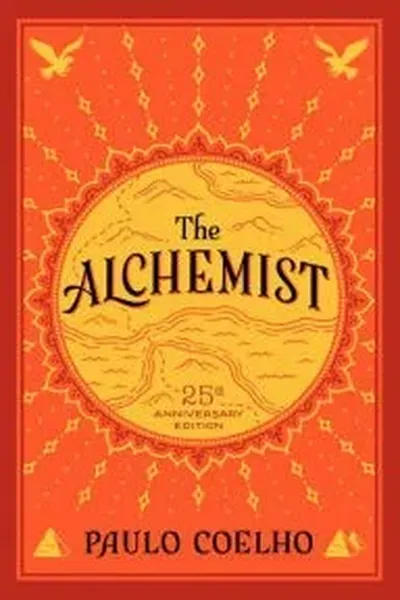





More Free Alchemy & Hermeticism Books
View all →