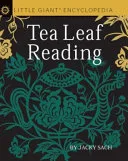
Tea Leaf Reading
 76
76

Tea Leaf Reading
Jacky Sach's "Tea Leaf Reading" offers a refreshingly grounded approach to a practice often shrouded in mystery. The initial chapters, which detail tea history and preparation, are surprisingly engaging, providing a solid foundation before delving into the core subject. Sach's strength lies in her methodical breakdown of symbols, presenting them not as rigid pronouncements but as springboards for interpretation. The section on common symbols, like the interpretation of a bird representing news or a tree signifying growth, is particularly well-executed and accessible. However, the book occasionally feels overstuffed, attempting to be both an encyclopedic overview of tea and a deep dive into divination. While the dual purpose is understandable, some readers might find the transition between the two aspects abrupt. The original blurb's mention of "tasty brew of tea information" hints at this breadth, which is both a strength and a minor detraction. Ultimately, Sach provides a practical, no-nonsense manual that demystifies tasseography effectively.
📝 Description
76
Jacky Sach's 2008 guide goes beyond simple prediction to detail the history and practice of tea leaf reading.
Published in 2008, Jacky Sach's "Tea Leaf Reading" offers a thorough look at tasseography. The book details the history and cultural impact of reading tea leaves, alongside practical instruction. It functions as both a resource on tea types and a manual for those interested in the practice. This volume suits a wide readership, from those new to esoteric studies to experienced practitioners looking to add to their skills. It will interest readers drawn to divination, mindfulness, historical customs, and the symbolic meaning found in everyday items. The book provides a tangible, ritualistic approach for personal reflection or for connecting with others.
Tea leaf reading, or tasseography, traces its origins to ancient China and gained significant traction in Europe during the 18th and 19th centuries, particularly in Victorian England. Sach's work places this practice within that lineage, acknowledging its long history and its persistence through changing intellectual climates. The book details common symbols, their meanings, and how to interpret them within the context of the cup, emphasizing insight over simple prediction.
💡 Why Read This Book?
• Gain practical instruction on performing tea leaf readings, learning specific symbol interpretations for common shapes like animals or natural elements, as detailed in the "How to Read Me!" section. • Understand the historical trajectory of tasseography, appreciating its journey from ancient origins to its Victorian popularity, a context explored in the book's historical overview. • Develop intuitive interpretation skills by practicing with guidance on cup swirling and symbol placement, a methodology central to Sach's approach to reading.
⭐ Reader Reviews
Honest opinions from readers who have explored this book.
❓ Frequently Asked Questions
What is the best type of tea for reading tea leaves?
Jacky Sach suggests using loose-leaf teas, particularly black teas like Assam or Yunnan, as they leave clearer patterns. Avoid teas with very fine dust or large, uniform pieces, as these can obscure the symbols.
Does the type of cup matter in tea leaf reading?
Yes, the book emphasizes that the cup's shape and material are important. Sach recommends cups with smooth, rounded interiors and no sharp angles, preferably white or light-colored to better reveal the tea leaf patterns.
How is tea leaf reading different from other forms of divination?
Tea leaf reading, or tasseography, is unique in its use of a common, everyday beverage and its focus on the residual patterns. It often emphasizes intuition and personal interpretation over strict, codified systems, as Sach details.
Can tea leaf reading predict the future?
While the book explores symbolic meanings that can relate to future events, it frames tea leaf reading more as a tool for gaining insight and understanding current circumstances rather than a definitive prophecy.
What are some common symbols in tea leaf reading?
Common symbols include an anchor (stability), a bird (news), a ring (union or commitment), a tree (growth), and a snake (transformation or hidden danger). Sach provides an extensive lexicon in the book.
When was tea leaf reading first documented?
While the precise origins are ancient, the practice became widely documented and popular in Europe, particularly in England, during the 18th and 19th centuries, coinciding with the rise of tea consumption.
🔮 Key Themes & Symbolism
The Art of Tasseography
This section explores the practice of tasseography, or tea leaf reading, as presented by Jacky Sach. It details the historical evolution of this divination method, tracing its roots from ancient practices to its popularization in 18th and 19th century Europe. The book emphasizes the tactile and intuitive nature of interpreting the patterns left by tea leaves, positioning it as a symbolic language accessible to all. Sach guides readers through the essential steps, from selecting the right tea and cup to the ritualistic swirling and observation of the leaf residue.
Symbolic Lexicon
Central to the practice is understanding the rich symbolic language of tea leaves. Sach meticulously catalogues common symbols – from animals and natural elements to geometric shapes and abstract forms – and provides interpretations. These symbols are not presented as rigid predictions but as prompts for introspection and understanding of life's circumstances. The book encourages the reader to develop their own intuitive connection with these symbols, recognizing that context and personal association play a significant role in the reading process.
Tea Culture and Ritual
Beyond divination, the book explores the broader culture surrounding tea. It touches upon the history of tea itself, its various types, and the rituals associated with its preparation and consumption across different cultures. Sach highlights how the act of preparing and sharing tea can be a meditative practice, enhancing the receptivity needed for insightful readings. The book suggests that the entire process, from brewing to reading, forms a holistic ritual connecting the user to a tradition spanning centuries.
Intuitive Development
Jacky Sach's approach stresses the development of personal intuition. While providing a framework of common symbols and their meanings, the book empowers readers to trust their inner guidance. It explains how the patterns in the cup can act as a mirror to the subconscious, offering insights that might otherwise remain hidden. This emphasis on personal connection and intuition distinguishes tea leaf reading as a practice that fosters self-awareness and personal growth.
💬 Memorable Quotes
Direct passages from the work, attributed to the author.
“An ABC of tea, from Assam and Black to Tikkam and Yunnan.”
— This highlights the book's encyclopedic approach to tea itself, not just the divination aspect. It promises comprehensive information on various tea types, suggesting a deep dive into the subject matter beyond just the reading.
“Over half the book is devoted to a 'How to Read Me!'--an instruction manual on tea leaf reading.”
— This emphasizes the practical, instructional nature of the core content. It signals that the book offers detailed, step-by-step guidance for learning the skill of tea leaf interpretation.
“Guidance on symbols, meanings, and omens.”
— This points to the symbolic nature of the practice. The book aims to equip readers with the knowledge to understand the various signs and messages that can be derived from tea leaves.
“Advice on preparing the perfect cup.”
— This suggests that the book offers practical tips on the physical preparation of tea, linking the quality of the brew to the effectiveness or clarity of the subsequent reading.
“Entertaining sidebars, quotes, and quizzes.”
— This indicates that the book is designed to be engaging and accessible, incorporating lighter elements to complement the serious study of divination and tea history.
🌙 Esoteric Significance
Tradition
This work fits within the broad umbrella of Western Esotericism, specifically touching upon divination practices that have existed across many cultures, including Hermeticism's interest in correspondences and symbolic languages. While not strictly tied to a single lineage like Kabbalah or Gnosticism, it shares the Hermetic principle of 'As Above, So Below,' interpreting the mundane (tea leaves) to reflect broader patterns of existence. It departs from more complex ritualistic systems by focusing on an accessible, everyday object and intuitive interpretation.
Symbolism
Two key symbols often explored in tea leaf reading, and implicitly within Sach's work, are the 'Tree' and the 'Bird.' In many esoteric traditions, the Tree symbolizes growth, life, connection, and stability, representing the querent's grounding or development. A Bird often signifies messages, news, or freedom, acting as a messenger from the unseen to the seen. These symbols, like many others catalogued in the book, function as archetypal images that resonate with universal human experiences and psychological states.
Modern Relevance
In contemporary practice, Sach's "Tea Leaf Reading" informs modern approaches to mindfulness, self-reflection, and intuitive development. It speaks to practices like tarot reading and oracle cards, which also utilize symbolic imagery for insight. Thinkers and practitioners exploring embodied spirituality or seeking less technologically mediated forms of guidance might draw upon Sach's methodical yet intuitive approach to connect with subtle energies and gain personal clarity.
👥 Who Should Read This Book
• Individuals new to divination practices seeking a gentle, accessible entry point into symbolic interpretation and intuition development. • Enthusiasts of tea culture interested in exploring the historical and ritualistic aspects of tea beyond simple consumption. • Practitioners of other esoteric arts looking to broaden their toolkit with a unique, portable, and historically rich divination method.
📜 Historical Context
Jacky Sach's "Tea Leaf Reading" emerged in 2008, a period where interest in esoteric practices and historical divination methods was experiencing a resurgence, partly fueled by online communities and a growing desire for tangible, ritualistic practices. The work engages with a tradition that saw significant popularization in Victorian England, a time when spiritualism and parlor games involving divination were common. Contemporaries like Doreen Valiente, a prominent Wiccan witch, were exploring and documenting various forms of folk magic and divination, although Sach's focus is more specifically on tasseography. Unlike more rigid, codified systems of divination that might have been prominent in earlier occult revivals, Sach's book reflects a modern trend towards accessible, personal, and intuitive interpretations, moving away from the more deterministic pronouncements sometimes associated with earlier fortune-telling manuals. The book implicitly argues for the continued relevance of such practices in a secularizing world.
📔 Journal Prompts
The symbolism of the 'Tree' in your tea leaves and its connection to personal growth.
Interpreting the meaning of a 'Bird' symbol and the message it might convey.
Reflecting on the preparation ritual for your tea and its impact on your reading.
How the shape of the teacup influences the patterns and your interpretation.
Your personal associations with common symbols like anchors or snakes.
🗂️ Glossary
Tasseography
The practice of divining the future or reading character by interpreting the patterns formed by tea leaves, coffee grounds, or wine sediments in a cup.
Divination
The practice of seeking knowledge of the future or the unknown by supernatural means, often through rituals or the interpretation of omens and symbols.
Symbolism
The use of symbols to represent ideas or qualities. In tea leaf reading, everyday objects and shapes formed by leaves are interpreted for their symbolic meaning.
Intuition
The ability to understand something immediately, without the need for conscious reasoning. It is considered a key faculty in interpreting tea leaf patterns.
Omens
Events or phenomena believed to foretell future occurrences, often interpreted as good or bad signs.
Assam Tea
A type of black tea originating from the Assam region of India, known for its robust flavor and dark color, often used in tea leaf reading.
Yunnan Tea
A variety of tea from the Yunnan province in China, known for its diverse profiles, including black teas often used for divination.