New England and the Bavarian Illuminati
 83
83

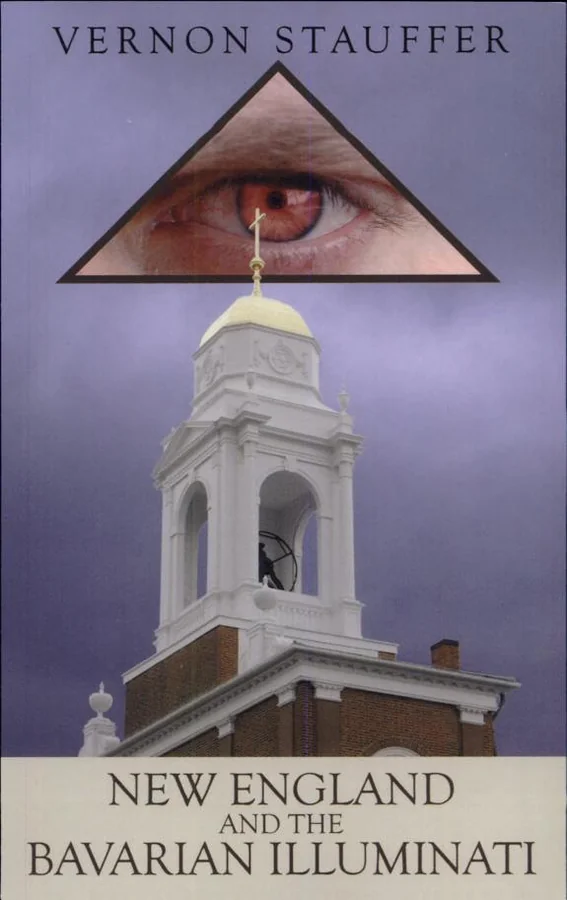
New England and the Bavarian Illuminati
Stauffer's examination of the Illuminati panic in post-Revolutionary America is a sober, academic corrective to sensationalist accounts. He demonstrates a keen eye for the rhetorical strategies employed by Federalist clergymen, particularly in New England, who weaponized the specter of the Bavarian Illuminati against the Jeffersonian Republicans. The book excels in its detailed dissection of sermons and political pamphlets, revealing how imported European anxieties about secret societies were grafted onto American partisan struggles. A notable strength is Stauffer's patient tracing of how figures like Jedidiah Morse amplified these fears. However, the dense academic prose, while precise, can occasionally obscure the narrative thrust for readers less familiar with the period's intricate political landscape. The passage detailing the specific accusations leveled against Jeffersonians, linking them to Masonic lodges and alleged Illuminati infiltration, remains particularly vivid in its illustration of the era's paranoia. It is a valuable, if demanding, contribution to understanding the anxieties shaping early American identity.
📝 Description
83
Vernon Stauffer's 1918 study examines the 1790s American "Illuminati scare."
Vernon Stauffer's "New England and the Bavarian Illuminati" analyzes the late 18th-century American panic surrounding the "Illuminati scare." This is not a sensational account but a critical historical study. Stauffer traces how fears about a clandestine Bavarian society were brought to and adapted by various groups in the young United States.
The late 1790s in America saw intense political divisions. The "Illuminati scare" became a strong talking point, mostly used by Federalists against their Democratic-Republican opponents. Stauffer details how this European conspiracy theory found fertile ground in New England. Clergy and political leaders there worried about the secular and equalizing ideas of the Jeffersonians. The book places this panic alongside wider fears of French revolutionary influence and threats to the social order.
Stauffer's work unpacks the idea of "conspiracy theory" as a political tool. It shows how societal anxieties were projected onto an unseen enemy. The "Bavarian Illuminati" became a symbol for radicalism, atheism, and social upheaval. Stauffer analyzes the language used by figures like Jedidiah Morse, who spread these fears. He reveals how unsubstantiated claims gained acceptance in certain communities.
This study places the "Illuminati scare" within the context of anxieties about secret societies and their perceived influence on public life. While Stauffer focuses on the political exploitation of these fears in early America, the book touches upon the historical suspicion directed at groups like the Bavarian Illuminati. It examines how the idea of a hidden, subversive organization could be used to discredit political opponents and reinforce existing social hierarchies, particularly in the context of anxieties surrounding the French Revolution and its perceived impact on American society.
💡 Why Read This Book?
• Understand the specific anxieties surrounding the "Illuminati scare" in the 1790s, learning how European conspiracy theories were adapted to American politics, a concept central to understanding early partisan rhetoric. • Analyze the rhetorical tactics used by figures like Jedidiah Morse, gaining insight into how fear of secret societies was employed to discredit political opponents, particularly the Democratic-Republicans. • Grasp the historical linkage between religious anxieties and political discourse in New England, recognizing how fears of secularism and radicalism fueled the panic around the Bavarian Illuminati.
⭐ Reader Reviews
Honest opinions from readers who have explored this book.
❓ Frequently Asked Questions
What was the "Illuminati scare" in New England?
The "Illuminati scare" was a period in the late 1790s, particularly acute in New England, where Federalists and clergy feared that the Bavarian Illuminati, a European secret society, was secretly influencing American politics and undermining religious and social order through the Democratic-Republicans.
Who were the main proponents of the Illuminati conspiracy theory in America?
Key figures included Federalist politicians and, notably, New England clergy such as Jedidiah Morse. They used sermons and public addresses to link the Jeffersonian Democrats with the alleged subversive aims of the Bavarian Illuminati.
What was the connection between the Illuminati and the Democratic-Republicans?
According to the conspiracy theorists, the Democratic-Republicans were seen as agents of the Illuminati, promoting radical, anti-religious, and anti-government ideas associated with the European secret society, particularly influenced by the French Revolution.
When was the Bavarian Illuminati founded?
The Bavarian Illuminati was founded in Bavaria (part of modern-day Germany) on May 1, 1776, by Adam Weishaupt.
Did the Bavarian Illuminati actually exist in America?
While the Bavarian Illuminati existed in Europe, there is no credible historical evidence that it established a formal presence or directed political activities in the United States during the 1790s. The "scare" was largely a product of political rhetoric and imported fears.
What historical period does Stauffer's book primarily cover?
The book primarily covers the late 18th century in America, focusing specifically on the years surrounding the "Illuminati scare" in the 1790s, a period of intense political division between Federalists and Democratic-Republicans.
🔮 Key Themes & Symbolism
Political Rhetoric as Weapon
The work dissects how the idea of the Bavarian Illuminati was employed not as a genuine threat assessment, but as a potent rhetorical device. Federalists, particularly clergy in New England, seized upon this imported European conspiracy theory to demonize their political opponents, the Democratic-Republicans. This theme highlights the construction of an external enemy to consolidate internal political power and discredit opposing ideologies, showing how fear of radicalism and atheism was projected onto the Jeffersonians.
Imported European Anxieties
Stauffer illustrates the transmission of European intellectual and social anxieties to the American continent. The fear of secret societies like the Illuminati, which emerged in Bavaria in 1776, became a lens through which Americans viewed the destabilizing potential of the French Revolution and its perceived influence. This theme underscores how nascent American identity grappled with external ideological threats and the desire to maintain social and religious order.
The Role of Clergy in Public Discourse
A significant focus is placed on the active participation of New England clergy in propagating the Illuminati scare. Figures like Jedidiah Morse used their pulpits and publications to equate Democratic-Republicanism with the supposed subversive aims of the Illuminati. This theme examines the intersection of religious authority and political commentary in the early republic, demonstrating how theological concerns were marshaled to influence secular political outcomes.
Conspiracy as Explanation
The book explores the psychological and social appeal of conspiracy theories as explanatory frameworks during times of uncertainty. Faced with rapid political change, partisan division, and the perceived irreverence of opposing factions, the Illuminati narrative provided a seemingly coherent, albeit unfounded, explanation for complex societal shifts. This theme looks at the human tendency to seek hidden causes for perceived disorder.
💬 Memorable Quotes
Direct passages from the work, attributed to the author.
“Fear of the s...”
— This fragment suggests the original text likely elaborated on the specific fears the Federalists harbored regarding the Democratic-Republicans, linking them to perceived threats like social upheaval, secularism, or the influence of the French Revolution, all attributed to the Illuminati.
“The work explores how European anxieties about secret societies were transplanted to American soil.”
— This interpretation highlights Stauffer's focus on the transmission of fears. The Bavarian Illuminati, a European phenomenon, became a symbol for perceived threats within the United States, demonstrating how external concerns shaped internal political discourse.
“The clergy of New England played a significant role in amplifying the Illuminati panic.”
— This emphasizes the specific demographic and geographic focus of the book's analysis. It points to the crucial role religious leaders in a particular region played in disseminating and validating conspiracy theories during the late 18th century.
“Partisan struggles found a convenient, albeit illusory, enemy in the specter of the Illuminati.”
— This captures the essence of the book's thesis: the Illuminati served as a projection for political adversaries. The 'enemy' was less a real organization and more a construct used to rally support and demonize opposition during the intense Federalist-Democratic-Republican conflicts.
💡 Key Ideas
Editorial paraphrase of the work's core concepts — not direct quotes.
The Federalists, especially the clergy, found in the Bavarian Illuminati a convenient explanation for the Democrats' supposed irreverence.
This paraphrased concept captures the core argument: the 'Illuminati scare' wasn't about the actual Illuminati, but a political tool used by Federalists to label and discredit their opponents by associating them with radical, anti-establishment ideas.
🌙 Esoteric Significance
Tradition
While not strictly an esoteric text itself, "New England and the Bavarian Illuminati" engages with the historical periphery of Hermetic and Enlightenment-era secret societies. It examines how the *idea* of the Illuminati, a group influenced by Enlightenment rationalism and potentially Gnostic or Hermetic ideals concerning hidden knowledge, was perceived and distorted. The work fits within the study of how esoteric concepts, once internalized or mythologized, can become potent forces in secular political and social discourse.
Symbolism
The primary symbol discussed is the "Bavarian Illuminati" itself, which functions as a potent signifier for hidden, malevolent forces orchestrating societal change. It symbolizes the perceived threat of radicalism, atheism, and subversion against traditional religious and political structures. The association with Masonic lodges, though historically tenuous in this context, also invoked symbols of secrecy, initiation, and hidden influence common in various esoteric traditions.
Modern Relevance
Contemporary discussions surrounding political polarization, the spread of misinformation, and the use of conspiracy theories in public discourse echo the dynamics Stauffer analyzes. Thinkers and practitioners interested in the historical roots of modern conspiracy culture, the psychology of belief, and the manipulation of fear in politics find this work relevant. It informs studies on how perceived esoteric threats can be weaponized in secular arenas.
👥 Who Should Read This Book
• Students of early American history, particularly those examining the Federalist era and the development of partisan politics, will gain a nuanced understanding of the period's anxieties. • Researchers of conspiracy theories and political rhetoric will find a detailed case study on the construction and dissemination of unfounded fears in a historical context. • Scholars of the history of secret societies and their perceived influence will appreciate the examination of how European esoteric concepts were adapted and feared in the American landscape.
📜 Historical Context
The late 1790s in the United States were marked by profound political polarization between the Federalists and the Democratic-Republicans. Amidst anxieties fueled by the French Revolution and its radicalism, fears of secret societies infiltrating American institutions began to circulate. Vernon Stauffer's work places the "Illuminati scare" within this context, demonstrating how the Bavarian Illuminati, founded in 1776 by Adam Weishaupt, became a potent symbol for subversive forces. Federalists, particularly the clergy in New England, seized upon this imported conspiracy theory, notably exemplified by figures like Jedidiah Morse, to denounce the perceived secular and egalitarian tendencies of their opponents. This panic served as a significant rhetorical weapon, reflecting a broader intellectual current concerned with maintaining social order against perceived threats of atheism and radical democracy. The reception was largely confined to academic circles analyzing early American political discourse, rather than widespread public acceptance of the conspiracy itself.
📔 Journal Prompts
The Federalist use of the Bavarian Illuminati as a political weapon.
Jedidiah Morse's sermons and their role in the Illuminati scare.
The concept of "irreverent habits" attributed to the Jeffersonians.
The transmission of European anxieties to post-Revolutionary America.
The fear of radicalism as a driver of conspiracy narratives.
🗂️ Glossary
Bavarian Illuminati
A historical secret society founded in Bavaria in 1776 by Adam Weishaupt. In the context of the book, it became a symbol used by American Federalists to represent perceived radical, subversive, and anti-religious forces allegedly influencing the Democratic-Republican party.
Federalists
One of the two major political factions in the early United States. Generally favored a strong central government, commercial interests, and closer ties with Britain. Opposed the Democratic-Republicans.
Democratic-Republicans
The opposing political faction to the Federalists. Advocated for states' rights, agrarian interests, and generally favored ties with France. Led by figures like Thomas Jefferson.
Illuminati Scare
A period of intense fear and suspicion in the United States, particularly in New England during the late 1790s, fueled by claims that the Bavarian Illuminati was secretly operating within the country and influencing politics.
Jedidiah Morse
A prominent Congregationalist minister in New England who became a leading voice in propagating fears about the Illuminati, linking the society to the Democratic-Republicans in his sermons and writings.
New England Clergy
The religious leaders of New England, many of whom held strong Federalist sympathies. They played a significant role in the "Illuminati scare," using their influence to promote fears of subversion and link them to political opponents.
Conspiracy Theory
An explanation for an event or situation that invokes a conspiracy by powerful and sinister groups, often political in nature. Stauffer analyzes how this framework was applied to the "Illuminati scare."
This book appears in 1 collection
🔮 Readers Also Liked
Browse all →




![[Comte de Gabalis. English]. The diverting history of the Count de Gabalis: containing, I. An account of the Rosicrucian doctrine of spirits, viz. sylphs, salamanders, gnomes, and d¶mons; ... To which is prefix'd, Monsieur Bayle's account of this work, ... 1714](/img/thumb/comte-de-gabalis-english-the-diverting-history-of-the-count-de-gabalis-containing-i-an-account-of-the-rosicrucian-doctrine-of-spirits-viz-sylphs-salamanders-gnomes-and-d-mons-to-which-is-prefix-d-mons.webp)

From the “Illuminati” Collection
View all →







More Free Freemasonry & Secret Societies Books
View all →