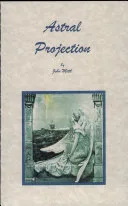
Astral Projection (Modus Operandi)
 79
79

Astral Projection (Modus Operandi)
John Mittl’s Astral Projection (Modus Operandi) offers a refreshingly direct manual for a notoriously elusive practice. Unlike many contemporary works that rely on vague spiritualism, Mittl’s 1993 publication attempts a pragmatic, almost technical, breakdown of astral projection. The strength lies in its procedural focus; it’s less about lofty pronouncements and more about the ‘how-to.’ A particular passage detailing preparatory mental exercises, while brief, exemplifies this no-nonsense approach. However, the work’s limitation is its somewhat dated presentation and the inherent difficulty in verifying the efficacy of its specific techniques without extensive personal experimentation. The author’s assertion of learning 'deep secrets' feels like a promise that the subsequent methodology doesn't fully deliver on, though the foundational instruction is sound. Mittl provides a functional framework for exploring the astral, albeit one that requires significant student effort to realize its potential.
📝 Description
79
John Mittl published Astral Projection (Modus Operandi) in March 1993, detailing a structured system for out-of-body experiences.
Astral Projection (Modus Operandi), released in March 1993, presents a methodical system for achieving out-of-body experiences. Author John Mittl outlines a step-by-step process designed for serious students of occultism. The book focuses on practical instruction, aiming to demystify astral projection and make it attainable for those dedicated to spiritual development. It is written for the active practitioner, not the passive observer.
Mittl's work centers on the idea of the astral body as a separate vehicle for consciousness that can travel independently. He stresses that astral projection is a learnable skill acquired through disciplined practice, not merely an innate psychic talent. The book also touches upon a structured, unseen cosmology, suggesting a 'spiritual phase of existence' accessible through these projected states. The manual offers a direct path into teachings that were once more guarded.
Emerging in the 1990s, a period of sustained interest in esoteric subjects, Mittl's work connects to a long-standing Western esoteric tradition emphasizing direct experiential knowledge. While distinct from early 20th-century Theosophy or Golden Dawn ceremonial magic, it follows a lineage focused on the practical application of occult teachings. The book appeared at a time when printed materials began to offer more accessible routes into previously secretive occult lore.
💡 Why Read This Book?
• Gain a concrete, step-by-step method for astral projection directly from John Mittl’s 1993 publication, focusing on practical application rather than abstract theory. • Understand the author’s specific concept of the ‘astral body’ as a tangible vehicle for consciousness, enabling exploration beyond the physical plane. • Learn Mittl’s approach to accessing the 'spiritual phase of existence,' offering a structured way to gain insight into non-physical realms through disciplined practice.
⭐ Reader Reviews
Honest opinions from readers who have explored this book.
❓ Frequently Asked Questions
What is the primary goal of John Mittl's 'Astral Projection (Modus Operandi)'?
The primary goal is to provide a clear, instructional method for sincere students to learn how to project their astral body and explore the spiritual dimensions of existence.
When was 'Astral Projection (Modus Operandi)' first published?
The book was first published in March 1993, reflecting esoteric interests and publishing trends of that era.
Is 'Astral Projection (Modus Operandi)' suitable for complete beginners?
Yes, the author claims it is a simple method of instruction designed for the sincere student, implying it's accessible for those new to the specific techniques presented.
What kind of insights does the book promise?
It promises deeper insight into the spiritual phase of existence and the non-physical realm, gained through direct experience of astral projection.
Does the book discuss different types of astral bodies?
The book focuses on the projection of 'his astral body,' implying a singular focus on the primary vehicle for such experiences as taught by the author.
What does 'Modus Operandi' mean in the context of this book?
'Modus Operandi' refers to the specific method or system of operation that John Mittl outlines for achieving astral projection.
🔮 Key Themes & Symbolism
The Astral Body as a Vehicle
Central to Mittl's approach is the concept of the astral body as a distinct, non-physical vehicle capable of independent movement and perception. The work posits that this 'astral body' is not merely a metaphor but a tangible aspect of consciousness that can be deliberately separated from the physical form. The focus is on understanding its nature and learning to consciously direct it, enabling exploration beyond the confines of the physical world. This perspective aligns with various esoteric traditions that posit multiple bodies or planes of existence for the human consciousness.
Systematic Instruction for Projection
The 'Modus Operandi' title itself signifies the book's emphasis on a specific, learnable procedure. Mittl aims to explain astral projection by presenting it as a skill honed through diligent practice and adherence to a defined set of techniques. This contrasts with approaches that might emphasize spontaneous psychic gifts or complex ritual. The work is structured to guide the 'sincere student' through progressive stages, suggesting that consistent application of the method is key to achieving projection and subsequent spiritual insights.
Direct Experience of Spiritual Realms
Beyond the mechanics of projection, the book aims to facilitate direct experiential contact with what it terms the 'spiritual phase of existence' and the broader 'realm.' This implies a reality that exists parallel to, or encompasses, the physical world, accessible through altered states of consciousness facilitated by astral travel. Mittl suggests that such direct perception offers a unique form of knowledge, providing insights that are unavailable through conventional sensory experience or purely intellectual study.
The Occult Student's Path
Mittl frames his work within the context of occult study, addressing the 'sincere student' specifically. This framing suggests a disciplined, dedicated approach to spiritual exploration, differentiating it from casual interest. The book is presented as a tool for those committed to advancing their understanding of esoteric principles through practical application and direct investigation of the unseen worlds, reinforcing the idea of a structured path of development for the occult practitioner.
💬 Memorable Quotes
Direct passages from the work, attributed to the author.
“a simple method of instruction whereby the sincere student of the occult may readily learn to project his astral body”
— This highlights the book's core promise: providing an accessible, systematic technique for achieving out-of-body experiences, aimed at dedicated practitioners.
“learn some of the deep secrets of the spiritual phase of existence”
— This points to the ultimate goal of the practice as presented by Mittl – uncovering hidden knowledge within the non-physical dimensions of reality.
“gain a deeper insight into the realm”
— This emphasizes the experiential and perceptual benefits of astral projection, suggesting it offers a unique understanding of existence beyond the physical.
“the sincere student of the occult”
— This defines the intended audience, indicating the book is for those genuinely committed to esoteric studies and practices, not casual dabblers.
“project his astral body”
— This is the central action Mittl's method aims to teach, referring to the conscious separation and directed movement of a non-physical aspect of the self.
🌙 Esoteric Significance
Tradition
Mittl's work draws from the broader Western Esoteric Tradition, particularly its focus on consciousness exploration and subtle bodies. While not explicitly Hermetic or Kabbalistic, its emphasis on a structured method for projecting the 'astral body' aligns with concepts found in Theosophy and later New Age spiritualism. It departs from purely philosophical or ritualistic approaches by prioritizing a direct, operational 'modus operandi' for experiential learning, making it a practical manual for those seeking to engage with non-physical planes.
Symbolism
The primary symbolic element is the 'astral body' itself, representing the soul's vehicle for navigating non-physical dimensions. The 'realm' signifies the spiritual or etheric planes of existence, often depicted in esoteric literature as layered realities. The act of 'projection' symbolizes liberation from physical limitations and the attainment of a higher state of perception, allowing for direct communion with spiritual forces or insights.
Modern Relevance
Contemporary practices in consciousness studies, lucid dreaming, and certain forms of neo-shamanism echo Mittl's focus on direct experiential exploration of non-ordinary reality. While specific methodologies evolve, the core principle of using disciplined techniques to access altered states for insight remains relevant. Modern practitioners interested in the mechanics of out-of-body experiences may find Mittl's systematic approach a foundational or comparative text to contemporary guides.
👥 Who Should Read This Book
• Aspiring practitioners of astral projection seeking a methodical, instructional guide rather than purely theoretical discourse. • Students of Western Esotericism interested in practical techniques for consciousness expansion beyond traditional meditation or ritual. • Individuals researching the history and development of out-of-body experience literature from the late 20th century.
📜 Historical Context
John Mittl’s Astral Projection (Modus Operandi), published in March 1993, emerged during a period of sustained interest in esoteric literature, following the New Age boom. While not directly tied to the ceremonial magic revival of the late 19th and early 20th centuries initiated by groups like the Hermetic Order of the Golden Dawn, it speaks to a continuous lineage of practical occultism focused on direct experiential knowledge. The 1990s saw a proliferation of printed guides offering structured approaches to subjects previously considered arcane. Mittl’s work can be seen as part of this trend, providing a manual for a practice that had been explored by figures like Sylvan Muldoon and Oliver Fox in earlier decades. Unlike the highly ritualized systems, Mittl’s 'modus operandi' suggests a more direct, perhaps less symbolically dense, method. The book’s reception was likely within the existing community of occultists and spiritual explorers, offering a specific technique amidst a diverse range of spiritual inquiry.
📔 Journal Prompts
The 'astral body' as described in Mittl's modus operandi.
Clarifying the distinction between the 'spiritual phase of existence' and the physical world.
Your personal readiness for the 'simple method of instruction' presented.
The potential 'deep secrets' accessible through projection.
Interpreting the purpose of the 'realm' in relation to physical life.
🗂️ Glossary
Astral Body
A non-physical vehicle of consciousness, distinct from the physical body, believed to be capable of independent movement and perception in subtle realms.
Modus Operandi
Latin for 'method of operation'; in this context, it refers to the specific, systematic procedure or technique Mittl outlines for achieving astral projection.
Occult Student
An individual dedicated to the study and practice of esoteric knowledge and hidden arts, seeking understanding beyond conventional science or religion.
Spiritual Phase of Existence
A dimension or level of reality considered to be non-physical, characterized by spiritual energies and consciousness, accessible through practices like astral projection.
The Realm
A general term used in the book to denote the non-physical planes or spiritual dimensions that can be explored through astral projection.
Projection
The act of consciously directing one's astral body or consciousness outside of the physical body to explore other states or locations.
Sincere Student
An individual who approaches the study of the occult with genuine dedication, seriousness, and a commitment to learning and practice.