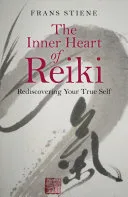
The Inner Heart of Reiki
 72
72

The Inner Heart of Reiki
Frans Stiene’s *The Inner Heart of Reiki* attempts to recalibrate the reader’s understanding of a globally popular practice. By focusing on the spiritual essence, Stiene challenges the prevalent perception of Reiki as a mere hands-on healing technique. His insistence on exploring the original teachings, particularly those influenced by Mikao Usui’s philosophy, is commendable. The work’s strength lies in its scholarly yet accessible approach, grounding the practice in its cultural origins. However, the book occasionally feels more like an extended essay than a fully developed argument, particularly in its treatment of Western adaptations. A specific passage discussing the Five Principles, where Stiene argues for their interpretation as meditative anchors rather than simple affirmations, highlights the book's potential. It pushes practitioners to question their assumptions. Ultimately, *The Inner Heart of Reiki* is a valuable corrective for those seeking depth in their practice, though it may leave some readers wanting more practical integration exercises.
📝 Description
72
Frans Stiene's 2015 book, The Inner Heart of Reiki, examines Reiki's spiritual underpinnings beyond superficial healing.
The Inner Heart of Reiki, published in 2015, scrutinizes the spiritual foundations of the Reiki system, moving past simple healing methods to its philosophical and ethical aspects. Frans Stiene, a known authority, presents Reiki not just as a technique but as a spiritual discipline with roots in Japanese culture and thought. The book aims to place Reiki in its original context, underscoring its initial purpose and deeper meanings for today's students and teachers. It covers the main ideas and how to use them in everyday life, aiming for a more complete grasp of the practice.
This book is for Reiki practitioners and instructors wanting a deeper understanding of its spiritual teachings. It is also useful for those interested in the philosophy of energy healing and comparing spiritual ideas. Individuals who want to go beyond basic techniques and look into the ethical and mindful parts of practice will find it especially helpful. It speaks to people who wonder about how spiritual practices change and want to connect with their original essence.
This work engages with the tradition of spiritual practices that have been adapted and spread globally, often losing their original cultural and philosophical context. Stiene's book attempts to reconnect modern Reiki practitioners with the system's origins under Mikao Usui and its links to broader Japanese spiritual philosophies like Shinto and Buddhism. It addresses the common trend of commercialization and Westernization in spiritual disciplines, advocating for a return to the foundational principles as they were understood in early 20th-century Japan. The book seeks to ground contemporary understanding within its historical and cultural background.
💡 Why Read This Book?
• Learn how the Five Principles of Reiki, as presented in the book, can function as meditative anchors for daily spiritual practice, offering a deeper connection than simple affirmations. • Understand the historical context of Reiki’s development under Mikao Usui, providing a critical perspective on its Westernization and commercialization that goes beyond generic historical accounts. • Explore the concept of the 'inner heart' of Reiki, discovering how to cultivate an authentic spiritual practice rooted in intention and self-awareness, as detailed in the book's core philosophical arguments.
⭐ Reader Reviews
Honest opinions from readers who have explored this book.
❓ Frequently Asked Questions
What is the primary focus of 'The Inner Heart of Reiki' by Frans Stiene?
The book focuses on the spiritual teachings and philosophical underpinnings of the Reiki system, aiming to deepen practitioners' understanding beyond basic techniques and connect them with its original intent as taught by Mikao Usui.
When was 'The Inner Heart of Reiki' first published?
The book was first published on October 30, 2015, marking its contribution to the discourse on Reiki during a period of widespread global adoption.
Who is Frans Stiene and what is his background in Reiki?
Frans Stiene is a recognized authority and educator in the field of Reiki, known for his scholarly approach that emphasizes the spiritual and philosophical dimensions of the practice, tracing its roots back to Japanese traditions.
How does this book differ from other Reiki literature?
It distinguishes itself by prioritizing the spiritual core and original teachings of Reiki, rather than focusing solely on healing techniques or Western adaptations, offering a critical perspective on the practice's evolution.
Is 'The Inner Heart of Reiki' suitable for beginners?
While it offers foundational insights, the book is best suited for practitioners and teachers who already have some familiarity with Reiki and are seeking to deepen their spiritual understanding and practice.
What specific spiritual traditions influence the concepts presented in the book?
The book draws heavily on Japanese spiritual philosophies and the teachings of Mikao Usui, offering an interpretation of Reiki that is rooted in its original cultural and historical context.
🔮 Key Themes & Symbolism
Spiritual Core of Reiki
This theme looks at the original spiritual intent behind Reiki, as established by Mikao Usui. It positions Reiki not merely as a method for physical healing but as a comprehensive spiritual discipline aimed at personal growth and enlightenment. Stiene argues for a return to these foundational teachings, emphasizing mindfulness, ethical conduct, and inner transformation as central to the practice, moving away from purely therapeutic or superficial interpretations that gained prominence in Western adaptations.
The Five Principles as Anchors
The book reinterprets the Five Principles of Reiki (often translated as 'Just for today...', 'Do not worry...', etc.) not as simple affirmations or rules, but as profound meditative anchors. Stiene suggests viewing them as tools for cultivating present moment awareness, emotional balance, and spiritual discipline. This perspective encourages practitioners to integrate these principles into their daily lives as a means of self-reflection and ethical guidance, fostering a deeper connection to the practice's spiritual roots.
Authenticity in Practice
A central theme is the importance of maintaining the authenticity of Reiki practice amidst its global proliferation and diversification. Stiene critiques the tendency for spiritual systems to become diluted or commercialized, advocating for a return to the essence of what was taught. He stresses that true Reiki practice involves cultivating the 'inner heart' – sincerity, intention, and a deep commitment to spiritual development, rather than focusing solely on external techniques or perceived outcomes.
Reiki and Japanese Philosophy
This theme explores the connections between Reiki and the broader field of Japanese spiritual thought, including Shinto and Buddhist influences. Stiene highlights how Mikao Usui's teachings are embedded within a specific cultural and philosophical context. Understanding these roots provides practitioners with a richer appreciation for the nuances of Reiki, encouraging a more informed and respectful approach that honors its origins and the philosophical underpinnings of its founder's vision.
💬 Memorable Quotes
Direct passages from the work, attributed to the author.
“The system of Reiki is a spiritual practice, not a therapy.”
— This statement directly challenges the common perception of Reiki as primarily a healing modality, asserting its identity as a path for spiritual development and self-awareness.
“The Five Principles are not commandments, but invitations to awareness.”
— This interpretation reframes the Reiki Precepts from rigid rules into gentle prompts for self-reflection and mindfulness, encouraging a more integrated and less judgmental approach to their practice.
“The 'inner heart' is where the true practice resides, not in the hands.”
— This highlights the importance of intention, consciousness, and the practitioner's internal state as the source of authentic Reiki energy, rather than focusing solely on the physical act of giving a treatment.
“We must return to the roots to understand the tree.”
— This metaphor emphasizes the necessity of studying the origins and foundational teachings of Reiki to truly grasp its depth and significance, advocating for historical and philosophical exploration.
“The practice of Reiki is a way of life, not just a technique.”
— This underscores that Reiki's impact extends beyond the treatment room, suggesting that its principles and ethos should permeate all aspects of a practitioner's daily existence for holistic spiritual growth.
🌙 Esoteric Significance
Tradition
The work aligns with the esoteric interpretation of Japanese spiritual traditions, particularly those influenced by Shinto and Buddhist meditative practices. While not strictly adhering to Western esoteric lineages like Hermeticism or Kabbalah, it shares their focus on inner transformation, spiritual discipline, and the cultivation of consciousness. Stiene's approach emphasizes the practical application of spiritual principles in daily life, a common thread in many esoteric paths, offering a unique lens on energy work derived from a non-Western source.
Symbolism
Key symbols explored include the 'inner heart,' representing the core intention and spiritual essence of the practitioner, and the Five Principles, which function as symbolic anchors for mindfulness and ethical conduct. While Reiki itself is often seen symbolically as a conduit for universal life force, Stiene focuses on the symbolic meaning derived from the philosophical interpretation of Usui's teachings, emphasizing inner states over external energetic phenomena.
Modern Relevance
Contemporary thinkers and practitioners in fields like mindfulness-based stress reduction (MBSR) and holistic wellness are increasingly seeking deeper philosophical grounding for their practices. Stiene's work provides a valuable resource for those looking to integrate spiritual depth into secular or secularized practices. His emphasis on ethical conduct and mindful living speaks to modern concerns about the integration of spiritual values into everyday life and professional practice.
👥 Who Should Read This Book
['• Dedicated Reiki practitioners and teachers: Those who feel their practice has become routine or technique-focused and wish to reconnect with its spiritual depth and original teachings.', '• Students of comparative spirituality: Individuals interested in exploring the philosophical underpinnings of healing traditions and understanding how spiritual practices evolve across cultures.', '• Mindfulness and meditation enthusiasts: People seeking to deepen their contemplative practice by exploring the ethical and spiritual dimensions of energy work rooted in Japanese traditions.']
📜 Historical Context
Published in 2015, *The Inner Heart of Reiki* emerged in a global spiritual marketplace where Reiki had become widely adopted, often stripped of its original Japanese cultural and philosophical context. Frans Stiene's work positions itself as a critical intervention, urging practitioners and teachers to reconnect with the system's spiritual roots as established by Mikao Usui in early 20th-century Japan. This period saw a surge in Western interest in Eastern spiritual practices, sometimes leading to syncretism or commercialization. Stiene's approach can be seen as a counter-movement, echoing the scholarly work of figures like Tadao Yamaguchi who also championed original Japanese practices. While not facing overt censorship, the book implicitly engages with the widespread tendency to simplify or alter spiritual traditions for Western audiences, aiming to restore a more nuanced understanding of Reiki's ethical and contemplative dimensions.
📔 Journal Prompts
The Five Principles as daily meditative anchors: How can 'Do not worry' be practiced as an act of present-moment awareness today?
Reflecting on the 'inner heart' of your Reiki practice: What intention guides your energy work beyond the physical act?
Mikao Usui's legacy: How does understanding Reiki's origins in early 20th-century Japan inform your current practice?
The spiritual vs. therapeutic: Where do you see the balance in your personal Reiki journey?
Authenticity in practice: How can you embody the core spiritual teachings of Reiki more fully in your daily life?
🗂️ Glossary
Reiki
A Japanese word commonly translated as 'universal life force energy.' In practice, it refers to a system of spiritual healing and personal development founded by Mikao Usui.
The Five Principles (Gokai)
Ethical guidelines or spiritual precepts associated with the Reiki system, often presented as 'Just for today...' statements focusing on gratitude, worry, anger, work, and compassion.
Inner Heart
A concept emphasizing the core spiritual essence, intention, and sincerity behind the practice of Reiki, distinguishing it from mere technique or external application.
Mikao Usui
The founder of the Usui Reiki Ryoho system, credited with rediscovering and formalizing Reiki healing practices in early 20th-century Japan.
Spiritual Practice
An activity or discipline undertaken with the aim of spiritual growth, self-awareness, and connection to a higher or deeper reality, as opposed to purely physical or therapeutic goals.
Usui Reiki Ryoho
The original name for the system of Reiki founded by Mikao Usui, emphasizing a holistic approach to mind, body, and spirit.
Meditative Anchor
A concept used to describe how the Five Principles can serve as focal points for mindfulness and present-moment awareness during meditation or daily life.