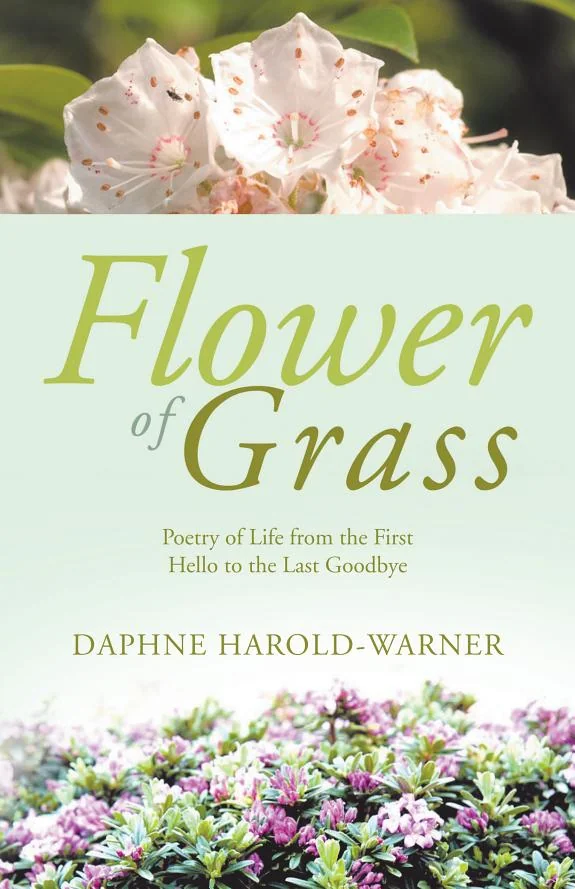
Flower of Grass
 82
82

Flower of Grass
Daphne Harold-Warner’s Flower of Grass presents a series of poetic meditations on the human condition, often rooted in personal memory and relational dynamics. The strength of the collection lies in its unvarnished portrayal of emotional landscapes. Harold-Warner excels at capturing the quiet poignancy of remembered moments, particularly in poems that trace the long arc of relationships, such as the enduring connection described in 'Witnesses'. The work's primary limitation, however, is a certain unevenness in its thematic development; while the intent to explore universal travail is clear, some poems feel more like personal reflections than universally accessible insights.
A standout passage occurs when the speaker reflects on how a single individual can irrevocably alter the course of one's life, a concept Harold-Warner articulates with a delicate touch. The collection offers moments of genuine emotional clarity, though at times it leans into generalized sentiments about fortune and misfortune. Ultimately, Flower of Grass offers a sincere, if sometimes familiar, exploration of life's inherent dualities.
📝 Description
82
Daphne Harold-Warner's 2012 collection, Flower of Grass, examines human experience through verse.
Flower of Grass, published in 2012, is a collection of poems by Daphne Harold-Warner. The poems cover the range of human emotions, from happiness and connection to sorrow and regret. Harold-Warner captures brief moments and lasting memories, considering how people influence each other throughout life.
The work is known for its direct emotional honesty and its focus on the inner lives of its subjects. It will appeal to readers who value lyrical examinations of the human condition. The collection is particularly suited for those interested in poetry that looks at personal relationships, the passing of time, and the gradual changes in perspective that come with age and experience.
Readers seeking verses that provide comfort or recognition in shared human difficulties will find resonance here. It is for the thoughtful reader who finds significance in both the common and uncommon events of life. The book emerged during a time when introspective and emotionally open poetry continued to attract readers.
While not explicitly tied to a specific esoteric school, Flower of Grass resonates with traditions that find spiritual depth in the natural world and everyday life. The concept of 'witnesses' as observers and preservers of memory echoes ideas of interconnectedness and the subtle energies that bind individuals across time. Harold-Warner's focus on finding profound meaning in common elements, like a 'flower of grass,' aligns with contemplative practices that seek the sacred within the mundane, suggesting a universal presence accessible through careful observation and inner reflection.
💡 Why Read This Book?
• Gain an appreciation for the concept of 'witnesses' as presented in the poem of that name, understanding how specific individuals serve as anchors in our personal histories. • Explore the nuanced portrayal of love gained and lost, finding solace in Harold-Warner's candid verses that acknowledge the pain alongside the memory of connection. • Reflect on the profound impact of seemingly ordinary lives and interactions, as highlighted by the central metaphor of the 'flower of grass' and its inherent significance.
⭐ Reader Reviews
Honest opinions from readers who have explored this book.
❓ Frequently Asked Questions
When was Flower of Grass first published?
Flower of Grass by Daphne Harold-Warner was first published in March 2012, marking its entry into contemporary poetry collections.
What are the main themes in Flower of Grass?
The collection explores themes of love gained and lost, the significance of relationships across time, the impact of individual lives, and the general fortunes and misfortunes inherent in human existence.
Does the book focus on specific life events?
Yes, the poems often reflect on experiences spanning from childhood to adulthood, highlighting memories of people known throughout these stages of life.
What is the significance of the title 'Flower of Grass'?
The title suggests finding beauty and profound meaning in the commonplace, emphasizing that even humble elements of nature or life can hold significant value and symbolism.
Who is Daphne Harold-Warner?
Daphne Harold-Warner is the author of Flower of Grass, a collection of poems first published in 2012 that delves into human experiences and relationships.
Is this book considered esoteric literature?
While the book focuses on human experience and relationships rather than traditional esoteric doctrines, its introspective and symbolic nature can appeal to readers interested in metaphysical explorations of life.
🔮 Key Themes & Symbolism
Enduring Human Travail
The collection confronts the universal struggles faced by individuals, encompassing both triumphs and setbacks. Harold-Warner's verses acknowledge the inherent difficulties of human existence, the 'much travail of men and women everywhere,' without succumbing to despair. This theme offers a sense of shared experience, recognizing that the fortunes and misfortunes encountered are part of a common human inheritance across diverse lives.
The Weight of Memory
Central to the collection is the power of memory, particularly concerning relationships. Poems like 'Witnesses' highlight how individuals who have known us from childhood into adulthood remain vivid in our consciousness, even after years of separation. This underscores the idea that our past selves and the people who populate them continue to shape our present identity and emotional landscape.
The Impact of Connection
Harold-Warner explores the profound influence individuals have on one another. The poems contemplate how connections are formed, cherished, and sometimes lost, often with significant consequences. The idea that 'it takes just one person to change our lives' is a recurring motif, emphasizing the delicate interconnectedness of human lives and the potential for both profound joy and deep sorrow stemming from these bonds.
Finding Significance in the Ordinary
The title itself, 'Flower of Grass,' suggests a theme of discovering profound beauty and meaning in the seemingly mundane. The collection implies that everyday experiences, overlooked individuals, and common elements of life possess inherent value and symbolic weight. It encourages readers to look closer at their surroundings and relationships for deeper truths and affirmations.
💬 Memorable Quotes
Direct passages from the work, attributed to the author.
“These poems reflect the much travail of men and women everywhere.”
— This opening statement sets the stage for a collection that directly addresses the universal struggles and hardships inherent in the human condition, promising an exploration of shared difficulties.
“There is the experience of loved gained and love lost...”
— This highlights a core thematic concern: the duality of romantic and interpersonal connection, acknowledging both the joy of finding love and the pain associated with its absence or ending.
“...how sometimes it takes just one person to change our lives.”
— This concept underscores the significant impact individuals can have on each other's destinies, suggesting that key life changes often stem from specific relationships or encounters.
“We learn not to neglect the ones we love...”
— This points to a lesson learned through experience, emphasizing the importance of cherishing and actively maintaining relationships with loved ones to avoid future regret.
“People who know us from childhood to adulthood... we still remember.”
— This speaks to the enduring power of long-term relationships and the formation of collective memory, where individuals from different life stages remain significant figures in our personal narratives.
🌙 Esoteric Significance
Tradition
While Flower of Grass is primarily a collection of personal and observational poetry, its focus on the inner life and the symbolic weight of everyday experiences can align with certain Hermetic principles. The Hermetic tradition emphasizes understanding the self and the cosmos through correspondence and introspection. Harold-Warner's work, by exploring the 'travail' and interconnectedness of human lives, touches upon the macrocosm (universal human experience) reflected in the microcosm (individual lives and relationships).
Symbolism
The titular 'Flower of Grass' serves as a potent symbol for finding profound meaning and beauty in the overlooked and the commonplace. In esoteric thought, such symbols often represent hidden truths within the mundane. The concept of 'witnesses'—individuals who observe and remember us across time—can be interpreted as forms of spiritual anchors or record-keepers of the soul's journey through its earthly manifestations.
Modern Relevance
Contemporary mindfulness practices and therapeutic approaches that emphasize self-reflection and the significance of interpersonal connections echo themes found in Flower of Grass. Thinkers in positive psychology and narrative therapy, who explore how personal stories and relationships shape well-being, would find resonance with Harold-Warner's focus on memory, connection, and the impact of individual lives. The collection’s emphasis on finding meaning in the everyday aligns with modern desires for authenticity and groundedness.
👥 Who Should Read This Book
• Readers interested in poetry that explores the nuances of human relationships, love, and loss, seeking verses that acknowledge life's inherent difficulties with grace. • Individuals drawn to introspective works that find profound meaning in everyday experiences and the concept of enduring personal connections across time. • Those who appreciate lyrical explorations of memory and the way past relationships and encounters shape present identity and emotional landscapes.
📜 Historical Context
Flower of Grass, published in 2012, arrived in a literary landscape where confessional poetry and introspective verse continued to hold a strong presence. While not explicitly aligned with a major avant-garde movement, Harold-Warner's work shares a lineage with the personal lyricism explored by poets like Elizabeth Bishop or Mary Oliver, focusing on observation and emotional truth. The early 21st century saw a continued interest in poetry that explored individual experience and relational dynamics, often published by independent presses or university imprints. This period was also marked by robust online literary communities that provided alternative platforms for dissemination and discussion, contrasting with the more traditional review cycles dominated by established journals. The reception of such works often depended on their accessibility and emotional resonance with a readership seeking connection and reflection in their poetry.
📔 Journal Prompts
The concept of 'witnesses' in relationships across time.
Moments of love gained and love lost.
The impact of a single individual on your life's trajectory.
Reflections on the 'travail' of human existence.
Finding significance in the ordinary, like a 'flower of grass'.
🗂️ Glossary
Travail
Referring to arduous effort, toil, or suffering; in the context of the book, it encompasses the general struggles, hardships, and difficulties inherent in human existence.
Fortunes and Misfortunes
These terms describe the range of luck, success, and adversity that individuals encounter throughout their lives, reflecting the unpredictable nature of human experience.
Witnesses
In the context of the poems, 'witnesses' are individuals who observe and remember others across different stages of life, serving as keepers of personal history and connection.
Flower of Grass
A central metaphor suggesting that profound beauty, meaning, and significance can be found in the seemingly ordinary, overlooked, or humble aspects of life and nature.
Childhood to Adulthood
Refers to the entire span of a human life, from early years through maturity, highlighting the continuity and evolution of relationships and experiences over time.
Neglect
The failure to care for or pay attention to someone or something; in the book, it relates to the potential regret that arises from not cherishing or maintaining important relationships.
One Person to Change Our Lives
This phrase expresses the idea that a single individual's influence or presence can dramatically alter the course or perspective of another person's life.
This book appears in 1 collection
🔮 Readers Also Liked
Browse all →








From the “Flower of Life” Collection
View all →







More Free Occult Philosophy Books
View all →