Basics of Acupuncture
 79
79

Basics of Acupuncture
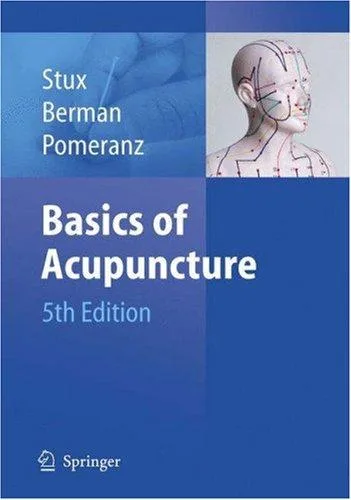
Gabriel Stux, Brian Berman, and Bruce Pomeranz’s Basics of Acupuncture presents a commendable, if somewhat dry, attempt to systematize the complex field of acupuncture for a Western audience. Its strength lies in its methodical dissection of TCM theory, particularly the discussion of channels and acupuncture points, which is rendered with clarity. The book's ambition to marry Western diagnostic paradigms with traditional Chinese concepts is evident throughout, though at times the integration feels more additive than truly synergistic. A notable limitation is the somewhat sterile presentation; the profound energetic principles of TCM are treated with a clinical detachment that may not satisfy those seeking the deeper philosophical currents. The section detailing the functional organs and their associated meridians, for instance, is factually dense but lacks the evocative language that often accompanies such discussions in more traditional texts. Ultimately, Basics of Acupuncture serves as a functional primer, a solid reference for practitioners requiring a structured understanding of the mechanics, rather than the mysteries, of the practice.
📝 Description
79
Basics of Acupuncture, published in December 2012, structures understanding and application of the practice.
Gabriel Stux, Brian Berman, and Bruce Pomeranz wrote this text to connect Western medical diagnostics with Traditional Chinese Medicine (TCM) theory. It starts with a clear overview of TCM principles, then details diagnostic methods. The book focuses on the Chinese systems of channels, functional organ networks, and identifying key acupuncture points. This work is for acupuncture practitioners and students, especially those trained in Western medicine seeking to integrate Chinese techniques. It aims to build a solid knowledge base for those interested in modern science alongside ancient healing methods.
The book appeared during a time of growing academic and clinical attention to acupuncture in Western healthcare. It built upon decades of research and practice, contributing to literature that sought to standardize and validate acupuncture's effectiveness. This period also saw an increase in clinical trials for acupuncture, partly driven by research into complementary medicine.
This book addresses acupuncture, a practice rooted in Traditional Chinese Medicine's concept of vital energy, or Qi. TCM posits that Qi flows through specific channels, influencing organ function. Imbalances in this flow are believed to cause illness. Acupuncture, therefore, seeks to restore this balance through the stimulation of precise points along these channels. While this text aims for a structured, evidence-informed approach, it engages with a healing system that has evolved over millennia, deeply intertwined with ancient Chinese philosophy and cosmology.
💡 Why Read This Book?
• Gain a foundational grasp of Traditional Chinese Medicine's theoretical framework, including concepts like Qi and meridians, as presented in the book's initial chapters, offering a structured entry point distinct from purely philosophical explorations. • Understand the diagnostic methods employed in acupuncture, as detailed in the text, providing practical insights into assessing energetic imbalances that differ from Western medical approaches. • Learn the specific Chinese systems of channels and functional organs, a core component of the book, equipping you with precise anatomical and energetic knowledge valuable for therapeutic application.
⭐ Reader Reviews
Honest opinions from readers who have explored this book.
❓ Frequently Asked Questions
When was "Basics of Acupuncture" first published?
The initial publication of "Basics of Acupuncture" by Gabriel Stux, Brian Berman, and Bruce Pomeranz was on December 6, 2012, marking its entry into the literature on integrated medicine.
What is the primary goal of "Basics of Acupuncture"?
The book aims to integrate Western medical diagnostic approaches with traditional Chinese medicine concepts, providing a structured understanding of acupuncture theory, diagnosis, and treatment methods.
What are the main components of acupuncture theory discussed in the book?
The text covers the theory of Traditional Chinese Medicine, including the concept of Qi, the system of channels (meridians), functional organ networks, and the identification and application of key acupuncture points.
Who are the authors of "Basics of Acupuncture"?
The authors are Gabriel Stux, Brian Berman, and Bruce Pomeranz, who collaborated to present a comprehensive overview of acupuncture principles.
What therapeutic methods are described in the book?
The book details treatment methods based on Western modes of diagnosis, focusing on the applications of needling and moxibustion techniques within the framework of Chinese medicine.
Is "Basics of Acupuncture" suitable for beginners?
Yes, the book is designed as a foundational text, offering a short introduction to TCM theory followed by detailed explanations of diagnostic and treatment systems, making it accessible for those new to the subject.
🔮 Key Themes & Symbolism
Integration of Medical Systems
This work critically examines the possibility of synthesizing Western medical diagnostics with the intricate theoretical framework of Traditional Chinese Medicine. It moves beyond mere juxtaposition, seeking a functional synergy where established Western diagnostic categories inform the application of ancient Chinese therapeutic modalities. The book's structure, moving from TCM theory to Western-informed treatment, exemplifies this integrative ambition, aiming to provide practitioners with a unified approach rather than separate disciplines.
Meridian and Organ Systems
A central focus is the detailed exposition of the Chinese systems of channels (meridians) and functional organs. These are presented not just as abstract concepts but as interconnected networks crucial for understanding health and disease. The book meticulously maps these pathways and their relationships to specific organs, offering a visual and conceptual guide to the energetic range of the body as understood in TCM. This forms the backbone of the diagnostic and therapeutic strategies discussed.
Acupuncture Point Efficacy
The text dedicates significant attention to the identification and application of the most important acupuncture points. It elucidates their specific locations and presumed physiological and energetic functions within the meridian system. By grounding the description of points within the broader context of TCM theory and Western diagnostic considerations, the book aims to provide a rational basis for their selection in clinical practice.
Therapeutic Modalities
Beyond theoretical constructs, the book offers practical guidance on treatment. It focuses on the methods and applications of needling and moxibustion, the primary techniques used in acupuncture. These are discussed in relation to the previously outlined diagnostic frameworks and the understanding of channel and organ systems, providing readers with actionable knowledge for therapeutic interventions.
💬 Memorable Quotes
Direct passages from the work, attributed to the author.
“The work explores the possibility of combining Western medicine with traditional Chinese concepts.”
— This foundational statement highlights the book's core objective: to create a bridge between two distinct medical paradigms, suggesting a pathway for a more holistic and integrated approach to patient care.
“A short introduction on the theory of traditional Chinese medicine is followed by a detailed account of diagnosis.”
— This sequence emphasizes a pedagogical approach that builds understanding logically, starting with foundational principles of TCM before moving to the practical application of diagnostic techniques.
“The main part focuses on the description of the Chinese systems of channels, functional organs...”
— This indicates the book's deep dive into the anatomical and energetic mapping of TCM, presenting the core theoretical constructs that underpin acupuncture practice in a systematic manner.
“...and the most important acupuncture points.”
— This points to the practical focus on specific therapeutic targets, detailing the key points used in treatment and their significance within the meridian system.
“The remainder of the book is devoted to treatment, based on western modes of diagnosis.”
— This reveals the book's unique methodology, applying traditional Chinese therapies informed by contemporary Western diagnostic reasoning, aiming for precision and efficacy.
🌙 Esoteric Significance
Tradition
While not strictly esoteric in the vein of Western Hermeticism or Kabbalah, "Basics of Acupuncture" engages with the energetic and vitalistic principles inherent in Traditional Chinese Medicine (TCM). TCM can be viewed as a sophisticated system of vitalistic philosophy and practice, focusing on the flow of Qi (life force) through meridians. The book's attempt to translate these concepts into a framework understandable via Western physiology positions it at the intersection of scientific inquiry and ancient, subtle-body traditions.
Symbolism
The core symbolism revolves around the concept of Qi, the vital energy that animates all life and flows through the body's channels (meridians). These channels are often depicted as rivers or pathways, with acupuncture points acting as gates or access points. The functional organs are not merely anatomical structures but energetic entities, interconnected in a complex web. The balance and free flow of Qi within this system symbolize health, while blockages or imbalances signify disease.
Modern Relevance
Contemporary practitioners of integrative medicine, functional medicine, and even some biohackers draw upon the principles elucidated in works like "Basics of Acupuncture." The book's emphasis on a systems-based approach to health, understanding interconnectedness, and utilizing precise points of intervention (acupuncture points) aligns with modern trends in personalized medicine and neuro-acupuncture research, which continues to explore the neurological and physiological underpinnings of these ancient practices.
👥 Who Should Read This Book
• Medical practitioners trained in Western diagnostics seeking to integrate established acupuncture techniques and theory into their clinical practice, benefiting from the book's structured approach and translation of TCM concepts. • Students of acupuncture and Traditional Chinese Medicine looking for a clear, foundational text that bridges theoretical knowledge with practical application, particularly those needing to understand the relationship between meridians and Western physiological concepts. • Researchers and academics interested in the historical and scientific integration of complementary medicine, who will find the book's methodical presentation valuable for understanding how traditional practices are analyzed and applied in contemporary healthcare settings.
📜 Historical Context
Published in December 2012, Gabriel Stux, Brian Berman, and Bruce Pomeranz's "Basics of Acupuncture" arrived at a time when acupuncture was increasingly integrated into mainstream healthcare, particularly in Western countries. This period saw a significant rise in research funding for complementary and alternative medicine (CAM), exemplified by initiatives like the National Institutes of Health's National Center for Complementary and Integrative Health (NCCIH), established in 1991. The work aimed to provide a scientifically-grounded explanation for acupuncture's efficacy, moving beyond purely traditional interpretations. It engaged with a growing academic discourse that sought to validate traditional healing practices through Western scientific methodologies, often contrasting with more spiritual or philosophical approaches to TCM. This era also witnessed debates and skepticism from certain medical establishments, making such clear, evidence-oriented texts crucial for broader acceptance and clinical application.
📔 Journal Prompts
The Chinese systems of channels and functional organs as presented in the book.
The integration of Western diagnosis with TCM theory.
Key acupuncture points and their therapeutic applications.
The concept of Qi and its flow within the meridian system.
Methods of needling and moxibustion described in the text.
🗂️ Glossary
Qi
The fundamental concept in Traditional Chinese Medicine representing vital energy or life force that flows through the body and governs all physiological and mental activities.
Meridians (Channels)
Specific pathways or channels through which Qi circulates in the body, connecting acupuncture points and influencing the function of organs and tissues.
Acupuncture Points
Specific locations on the body, typically along the meridians, where thin needles are inserted or pressure is applied to influence the flow of Qi and treat various conditions.
Functional Organs
In TCM, organs are viewed not just anatomically but as functional and energetic systems (e.g., Liver, Heart, Spleen) with specific roles in maintaining health and regulating Qi.
Moxibustion
A traditional Chinese medicine technique that involves burning dried mugwort (moxa) near the skin or on acupuncture needles to warm and stimulate specific points or areas.
TCM Theory
The theoretical framework of Traditional Chinese Medicine, encompassing concepts such as Yin and Yang, Five Elements, Qi, Blood, and the Zang-Fu organ system, used for diagnosis and treatment.
Western Diagnosis
Diagnostic methods and frameworks derived from Western scientific medicine, including physical examination, laboratory tests, and imaging, used to identify diseases and conditions.