Navigating Spiritual Depression

 73
73

Navigating Spiritual Depression
Sergio Rijo's "Navigating Spiritual Depression" offers a much-needed bridge between clinical psychology and esoteric spiritual experience. The author’s direct engagement with his own journey through what mystics call the 'dark night of the soul' lends an authentic voice to the text. His articulation of this state as a potential crucible for spiritual growth, rather than solely a pathology, is particularly compelling. He skillfully outlines how the loss of familiar spiritual anchors can paradoxically lead to a more profound connection to the ineffable. A notable strength is the integration of therapeutic insights with contemplative tradition, particularly referencing St. John of the Cross. However, the book could benefit from a more extensive exploration of diverse cross-cultural expressions of spiritual desolation beyond its Western mystical focus. Despite this, Rijo provides a compassionate and practical guide for those enduring such trials. It is a valuable resource for anyone questioning the nature of their spiritual path during times of profound doubt.
📝 Description
73
Sergio Rijo's April 2023 book reframes spiritual distress not as illness, but as a path to deeper understanding.
Published in April 2023, Sergio Rijo's Navigating Spiritual Depression moves beyond typical psychological frameworks to address profound spiritual distress. The book focuses on experiences often called the 'dark night of the soul,' suggesting these periods of existential crisis can serve as catalysts for spiritual growth. Rijo distinguishes this spiritual desolation from clinical depression, emphasizing a loss of meaning and connection.
The work is intended for those grappling with intense spiritual doubt, feelings of divine abandonment, or faith crises that disrupt their sense of purpose. It also serves as a resource for therapists, counselors, and spiritual directors who wish to better support individuals undergoing these difficult transformations. Readers interested in comparative spirituality and the phenomenology of religious experience will find the book relevant.
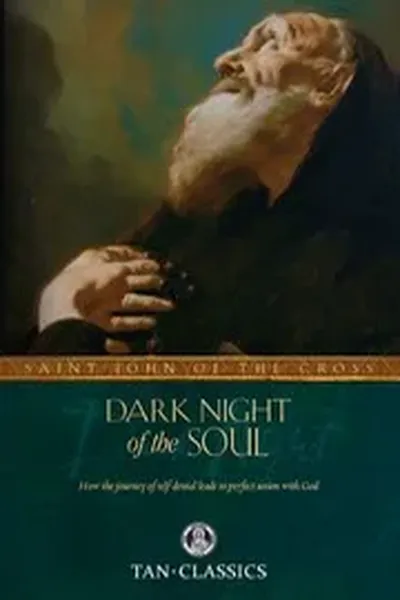
Rijo's 2023 work engages with the historical concept of the 'dark night of the soul,' a term notably articulated by the 16th-century mystic St. John of the Cross. His writings described a purification process involving spiritual trials, a lineage Rijo connects to modern experiences of spiritual desolation. By situating contemporary crises within this long-standing contemplative tradition, Rijo offers an alternative to purely clinical interpretations of depression and spiritual doubt.
💡 Why Read This Book?
• Understand the 'dark night of the soul' as a distinct spiritual crucible, not just clinical depression, learning to identify its unique spiritual markers as described by Rijo. • Discover practical therapeutic and contemplative tools for finding meaning during periods of spiritual desolation, directly applicable to your personal journey. • Gain a historical perspective on spiritual crises, referencing figures like St. John of the Cross, to contextualize your own experiences within a lineage of mystical seekers.
⭐ Reader Reviews
Honest opinions from readers who have explored this book.
❓ Frequently Asked Questions
What is the 'dark night of the soul' according to Sergio Rijo's book?
Rijo describes the 'dark night of the soul' as a profound spiritual crisis marked by a loss of connection to the divine and a questioning of one's faith and purpose, distinct from but potentially co-occurring with clinical depression.
How does Rijo's book differ from standard psychological approaches to depression?
Unlike purely clinical models, Rijo's work frames spiritual depression as a potentially transformative process with spiritual significance, drawing on mystical traditions and personal experience alongside therapeutic insights.
When was 'Navigating Spiritual Depression' first published?
The book 'Navigating Spiritual Depression: Finding Meaning in the Dark Night of the Soul' by Sergio Rijo was first published on April 18, 2023.
Who is the author, Sergio Rijo?
Sergio Rijo is presented as both an individual who has personally navigated spiritual depression and a therapist experienced in working with others facing similar challenges.
What historical figure's concept of the 'dark night' does the book reference?
The book references the concept of the 'dark night of the soul' as articulated by the 16th-century Spanish mystic St. John of the Cross.
What are the main goals for readers of 'Navigating Spiritual Depression'?
Readers aim to find meaning in periods of spiritual distress, gain practical tools for navigating these difficult times, and understand these experiences as potential catalysts for growth.
🔮 Key Themes & Symbolism
The Dark Night of the Soul
This theme focuses on the profound spiritual crisis known as the 'dark night,' distinct from psychological depression. It explores the sense of abandonment by the divine, the loss of spiritual meaning, and the existential void that characterizes this state. Rijo frames it not as an illness to be cured but as a potentially transformative phase in a spiritual journey, drawing parallels to the experiences of historical mystics who underwent similar trials.
Finding Meaning in Suffering
A core aspect of the book is the process of uncovering meaning within periods of intense spiritual suffering. Rijo suggests that the disorientation and loss experienced during the dark night can serve as a catalyst for deeper self-understanding and a more authentic connection to ultimate reality. This involves re-evaluating one's spiritual framework and finding purpose even amidst desolation.
Therapeutic and Mystical Integration
The work bridges contemporary therapeutic practices with ancient mystical wisdom. Rijo, as both a therapist and someone who has experienced spiritual desolation, offers practical guidance informed by psychological principles while remaining deeply rooted in contemplative traditions. This integration provides a dual lens for understanding and working through the complex terrain of spiritual crises.
Spiritual Growth Through Crisis
This theme posits that periods of spiritual depression are not endpoints but rather crucial junctures for spiritual evolution. By confronting and moving through the darkness, individuals can achieve a more mature and resilient spiritual life. The book provides a framework for viewing these challenging phases as essential steps toward profound personal and spiritual transformation.
💬 Memorable Quotes
Direct passages from the work, attributed to the author.
“The dark night of the soul is a profound spiritual crisis.”
— This statement captures the book's central thesis: that extreme spiritual distress has a distinct identity and significance beyond mere psychological distress, marking a critical point in one's spiritual journey.
“Finding meaning is possible even in the absence of spiritual connection.”
— This interpretation emphasizes the practical guidance offered, suggesting that the book provides methods for cultivating purpose and significance even when the traditional sources of spiritual comfort and clarity seem lost.
“St. John of the Cross described a process of purification through spiritual trial.”
— This references a key historical anchor for the concept, illustrating how Rijo situates contemporary experiences of spiritual depression within a long lineage of mystical thought and practice.
“Therapeutic tools can aid in navigating spiritual emptiness.”
— This highlights the book's mix of psychological and spiritual approaches, indicating that practical, evidence-based methods can be applied to address the profound challenges of spiritual crises.
💡 Key Ideas
Editorial paraphrase of the work's core concepts — not direct quotes.
Periods of spiritual desolation can be catalysts for deeper understanding.
This paraphrased concept highlights the book's optimistic perspective, suggesting that even the most challenging spiritual experiences hold the potential for growth and useful insights, reframing suffering as a path to wisdom.
🌙 Esoteric Significance
Tradition
This work engages with the Christian mystical tradition, specifically the concept of the 'dark night' as defined by St. John of the Cross. It functions within the broader Hermetic and Gnostic emphasis on inner transformation and the journey of the soul through trials. Rijo departs from strict dogma, however, by integrating modern psychological frameworks, making the esoteric concept accessible to a wider, secularized audience while retaining its profound spiritual implications.
Symbolism
The primary symbol is the 'dark night' itself, representing a state of spiritual obscurity, the absence of divine light, and a profound testing of faith. It symbolizes the ego's dissolution and the soul's purification. Another motif is the journey or path, implying that this dark period is not a static state but a dynamic process leading towards a transformed consciousness, mirroring the alchemical process of dissolution and re-coagulation.
Modern Relevance
Rijo's work appeals to contemporary movements exploring spiritual but not religious (SBNR) identities, transpersonal psychology, and depth psychology. Thinkers and practitioners who explore existential psychology, mindfulness-based therapies, and somatic experiencing might find Rijo's integration of inner experience and practical coping mechanisms valuable for clients grappling with meaninglessness or spiritual desolation.
👥 Who Should Read This Book
• Individuals experiencing profound spiritual doubt or a crisis of faith, seeking to understand and find meaning in their desolation. • Therapists, counselors, and spiritual directors aiming to better support clients undergoing spiritual emergencies or existential crises. • Students of mysticism and comparative religion interested in contemporary interpretations of historical spiritual concepts like the 'dark night of the soul.'
📜 Historical Context
Sergio Rijo's "Navigating Spiritual Depression" (2023) emerges in an era where the intersection of mental health and spirituality is increasingly explored, yet often remains fragmented. The concept of the 'dark night of the soul' itself has a deep lineage, most famously articulated by St. John of the Cross in the 16th century, who detailed a profound spiritual purification process. Rijo’s work revisits this notion, grounding it in contemporary personal and therapeutic experience. This contrasts sharply with the rise of secularized therapeutic models that might pathologize such experiences solely as clinical depression. In the 20th century, figures like Carl Jung explored the spiritual dimensions of the psyche, and later thinkers in transpersonal psychology continued this dialogue. Rijo's contribution is to synthesize these historical mystical insights with modern therapeutic understanding, offering a contemporary framework for a timeless spiritual challenge.
📔 Journal Prompts
The 'dark night of the soul' as a perceived absence of divine light.
Finding meaning within periods of spiritual desolation.
The integration of therapeutic tools with mystical practices.
The concept of spiritual purification through trial.
Re-evaluating spiritual frameworks during existential crises.
🗂️ Glossary
Dark Night of the Soul
A spiritual state described by mystics, characterized by a profound sense of dryness, absence of divine consolation, and a testing of faith, often leading to spiritual purification and deeper union.
Spiritual Depression
A state of profound existential or spiritual distress, marked by a loss of meaning, purpose, and connection to the transcendent, which may overlap with but is distinct from clinical depression.
Spiritual Crisis
A period of intense psychological and spiritual upheaval, often triggered by major life events or a fundamental questioning of one's beliefs and worldview, leading to potential transformation.
Therapeutic Guidance
Support and practical advice offered by a trained therapist to help individuals navigate emotional, psychological, and spiritual challenges.
Existential Void
A feeling of emptiness, meaninglessness, and lack of purpose in life, often arising from confronting the human condition and mortality.
Spiritual Maturation
The process of developing a deeper, more authentic, and resilient relationship with oneself, others, and the transcendent through life experiences and inner work.
Contemplative Tradition
A lineage of spiritual practice focused on deep prayer, meditation, and inner reflection to foster direct experience of the divine or ultimate reality.
This book appears in 1 collection
🔮 Readers Also Liked
Browse all →









From the “Dark Night of the Soul” Collection
View all →







More Free Occult Philosophy Books
View all →