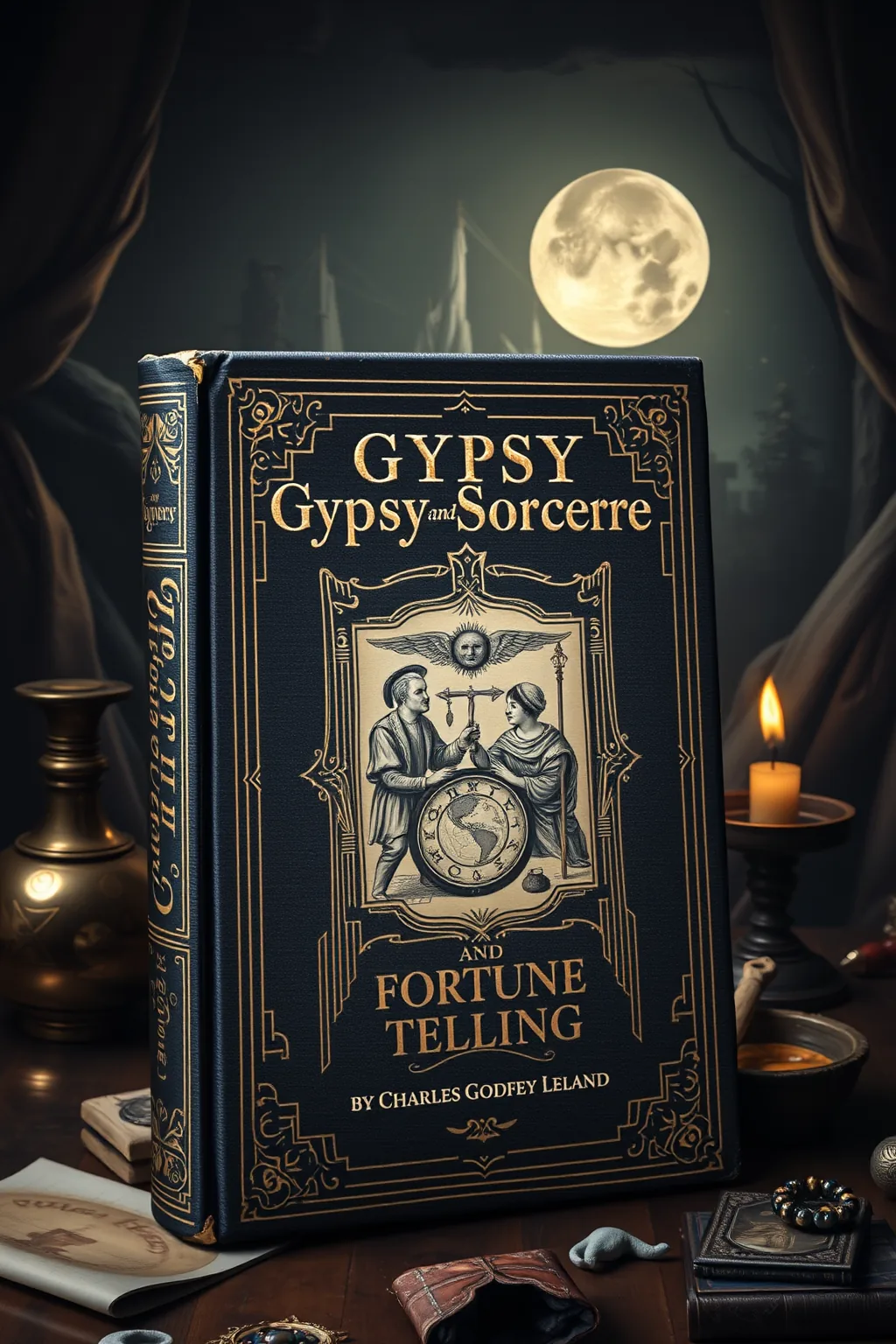
Gypsy Sorcery and Fortune Telling
 80
80

Gypsy Sorcery and Fortune Telling
Leland's "Gypsy Sorcery and Fortune Telling" is an invaluable, if occasionally dated, compendium of Romani magical practices. Its strength lies in the sheer volume of material gathered directly from informants, providing a raw, unvarnished look at spellcraft and divination as it was practiced. The section detailing various methods of fortune-telling, particularly those involving natural elements and everyday objects, offers a fascinating glimpse into a practical, earth-bound magic. However, the text’s 1891 publication date means its ethnographic lens is undeniably Victorian; modern readers must account for Leland's own biases and the societal perceptions of Romani people at the time. A significant limitation is the lack of critical distance, with the work presenting Romani beliefs with an earnestness that sometimes borders on uncritical acceptance. Despite this, the specific details on charms for protection and love spells remain compelling. The book serves as a vital primary source, albeit one requiring careful contextualization.
📝 Description
80
Charles Godfrey Leland published 'Gypsy Sorcery and Fortune Telling' in 1891, detailing Romani magical practices.
First released in 1891, Charles Godfrey Leland's "Gypsy Sorcery and Fortune Telling" details Romani magical practices. The book compiles spells, charms, and divination methods gathered directly from Romani individuals. It is more than a simple collection of folklore; it presents a methodical examination of the magical beliefs of the Romani people as they were understood in the late 19th century. The text is structured to cover different facets of sorcery, including protective objects and ways to foresee the future.
This volume is primarily useful for folklorists, ethnographers, and students of comparative religion and esoteric traditions. It will also attract those interested in folk magic and the history of divination. Readers looking for primary source material on Romani culture, particularly their spiritual and magical beliefs, will find considerable information. It is also of value to anyone studying occult practices from the late Victorian period.
Published in 1891, "Gypsy Sorcery and Fortune Telling" reflects a late Victorian interest in folklore and esoteric traditions. Leland, an American scholar active in Europe, participated in a movement to document various cultures and their belief systems. His work touched on the developing field of Romani studies, influenced by contemporary European perceptions of Romani people. This period also saw growing fascination with older, non-Western belief systems, contributing to the reception of such texts.
💡 Why Read This Book?
• Learn about specific Romani divination techniques, such as crystal gazing and interpreting natural signs, as detailed in Leland's 1891 research, offering a unique window into folk predictive arts. • Discover the practical application of charms and amulets described in the book for protection and well-being, providing concrete examples of sympathetic magic beyond theoretical discourse. • Understand the historical context of late 19th-century ethnography through Leland’s direct engagement with Romani informants, revealing how esoteric traditions were documented and perceived during that era.
⭐ Reader Reviews
Honest opinions from readers who have explored this book.
❓ Frequently Asked Questions
When was Charles Godfrey Leland's "Gypsy Sorcery and Fortune Telling" first published?
Charles Godfrey Leland's "Gypsy Sorcery and Fortune Telling" was first published in 1891, making it a significant work from the late Victorian era of occult and folklore studies.
Is "Gypsy Sorcery and Fortune Telling" based on original research?
Yes, the work is based on extensive original research and direct interviews conducted by Charles Godfrey Leland with Romani people across Europe.
What kind of magical practices are covered in the book?
The book covers a wide range of practices including sorcery, fortune-telling methods (like crystal gazing and card reading), charms, amulets, spells, and Romani folk beliefs.
Is this book suitable for beginners in occult studies?
While informative, the book's academic and historical nature means it's best suited for those with some background in folklore or esoteric traditions, rather than absolute beginners.
Can I find this book online for free?
As a work published in 1891 and in the public domain in the United States, "Gypsy Sorcery and Fortune Telling" is widely available for free online through various digital archives.
What is the significance of the Romani people in this book?
The book focuses on documenting the magical and spiritual practices of the Romani people, presenting their sorcery and fortune-telling traditions as a distinct cultural system.
🔮 Key Themes & Symbolism
Romani Divination Systems
Leland meticulously documents various Romani methods for foretelling the future, moving beyond generic descriptions to specific techniques. This includes detailed accounts of crystal gazing (scrying), interpreting dreams, reading playing cards, and even divining through natural phenomena like the flight of birds or the patterns of tea leaves. The emphasis is on the practical, everyday application of these arts within Romani culture, showing how foresight was integrated into daily life and decision-making processes.
Charms and Protective Magic
A significant portion of the book is dedicated to the creation and use of charms and amulets within Romani communities. Leland presents specific recipes and incantations for items believed to offer protection against evil spirits, curses, illness, and misfortune. These range from simple knotted cords to more complex talismans imbued with symbolic power through ritual and spoken word, illustrating a belief in the efficacy of sympathetic magic and the manipulation of unseen forces.
Folk Beliefs and Sorcery
The work examines the broader spectrum of Romani folk beliefs concerning sorcery, the spirit world, and the manipulation of natural forces. Leland records accounts of curses, healing rituals, and the perceived influence of specific individuals or groups within the community on magical outcomes. This theme highlights the Romani worldview where the spiritual and material realms are deeply intertwined, and where magic serves as a vital tool for navigating life's challenges.
Ethnographic Documentation
Beyond the magical content, the book itself is a key artifact of 19th-century ethnographic study. Leland's approach, while rooted in his era, represents an attempt to systematically collect and preserve the lore of a specific cultural group. The work showcases the challenges and methods of early ethnography, particularly in documenting oral traditions and esoteric knowledge from communities often viewed with suspicion or fascination by the dominant societies.
💬 Memorable Quotes
Direct passages from the work, attributed to the author.
“The Romani believe that words have power to effect what they signify.”
— This concise statement expresses a fundamental principle of many magical systems, including those documented by Leland. It highlights the belief that spoken language, particularly incantations or specific phrases, possesses an inherent force capable of influencing reality.
“Amulets are worn to guard against evil spirits and misfortune.”
— This highlights the practical, protective function of talismans within the Romani magical framework. It underscores a worldview where unseen forces pose tangible threats, and specific objects are employed as a defense.
“Dreams are often interpreted as prophetic visions.”
— This points to the significance of the subconscious and the dream state as a source of knowledge and prediction within Romani culture, as recorded by Leland.
“Crystal gazing was a common method for seeking answers to questions.”
— This illustrates one of the specific divination techniques detailed in the book, emphasizing its prevalence and purpose within the Romani practices Leland studied.
“Spells are employed for both harmful and beneficial purposes.”
— This acknowledges the dual nature of magical practice, noting that sorcery, as documented here, was not solely for protection or divination but could also be used to influence events or individuals.
🌙 Esoteric Significance
Tradition
This work primarily falls within the sphere of folk magic and comparative folklore, rather than a specific, formalized esoteric lineage like Hermeticism or Kabbalah. However, it touches upon universal magical principles found across many traditions, such as sympathetic magic, the power of the spoken word, and the use of talismans. Leland's documentation of Romani practices offers a unique, often overlooked, branch of European folk esoteric traditions, distinct from the more scholarly or ceremonial magic prevalent in other circles.
Symbolism
Key symbols include the serpent, often associated with wisdom, healing, and chthonic powers in many cultures, which appears in Romani lore. Knotted cords and specific patterns are also significant, representing binding spells or protective measures. The use of reflective surfaces like crystals or water for divination (scrying) is another prominent motif, symbolizing a gateway to hidden knowledge or future events, a practice found in various forms of magic.
Modern Relevance
Contemporary practitioners of folk magic, witchcraft, and eclectic paganism draw upon Leland's work for authentic historical spellcraft and divination techniques. Scholars of Romani studies and cultural anthropology utilize it as a primary source, albeit critically examined for its historical context. Modern occultists interested in the diversity of magical traditions find value in its detailed accounts of charms, amulets, and fortune-telling methods, appreciating its raw ethnographic data.
👥 Who Should Read This Book
• Students of comparative folklore and ethnography: Gain direct insights into the documented magical practices and beliefs of the Romani people in the late 19th century, as recorded by Leland. • Folklorists and practitioners of traditional magic: Discover specific spells, charms, and divination techniques that can inform or expand your understanding and practice of earth-based, traditional magical systems. • Researchers of esoteric history: Utilize this volume as a primary source for understanding the documented occult beliefs and practices prevalent in Europe during the late Victorian era.
📜 Historical Context
Charles Godfrey Leland's "Gypsy Sorcery and Fortune Telling," published in 1891, arrived during a fervent period of occult revival and anthropological interest in folklore. The late 19th century saw scholars like Andrew Lang collecting fairy tales and societies like the Theosophical Society exploring esoteric traditions. Leland, an American expatriate, was deeply engaged with European folklore, particularly Romani culture. His work contributed to a growing body of literature on marginalized groups, though often filtered through a romanticized Victorian lens. This era also witnessed the rise of comparative mythology and a fascination with ancient wisdom, influencing how such practices were perceived. While Leland sought to document, his work engaged with contemporary notions of the 'exotic' and 'primitive,' a common characteristic of ethnography of the time. Unlike purely academic treatises, his book presented practical magical applications, aligning with the popular interest in spiritualism and occultism spurred by figures like Helena Blavatsky, though Leland's focus remained distinctly on folk magic rather than formal occult orders.
📔 Journal Prompts
Romani crystal gazing as a divination method.
The symbolic meaning of specific charms detailed in Chapter III.
Comparison of Leland's 1891 documentation with modern Romani cultural studies.
Incantations for protection versus those for influencing events.
The role of dreams in prophetic traditions across cultures.
🗂️ Glossary
Charms
Objects or sayings believed to possess magical properties, often used for protection, healing, or to bring good luck.
Scrying
A form of divination involving gazing into a reflective surface, such as a crystal ball, mirror, or bowl of water, to receive visions or insights.
Amulets
Items worn on the body, believed to offer protection against evil, danger, or misfortune. Often inscribed with symbols or containing specific materials.
Talismans
Objects believed to be imbued with magical power, often created for a specific purpose, such as attracting love, wealth, or providing defense.
Incantation
A series of words said or sung as a magic spell or charm, believed to have the power to effect a specific outcome.
Sorcery
The practice of magic, especially black magic; the use of spells and incantations believed to control natural forces or supernatural beings.
Divination
The practice of seeking knowledge of the future or the unknown by supernatural means; fortune-telling.