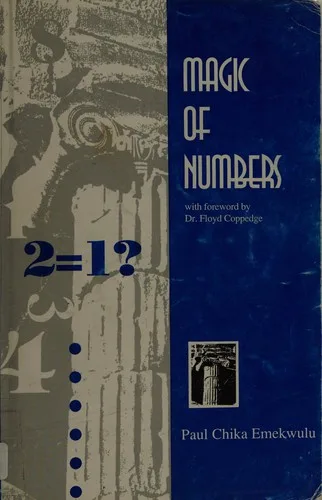
Mr. Cool

 79
79

Mr. Cool
Roger Hargreaves’ “Mr. Cool” offers a distilled character sketch, explaining precisely how its titular figure acquired his moniker. The strength of the book lies in its unpretentious clarity; it directly addresses the link between consistent behavior and acquired identity. A notable limitation, however, is its simplicity, which might leave some readers seeking deeper psychological nuance wanting. The narrative’s focus on Mr. Cool’s unruffled demeanor, a concept explored through his actions rather than internal monologue, highlights how external perception can solidify an individual's public image. While the 2008 publication date places it within a wave of accessible psychological narratives, its core message about earned reputation is its most enduring feature. It serves as a brief, effective illustration of a simple social dynamic.
📝 Description
79
Roger Hargreaves' 2008 book, "Mr. Cool," examines how a consistent demeanor earns a lasting label.
This book follows a character whose defining trait is his unflappable composure. His name, Mr. Cool, is not given to him but is earned through his unwavering attitude and self-perception. The narrative illustrates how outward behavior shapes how others perceive an individual, suggesting that a consistent projection of a certain state of being can solidify that persona.
The story offers a simple yet direct look at how personality is understood and how external labels arise from sustained actions. It appeals to readers who appreciate straightforward narratives about character archetypes and the subtle ways people present themselves. The book's concise approach makes its themes accessible to a wide audience, from young readers learning about social interactions to adults considering personal branding and emotional expression.
While not overtly magical, "Mr. Cool" touches upon archetypal studies found in various philosophical traditions. Its focus on a singular, dominant characteristic aligns with concepts of the 'fixed star' or the 'master archetype' in some esoteric thought, where a person's essence is seen as reflected in their most prominent trait. The book implicitly discusses how embodying a specific persona can reinforce that identity, a concept akin to sympathetic magic or the power of focused intent in shaping reality.
💡 Why Read This Book?
• You will learn how consistent behavior solidifies a personal reputation, as demonstrated by Mr. Cool’s earned name, a concept explored in the book's straightforward narrative. • You will gain insight into the power of external perception, understanding how observable traits, like Mr. Cool’s demeanor, can define an individual in the eyes of others. • You will appreciate a narrative that illustrates the formation of archetypes, showing how a single, dominant characteristic, central to Mr. Cool's identity, can become a defining label.
⭐ Reader Reviews
Honest opinions from readers who have explored this book.
❓ Frequently Asked Questions
What is the main message of Mr. Cool by Roger Hargreaves?
The primary message is that a person's name or reputation, like 'Mr. Cool,' is earned through consistent behavior and attitude over time, reflecting how external perception solidifies identity.
When was Roger Hargreaves' Mr. Cool first published?
Mr. Cool by Roger Hargreaves was first published in 2008, placing it within the early 21st-century landscape of accessible character-driven literature.
What kind of character is Mr. Cool?
Mr. Cool is characterized by a consistently calm and composed demeanor, which is the reason he earned his distinctive name, as explained in the book.
Is Mr. Cool a children's book?
While often categorized for younger audiences due to its simple language and direct storytelling, the themes of reputation and self-perception are relatable across ages.
Does the book explore the psychological reasons behind Mr. Cool's demeanor?
The book focuses more on the observable behavior and the resulting reputation rather than delving deeply into the internal psychological motivations behind Mr. Cool's attitude.
What does the name 'Mr. Cool' signify in the book?
The name 'Mr. Cool' signifies the protagonist's consistent ability to remain composed and unfazed, demonstrating how a singular trait can become a defining characteristic.
🔮 Key Themes & Symbolism
Earned Reputation
The core of "Mr. Cool" lies in the concept of an earned reputation. The book illustrates how the protagonist's appellation is not a given but a designation achieved through consistent, observable behavior. This theme touches on the social contract where actions define identity. It’s a foundational idea present in many philosophical traditions, from ancient Greek ethics concerning virtue to modern sociology of identity, emphasizing that who we are perceived to be is often a direct consequence of what we do.
Character Archetypes
"Mr. Cool" presents a singular character archetype, embodying a specific, unwavering trait. This aligns with broader discussions of archetypes found in Jungian psychology and mythological studies, where recurring character patterns help us understand universal human tendencies. By focusing on one dominant characteristic, the book simplifies the complex nature of personality into a recognizable figure, making it easier to grasp the power of a defining trait and its impact on social interaction and self-conception.
Emotional Regulation
The character's name, "Mr. Cool," directly implies a mastery or consistent display of emotional regulation. The work implicitly explores how maintaining a level of composure, particularly in contrast to potential emotional upheaval, can shape how others perceive an individual. This theme speaks to stoic philosophies and mindfulness practices that advocate for inner calm and reasoned response, suggesting that such control is not only achievable but also socially impactful.
Perception vs. Reality
The book subtly examines the relationship between how a character is perceived and their underlying reality. "Mr. Cool" becomes known for his composure, and the narrative explains this through his actions. This theme invites reflection on how outward appearances and consistent behaviors can create a strong public persona, sometimes overshadowing internal complexities, a dynamic explored in various literary and psychological contexts.
💬 Memorable Quotes
Direct passages from the work, attributed to the author.
“He got his name because he was always cool.”
— This is a direct statement explaining the origin of the character's title. It emphasizes the direct correlation between the attribute ('cool') and the earned identity ('Mr. Cool'), highlighting simplicity and consistency.
“Mr. Cool never got flustered.”
— This interpretation of the character's behavior illustrates the specific actions that led to his reputation. It points to an absence of emotional reactivity as the defining factor of his 'coolness'.
“Everyone knew Mr. Cool was cool.”
— This highlights the social recognition of the character's trait. It underscores how consistent behavior leads to a widely accepted public perception and a solidified identity.
“He showed how to stay calm.”
— This statement frames Mr. Cool's demeanor as an example or lesson for others. It suggests that his characteristic composure serves as a model for emotional regulation.
“His name fit him perfectly.”
— This reinforces the idea that the character's appellation is an accurate reflection of his personality and behavior, emphasizing the congruence between identity and action.
🌙 Esoteric Significance
Tradition
While "Mr. Cool" is not explicitly rooted in a specific esoteric tradition like Kabbalah or Theosophy, its focus on a singular, defining characteristic aligns with the concept of archetypes prevalent in Western Esotericism. Esoteric traditions often explore how individuals embody or strive towards specific divine or perfected states, represented by symbolic figures. The character of Mr. Cool can be seen as a simplified, secularized archetype of composure and self-mastery, a theme echoed in Stoic philosophy and Hermeticism's emphasis on understanding and controlling the self.
Symbolism
The primary symbol is the name 'Mr. Cool' itself, representing a state of unwavering emotional equilibrium and self-possession. This symbolizes the ideal of inner stillness and control over external circumstances or internal reactions, a concept valued in many contemplative practices. The character's consistent demeanor acts as a visual metaphor for this internal state, suggesting that such composure is observable and can define one's public identity.
Modern Relevance
The character of Mr. Cool speaks to modern discussions around personal branding and the cultivation of a specific public image, particularly in the age of social media. His archetype informs contemporary ideas about projecting confidence and resilience. Thinkers and practitioners in fields like performance psychology or even lifestyle coaching might reference such simplified archetypes to illustrate the power of consistent self-presentation and emotional regulation in achieving personal and professional goals.
👥 Who Should Read This Book
• Aspiring communicators and public speakers seeking to understand how consistent demeanor can shape audience perception. • Readers interested in character archetypes and how simple, dominant traits define recognizable figures in literature and life. • Individuals exploring the foundational concepts of self-mastery and emotional regulation through straightforward, relatable narratives.
📜 Historical Context
Roger Hargreaves' "Mr. Cool," published in 2008, arrived in an era marked by a continued public fascination with simplified psychological concepts and character studies, often presented in accessible formats. While Hargreaves' original "Mr. Men" series dates back to the 1970s, this 2008 entry reflects a later iteration. The early 21st century saw a proliferation of self-help literature and popular psychology books that aimed to distill complex ideas into easily digestible narratives. The work operates within this trend, offering a clear, character-driven lesson on identity and reputation. It contrasts with more academic explorations of personality theory prevalent in psychology at the time, such as the Big Five personality traits, by focusing on a single, dominant characteristic as the source of an individual's public persona.
📔 Journal Prompts
Mr. Cool's earned name and consistent composure.
The social recognition of Mr. Cool's unflappable nature.
Embodying a defining characteristic like Mr. Cool's.
The power of a single trait, as seen in Mr. Cool.
How Mr. Cool's actions defined his reputation.
🗂️ Glossary
Demeanor
The outward behavior or bearing of a person. In 'Mr. Cool,' it refers specifically to his consistently calm and composed attitude.
Appellation
A name or title. In the context of 'Mr. Cool,' it refers to the name 'Mr. Cool' itself and how it was acquired.
Archetype
A very typical example of a certain person or thing. Mr. Cool serves as an archetype of someone consistently calm and collected.
Reputation
The beliefs or opinions that are generally held about someone or something. Mr. Cool's reputation is built entirely on his coolness.
Emotional Regulation
The ability to manage and control one's emotional responses. Mr. Cool is presented as someone who excels at this.
Self-Perception
How one views oneself. The book implies Mr. Cool's self-perception aligns with how others see him.
Consistency
The quality of behaving or performing in the same way over time. This is the key factor in Mr. Cool earning his name.
This book appears in 1 collection
🔮 Readers Also Liked
Browse all →









From the “Witchcraft” Collection
View all →









More Free Magic & Ritual Books
View all →