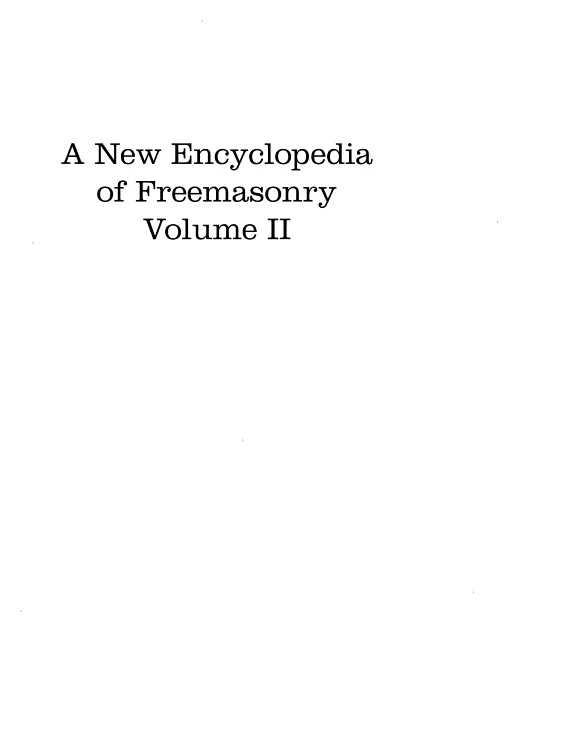
Proofs of a Conspiracy
 75
75

Proofs of a Conspiracy
John Robison's "Proofs of a Conspiracy" offers a chillingly detailed account from a man of science regarding the supposed machinations of the Bavarian Illuminati. Written with the precision of a natural philosopher, Robison lays out his case not with speculative fervor, but with what he presents as evidentiary reasoning. A significant strength lies in his meticulous cataloging of purported Illuminati doctrines and organizational structures, derived from confiscated documents and alleged member testimonies. However, the work suffers from the inherent limitations of its time and subject matter; it operates within a framework of intense suspicion, making it difficult to objectively distinguish between documented facts and the author's interpretation of those facts as part of a grand conspiracy. The passage detailing Weishaupt's alleged intention to 'extinguish all religion' is particularly striking for its stark articulation of the perceived threat. Ultimately, "Proofs of a Conspiracy" remains a pivotal, if biased, historical document reflecting late 18th-century fears of hidden forces shaping global events.
📝 Description
75
John Robison published 'Proofs of a Conspiracy' in 1797, detailing alleged Illuminati influence on the French Revolution.
In 1797, Scottish natural philosopher John Robison presented his findings on a clandestine network to the Royal Society of Edinburgh. He argued that the Bavarian Illuminati, founded by Adam Weishaupt in 1776, had orchestrated revolutionary movements across Europe, aiming to dismantle monarchies and religions. Robison's work meticulously detailed what he saw as the infiltration of various societies by this group.
Published during the intense political upheaval of the French Revolution, Robison's account was a direct response to widespread anxieties about secret societies. He specifically targeted the Illuminati, an order already dissolved by Bavarian authorities in the 1780s, portraying their supposed continued influence as a significant threat. His claims gained attention amidst contemporary critiques of radicalism, like Edmund Burke's analysis of the revolution, providing a context for his theories of clandestine manipulation.
The book's central thesis is that the Illuminati pursued a coordinated, covert strategy to subvert societal structures. Robison identified specific doctrines and organizational methods attributed to the group, suggesting their reach extended far beyond their Bavarian origins and aimed at fundamentally altering established orders.
John Robison's 'Proofs of a Conspiracy' situates itself within a tradition of exposing supposed hidden forces manipulating world events. Emerging in the late 18th century, a period rife with speculation about secret societies like Freemasonry and the newly formed Illuminati, the book reflects anxieties about rationalism's potential to undermine traditional authority. Robison's work is a direct reaction to the perceived esoteric underpinnings of revolutionary fervor, specifically attributing agency to the Illuminati's alleged doctrines and organizational structure.
💡 Why Read This Book?
• Learn about the alleged organizational principles and doctrines of the Bavarian Illuminati, as documented by Robison, to understand the specific fears driving late 18th-century anti-secret society sentiment. • Grasp the historical context of the French Revolution (1789-1799) through Robison's lens, recognizing how contemporary observers attributed revolutionary chaos to organized clandestine groups. • Examine the specific claims made by Robison regarding Adam Weishaupt's alleged agenda, providing a primary source for understanding the intellectual lineage of certain conspiracy narratives.
⭐ Reader Reviews
Honest opinions from readers who have explored this book.
❓ Frequently Asked Questions
What was the Bavarian Illuminati according to John Robison?
Robison describes the Bavarian Illuminati, founded by Adam Weishaupt in 1776, as a secret society dedicated to overthrowing established monarchies and religions. He alleges they employed clandestine methods and specific doctrines to achieve these aims, influencing revolutionary movements.
When was "Proofs of a Conspiracy" published?
"Proofs of a Conspiracy" was published in 1797, during a period of significant political and social upheaval across Europe, particularly influenced by the ongoing French Revolution.
Who was John Robison, the author?
John Robison (1739–1805) was a Scottish physicist, mathematician, and inventor, and a professor at the University of Edinburgh. He was also Secretary to the Royal Society of Edinburgh, lending his scientific credibility to his controversial claims.
What is the main argument of Robison's book?
Robison's central argument is that a coordinated conspiracy, primarily orchestrated by the Illuminati, was secretly manipulating events to instigate revolutions and dismantle existing political and religious structures across Europe.
Did Robison believe the Illuminati still existed in 1797?
Yes, Robison's work strongly implies that despite official dissolution of the Bavarian Illuminati in the 1780s, its members and influence persisted, actively working to destabilize nations and promote revolutionary ideals.
What historical events did Robison link to the Illuminati?
Robison explicitly linked the Illuminati to the French Revolution, viewing it as the prime example of their subversive activities. He also suggested their influence extended to other revolutionary sentiments and political movements of his era.
🔮 Key Themes & Symbolism
The Illuminati Network
Robison meticulously details the structure and alleged objectives of the Bavarian Illuminati, founded by Adam Weishaupt in 1776. He presents them as a highly organized, clandestine force aiming for global societal transformation. The work explores their purported use of secret rituals, recruitment tactics, and ideological infiltration to undermine established governments and religious institutions. Robison's analysis suggests a deliberate, long-term plan to sow discord and promote radical change, making the Illuminati the central node of his conspiracy theory.
Revolutionary Agitation
A core theme is the direct attribution of revolutionary movements, most notably the French Revolution, to the machinations of the Illuminati. Robison argues that the chaos, violence, and societal upheaval observed were not spontaneous but were systematically engineered by this secret society. He identifies specific revolutionary ideals and actions as manifestations of Illuminati doctrine, suggesting their goal was the complete dismantling of the old order and the establishment of a new, secularized world.
Subversion of Authority
Robison's work centers on the perceived threat posed by secret societies to legitimate political and religious authority. He describes how groups like the Illuminati allegedly sought to infiltrate Masonic lodges and other influential organizations to spread their anti-establishment agenda. The book examines the methods by which traditional hierarchies, monarchies, and churches were targeted for subversion, portraying a deliberate effort to erode societal foundations from within.
Enlightenment Ideals Perverted
The book explores how Robison believed certain radical interpretations of Enlightenment philosophy were twisted and weaponized by the Illuminati. He suggests that ideals of reason, liberty, and equality were distorted into tools for anarchy and irreligion. This theme highlights the author's concern that the intellectual currents of the era, when channeled through clandestine organizations, could lead to destructive societal outcomes rather than progress.
💬 Memorable Quotes
Direct passages from the work, attributed to the author.
“We are here then to see that the whole plan of the Illuminati was to extinguish all religion.”
— This statement captures Robison's interpretation of the Illuminati's ultimate goal. He perceived their doctrines and activities as a direct assault on religious faith, aiming for a secularized society devoid of traditional spiritual belief.
“The Illuminati aimed to overturn all governments.”
— This interpretation reflects Robison's view of the Illuminati's political agenda. He believed their conspiracy extended beyond religious subversion to encompass the complete overthrow of existing monarchical and aristocratic systems across Europe.
“Adam Weishaupt's doctrines were designed for subversion.”
— Robison focused heavily on the writings and teachings of Adam Weishaupt, the founder of the Illuminati. He interpreted these doctrines as inherently revolutionary and intended to destabilize society and incite rebellion against established powers.
💡 Key Ideas
Editorial paraphrase of the work's core concepts — not direct quotes.
The French Revolution was the work of the Illuminati.
This paraphrased assertion highlights Robison's central thesis connecting the Illuminati directly to the seismic events of the French Revolution. He saw the revolution not as a popular uprising but as a calculated move by the secret society.
Secret societies pose a threat to public order.
This paraphrased concept reflects Robison's broader anxiety about clandestine organizations. He argued that their secrecy, coupled with radical aims, made them inherently dangerous to the stability and security of nations.
🌙 Esoteric Significance
Tradition
While not strictly within a traditional esoteric lineage like Hermeticism or Kabbalah, Robison's work engages with the concept of hidden knowledge and organized groups pursuing societal transformation, themes often found in esoteric traditions. It reflects a late Enlightenment anxiety about the potential for radical philosophies, even those derived from rationalist thought, to be adopted by secretive orders with subversive aims. His focus on organizational structure and doctrine carries the way esoteric societies historically operated, albeit with a critical and fearful lens.
Symbolism
Robison's text is less concerned with symbolic interpretation in the esoteric sense and more with the symbolic implications of organizational structures and doctrines. The Illuminati's alleged use of secrecy, initiation rites, and coded language are presented not as mystical symbols but as tools of manipulation and control. The very concept of a 'conspiracy' functions as a potent symbol of hidden, malevolent forces operating beneath the surface of apparent reality, a motif frequently explored in various occult traditions.
Modern Relevance
Robison's "Proofs of a Conspiracy" remains relevant for understanding the enduring fascination with secret societies and conspiracy theories. Contemporary thinkers and groups exploring the history of disinformation, the psychological impact of perceived hidden control, and the evolution of anti-establishment narratives often reference Robison's work. It serves as a foundational text for tracing the lineage of modern conspiracy thinking, particularly concerning organizations like the Illuminati, which continue to be a focal point in various subcultures and online communities.
👥 Who Should Read This Book
• Students of late 18th-century political history: Gain insight into the specific fears and accusations leveled against secret societies during the era of the French Revolution. • Researchers of conspiracy theory origins: Understand a foundational text that shaped early modern discourse on clandestine organizations and their alleged influence on world events. • Readers interested in the history of ideas: Explore how Enlightenment concepts were perceived as potentially dangerous when adopted by organized, secretive groups.
📜 Historical Context
Published in 1797, John Robison's "Proofs of a Conspiracy" emerged at a critical juncture in European history, deeply shadowed by the ongoing French Revolution (1789-1799). Robison, a respected figure in Scottish science and Secretary to the Royal Society of Edinburgh, wrote his exposé in response to widespread anxieties about revolutionary contagion and the role of secret societies. His work specifically targeted the Illuminati, a Bavarian order founded by Adam Weishaupt in 1776, which had been suppressed by authorities in the 1780s. Robison argued that this group, despite its dissolution, continued to exert a powerful, clandestine influence, orchestrating revolutionary activities. This narrative found fertile ground among those, like Edmund Burke, who were already deeply critical of the revolution's radicalism and sought explanations for its perceived descent into chaos beyond mere popular discontent. Robison's publication was a significant contribution to the anti-Jacobin literature of the era, fueling fears of a coordinated, hidden hand guiding events.
📔 Journal Prompts
The Illuminati's alleged doctrines for subversion.
Robison's perception of Adam Weishaupt's ultimate aims.
The connection drawn between the French Revolution and clandestine societies.
The role of secrecy in fostering public fear.
Comparing Robison's fears with historical outcomes.
🗂️ Glossary
Illuminati
A secret society founded in Bavaria in 1776 by Adam Weishaupt. Robison alleged they sought to overthrow governments and religions through clandestine means.
Adam Weishaupt
Founder of the Bavarian Illuminati. Robison's work focuses heavily on Weishaupt's writings and alleged intentions for societal transformation.
French Revolution
The period of radical social and political upheaval in France from 1789 to 1799. Robison controversially attributed its causes and conduct to the Illuminati.
Conspiracy
In Robison's context, a secret, coordinated plan by a group (primarily the Illuminati) to achieve subversive political and religious aims.
Enlightenment
An 18th-century intellectual and philosophical movement emphasizing reason, individualism, and skepticism. Robison argued certain radical Enlightenment ideas were perverted by the Illuminati.
Masonic Lodges
The local organizations of Freemasonry. Robison claimed the Illuminati infiltrated these lodges to spread their influence and recruit members.
Bavaria
A German state where the Illuminati was founded in 1776. The order was suppressed there by electoral order in 1785.
This book appears in 1 collection
🔮 Readers Also Liked
Browse all →







From the “Illuminati” Collection
View all →







More Free Freemasonry & Secret Societies Books
View all →




![Gould R F History Of Freemasonry Throughout The World V 2 [ 1936 Ed][ 469p]](/img/thumb/gould-r-f-history-of-freemasonry-throughout-the-world-v-2-1936-ed-469p.webp)