Moore C The Craftsman And Freemasons Guide 9th Ed 1855

 71
71

Moore C The Craftsman And Freemasons Guide 9th Ed 1855

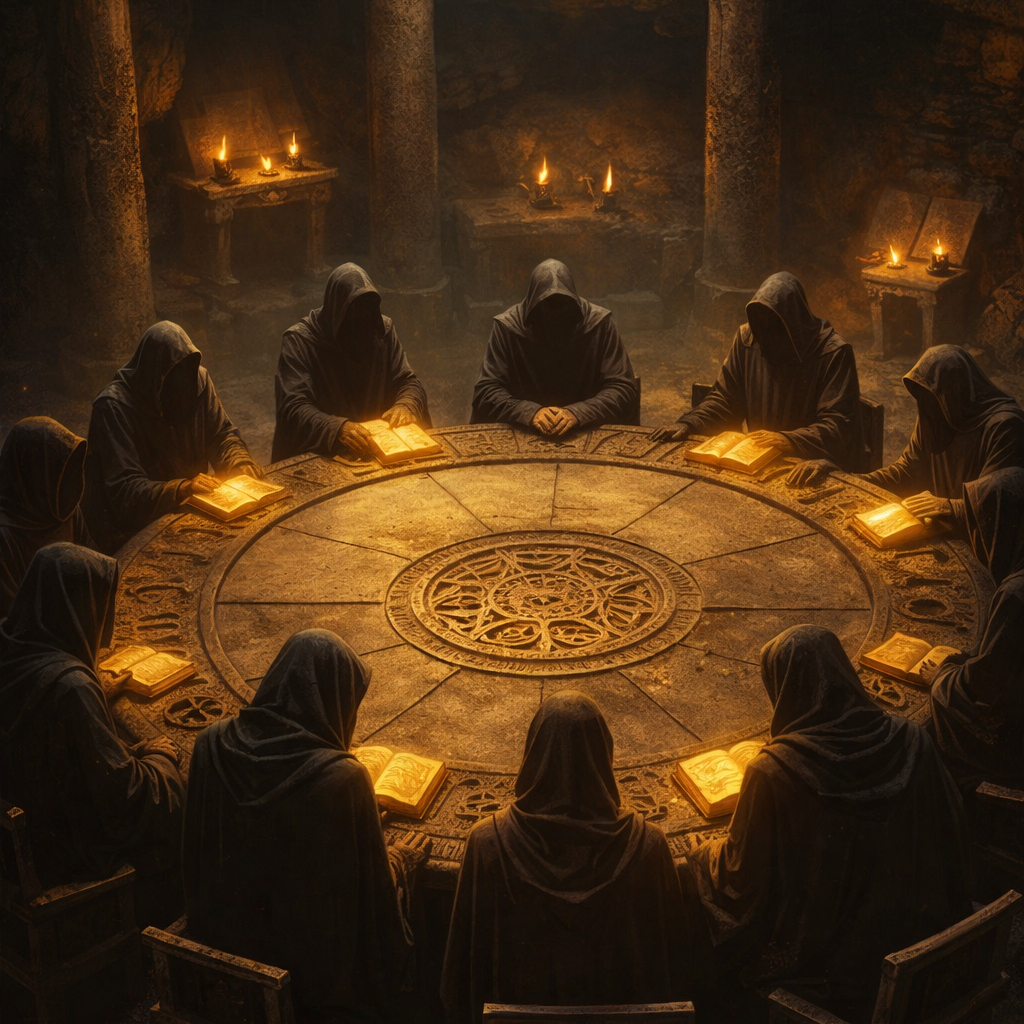

Isolde Whitaker, Sacred Texts Editor, writes: 'Moore's 'The Craftsman and Freemason's Guide' remains a cornerstone for understanding the philosophical depth of Freemasonry. The Ninth Edition from 1855 offers a particularly rich exploration of its symbolic language and moral teachings. It transcends mere ritual description, delving into the esoteric principles that underpin Masonic practice. This text is essential for practitioners seeking authentic knowledge and scholars investigating the evolution of Western esotericism. Its clarity and comprehensive approach make it an invaluable resource for anyone aspiring to grasp the true essence of the Craft.'
📝 Description
71
Published in 1855, 'The Craftsman and Freemason's Guide' unpacks Masonic symbolism and philosophy.
This 1855 edition of 'The Craftsman and Freemason's Guide' serves as a detailed examination of Freemasonry. It presents the fraternity not just as a social order but as a system of moral and spiritual instruction. The book aims to illuminate the symbolic language, geometric principles, and hidden doctrines integral to Masonic teachings. Readers will find explanations of allegorical narratives within Masonic rituals and the use of architectural concepts to represent inner development. The text focuses on the ethical structure intended to shape an individual's character.
This guide is intended for those interested in the philosophical aspects of Freemasonry. It addresses individuals seeking a deeper understanding of the intellectual foundations of the fraternity. The book also appeals to students of symbolism and those curious about historical societies that maintain a degree of privacy. It offers insights into the moral and spiritual dimensions that have characterized Masonic practice for generations.
Published in the mid-19th century, this guide sits within a period of increased interest in esoteric traditions and secret societies. Freemasonry, with its layered symbolism and ritualistic structure, was a significant focus for those seeking deeper meaning beyond conventional religious or social norms. The book reflects the era's tendency to interpret Masonic degrees and teachings through a lens of hermeticism, alchemy, and ancient mystery schools, seeking universal truths within its specific framework. It connects Masonic practice to broader currents of Western esotericism.
💡 Why Read This Book?
Unravel the mystical heart of Freemasonry, exploring its profound symbolism and philosophical underpinnings. Discover ancient wisdom, ethical teachings, and the spiritual journey of self-perfection. Ideal for seekers of hidden knowledge, students of esoteric traditions, and those curious about the enduring legacy of secret societies. This guide offers a pathway to deeper understanding and personal growth.
⭐ Reader Reviews
Honest opinions from readers who have explored this book.
❓ Frequently Asked Questions
What is the primary purpose of this guide?
This guide serves as a comprehensive manual for understanding the rituals, symbolism, moral philosophy, and historical context of Freemasonry, offering insights into its esoteric teachings and spiritual significance.
Is this book suitable for non-Masons?
Absolutely. While it details Masonic practices, its exploration of universal themes like morality, self-improvement, and symbolism makes it highly valuable for anyone interested in esoteric philosophy and the history of secret societies.
What makes the 1855 edition significant?
The 1855 edition represents a mature articulation of Masonic teachings from a period rich in esoteric thought, offering a valuable historical perspective on the Craft's development and its philosophical interpretations.
Does the book discuss the 'secrets' of Freemasonry?
It delves into the symbolic and allegorical meanings that have been historically associated with Masonic practices, focusing on the 'secrets' of self-knowledge and moral development rather than clandestine information.
What kind of knowledge can I expect to gain?
You can expect to gain a deep appreciation for Masonic symbolism, ethical principles, the historical evolution of the fraternity, and its philosophical resonance with broader esoteric traditions.
🔮 Key Themes & Symbolism
The Architect and the Temple
Central to this guide is the concept of the Great Architect of the Universe and the aspirant's journey to construct their inner temple. This theme explores the divine blueprint and the meticulous work required for spiritual edifice, drawing parallels between physical building and the refinement of character. It highlights how Masonic symbolism provides a framework for understanding one's place in the cosmic order and the sacred duty of self-cultivation.
The Language of Symbols
This work emphasizes that Freemasonry is a system of morality veiled in allegory and illustrated by symbols. It deciphers the profound meanings embedded in the tools of the operative mason, transforming them into potent metaphors for ethical conduct, intellectual pursuit, and spiritual growth. Readers will discover how seemingly simple objects carry layers of esoteric wisdom, intended to guide the initiate towards enlightenment and virtue.
The Path of Enlightenment
Moore's guide illuminates Freemasonry as a progressive journey of self-discovery and moral refinement. It outlines the stepwise ascent through degrees, each representing a new level of understanding and a deepening commitment to virtuous living. The text explores the transformative power of Masonic ritual and teachings in shaping the individual, fostering a stronger connection to universal truths and the betterment of humanity.
💬 Memorable Quotes
Direct passages from the work, attributed to the author.
“To build is to learn; to learn is to grow.”
— This aphorism captures the progressive nature of Masonic education, positing that the act of building, both externally and internally, is synonymous with the acquisition of wisdom and personal advancement.
“Light is the emblem of truth.”
— This simple yet profound statement connects the fundamental Masonic pursuit of illumination with the ultimate goal of uncovering universal verities and dispelling ignorance.
“Every man is a stone in the great temple.”
— This highlights the individual's role and importance within the collective spiritual edifice of humanity, emphasizing the shared responsibility in constructing a virtuous and harmonious society.
“The square teaches us to square our actions.”
— This interprets a fundamental Masonic tool as a direct moral imperative, urging practitioners to align their conduct with principles of justice, rectitude, and fairness in all dealings.
💡 Key Ideas
Editorial paraphrase of the work's core concepts — not direct quotes.
The tools of the operative become the symbols of the speculative.
This quote signifies the transition from physical labor to spiritual work, where the implements of building are reinterpreted as allegorical guides for moral and intellectual development.
🌙 Esoteric Significance
Tradition
This text is deeply rooted in the Western Esoteric Tradition, particularly within the hermetic and alchemical lineages that have influenced Freemasonry. It draws upon Neoplatonic philosophies, ancient mystery schools, and symbolic interpretations common to Rosicrucianism and Kabbalah, presenting Freemasonry as a structured path toward Gnosis or spiritual illumination.
Symbolism
The guide meticulously deciphers a rich lexicon of Masonic symbols, transforming operative tools like the square, compass, and level into potent metaphors for ethical conduct, cosmic order, and spiritual development. It explores the symbolism of light, darkness, architectural elements, and the degrees of progression, revealing layers of hidden meaning intended to guide the initiate's inner transformation.
Modern Relevance
In an age often characterized by materialism and disconnection, this guide offers a timeless framework for self-reflection, ethical living, and the pursuit of deeper meaning. Its emphasis on character building, symbolic understanding, and the search for truth remains profoundly relevant for individuals seeking spiritual grounding and a more profound connection to themselves and the universe.
👥 Who Should Read This Book
This comprehensive guide is essential for Freemasons seeking to deepen their understanding of the Craft's philosophical and symbolic dimensions. It is equally useful for scholars of Western Esotericism, comparative religion, and secret societies. Seekers of wisdom drawn to allegorical teachings, moral philosophy, and the historical evolution of spiritual traditions will find it an useful resource. Practitioners of meditation and mindfulness may also benefit from its insights into symbolic interpretation and inner transformation.
📜 Historical Context
Published in 1855, 'The Craftsman and Freemason's Guide' emerged during a vibrant period of Victorian esotericism and renewed interest in ancient mysteries. The mid-19th century saw a proliferation of occult societies and a surge in the printing of esoteric texts, as scholars and seekers studied Hermeticism, Kabbalah, and alchemy. Freemasonry, already centuries old, was a significant cultural force, often viewed as a repository of ancient wisdom and a vehicle for moral and spiritual upliftment. This edition reflects the era's intellectual climate, where the symbolic and allegorical aspects of the Craft were emphasized, positioning it not just as a social fraternity but as a philosophical and even mystical path.
📔 Journal Prompts
Reflect on the symbolism of the 'Great Architect' in your own life. How do you perceive a guiding force or principle?
Consider a personal 'tool' or skill you possess. How can you apply its principles metaphorically to improve your character or relationships?
What does 'light' symbolize for you beyond mere illumination? How do you pursue truth in your daily life?
Imagine yourself as a 'stone' in a larger structure. What qualities do you bring, and how do you contribute to the collective whole?
How can the concept of 'building' be applied to your personal growth and spiritual journey?
🗂️ Glossary
Gnosis
A Greek term meaning 'knowledge,' often referring to a spiritual or mystical knowledge that leads to salvation or enlightenment, a central concept in esoteric traditions.
Allegory
A story, poem, or picture that can be interpreted to reveal a hidden meaning, typically a moral or political one. Freemasonry extensively uses allegory to convey its teachings.
Speculative Masonry
The philosophical and symbolic practice of Freemasonry, as opposed to operative masonry, which involved the physical construction of buildings. It focuses on moral and spiritual development.
Initiate
A person who has undergone a ritual or ceremony to be admitted into a particular society or group, often one with secret knowledge or practices, like a Masonic lodge.
Hermeticism
A philosophical and religious tradition based on the purported teachings of Hermes Trismegistus. It emphasizes the unity of all things and the possibility of divine knowledge through spiritual practices.
This book appears in 2 collections
🔮 Readers Also Liked
Browse all →



From the “Secret Societies” Collection
View all →

More Free Freemasonry & Secret Societies Books
View all →