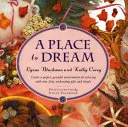
A Place to Dream
 84
84

A Place to Dream
Lynne Blackman and Kathy Corey's A Place to Dream presents a refreshingly grounded approach to the often-ethereal subject of dreams. Rather than offering abstract theories, the book prioritizes actionable advice for improving sleep and harnessing dream recall. Its strength lies in demystifying the process, providing clear instructions for creating sleep aids using common materials, a concept illuminated by the chapter on "dream pillows." A notable limitation, however, is its occasional brevity; some deeper dives into the symbolic language of dreams could have benefited from more extensive exploration, perhaps referencing specific mythological archetypes more directly. The section detailing how to construct a "dream pillow" with lavender and rosemary, for instance, is concrete but leaves one wanting more on the historical and energetic properties of these herbs in dream work. Ultimately, A Place to Dream serves as a valuable primer for those seeking tangible ways to connect with their inner world during sleep.
📝 Description
84
Published in 1997, A Place to Dream connects sleep quality with overall well-being.
A Place to Dream offers guidance for understanding and improving one's sleep and dream life. The authors frame dreams not as random events, but as meaningful messages from the subconscious. They highlight the direct connection between good sleep and both physical and mental health. This book is for anyone wanting to understand their dreams better and enhance their sleep habits. It will appeal to those interested in the deeper aspects of consciousness, personal development, and using dream analysis for healing.
The work details methods for creating a positive sleep environment and using dream recall for self-discovery. The focus is on applying dream insights to improve daily life and health. It presents dreams as a form of inner communication, a place where the mind offers advice and reveals what is hidden. Readers will find its approach to complex psychological and spiritual ideas accessible.
This book emerged in 1997, a time when public interest in Jungian psychology and dream interpretation was growing. It fits within a late 20th-century trend of self-help literature that blended psychological and esoteric ideas. Blackman and Corey's work spoke to a culture increasingly open to alternative approaches to wellness and personal growth.
💡 Why Read This Book?
• Learn to craft personal "dream pillows" using simple ingredients like lavender and rosemary, as detailed in the book, to foster a more conducive sleep environment. • Discover practical techniques for dream recall and interpretation, moving beyond passive dreaming to active engagement with your subconscious messages. • Understand the direct physiological and psychological benefits of quality sleep, reinforcing its role as a cornerstone of overall health as presented by Blackman and Corey.
⭐ Reader Reviews
Honest opinions from readers who have explored this book.
❓ Frequently Asked Questions
What is the primary goal of A Place to Dream?
The primary goal is to illuminate the connection between good sleep and optimal health, while demystifying the wisdom of dreams and providing practical methods for enhancing one's dream life.
Are the ingredients for the dream gifts difficult to find?
No, the book emphasizes using easy-to-find and inexpensive ingredients for creating special sleep and dream aids, making the practices accessible to most readers.
When was A Place to Dream first published?
A Place to Dream was first published in 1997, reflecting a period of growing interest in practical approaches to sleep and dream analysis.
What kind of guidance does the book offer for improving sleep?
It offers clear, detailed instructions for creating a better sleep environment and utilizing specific remedies, alongside insights into the psychological aspects of sleep.
Can this book help with understanding dream meanings?
Yes, the book provides insights into the mystery and wisdom of dreams, encouraging readers to see them as significant communications from within.
Is the approach in A Place to Dream academic or practical?
The approach is predominantly practical, focusing on actionable steps and accessible methods for readers to apply in their daily lives for better sleep and dream experiences.
🔮 Key Themes & Symbolism
Sleep Hygiene & Health
This theme underscores the fundamental connection between restorative sleep and overall physical and mental well-being. The book moves beyond mere aesthetics of sleep to present it as a critical health pillar. It provides actionable advice for cultivating better sleep habits and environments, suggesting that improved sleep is not just about resting, but about actively supporting the body's natural healing and regenerative processes. This practical focus makes the esoteric concept of sleep tangible and universally applicable.
Dream Recall & Interpretation
Central to the work is the idea that dreams are meaningful communications from the subconscious. The book offers methods to enhance dream recall, encouraging readers to engage with their dream experiences rather than dismissing them. It frames dream interpretation not as an arcane art, but as a personal exploration tool, suggesting that understanding dream symbolism can offer clear insights into one's waking life, challenges, and aspirations.
Practical Esotericism
A Place to Dream exemplifies practical esotericism by grounding spiritual and psychological concepts in accessible, everyday applications. The emphasis on creating tangible 'gifts' or aids for sleep and dreams using common ingredients demonstrates this approach. It bridges the gap between abstract metaphysical ideas and daily routines, showing how esoteric principles can be integrated into life for tangible benefits in health and self-awareness.
The Subconscious Dialogue
The book posits dreams as a vital channel for dialogue with the deeper self. It explores how the subconscious mind communicates through symbols, imagery, and narratives during sleep. By learning to listen to these nocturnal messages, readers are encouraged to gain a more holistic understanding of themselves, addressing underlying issues and fostering personal growth. This perspective elevates dreaming from a passive state to an active process of self-discovery.
💬 Memorable Quotes
Direct passages from the work, attributed to the author.
“Clear and detailed instructions using easy-to-find, inexpensive ingredients show how to make special gifts.”
— This captures the book's practical, accessible approach. It highlights that the wisdom of dreams and sleep isn't confined to abstract theory but can be embodied in simple, homemade items, making esoteric knowledge personally attainable.
“A Place to Dream sheds light on the mystery and wisdom of dreams and the connection between good sleep and best health.”
— This statement frames the core purpose of the book: clarifying dreams and directly linking their quality and understanding to fundamental physical and mental well-being, positioning sleep and dreams as crucial health factors.
“The mystery and wisdom of dreams.”
— This phrase suggests that dreams hold inherent knowledge and significance, inviting readers to explore their subconscious without fear, viewing them as sources of insight rather than random mental noise.
“The connection between good sleep and best health.”
— This highlights a scientifically and experientially supported link, grounding the book's esoteric explorations in the very real physiological and psychological benefits of adequate, quality rest.
“Special gifts.”
— Refers to the practical, often herb-infused, items readers can create to enhance sleep and dream recall, such as the mentioned 'dream pillows,' making the abstract tangible and personal.
🌙 Esoteric Significance
Tradition
This work aligns with the broader Hermetic and Jungian psychological traditions, emphasizing the interconnectedness of the psyche, the cosmos, and the body. It draws from the Hermetic principle of 'As Above, So Below,' suggesting that the inner world of dreams mirrors and influences outer reality and health. It departs from purely theoretical Hermeticism by focusing on tangible, personal practices for accessing this inner wisdom, making its application accessible outside of formal initiatory structures.
Symbolism
Key symbols explored include the 'dream pillow,' a tangible representation of intention and preparation for the dream state, often infused with herbs like lavender and rosemary for their traditional associations with peace and psychic clarity. The dream itself acts as a potent symbol of the subconscious, a liminal space where archetypal imagery and personal narratives converge to offer guidance and insight.
Modern Relevance
Contemporary practices in mindfulness, sleep science, and therapeutic dream work echo the principles laid out in A Place to Dream. Thinkers and practitioners focusing on somatic psychology, trauma-informed care, and the integration of spiritual practices into daily life find resonance in its emphasis on the body-mind connection and the therapeutic potential of dreams. Its accessible, DIY approach continues to inform modern approaches to holistic well-being.
👥 Who Should Read This Book
• Individuals new to dream interpretation: Those seeking an accessible entry point into understanding their dreams will find practical methods for recall and basic interpretation. • Health-conscious readers: Anyone prioritizing holistic well-being and seeking to understand the critical role of sleep and dream states in physical and mental health. • Practitioners of self-care: Readers interested in developing personal rituals and using simple, natural remedies to enhance their sleep and inner awareness.
📜 Historical Context
Published in 1997, A Place to Dream emerged during a resurgence of interest in Jungian psychology and dream analysis, influenced by figures like Carl Jung and his key work on dream symbolism. The late 20th century saw a proliferation of self-help and alternative wellness literature, where psychological insights often blended with spiritual or esoteric frameworks. This era was marked by a growing public acceptance of practices that explored consciousness beyond conventional Western medical paradigms. While not directly engaging with a specific contemporary scholar's critique, the book's approach aligns with broader New Age and holistic health movements prevalent at the time, differentiating itself from purely clinical psychological texts by offering practical, almost ritualistic, applications for dream work and sleep enhancement.
📔 Journal Prompts
Your personal dream pillow construction and its intended effects.
Recurring symbols or themes from recent dreams.
The perceived connection between your sleep quality and daily energy levels.
A dream scenario offering guidance on a waking life challenge.
The feeling of waking after a particularly restful sleep.
🗂️ Glossary
Dream Pillow
A specially prepared pillow or sachet, often filled with herbs like lavender or rosemary, designed to enhance dream recall, promote restful sleep, and invite specific dream experiences.
Dream Recall
The ability to remember dreams upon waking. The book provides techniques to improve this skill, viewing remembered dreams as valuable sources of personal insight.
Sleep Hygiene
Practices and habits conducive to sleeping well on a regular basis. This includes environmental factors and pre-sleep routines aimed at optimizing sleep quality.
Subconscious Communication
The idea that the deeper parts of the mind communicate messages, often symbolically, through dreams and other non-ordinary states of consciousness.
Esoteric Wisdom
Knowledge or understanding concerning secret or mysterious subjects, often related to spiritual or mystical traditions, presented here in a practical context.
Holistic Health
An approach to health that considers the whole person—mind, body, and spirit—and emphasizes the interconnectedness of these aspects for overall well-being.
Dream Interpretation
The process of analyzing the content and symbolism of dreams to gain understanding of the dreamer's psyche, emotions, and life circumstances.