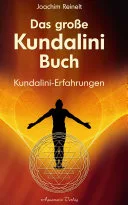
Das große Kundalini-Buch
 76
76

Das große Kundalini-Buch
Joachim Reinelt’s *Das große Kundalini-Buch* undertakes the ambitious task of cataloging the vast terrain of Kundalini, a feat it largely accomplishes through diligent scholarship and a respect for lived experience. Its strength lies in its historical breadth, connecting ancient Indian yogic traditions to later developments in Kashmir and Tibet, offering a much-needed historical anchor for a topic often shrouded in speculation. The inclusion of personal accounts is particularly effective, grounding the esoteric concept in tangible human transformation. However, the sheer volume of information, while comprehensive, can occasionally feel dense, requiring sustained focus from the reader. A more targeted exploration of the potential pitfalls or challenges of Kundalini awakening, beyond the dramatic changes, would have provided a more balanced perspective. Despite this, Reinelt’s work stands as a significant compilation for anyone serious about understanding this potent spiritual force.
📝 Description
76
Joachim Reinelt's *Das große Kundalini-Buch* was first published in 1987.
Joachim Reinelt's *Das große Kundalini-Buch* offers a thorough look at Kundalini energy. The book traces its origins from ancient India, through traditions in Kashmir and Tibet, to modern spiritual practices. Reinelt builds this understanding on detailed research into the history and culture surrounding Kundalini.
Beyond theory, the book examines the actual experience of Kundalini awakening. Reinelt includes personal accounts of those who have experienced this transformation, detailing the physiological, psychological, and spiritual changes. These narratives aim to clarify the concept of the 'serpent power' and its effect on human consciousness.
The work maps out the historical development of Kundalini traditions. It points to the scholarly and yogic groups that have maintained this knowledge, showing how the practices continue. The book also discusses the philosophical ideas that have shaped how Kundalini energy is perceived and used in different spiritual systems.
This book is situated within the broader study of Shakti traditions and Tantric yoga, particularly those originating in India. It addresses the concept of Kundalini as a primal energy coiled at the base of the spine, often described as a dormant serpent. The text examines its potential for spiritual transformation and the methods historically used for its controlled activation, linking these ideas to lineages that preserve such esoteric knowledge.
💡 Why Read This Book?
• Understand the historical trajectory of Kundalini from its origins in early Indian high cultures to its presence in Tibet, gaining context not found in generalized spiritual texts. • Grasp the practical implications of Kundalini awakening through detailed experiential reports, offering a realistic portrayal of its dramatic changes beyond theoretical descriptions. • Discern the specific energetic nature of the "Schlangenkraft" as presented in Reinelt's work, providing a unique conceptual framework for personal esoteric study.
⭐ Reader Reviews
Honest opinions from readers who have explored this book.
❓ Frequently Asked Questions
What are the earliest known origins of Kundalini as discussed in *Das große Kundalini-Buch*?
The book traces Kundalini's origins to the early Indian high cultures, suggesting its roots are deeply embedded in the foundational spiritual and philosophical traditions of ancient India, predating many later esoteric interpretations.
Does Joachim Reinelt discuss Kundalini experiences outside of India?
Yes, *Das große Kundalini-Buch* charts the traditions of Kundalini through Kashmir and Tibet, illustrating its transmission and adaptation across different Himalayan spiritual landscapes and into contemporary times.
How does the book explain the 'serpent force' (Schlangenkraft)?
Reinelt explains the 'serpent force' as the fundamental energy within the human body associated with Kundalini, detailing its energetic properties and its potential for profound spiritual evolution when properly understood and approached.
Are there personal accounts of Kundalini awakening in the book?
Absolutely. The book includes moving personal testimonies that describe the real-world effects and dramatic transformations triggered by Kundalini's activation, providing a practical dimension to the esoteric subject.
What distinguishes *Das große Kundalini-Buch* from other books on Kundalini?
Its distinction lies in its exhaustive treatment of all aspects, from historical origins and traditional lineages to detailed experiential reports, offering a comprehensive and scholarly approach to the phenomenon.
When was *Das große Kundalini-Buch* first published?
The original publication date for Joachim Reinelt's *Das große Kundalini-Buch* was August 3, 2020, marking it as a relatively recent yet comprehensive work on the subject.
🔮 Key Themes & Symbolism
Ancient Indian Roots
The work meticulously reconstructs the genesis of Kundalini understanding within the foundational epochs of Indian civilization. It posits that the "serpent force" was not an isolated concept but was interwoven with early cosmological and physiological models, offering insights into how ancient yogis and sages perceived this potent internal energy. This section grounds the phenomenon in its original cultural and spiritual milieu, moving beyond later interpretations.
Himalayan Transmission
Reinelt maps the migration and evolution of Kundalini traditions across the Himalayas, specifically detailing its presence and development in Kashmir and Tibet. This exploration highlights how the core principles were adapted and integrated within distinct monastic and yogic lineages, showing the resilience and adaptability of this esoteric knowledge across diverse philosophical landscapes.
Experiential Manifestations
Central to the book are the vivid accounts of Kundalini awakening. These narratives serve to illustrate the profound and often dramatic changes—physiological, psychological, and spiritual—that individuals undergo. By presenting these personal testimonies, Reinelt clarifies the process, offering readers a tangible sense of the energy's impact and the transformative potential it holds for human consciousness.
The "Schlangenkraft" Explained
The book systematically addresses Kundalini as the "Schlangenkraft," or serpent force. It elucidates its energetic nature, its dormant potential within the human system, and the conditions conducive to its activation. This focus provides a clear conceptual framework for understanding this fundamental esoteric power and its role in spiritual evolution.
💬 Memorable Quotes
Direct passages from the work, attributed to the author.
“Kundalini originates in the early Indian high cultures.”
— This statement anchors the book's exploration in a specific historical and geographical context, suggesting that the understanding of this potent energy is deeply rooted in the foundational spiritual traditions of ancient India.
“The traditions trace through India, Kashmir, and Tibet to the present.”
— This highlights the historical continuity and geographical spread of Kundalini knowledge, indicating a lineage that has persisted and adapted across centuries and diverse spiritual landscapes.
“The book addresses the 'serpent force' within the human body.”
— This identifies the central concept of Kundalini as the inherent 'Schlangenkraft,' positioning the book as a detailed examination of this specific esoteric power residing within each person.
“Personal accounts show how Kundalini really works.”
— This points to the methodological approach of the book, relying on lived experiences and testimonials to illustrate the practical effects and mechanisms of Kundalini activation, rather than purely theoretical discourse.
💡 Key Ideas
Editorial paraphrase of the work's core concepts — not direct quotes.
Kundalini awakening causes dramatic changes.
This concisely summarizes the experiential aspect of the book, emphasizing that the activation of this energy is not a subtle shift but can lead to significant and profound transformations in an individual's life.
🌙 Esoteric Significance
Tradition
This work firmly aligns with the broader tradition of Indian yogic and Tantric sciences, specifically focusing on the potent energy known as Kundalini. It operates within a lineage that views this energy as fundamental to human spiritual evolution, moving beyond mere physiological descriptions to explore its profound metaphysical implications. The book respects the traditional understanding while contextualizing it for a contemporary audience.
Symbolism
The primary symbol is the coiled serpent, representing the dormant Kundalini energy at the base of the spine, often depicted as a three-and-a-half coiled serpent. This symbolizes immense potential power that, when awakened, ascends through the subtle energy channels (nadis), particularly the Sushumna, leading to expanded consciousness. Another motif is the ascent through the chakras, seen as energy centers that are purified and activated during the process.
Modern Relevance
Contemporary practitioners of yoga, meditation, and various forms of energy work draw heavily on the foundational understanding presented in works like Reinelt's. Thinkers and schools exploring consciousness studies, somatic psychology, and transpersonal psychology find value in the detailed accounts of Kundalini's effects, seeking to integrate these potent spiritual experiences into broader frameworks of human potential and well-being.
👥 Who Should Read This Book
['• Students of comparative religion and ancient spiritual traditions seeking to understand the historical development and cross-cultural transmission of Kundalini concepts.', '• Dedicated practitioners of yoga and meditation looking for a comprehensive guide that details the energetic principles and potential experiences associated with Kundalini.', '• Researchers into esoteric phenomena and consciousness studies interested in the historical and experiential dimensions of the "serpent force" as documented by Joachim Reinelt.']
📜 Historical Context
Published in 2020, Joachim Reinelt's *Das große Kundalini-Buch* emerges in an era of renewed global interest in Eastern spiritual traditions, yet it distinguishes itself by grounding its discussion in deep historical scholarship. The book situates Kundalini within the ancient Indian yogic traditions, a lineage that predates and influenced many later esoteric movements, including aspects of Theosophy and New Age spirituality that gained prominence in the late 19th and 20th centuries. Unlike purely philosophical treatises or modern self-help guides, Reinelt’s work meticulously traces the historical threads from early Indian high cultures through the specific developments in Kashmir and Tibet, offering a continuity often overlooked. While the book itself is recent, its subject matter engages with centuries-old practices, potentially engaging with scholarly discourse that has explored Tantra and yogic sciences, such as the work of Mircea Eliade, though Reinelt's focus remains on the direct transmission and experience of Kundalini itself.
📔 Journal Prompts
The origins of Kundalini in early Indian high cultures.
The tracing of traditions through Kashmir and Tibet.
The concept of the "Schlangenkraft" as a distinct energy.
Personal accounts of Kundalini's dramatic changes.
The specific lineage of Kundalini knowledge discussed.
🗂️ Glossary
Kundalini
A primordial cosmic energy, often described as a dormant serpent power residing at the base of the spine, believed to be the source of spiritual potential and consciousness when awakened.
Schlangenkraft
German for 'serpent force,' used synonymously with Kundalini to describe the potent, coiled energy believed to be present within the human subtle body.
Chakras
Energy centers within the subtle body, typically visualized along the spine, through which Kundalini energy is said to ascend, bringing about transformation.
Nadis
Subtle energy channels in the body through which prana (life force) flows. The main nadis are Ida, Pingala, and Sushumna, with Sushumna being the central channel for Kundalini ascent.
Sushumna
The central and most important nadi, running along the spinal column, through which Kundalini energy is believed to ascend from the base chakra to the crown chakra.
Awakening (Erweckung)
The process by which Kundalini energy is activated or roused from its dormant state, leading to profound physiological, psychological, and spiritual experiences.
High Cultures (Hochkulturen)
Refers to advanced ancient civilizations, specifically in the context of the book, the early societies of India where complex spiritual and philosophical systems first emerged.











![A high-school algebra wallet-sized proof, of the Bieberbach conjecture After L. Weinstein]](/img/thumb/a-high-school-algebra-wallet-sized-proof-of-the-bieberbach-conjecture-after-l-weinstein-shalosh-b-ekhad.webp)