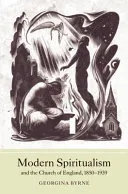
Modern Spiritualism and the Church of England, 1850-1939
 71
71

Modern Spiritualism and the Church of England, 1850-1939
Georgina Byrne’s study offers a refreshingly grounded analysis of how Spiritualism, often dismissed as mere charlatanry or fringe belief, actively participated in shaping the religious consciousness of late Victorian and Edwardian England. Her examination of the Church of England’s engagement with spiritualist tenets, particularly regarding the afterlife and communion with the dead, is both rigorous and illuminating. A particular strength lies in Byrne's meticulous tracing of how specific spiritualist concepts, such as the possibility of direct communication with spirits, subtly permeated theological discussions within the Church, influencing popular Christian understandings without necessarily being formally adopted. The book’s limitation, perhaps inherent in its focus, is a tendency to concentrate on the intellectual exchange, occasionally at the expense of a deeper exploration of the lived emotional and spiritual experiences of those caught between these belief systems. The section detailing the Church's anxiety over the blurring lines between spiritualist mediums and religious prophets provides a particularly vivid example of this tension. Ultimately, Byrne presents a compelling argument for the significant, if often unacknowledged, role of Spiritualism in the evolution of modern English Christianity.
📝 Description
71
Georgina Byrne's 2015 book examines Spiritualism's influence on the Church of England from 1850 to 1939.
Georgina Byrne's study investigates the dynamic between Spiritualism and the Church of England between 1850 and 1939. The book details how the Spiritualist movement, with its claims of contact with the dead and descriptions of the afterlife, began to influence theological discussions and popular Christian beliefs in Britain. Byrne moves beyond simply listing phenomena to analyze the intellectual and spiritual reasons for Spiritualism's acceptance in a largely Christian society.
This work is valuable for scholars of Victorian and Edwardian religious history, especially those focused on the interactions between established Christianity and alternative movements. Students of Spiritualism, psychical research, and the sociology of religion will also find it relevant. The book offers substantial material for readers interested in how societal views on death and the afterlife change, and how new ideas challenge or are integrated into existing institutions.
This book sits within the academic study of religious history, specifically examining a period where traditional religious frameworks were challenged by new spiritualist beliefs. It addresses the historical engagement between institutional religion and movements claiming direct experience of the supernatural, a common thread in the study of esoteric traditions. The work focuses on the intellectual and social processes through which such challenges were met, absorbed, or rejected by established churches.
💡 Why Read This Book?
• Learn how specific Spiritualist doctrines, like the tangible reality of the afterlife communicated through séances, began to influence mainstream Christian eschatology between 1850 and 1939, challenging traditional views of divine communication. • Understand the Church of England's varied responses to the influx of Spiritualist ideas, from outright condemnation to cautious exploration, as detailed through its internal debates and pastoral concerns. • Gain insight into the work of figures such as Frederic W.H. Myers and the Society for Psychical Research, who attempted to bridge the gap between scientific inquiry and spiritual phenomena, impacting the era's intellectual climate.
⭐ Reader Reviews
Honest opinions from readers who have explored this book.
❓ Frequently Asked Questions
When did Modern Spiritualism arrive in Britain, and how quickly did it gain popularity?
Modern Spiritualism arrived in Britain in 1852 and rapidly became popular across all social classes, indicating a significant societal openness to its ideas about communication with the departed.
What specific aspects of Spiritualism influenced the Church of England?
Spiritualism's ideas about the afterlife, its claims of direct communication with the deceased, and the phenomena presented at séances were key aspects that influenced theological discussions and popular Christian beliefs.
What is the primary argument of Georgina Byrne's book?
The book argues that Spiritualism's concepts, particularly concerning the afterlife and spirit communication, helped to shape popular Christianity in Britain between 1850 and 1939, influencing the Church of England's discourse.
What time period does 'Modern Spiritualism and the Church of England' cover?
The book covers the period from 1850 to 1939, a significant era for both the rise of Spiritualism and evolving religious thought within the Church of England.
Who was Frederic W.H. Myers in relation to this subject?
Frederic W.H. Myers was a key figure in the Society for Psychical Research who sought to scientifically investigate spiritual phenomena, engaging with the very ideas that Spiritualism presented and that Byrne examines in relation to the Church.
What kind of phenomena are discussed in relation to Spiritualism?
The book discusses 'séance phenomena,' which included purported communications with the departed, as central to Spiritualism's appeal and its challenge to established religious frameworks.
🔮 Key Themes & Symbolism
Eschatological Dialogue
This work critically analyzes how Spiritualism's vivid depictions of the afterlife and its assertion of direct communication with the departed challenged and, in turn, subtly influenced the Church of England's own doctrines on death and eternity. Byrne demonstrates that the popular fascination with séances and spirit messages prompted a re-evaluation, or at least a nuanced response, from within Anglicanism, moving beyond simple refutation to a complex negotiation of spiritual realities.
The Church's Response to Heterodoxy
The book details the Church of England's often-divided reaction to the widespread appeal of Modern Spiritualism from 1852 onwards. It highlights internal debates within the clergy and theological circles regarding the validity and implications of spiritualist claims. Byrne illustrates how the established church grappled with maintaining its authority and theological integrity while facing a popular movement that offered seemingly direct spiritual experiences and alternative visions of post-mortem existence.
Séance Phenomena and Belief
Byrne dissects the significance of 'séance phenomena' – the supposed manifestations and communications from spirits – not merely as curiosities, but as potent evidence presented by Spiritualism. The work examines how these experiences, often witnessed by individuals from all societal strata, provided a tangible, albeit controversial, counterpoint to abstract theological pronouncements, compelling a consideration of their impact on public faith and ecclesiastical thought.
Social Integration of Spiritualism
A crucial aspect explored is the broad social reach of Spiritualism, extending beyond niche groups to encompass diverse segments of British society. This widespread adoption is presented as a key factor enabling its ideas to penetrate mainstream Christian consciousness. The book implicitly argues that the sheer popularity of Spiritualism necessitated a form of engagement, however indirect, from the established religious institutions like the Church of England.
💬 Memorable Quotes
Direct passages from the work, attributed to the author.
“Spiritualism offered not just entertainment, but a tangible vision of what life after death might entail.”
— This highlights how Spiritualism moved beyond mere spectacle, providing concrete, albeit unverified, narratives about the afterlife that resonated with a public questioning traditional religious assurances.
“The arrival of Modern Spiritualism in Britain in 1852 marked a significant challenge to established religious certainties.”
— This statement emphasizes the historical impact of Spiritualism's introduction, framing it as a disruptive force that directly confronted and questioned the prevailing Christian worldview of the era.
“Communicating with the departed became a central tenet, altering perceptions of the boundary between the living and the dead.”
— This interpretation focuses on the core mechanism of Spiritualism – spirit communication – and its profound implication: the erosion of a perceived absolute separation between earthly existence and the spiritual realm.
“Popular Christianity in the period was subtly shaped by ideas presented by Spiritualism.”
— This captures the book's central thesis, suggesting a less overt but significant influence of Spiritualist concepts on the everyday religious beliefs and practices of the general populace.
💡 Key Ideas
Editorial paraphrase of the work's core concepts — not direct quotes.
The Church of England had to contend with a popular movement that claimed direct access to spiritual knowledge.
This paraphrased concept underscores the institutional challenge faced by the Anglican Church, as Spiritualism presented an alternative source of spiritual authority and information outside its control.
🌙 Esoteric Significance
Tradition
While not strictly a Hermetic or Gnostic text, Byrne's work engages with the broader currents of esoteric thought that flourished in the 19th century, particularly those concerned with mediumship, altered states of consciousness, and the nature of the soul's survival. It sits adjacent to Theosophy and Spiritualism itself, examining how these movements interacted with established religious frameworks, revealing the permeable boundaries between orthodox belief and emergent esoteric practices.
Symbolism
The primary 'symbol' explored is the séance itself, functioning as a liminal space where the veil between worlds is believed to thin. Other motifs include ectoplasm (as physical manifestation of spirit), spirit guides (as intermediaries), and the overarching concept of the afterlife as a communicable reality, symbolizing a shift from faith-based acceptance to experiential verification within the spiritual domain.
Modern Relevance
Contemporary interest in mediumship, channeling, and near-death experiences carries the phenomena discussed. Modern spiritual practitioners, researchers into consciousness, and those exploring alternative healing modalities may find Byrne's historical analysis useful for understanding the roots of current beliefs about inter-spirit communication and the nature of consciousness beyond the physical body.
👥 Who Should Read This Book
• Scholars of Victorian and Edwardian religious history seeking to understand the complex interplay between orthodox Christianity and emergent spiritual movements. • Students of the history of Spiritualism and psychical research interested in its societal impact and philosophical underpinnings. • General readers fascinated by the evolution of beliefs surrounding death, the afterlife, and the human desire for connection with the departed.
📜 Historical Context
The period between 1850 and 1939 was a crucible for religious thought in Britain. Rapid industrialization, scientific discoveries like Darwin's theory of evolution, and growing secularism challenged the foundations of traditional faith. Into this environment, Modern Spiritualism, arriving with force in 1852, offered compelling alternatives, particularly regarding life after death and communication with spirits. This movement gained widespread traction, appealing across social classes and presenting phenomena that were difficult for the established Church of England to ignore. While figures like Frederic W.H. Myers and the Society for Psychical Research attempted a more scientific approach to these claims, the Church itself was internally divided. Some clergy denounced Spiritualism as demonic or fraudulent, while others cautiously explored its implications, fearing a loss of adherents to alternative spiritual pathways. The intellectual climate was ripe for such exchanges, with theological debates often intersecting with broader cultural anxieties about mortality and the unseen world.
📔 Journal Prompts
The Church of England's response to séance phenomena.
How the concept of 'life after death' presented by Spiritualism contrasted with Anglican eschatology.
The social integration of Spiritualism across different classes in 19th-century Britain.
The influence of Frederic W.H. Myers' investigations on spiritualist discourse.
The perceived boundary between the living and the departed in Spiritualist belief.
🗂️ Glossary
Modern Spiritualism
A religious movement that began in the mid-19th century, asserting that spirits of the dead can communicate with the living, often through mediums.
Church of England
The established Christian church in England, a major institution whose theological positions and popular influence are examined in relation to Spiritualism.
Séance phenomena
The purported manifestations and communications (e.g., voices, movements, apparitions) experienced during spiritualist gatherings or séances.
Eschatology
The theological study of the end times, including beliefs about death, judgment, the afterlife, and the ultimate destiny of humanity and the cosmos.
Medium
An individual believed to be able to communicate with spirits of the dead or act as an intermediary between the physical and spiritual worlds.
Anglicanism
The form of Protestant Christianity originating from the Church of England, characterized by its liturgy, theology, and governance.
Psychical research
The interdisciplinary investigation of purported psychic phenomena, such as telepathy, clairvoyance, and spiritualism, often employing scientific methods.