Modern Palmistry
 75
75

Modern Palmistry
Fenton and Wright’s *Modern Palmistry* distinguishes itself by prioritizing a practical, almost psychological, application of chiromancy. The authors’ insistence on using hand analysis constructively, to understand character and personality for self-improvement, is a welcome departure from more fatalistic interpretations. The book's strength lies in its clarity and the abundance of detailed illustrations, which are crucial for grasping the nuances of hand shapes and line variations. However, the text occasionally feels overly prescriptive, offering definitive interpretations where a more probabilistic approach might be warranted. For instance, the detailed breakdown of the Fate Line, while thorough, risks presenting destiny as rigidly predetermined. Despite this, the work provides a solid foundation for anyone looking to explore the physical map of the hand. It’s a functional manual that grounds esoteric practice in observable detail.
📝 Description
75
Published in 2003, Modern Palmistry updates chiromancy for today's readers.
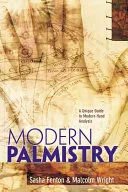
Authored by Sasha Fenton and Malcolm Wright, Modern Palmistry offers a contemporary take on reading palms, moving past older interpretations to provide practical insights into character and personality. The authors use their extensive experience with hands to make palm reading accessible. This guide is meant for both those new to the subject and individuals wanting to sharpen their hand analysis skills.
The book addresses readers curious about self-knowledge and understanding others through palmistry. It is suitable for students of esoteric subjects, psychology fans interested in nonverbal signals, and anyone looking for a methodical way to examine human nature. Those who value clear illustrations and step-by-step directions will find this manual especially useful. It covers hand shapes, finger lengths, and the main palm lines like the Life, Head, and Heart lines, as well as mounts, fingerprint patterns, and skin texture and color.
Modern Palmistry, released in 2003, updates ancient chiromancy for a modern audience. It connects to a broader revival of esoteric interests in the late 20th and early 21st centuries, a time when fields like astrology and Tarot saw renewed attention. The book implicitly engages with earlier palmists, such as Cheiro, aiming to provide a more straightforward entry into the practice. It seeks to align traditional hand reading with contemporary understanding.
💡 Why Read This Book?
• Learn to interpret the basic hand features, including the significance of different hand shapes and the primary lines like the Head Line and Heart Line, as detailed in the foundational chapters. • Gain a practical understanding of how to apply hand analysis constructively, moving beyond mere prediction to character assessment, a core tenet emphasized by Fenton and Wright's approach. • Explore the modern updates to palmistry, understanding how concepts like dermatoglyphics and subtle skin variations are incorporated into analysis, reflecting the book’s 2003 publication date.
⭐ Reader Reviews
Honest opinions from readers who have explored this book.
❓ Frequently Asked Questions
What is the primary goal of palmistry according to Sasha Fenton and Malcolm Wright?
The primary goal is to read a person's character and personality through hand analysis and then apply these insights in a constructive manner for personal growth and understanding.
Does Modern Palmistry rely on ancient palmistry traditions or offer a new perspective?
It offers a modern approach, building upon traditional palmistry but emphasizing contemporary applications and insights derived from the authors' extensive experience with hands.
Are there specific illustrations or diagrams included in the book?
Yes, the book features detailed illustrations and diagrams specifically designed to make learning hand analysis techniques easier for the reader.
What basic features of the hand does the book explain?
It fully explains basic features like the shape of the hand, finger lengths, and the primary palm lines (Life, Head, Heart, Fate) and what they indicate about a person.
Is this book suitable for complete beginners in palmistry?
Yes, its instructional nature and clear explanations with visual aids make it an accessible guide for beginners interested in learning palmistry.
When was Modern Palmistry first published?
Modern Palmistry was first published in 2003, reflecting a more contemporary perspective on the ancient art of palm reading.
🔮 Key Themes & Symbolism
Character Analysis Through Hand Morphology
This theme focuses on the physical attributes of the hand as direct indicators of personality. Fenton and Wright meticulously detail how the overall shape of the hand—square, spatulate, conic, or psychic—correlates with fundamental character types. They extend this analysis to the proportions and shapes of the fingers, noting how their length and form can reveal tendencies towards logic, creativity, or practicality. This approach grounds esoteric interpretation in observable physical traits, making it accessible for readers seeking to understand themselves and others through a tangible, visual medium.
The Language of Palm Lines
Central to the book is the interpretation of the major and minor lines etched onto the palm. The text provides in-depth explanations for the Life Line, Head Line, Heart Line, and Fate Line, detailing their significance concerning vitality, intellect, emotional disposition, and life path respectively. Beyond these, it explores numerous smaller lines and markings, such as the Apollo Line or the Simian Line, offering nuanced insights into specific talents, challenges, and life events. The authors emphasize reading these lines in conjunction, understanding their interplay rather than in isolation.
Constructive Application of Chiromancy
A defining aspect of *Modern Palmistry* is its emphasis on the practical and beneficial use of palm reading. The authors advocate for using chiromancy not as a deterministic tool for fortune-telling, but as a method for self-awareness and personal development. By understanding one's inherent traits and potential challenges as revealed in the hand, individuals can make more informed choices, cultivate their strengths, and address weaknesses constructively. This ethical framework guides the reader toward self-improvement and a deeper understanding of human psychology.
Dermatoglyphics and Subtle Hand Indicators
Expanding beyond traditional line and shape analysis, this book incorporates more subtle physical indicators. It touches upon dermatoglyphics, the study of fingerprint patterns, suggesting their correlation with inherent predispositions. Furthermore, the authors consider less commonly discussed elements such as the texture of the skin, the presence of moles, and the coloration of the palm and fingers. These details add layers of complexity to the reading, allowing for a more refined and personalized interpretation of the hand's map.
💬 Memorable Quotes
Direct passages from the work, attributed to the author.
“Through palmistry, you can read a person's character and personality and then apply what is revealed in a constructive manner.”
— This statement expresses the book's core philosophy: palmistry as a tool for self-understanding and positive action, rather than passive prediction.
“Based on the authors' experience working with hands, this fascinating instructional guide offers the most up-to-date approach to palmistry.”
— Highlights the practical, experiential basis of the book and its claim to offer a contemporary perspective on a traditional subject.
“Detailed illustrations and diagrams make it easy to learn hand analysis techniques.”
— Emphasizes the pedagogical approach of the book, relying on visual aids to explain complex interpretive methods.
“The basic features of the hand, and what they can indicate about a person, are fully explained.”
— Suggests a comprehensive coverage of fundamental palmistry elements, suitable for newcomers to the subject.
“See what the shape of a hand can tell you, and look a...”
— This fragmented quote points to the detailed examination of hand shapes as a primary element in character assessment within the text.
🌙 Esoteric Significance
Tradition
While not explicitly tied to a single esoteric lineage like Hermeticism or Kabbalah, *Modern Palmistry* draws from the broad Western tradition of physiognomy and chiromancy. It operates within a general esoteric framework that posits a correspondence between the microcosm (the human body/hand) and the macrocosm (universal principles). The book departs from purely mystical interpretations by grounding its analysis in observable physical characteristics, aligning with a more empirical, psychological-esoteric approach popular in the late 20th and early 21st centuries.
Symbolism
The primary symbols are the hand itself, representing the physical manifestation of the individual's potential and life path, and the lines etched upon it. The Life Line symbolizes vitality and physical well-being, the Head Line represents intellect and thought processes, and the Heart Line signifies emotional capacity and relationships. The shape of the hand and fingers also carry symbolic weight, with different forms correlating to elemental influences (earth, air, fire, water) and associated personality traits, reflecting ancient correspondences.
Modern Relevance
This work remains relevant for contemporary practitioners and enthusiasts of divination and self-help. Its emphasis on constructive application and psychological insight speaks to modern mindfulness and self-awareness movements. Thinkers and practitioners in fields ranging from Jungian psychology to contemporary intuitive arts can find value in its structured approach to interpreting physical signs as reflections of inner states and potentials.
👥 Who Should Read This Book
• Aspiring palmists seeking a clear, step-by-step guide to interpreting hand shapes, lines, and mounts. • Individuals interested in personal development and self-awareness who want to explore a unique method of understanding their character and potential. • Students of esoteric arts and comparative divination looking to add a practical, visually-oriented discipline to their knowledge base.
📜 Historical Context
Published in 2003, *Modern Palmistry* arrived during a period of renewed public interest in esoteric practices, often framed through a lens of personal growth and psychological exploration. This era saw figures like Liz Greene and Robert Hand popularizing astrological and divinatory systems with a more analytical approach, contrasting with earlier, more mystical traditions. Fenton and Wright’s work positions itself within this trend, offering a practical, instructional guide that downplays fatalism in favor of self-understanding. While ancient Greek and Roman texts formed the bedrock of Western chiromancy, and figures like William Lilly (17th century) detailed its practice, *Modern Palmistry* aimed to synthesize these historical foundations with contemporary psychological insights and modern life concerns, eschewing the more sensationalist or purely predictive elements found in some popular palmistry books of the 20th century.
📔 Journal Prompts
The specific shape of your dominant hand, detailing its primary characteristics.
The clearest of your major palm lines (Life, Head, Heart) and its perceived meaning.
Any unique markings or mounts on your palm and their potential significance.
How the interpretation of your hand's features aligns with your self-perception.
A constructive application of a trait revealed by your palm analysis.
🗂️ Glossary
Chiromancy
The practice of divination by the examination of the palm of the hand. It involves interpreting lines, mounts, and other features to understand character, personality, and potential future events.
Life Line
A major line on the palm, typically curving around the base of the thumb. It is traditionally associated with vitality, physical health, and significant life events or changes.
Head Line
A prominent line running across the palm, usually horizontally. It is interpreted as indicating the person's mental abilities, intellectual capacity, communication style, and thought patterns.
Heart Line
Another major horizontal line, typically located above the Head Line. It relates to emotional nature, romantic inclinations, relationships, and the state of the heart, both literally and figuratively.
Fate Line
A vertical line, often found in the center of the palm, running upwards towards the fingers. It is traditionally associated with career, life path, destiny, and external influences affecting one's life.
Mounts
The fleshy, raised pads at the base of the fingers and on the palm. Each mount (e.g., Mount of Venus, Mount of Jupiter) is associated with specific planetary influences and corresponding character traits.
Dermatoglyphics
The study of the patterns of ridges on fingers, palms, and soles. In palmistry, fingerprint patterns are sometimes considered indicators of inherent personality traits and predispositions.
This book appears in 1 collection
🔮 Readers Also Liked
Browse all →








From the “Palmistry” Collection
View all →








More Free Occult Philosophy Books
View all →