Mitchell JWS Masonic Signet And Literary Mirror Vol 5 & 6 1851

 83
83

Mitchell JWS Masonic Signet And Literary Mirror Vol 5 & 6 1851


Silas Hawthorne (Hermetic Studies Editor) — This fifth and sixth volume of Mitchell's 'Masonic Signet And Literary Mirror' stands as a monumental testament to Masonic scholarship and esoteric inquiry. It masterfully synthesizes historical accounts with profound philosophical interpretations, illuminating the veiled symbolism inherent in Masonic practice. The language, though of its time, resonates with a timeless wisdom, offering unparalleled insights into the allegorical journey of the Craft. It is an indispensable resource for serious students of Freemasonry, hermeticism, and comparative religion, providing a rich tapestry of knowledge for those committed to the Great Work.
📝 Description
83
Published in 1851, Mitchell's Masonic Signet and Literary Mirror Vol. 5 & 6 presents Masonic philosophy and symbolism.
This 1851 volume, the fifth and sixth installments of Mitchell's Masonic Signet and Literary Mirror, contains writings on Freemasonry. It details the symbolism and philosophical underpinnings of the fraternity, drawing on hermetic traditions and allegorical language. The text aims to guide the reader toward a deeper comprehension of Masonic rituals and degrees, encouraging contemplation of their hidden meanings.
The book is written for those seeking more than a historical overview, appealing to initiates, scholars of lost traditions, and those interested in perennial philosophy. It reflects the intellectual and spiritual climate of the mid-19th century, showing how Masonic thought engaged with wider metaphysical discussions. The content encourages personal growth and an understanding of universal principles.
This work belongs to the tradition of Masonic literature that emerged in the 19th century, a period of significant interest in esoteric societies and spiritual philosophies. It engages with hermeticism, a system of thought drawing on ancient Egyptian, Greek, and Kabbalistic traditions, and the use of allegory to convey complex spiritual truths. Such texts often sought to illuminate the perceived universal principles underlying various religious and philosophical systems, connecting them to the structure and teachings of Freemasonry.
💡 Why Read This Book?
Uncover the esoteric underpinnings of Freemasonry through rich 19th-century discourse. This volume is essential for seekers of hidden wisdom, scholars of secret societies, and practitioners seeking to deepen their understanding of Masonic symbolism and its philosophical lineage. Discover texts that illuminate the path to self-knowledge and universal truths.
⭐ Reader Reviews
Honest opinions from readers who have explored this book.
❓ Frequently Asked Questions
What is the primary focus of this publication?
This publication is primarily focused on exploring the esoteric dimensions of Freemasonry, delving into its symbolism, rituals, philosophical underpinnings, and literary expressions from the mid-19th century.
Who is the intended audience for this book?
The intended audience includes Freemasons seeking deeper understanding, scholars of secret societies and esoteric traditions, and individuals interested in the history of mysticism and philosophical inquiry.
Is this a primary source document or a secondary analysis?
This volume is a compilation of various Masonic writings, essays, and potentially historical accounts from the era, functioning as a collection of primary and near-primary source material for understanding 19th-century Masonic thought.
What period does this work primarily cover in terms of Masonic history?
The work primarily reflects and discusses Masonic thought and literature prevalent around the year 1851, offering insights into the practices and intellectual currents of Freemasonry during the mid-Victorian era.
Are there any discussions of specific Masonic degrees or rituals?
While the exact contents can vary, volumes of this nature typically include discussions, interpretations, and allegorical analyses of various Masonic degrees, rituals, and their symbolic meanings.
🔮 Key Themes & Symbolism
The Allegorical Language of Masonry
This volume meticulously dissects the profound allegorical language that forms the backbone of Masonic teachings. It explores how symbols, rituals, and narrative structures are employed not merely as historical markers, but as vehicles for transmitting esoteric wisdom. Readers will gain insight into the deeper, often hidden, meanings behind common Masonic imagery, understanding them as keys to unlocking philosophical truths and personal transformation. The text emphasizes that within the Lodge, every sign and gesture carries a weight of ancient significance, guiding the aspirant through a symbolic journey towards enlightenment and moral perfection, reflecting universal principles.
Hermeticism and the Quest for Enlightenment
A significant thread woven through these volumes is the pervasive influence of Hermetic philosophy and the broader Hermetic tradition. The work illuminates how Masonic principles resonate with the core tenets of Hermeticism, such as the pursuit of hidden knowledge, the understanding of cosmic correspondences, and the belief in the interconnectedness of all things. It presents the Masonic journey as a spiritual quest, mirroring the alchemical process of transformation and the pursuit of the philosopher's stone, not as a material substance, but as a state of higher consciousness and divine union. The text encourages introspection and the application of these principles to elevate the soul.
The Literary and Philosophical Range of Mid-19th Century Masonry
This collection offers an invaluable glimpse into the intellectual milieu of Freemasonry in the mid-19th century. It showcases the literary styles and philosophical debates that engaged Masonic thinkers of the era, revealing how the fraternity interacted with contemporary intellectual currents. The 'Literary Mirror' aspect highlights the importance of written discourse in disseminating Masonic ideas and fostering a community of learning. Readers will encounter a collection of essays, reflections, and perhaps even poetry, all contributing to a broader understanding of how Masonic ideals were articulated, debated, and preserved during a dynamic period of social and intellectual change.
💬 Memorable Quotes
Direct passages from the work, attributed to the author.
“Within the veiled sanctuary, symbols speak volumes to the discerning mind.”
— This highlights the core Masonic principle that esoteric knowledge is conveyed through symbolic representation, accessible only to those with the inner perception to understand its deeper meanings.
“Light is not merely seen, but is an inner illumination of the soul.”
— This speaks to the Masonic pursuit of knowledge as a transformative inner experience, a spiritual awakening rather than just intellectual understanding, leading to moral and spiritual growth.
“The tools of the craft are instruments of moral and spiritual refinement.”
— This emphasizes that the physical tools used in Masonic rituals are symbolic representations of virtues and principles, meant to guide the member in building their character and spiritual edifice.
“To seek is to find, but only when the heart is truly open to receive.”
— This underscores the importance of sincere intention and receptivity in the pursuit of esoteric wisdom, suggesting that genuine spiritual seeking requires an open and humble disposition.
💡 Key Ideas
Editorial paraphrase of the work's core concepts — not direct quotes.
The Great Architect's design is mirrored in the microcosm of man.
This quote points to the Hermetic concept of 'as above, so below,' suggesting that the divine order of the universe is reflected within the human being, emphasizing the spiritual potential within each individual.
🌙 Esoteric Significance
Tradition
This work is deeply rooted in the Western Esoteric Tradition, with a particular focus on Freemasonry as a vehicle for its transmission. It draws heavily from Hermeticism, Kabbalah, and Neoplatonism, interpreting Masonic symbols and rituals through these lenses. The emphasis is on the 'perennial philosophy'—the idea that there is a single, underlying truth that manifests across diverse spiritual traditions, with Freemasonry serving as a practical system for accessing and embodying this truth.
Symbolism
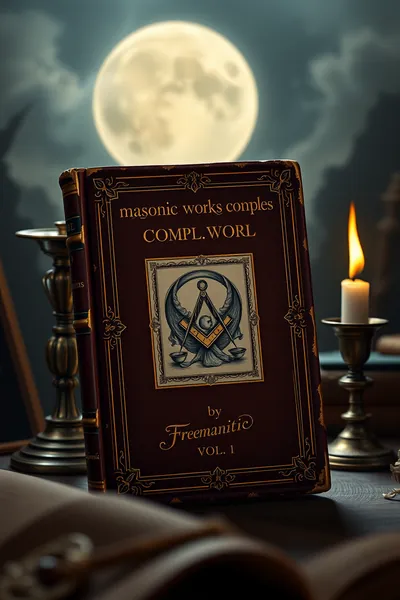
The text looks at the rich symbolic language of Freemasonry, interpreting everything from architectural tools to geometric forms as representations of cosmic principles and stages of spiritual development. Key symbols likely explored include the square, compasses, level, plumb line, and the Blazing Star, each imbued with many-sided meanings related to morality, divine order, and the aspirant's journey. The 'Signet' aspect suggests a focus on emblems of authority and hidden meaning, further emphasizing the symbolic depth.
Modern Relevance
The esoteric insights presented in this 1851 publication remain remarkably relevant today. In an age often characterized by materialism and a disconnect from deeper spiritual realities, these texts offer a profound re-engagement with timeless principles of self-mastery, ethical conduct, and the pursuit of higher consciousness. The symbolic language and philosophical inquiries serve as potent tools for modern seekers looking to understand their place in the cosmos, cultivate inner wisdom, and connect with a tradition that emphasizes personal transformation and universal brotherhood.
👥 Who Should Read This Book
This volume is a treasure for dedicated Masonic initiates seeking to deepen their understanding beyond the ritualistic surface, offering philosophical and historical context. Scholars of secret societies, esoteric traditions, and 19th-century intellectual history will find invaluable primary and secondary source material. Spiritual seekers and practitioners of hermetic arts will appreciate the rich allegorical interpretations and the exploration of perennial philosophy. Even the curious historian will find a compelling window into the spiritual and intellectual currents of the Victorian era, revealing the enduring quest for meaning.
📜 Historical Context
Published in 1851, 'Mitchell JWS Masonic Signet And Literary Mirror Vol 5 & 6' emerges from the heart of the Victorian era, a period characterized by a burgeoning interest in spiritualism, occultism, and the re-examination of ancient traditions. Freemasonry, already a well-established institution, was a significant cultural force, attracting thinkers, leaders, and seekers of esoteric knowledge. This era saw a proliferation of Masonic literature, much of which sought to codify, interpret, and disseminate the fraternity's teachings, often with a strong emphasis on moral philosophy, allegory, and the search for universal truths. The 'Literary Mirror' aspect suggests a reflection of the broader intellectual landscape, where Masonic thought intertwined with contemporary philosophical, scientific, and religious debates, offering a unique perspective on the intersection of societal progress and mystical inquiry.
📔 Journal Prompts
Reflect on a Masonic symbol that appeals to you. What deeper meaning might it hold in your personal life?
How does the concept of the 'Great Architect' in Freemasonry align with or differ from your own understanding of the divine?
Consider the tools of the craft (square, compasses, etc.). How can these be applied metaphorically to your own self-improvement?
What does the idea of 'inner illumination' mean to you, and how might you cultivate it in your daily life?
Explore the connection between outer order (society, rituals) and inner order (personal growth, spiritual development) as presented in Masonic thought.
🗂️ Glossary
Esoteric
Relating to or intended only for a small number of people with a specialized knowledge or interest; inner, hidden, or secret knowledge.
Hermeticism
A religious, philosophical, and esoteric tradition based on the writings attributed to Hermes Trismegistus, emphasizing the unity of all things and the pursuit of hidden wisdom.
Allegory
The symbolic representation of abstract ideas or principles through concrete characters, events, or settings in literature or art.
Perennial Philosophy
A concept popularized by Aldous Huxley, suggesting that all major religious and spiritual traditions share a common, underlying truth or wisdom.
Signet
A small seal, especially one used to authenticate documents; often symbolic of authority, hidden knowledge, or a mark of belonging.
This book appears in 2 collections
🔮 Readers Also Liked
Browse all →





From the “Secret Societies” Collection
View all →



More Free Freemasonry & Secret Societies Books
View all →