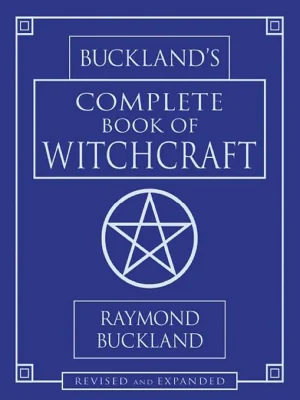
Buckland's Complete Book of Witchcraft
 77
77

Buckland's Complete Book of Witchcraft
Raymond Buckland's "Complete Book of Witchcraft" remains a foundational text for many exploring modern Wicca. Its strength lies in its clear, step-by-step approach, making complex concepts accessible to beginners. Buckland's own lineage and experience, particularly with Seax-Wica, imbue the text with practical authority. However, its focus is decidedly on the tradition Buckland knew, which may feel restrictive to those seeking a broader overview of the diverse witchcraft landscape. A particularly illustrative section is the detailed explanation of the tools and their consecration, offering tangible entry points into ritual practice. While undeniably influential, its specific focus means it is best approached as an introduction to one stream of Wicca, rather than a universal guide. It succeeds as a practical primer for the initiated.
📝 Description
77
Raymond Buckland published his Complete Book of Witchcraft in 1986, detailing Gardnerian and Seax-Wica traditions.
Raymond Buckland's Complete Book of Witchcraft, first released in 1986, functions as a detailed guide for modern Wicca. It lays out the beliefs, ceremonies, and practices of Gardnerian and Seax-Wica, as Buckland himself followed them. The book is organized to help individuals learn about and possibly participate in Wiccan practices.
This book is primarily for newcomers to Wicca or witchcraft who want a clear, structured way to learn. Experienced practitioners can also use it to better grasp specific traditions or compare their own methods. Readers interested in the history of modern Paganism and witchcraft will find its basic explanations especially helpful. The text emerged during a time of expansion and change in these movements, offering a more organized approach than some prior, less clear sources. It gave a solid structure for those wanting to understand or practice a particular form of Wicca.
Published in 1986, Buckland's work appeared as modern Paganism and Wicca were gaining wider recognition. It presented a coherent instructional text for specific Wiccan traditions, contrasting with earlier, more scattered or personal accounts. The book codified elements of Gardnerian and Seax-Wica, making them accessible for self-study and group practice. This contributed to the formalization of witchcraft as a spiritual path for a growing number of adherents.
💡 Why Read This Book?
• Gain a structured understanding of modern Wiccan beliefs and practices, including the significance of the Sabbats, as detailed in Buckland's early work on the subject. • Learn the practicalities of ritual construction and the consecration of magical tools, concepts thoroughly explained in the book's instructional chapters. • Explore the foundational principles of Seax-Wica, a tradition developed by Raymond Buckland himself, offering insight into a specific, lineage-based witchcraft.
⭐ Reader Reviews
Honest opinions from readers who have explored this book.
❓ Frequently Asked Questions
When was Buckland's Complete Book of Witchcraft first published?
Buckland's Complete Book of Witchcraft was first published in 1986, establishing it as a significant text during the burgeoning years of modern Paganism and Wicca.
What tradition of Wicca does this book primarily focus on?
The book primarily focuses on the Gardnerian tradition and Seax-Wica, a tradition founded by Raymond Buckland himself, offering a specific lineage-based perspective.
Is this book suitable for absolute beginners in witchcraft?
Yes, the book is designed as a self-study course and is highly suitable for beginners seeking a clear, structured introduction to Wiccan practices and beliefs.
What kind of rituals are described in Buckland's Complete Book of Witchcraft?
It describes various rituals, including those for the eight Sabbats, Esbats, and rites of passage, alongside basic spellcraft and consecration ceremonies.
Does the book cover the history of witchcraft?
While it touches upon the historical context of modern Wicca, its main focus is on providing practical instruction for contemporary practice rather than extensive historical research.
What are the key elements of Wiccan practice explained in the book?
Key elements include the Wiccan Rede, the concept of the God and Goddess, the use of magical tools, and the structure of coven workings.
🔮 Key Themes & Symbolism
The Wiccan Rede
The book emphasizes the Wiccan Rede, particularly the oft-quoted line 'An it harm none, do what ye will.' This ethical framework guides magical practice, stressing responsibility and the avoidance of negative consequences. Buckland presents it not merely as a rule, but as a fundamental principle for living in harmony with natural law and the divine. Understanding this ethical compass is crucial for anyone approaching the practice of witchcraft as outlined in his work.
The God and Goddess
Central to Buckland's presentation of Wicca is the dualistic divinity of the Horned God and the Triple Goddess. The book explores their archetypal roles, their relationship, and their manifestation in various myths and natural cycles. It details how practitioners invoke and honor these deities through ritual, particularly during the Sabbats. This focus on divine polarity forms the theological bedrock of the practices described.
Ritual and Spellcraft
A significant portion of the book is dedicated to the practical application of magic. It meticulously outlines the construction of sacred space, the consecration of tools like the athame and wand, and the execution of spells for various purposes. Buckland provides specific instructions and examples, explaining ritual processes and empowering the reader to engage in magical workings safely and effectively.
Seax-Wica Tradition
Buckland's personal contribution, Seax-Wica, is presented as a viable and accessible path. This tradition, distinct from Gardnerianism, emphasizes a more solitary or family-oriented practice and draws inspiration from Anglo-Saxon roots. The book details its unique structure, its calendar, and its specific rituals, offering readers an alternative to traditional coven structures and a connection to a specific ancestral current.
💬 Memorable Quotes
Direct passages from the work, attributed to the author.
“An it harm none, do what ye will.”
— This foundational ethical principle of Wicca, the Wiccan Rede, is presented as the guiding law for practitioners. It underscores the importance of personal responsibility and the avoidance of causing harm in all actions, magical or mundane.
“The tools are an extension of the will.”
— This statement highlights the symbolic and functional importance of magical tools in ritual. They are not merely objects but conduits through which the practitioner focuses their intent and energy to manifest desired outcomes.
“The Wheel of the Year turns, bringing the Sabbats.”
— This phrase captures the cyclical nature of the Wiccan year, marked by eight major festivals celebrating the changing seasons and the interplay of the God and Goddess. These Sabbats are central to Wiccan observance and ritual.
“The Goddess is the Great Mother, the source of all.”
— This interpretation defines the Goddess as the ultimate divine feminine principle, the origin of life and creation. Her complex nature is explored throughout the book in relation to her consort, the God.
“Consecrate your tools before use.”
— This instruction emphasizes the necessity of purifying and dedicating magical implements before engaging in spellwork or ritual. Consecration imbues the tools with spiritual energy and prepares them for sacred work.
🌙 Esoteric Significance
Tradition
This work primarily fits within the Neopagan and Wiccan traditions, specifically detailing practices derived from Gardnerian Wicca and presenting Buckland's own Seax-Wica. It represents a practical, initiatory approach to modern witchcraft, emphasizing the worship of a dualistic deity (God and Goddess) and the observance of seasonal cycles. While rooted in earlier Wiccan streams, Buckland's contribution lies in its accessible, self-study format, democratizing access to these esoteric practices.
Symbolism
Key symbols include the Pentacle, representing the elements and spirit, often used for protection and invocation; the Athame, a ritual dagger symbolizing the element of fire and the practitioner's will; and the Wheel of the Year, which visually maps the eight Sabbats, symbolizing cosmic cycles, divine interplay, and the rhythm of life, death, and rebirth.
Modern Relevance
Buckland's text continues to be a reference point for contemporary solitary practitioners and those interested in the history of modern witchcraft. Its clear exposition of ritual mechanics and theological underpinnings informs current discussions on Wiccan ethics and practice. Many online communities and beginner courses still draw directly from its foundational principles and structured approach to learning.
👥 Who Should Read This Book
• Aspiring Wiccans seeking a comprehensive, self-paced introduction to foundational beliefs and practices. • Individuals interested in comparative religion and the development of modern Pagan spiritualities. • Those looking to understand the structure and lineage of specific Wiccan traditions like Gardnerianism or Seax-Wica.
📜 Historical Context
Raymond Buckland's "Complete Book of Witchcraft" emerged in 1986, a period when modern witchcraft and Wicca were gaining broader public visibility, partly due to figures like Carl Llewellyn Weschcke of Llewellyn Publications. The late 20th century saw a proliferation of witchcraft manuals, moving beyond the earlier, more exclusive works like those of Gerald Gardner and Doreen Valiente. Buckland’s book offered a clear, structured, and accessible introduction, particularly drawing from his own experiences within Gardnerian Wicca and his development of Seax-Wica. This contrasted with the more academic or esoteric writings prevalent at the time and provided a direct pathway for solitary practitioners. While figures like Starhawk were also popularizing witchcraft, Buckland’s approach was notably more instructional and tradition-specific, making it a reference for many seeking to learn practical Wiccan methods.
📔 Journal Prompts
The consecration of the Athame: what personal intentions does this ritual tool represent for you?
Reflect on the principles of the Wiccan Rede and their application to modern ethical dilemmas.
Consider the archetypal energies of the Horned God and the Triple Goddess in your own life experiences.
Outline a personal Sabbat ritual that incorporates elements discussed in the book.
Analyze the role of sacred space in your spiritual practice, drawing from the book's instructions.
🗂️ Glossary
Sabbat
One of the eight major seasonal festivals observed in Wicca, marking significant points in the solar and agricultural year, such as Samhain, Yule, and Beltane.
Esbat
A ritual or meeting held during the full moon, traditionally observed monthly in Wiccan covens to honor the Goddess.
Wiccan Rede
The ethical code of Wicca, famously summarized by the phrase 'An it harm none, do what ye will,' guiding practitioners' actions and magical workings.
Athame
A ritual dagger, typically double-edged and often made of metal, used for directing energy and invoking spirits in Wiccan ceremonies; it is not used for cutting physical objects.
Coven
A group of witches, traditionally numbering thirteen, who practice together under the guidance of a High Priest and High Priestess.
Consecration
The ritual act of purifying and dedicating a person, object, or space for sacred purposes, imbuing it with spiritual energy.
Seax-Wica
A tradition of witchcraft founded by Raymond Buckland, drawing inspiration from Anglo-Saxon culture and often practiced by solitary individuals or families.
This book appears in 1 collection
🔮 Readers Also Liked
Browse all →








From the “Witchcraft” Collection
View all →





More Free Occult Philosophy Books
View all →



![Essential Tales and Poems of Edgar Allan Poe [34 stories, 17 poems]](/img/thumb/essential-tales-and-poems-of-edgar-allan-poe-34-stories-17-poems-edgar-allan-poe-080648.webp)