Kirsteen's Grimoire
 79
79

Kirsteen's Grimoire
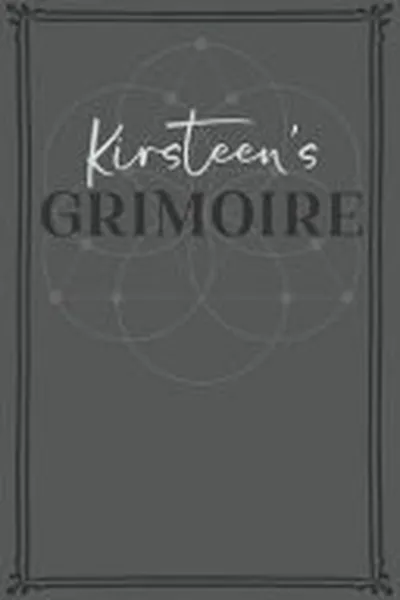
Loveable Fringe’s Kirsteen's Grimoire presents a modern, accessible entry point into the personal grimoire tradition. Its clean 6x9 format and dual-page layout—part journal, part spell page—is a pragmatic design choice, offering structure without being overly prescriptive. The inclusion of specific prompts related to spell pages and herb notes is a notable strength, guiding the user effectively. However, the lack of pre-written content or thematic guidance means the onus of creation falls entirely on the user; it's a blank canvas, which could be intimidating for absolute beginners. A passage detailing the significance of lunar cycles for spell timing, though brief, highlights the book's practical intent. Ultimately, Kirsteen's Grimoire serves its purpose as a functional, customizable vessel for personal magical record-keeping.
📝 Description
79
Kirsteen's Grimoire, first published in 2019, is a personalized notebook for esoteric practices.
This 6x9 inch notebook contains 110 pages designed for practitioners of magical arts. It combines blank lined sections for general journaling with dedicated spaces for recording spellcraft. The aim is to provide a flexible yet organized format for documenting magical experiments, personal insights, and observations related to occult interests.
Its design caters specifically to individuals named Kirsteen who wish to chronicle their spiritual and magical activities. The book is suitable for newcomers to witchcraft, spellcasting, or pagan paths, and also for seasoned practitioners needing a portable record-keeping system. It makes a thoughtful gift for various occasions for such individuals.
This grimoire follows the tradition of personal magical notebooks, akin to a Book of Shadows in modern witchcraft. Historically, grimoires have served as compendiums of magical spells and rituals, with examples dating back to medieval and Renaissance Europe. These texts often contained instructions for alchemy, astrology, and other occult arts, acting as vital tools for knowledge transmission in clandestine magical circles.
💡 Why Read This Book?
• Gain a dedicated, structured space for cataloging your unique magical practices, moving beyond abstract concepts to concrete spell formulations as seen in the alternating spell pages. • Develop a personal system for tracking vital esoteric data, such as astrological cycles and herb properties, fostering a deeper connection to natural rhythms and correspondences. • Cultivate a tangible record of your spiritual growth and magical experimentation, creating a personal archive that reflects your individual journey since its 2019 publication.
⭐ Reader Reviews
Honest opinions from readers who have explored this book.
❓ Frequently Asked Questions
What is a grimoire and why is it important in esoteric traditions?
A grimoire is a textbook of magic, typically containing spells, rituals, and instructions for magical operations. Historically, they were vital for transmitting occult knowledge and personal magical systems, serving as a record of practices and discoveries.
How does Kirsteen's Grimoire differ from a standard journal?
Unlike a standard journal, Kirsteen's Grimoire is specifically designed for magical record-keeping. It features alternating spell pages alongside lined journal pages, encouraging the systematic documentation of spells, herbs, and esoteric observations.
Can someone new to witchcraft use Kirsteen's Grimoire effectively?
Yes, it can be effective for beginners as a tool to start documenting their journey. Its blank pages provide a foundation for learning and recording spells, herbs, and personal insights as they discover them.
What kind of personal information can be recorded in this grimoire?
You can record spells, recipes for magical tinctures or potions, observations on moon cycles and astrological events, tarot readings, dream interpretations, and any other personal esoteric experiences.
When was Kirsteen's Grimoire first published?
Kirsteen's Grimoire was first published on September 11, 2019, by Loveable Fringe.
What are the physical dimensions of the notebook?
The notebook measures 6 x 9 inches, making it a convenient size for personal use and portability while offering ample writing space on its 110 pages.
🔮 Key Themes & Symbolism
Personalized Magical Record-Keeping
This grimoire emphasizes the creation of a unique, personalized record of magical practice. It moves away from generalized texts by offering a dedicated space for an individual practitioner, named Kirsteen, to document her specific spells, herbal knowledge, and observations. The blend of lined and spell pages encourages a holistic approach, integrating personal reflections with structured magical notation. This fosters a deep, individual connection to one's craft, transforming the book into a living document of personal spiritual evolution.
Integration of Esoteric Disciplines
The grimoire serves as a nexus for various esoteric disciplines. It prompts users to track not only spells but also astrological cycles, lunar phases, and herbal properties, linking different facets of occult study. This integration is crucial for understanding the interconnectedness of magical workings. By providing space for these diverse entries, the book encourages a comprehensive worldview, where celestial movements, plant energies, and ritual actions are seen as part of a unified magical system.
The Book of Shadows Concept
As a 'Book of Shadows,' Kirsteen's Grimoire embodies the modern witchcraft principle of a personal, mutable magical record. Unlike ancient grimoires, which often contained fixed traditions, this modern iteration is designed for adaptation and personalization. It is a space where the practitioner's evolving understanding and experimental results are paramount. The concept highlights the shift towards individual authority and direct experience in contemporary esoteric practice.
Practical Application of Magic
The design of the grimoire prioritizes practical application. The inclusion of specific 'spell pages' alongside journal entries suggests a methodology for recording and refining magical techniques. Users are encouraged to document not just intentions but also outcomes, materials used (like herbs), and relevant timing (moon cycles, astrology). This focus on empirical observation and systematic recording promotes a disciplined approach to magical work.
💬 Memorable Quotes
Direct passages from the work, attributed to the author.
“Personalized Name Grimoire / Book of Shadows - 6 x 9 inch.”
— This description highlights the book's core function: a customizable grimoire tailored to an individual, serving as a personal 'Book of Shadows' for documenting magical practices.
“110 pages measuring 6 x 9 inches in size with both blank lined journal papers and alternating spell pages.”
— This detail underscores the practical, dual-purpose design, offering ample space for both freeform journaling and structured spell recording within a convenient physical format.
“Grimoires, or shadow books, are perfect for keeping track of spells, herbs, recipes, moon cycles, tarot readings, astrology cycles and so much more.”
— This statement outlines the broad utility of a grimoire, positioning it as an essential tool for comprehensively documenting diverse esoteric knowledge and practices.
“The Perfect Personalized birthday, Christmas, holiday or back to school gift for that beautiful person named Kirsteen in”
— This emphasizes the grimoire's suitability as a thoughtful, personalized gift, specifically intended for someone named Kirsteen, highlighting its bespoke nature.
“Stylish and modern personalized grimoire notebook.”
— This phrase positions the grimoire not as an archaic artifact but as a contemporary tool, appealing to modern aesthetics while retaining its esoteric purpose.
🌙 Esoteric Significance
Tradition
This grimoire aligns with the modern Western Esoteric tradition, particularly drawing from contemporary witchcraft and pagan practices that utilize a personal 'Book of Shadows.' It departs from older, more rigidly defined grimoires by emphasizing personalization and adaptation. While historical grimoires often focused on ceremonial magic or specific angelic/demonic evocations, this work caters to a broader, more individualized approach to magic, integrating personal experience with established esoteric concepts.
Symbolism
The primary symbolic element is the grimoire itself, representing the practitioner's inner world, knowledge, and power made manifest. The alternating pages symbolize the duality of magical practice: the structured, intentional 'spell page' for focused workings, and the fluid, intuitive 'journal page' for reflection and discovery. The 6x9 inch format can be seen as a practical, grounded dimension, making the esoteric accessible for daily use.
Modern Relevance
Contemporary practitioners of witchcraft, Wicca, and other nature-based spiritual paths frequently employ personalized grimoires. This book speaks to modern trends emphasizing self-discovery, personal gnosis, and the integration of magic into daily life. Thinkers and practitioners focusing on modern magical theory, such as those influenced by authors like Doreen Valiente's foundational work on the Book of Shadows, find value in such tools for documenting evolving practices.
👥 Who Should Read This Book
• Aspiring witches and occultists seeking a dedicated space to begin documenting their magical journey from the outset of their studies. • Experienced practitioners looking for a practical, modern notebook to meticulously record spells, rituals, and esoteric observations in a portable format. • Individuals named Kirsteen interested in receiving a personalized and functional gift that supports their exploration of esoteric arts and personal spirituality.
📜 Historical Context
The concept of the grimoire, or 'spell book,' gained prominence in Europe during the late medieval and Renaissance periods, with texts like the *Grimorium Verum* and the *Key of Solomon* circulating widely. These often compiled earlier magical traditions, including Hermeticism, Kabbalah, and folk magic. While Loveable Fringe's *Kirsteen's Grimoire* (2019) is a modern manifestation, it taps into this long lineage of personal magical documentation. During the periods when grimoires were prevalent, they were often viewed with suspicion by religious authorities, leading to periods of censorship and persecution for those found possessing or practicing from them. Contemporary occultists like Aleister Crowley, writing in the early 20th century, also engaged with and adapted grimoire traditions, demonstrating the enduring, albeit often clandestine, influence of these texts. The reception of grimoires has varied, from being dismissed as superstition to being studied as historical documents of belief systems.
📔 Journal Prompts
Record a spell you devised this week, noting the specific herbs and astrological timing used.
Reflect on the significance of the current moon phase for your magical workings.
Detail a recent tarot reading, including your interpretation of the spread.
Document the properties of a new herb you have encountered.
Explore the connection between your dream experiences and your magical intentions.
🗂️ Glossary
Grimoire
A textbook of magic, typically containing instructions for spells, rituals, and the invocation of spirits. Historically significant in Western esotericism.
Book of Shadows
A personal book kept by witches and pagans containing magical information, spells, rituals, and personal notes relevant to their practice. Often seen as a living document.
Spell Page
A dedicated section within the grimoire designed for the systematic recording and detailing of magical spells and their components.
Herbs
Plants used in magical practices for their perceived energetic properties, often incorporated into spells, potions, or rituals.
Moon Cycles
The phases of the Moon (new moon, waxing, full moon, waning) which are often considered significant for timing magical workings and rituals.
Astrology
The study of the movements and relative positions of celestial bodies interpreted as having an influence on human affairs and the natural world.
Tarot Readings
A practice using a deck of cards (the Tarot) to gain insight into the past, present, or future, often involving specific spreads and interpretations.