The Nostradamus Prophecy
 84
84

The Nostradamus Prophecy
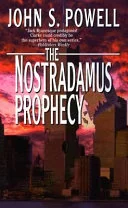
John S. Powell's The Nostradamus Prophecy plunges a former CIA operative into a high-stakes race against time, a familiar premise that nonetheless sparks with urgency. The author grounds the narrative in plausible geopolitical tensions, specifically referencing the Chechen conflict and the specter of nuclear terrorism, giving the technothriller a chilling contemporary relevance. Powell’s depiction of the protagonist’s journey, from Cairo’s City of the Dead to an abandoned Civil War iron mine, provides vivid settings that enhance the sense of global pursuit. A notable strength lies in the intricate plotting, which successfully builds suspense through layers of deception. However, the reliance on the trope of the lone, legendary operative occasionally strains credulity, particularly when confronting a sophisticated terrorist network. The integration of Nostradamus's prophecies, while central to the title, sometimes feels more like a narrative device than a deeply explored thematic element. Ultimately, Powell delivers a competent, action-driven thriller that, despite minor conventionalities, offers a satisfyingly complex plot.
📝 Description
84
John S. Powell's 1999 technothriller, The Nostradamus Prophecy, pits a retired CIA operative against Chechen terrorists.
The Nostradamus Prophecy, published in 1999, is a technothriller by John S. Powell. The story follows a former CIA operative tasked with stopping Chechen terrorists from detonating nuclear weapons in the United States. Powell weaves a narrative of global intrigue and high-stakes missions, blending espionage with elements of speculative prophecy.
This novel appeals to readers who enjoy fast-paced thrillers that incorporate geopolitical tensions, mystery, and historical prophecy. It is suited for those interested in clandestine operations, international threats, and the intersection of ancient predictions with modern conflicts.
Published as the millennium turned, the book reflects late 20th-century anxieties about nuclear proliferation and terrorism, issues heightened by events like the Chechen Wars. The work also taps into the sustained public interest in Nostradamus's quatrains, which saw a cultural revival in the 1990s.
The Nostradamus Prophecy engages with the popular fascination surrounding Michel de Nostredame's 16th-century prophecies. The book's plot draws on the idea that ancient predictions might offer insight into contemporary global conflicts and potential future catastrophes. It explores how such prophecies can be interpreted in light of modern geopolitical events and the perceived inevitability or controllability of future crises, reflecting a broader cultural interest in divination and its relation to historical patterns.
💡 Why Read This Book?
• Gain insight into the geopolitical anxieties of the late 20th century, specifically the threat of nuclear terrorism, as depicted in the novel's depiction of Chechen conflicts. • Experience a narrative that interweaves espionage with the historical mystique of Nostradamus's prophecies, exploring how ancient predictions might manifest in modern crises. • Follow a suspenseful plot that traverses diverse locations, from Cairo's ancient burial sites to forgotten American industrial remnants, highlighting the blend of historical settings and contemporary action.
⭐ Reader Reviews
Honest opinions from readers who have explored this book.
❓ Frequently Asked Questions
What is the primary plot of The Nostradamus Prophecy?
The book follows an ex-CIA operative who must recover stolen nuclear warheads from Chechen terrorists aiming to attack the United States, navigating a complex web of betrayal and illusion.
What historical periods or locations are featured in the book?
The narrative spans locations from Cairo's City of the Dead to an abandoned Civil War iron mine in North Carolina, incorporating elements of historical mystery.
Does the book feature actual prophecies from Nostradamus?
While the title suggests a direct focus, the book uses the concept of Nostradamus's prophecies as a thematic element within a technothriller plot rather than a direct exposition of his quatrains.
Who is the author John S. Powell?
John S. Powell is the author of The Nostradamus Prophecy, first published in 1999. Information about his other works or background is less prominent.
What genre does The Nostradamus Prophecy belong to?
It is primarily a technothriller, blending elements of espionage, geopolitical intrigue, action, and mystery with speculative themes related to prophecy.
Is this book based on a true story?
The book is a work of fiction, a technothriller. While it draws on real-world geopolitical concerns like nuclear terrorism and the Chechen Wars, the plot and characters are imagined.
🔮 Key Themes & Symbolism
Prophecy and Predetermination
The novel grapples with whether human actions can alter foreseen catastrophic events, using Nostradamus's enigmatic quatrains as a backdrop. It questions the extent to which fate is fixed or mutable, especially when confronted by imminent global threats. The narrative explores the psychological impact of believing in or defying destiny, particularly for characters like the ex-CIA operative facing seemingly insurmountable odds.
Geopolitical Intrigue and Nuclear Threat
Set against the backdrop of late 20th-century international relations, the book highlights anxieties surrounding nuclear proliferation and the rise of non-state actors like terrorist groups. The Chechen Wars provide a specific, volatile context for the plot, underscoring the real-world dangers of weapons of mass destruction falling into the wrong hands. This theme grounds the speculative elements in tangible, present-day fears.
Betrayal and Illusion
A core element of the narrative involves a labyrinth of deception where allies may be enemies and truth is obscured. The protagonist must constantly discern reality from falsehood, navigating a treacherous field of hidden agendas and manipulation. This theme emphasizes the psychological toll of espionage and the difficulty of trust in high-stakes situations, where appearances are rarely what they seem.
Historical Settings and Modern Quests
The book contrasts ancient, evocative settings like Cairo's City of the Dead with contemporary espionage. These locations are not mere backdrops but integral to the quest, suggesting a connection between past mysteries and present dangers. The juxtaposition of historical mausoleums and abandoned industrial sites underscores the novel's exploration of enduring human conflicts and the search for answers across time.
💬 Memorable Quotes
Direct passages from the work, attributed to the author.
“The trail takes him through a labyrinth of illusion and betrayal.”
— This phrase expresses the novel's core tension, highlighting that the protagonist's mission is not merely physical but also a psychological battle against deception and hidden motives.
“From the dusty mausoleums in Cairo's City of the Dead...”
— This evocative description signals the exotic and ancient settings the protagonist will traverse, hinting at the blend of historical mystery and modern thriller elements within the narrative.
“...to an abandoned Civil War iron mine in North Carolina.”
— This contrasts the global scope with specific, grounded American locations, suggesting the search for the warheads leads through forgotten historical sites, adding layers of historical resonance.
“Intent on waging war against the United States.”
— This clearly states the antagonists' objective, framing the narrative within a direct, high-impact geopolitical conflict and establishing the urgency of the protagonist's mission.
💡 Key Ideas
Editorial paraphrase of the work's core concepts — not direct quotes.
An ex-CIA legend must recover nuclear warheads from Chechen terrorists.
This summarizes the central conflict, establishing the high stakes of the plot and the protagonist's critical role in preventing a global catastrophe involving advanced weaponry.
🌙 Esoteric Significance
Tradition
While *The Nostradamus Prophecy* is primarily a technothriller, its engagement with Nostradamus's quatrains places it adjacent to traditions of prophetic interpretation and divination. It doesn't strictly adhere to a single esoteric lineage like Hermeticism or Kabbalah but draws upon the popular cultural legacy of prophetic figures whose pronouncements are often analyzed through symbolic and allegorical lenses, akin to how one might approach ancient oracles.
Symbolism
The primary symbolic element is Nostradamus himself and his prophecies, representing the unknown future and the human attempt to decipher it. Locations like the 'City of the Dead' in Cairo symbolize mortality, history, and the hidden knowledge of the past. The abandoned Civil War iron mine can symbolize forgotten conflicts, buried secrets, and the industrial capacity for both creation and destruction.
Modern Relevance
Contemporary thinkers and practitioners interested in the intersection of geopolitics, speculative fiction, and historical prophecy might find the novel a case study. It reflects a persistent human desire to find patterns and meaning in chaotic global events, a theme relevant to modern discussions on predictive analytics, conspiracy theories, and the enduring allure of apocalyptic narratives in popular culture.
👥 Who Should Read This Book
• Fans of 1990s technothrillers looking for a plot that blends espionage with speculative prophecy, offering a specific historical context of geopolitical tension. • Readers interested in the cultural phenomenon of Nostradamus and how his prophecies have been interpreted in popular fiction, seeking a fictional exploration rather than academic analysis. • Individuals who enjoy fast-paced narratives with global settings and intricate plots involving betrayal, seeking an action-driven story that touches upon themes of fate and human agency.
📜 Historical Context
Published in 1999, John S. Powell's *The Nostradamus Prophecy* emerged during a period of heightened global anxiety. The late 20th century was marked by the aftermath of the Cold War, the rise of international terrorism, and persistent fears of nuclear annihilation, particularly amplified by conflicts such as the Chechen Wars. The novel taps into this zeitgeist, positioning Nostradamus's prophecies not as mere historical curiosities but as potentially relevant portents for contemporary crises. This fascination with Nostradamus saw a significant popular revival in the late 20th century, fueled by media interpretations and a general public interest in esotericism and future-telling. Powell's work fits within a broader trend of technothrillers that fused geopolitical realism with speculative elements, a genre that gained traction throughout the 1990s. While not directly engaging with academic esoteric circles, it reflected a popular cultural preoccupation with hidden knowledge and apocalyptic scenarios, a trend also explored by authors like Graham Hancock, albeit in different domains.
📔 Journal Prompts
The labyrinth of illusion and betrayal: How does the protagonist discern truth from falsehood?
Nostradamus's prophecies as a narrative device: Reflect on their role in driving the plot.
The contrast between Cairo's City of the Dead and the iron mine: What do these settings symbolize?
The specter of nuclear warheads: Consider the geopolitical anxieties Powell tapped into.
An ex-CIA legend's task: Explore the archetype of the lone operative facing immense odds.
🗂️ Glossary
Technothriller
A genre of fiction that combines elements of technology, science, and suspenseful action, often involving espionage, military operations, or imminent global threats.
Nostradamus Prophecy
Refers to the quatrains (four-line poems) written by Michel de Nostredame in the 16th century, which many believe predict future events. The book uses this concept as a plot element.
Chechen Terrorists
Refers to militant groups associated with the Chechen Republic, often involved in conflicts and acts of terrorism during the late 20th and early 21st centuries, as depicted in the novel.
Nuclear Warheads
The explosive component of a nuclear weapon, the recovery of which forms the central objective of the protagonist in the novel.
City of the Dead (Cairo)
A historic Islamic cemetery in Cairo, Egypt, known for its mausoleums and urban landscape, used as a setting in the book to evoke historical mystery.
Civil War Iron Mine
An abandoned industrial site from the American Civil War era, used as a location in North Carolina within the novel, symbolizing forgotten history and hidden dangers.
Ex-CIA Legend
A term used in the book's blurb to describe the protagonist, implying a highly skilled and experienced former operative from the Central Intelligence Agency.
This book appears in 1 collection
🔮 Readers Also Liked
Browse all →









From the “Nostradamus” Collection
View all →






More Free Occult Philosophy Books
View all →