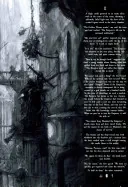
Midnight

 76
76

Midnight
Erin Hunter’s "Midnight" presents a compelling, if occasionally dense, exploration of the psychological and symbolic significance of darkness. The strength of the work lies in its unflinching gaze into the abyss of the subconscious, particularly how it renders the abstract concept of the 'midnight hour' as a palpable state of being. Hunter avoids easy answers, instead opting for a more challenging, evocative prose that mirrors the very subject matter. A limitation, however, is the text’s inherent opacity; while deliberate, this can sometimes border on inaccessible, requiring significant reader investment to unpack its layers. The passage detailing the 'encroaching shadow' as a metaphor for unacknowledged personal truths, for instance, is powerful but demands careful rereading. Ultimately, "Midnight" offers a unique, stark meditation on the self, rewarding those willing to sit with its inherent ambiguities.
📝 Description
76
Erin Hunter's 2016 book "Midnight" examines the psychological state of the 'midnight hour'.
Published in 2016, Erin Hunter's "Midnight" is a work that engages with themes of darkness, transformation, and the unknown. The narrative addresses the liminal spaces between consciousness and unconsciousness, and the potent forces that stir in the quiet hours. It is not a straightforward story but a text that invites contemplation on the nature of existence and the self when conventional reality recedes. The book's structure and content evoke an atmosphere of introspection and unease.
This book appeals to readers who seek literature that challenges conventional storytelling and explores psychological depths. It is suited for those interested in the esoteric, particularly the philosophical implications of darkness, shadow selves, and the subconscious. Readers who appreciate symbolic language and narratives that operate on multiple interpretive levels will find "Midnight" a fertile ground for their engagement. It is for the solitary reader, the late-night ponderer, and the seeker of texts that mirror the more obscure aspects of inner experience.
Published in 2016, "Midnight" connects to perennial philosophical inquiries into consciousness and the void, subjects explored by thinkers from Plotinus to Carl Jung. While not directly tied to a specific historical esoteric movement, its themes echo these inquiries. The rise of digital platforms facilitated wider access to niche literature, allowing works like "Midnight" to find dedicated audiences interested in exploring unconventional spiritual and psychological terrains.
💡 Why Read This Book?
• Gain a unique perspective on the psychological weight of nighttime, as explored through the concept of the 'midnight hour' state, offering insights distinct from diurnal narratives. • Understand the symbolic role of the shadow self, a key theme in "Midnight," providing a framework for confronting subconscious elements not typically addressed in mainstream psychology. • Experience a literary style that mirrors esoteric traditions by using atmosphere and symbolism to convey meaning, moving beyond conventional plot structures to evoke deeper contemplation.
⭐ Reader Reviews
Honest opinions from readers who have explored this book.
❓ Frequently Asked Questions
What is the primary theme of Erin Hunter's 'Midnight'?
The primary theme of 'Midnight' is the psychological and symbolic significance of the 'midnight hour' as a state of being, exploring the shadow self and liminal experiences that emerge in stillness.
When was Erin Hunter's 'Midnight' first published?
'Midnight' by Erin Hunter was first published in 2016, a period marked by growing interest in introspective and psychologically complex literature.
Does 'Midnight' offer practical advice for dealing with darkness?
No, 'Midnight' does not offer practical advice. Instead, it uses the concept of darkness and the 'midnight hour' as a symbolic lens for exploring the subconscious and inner states.
What kind of reader would appreciate 'Midnight'?
Readers interested in esoteric themes, psychological depth, symbolic language, and literature that challenges conventional narrative structures would appreciate 'Midnight'.
Are there specific symbols discussed in 'Midnight'?
While not explicitly detailed in summaries, the work uses overarching symbols like the 'midnight hour' itself and the 'shadow self' to explore its themes of introspection and the subconscious.
Is 'Midnight' part of a series?
Information regarding whether 'Midnight' is part of a series by Erin Hunter is not readily available; it is presented as a standalone work engaging with esoteric themes.
🔮 Key Themes & Symbolism
The Midnight Hour as a State
The work posits the 'midnight hour' not merely as a time but as a distinct existential and psychological state. This period represents a threshold where the ordinary veils of consciousness lift, allowing for encounters with deeper, often unacknowledged, aspects of the self. It’s a time for confronting the void, embracing stillness, and potentially accessing hidden knowledge or truths that are obscured by the 'daylight' of mundane reality. The narrative encourages readers to see this period as ripe for introspection and transformation.
The Shadow Self
A core concept explored is the shadow self, the repository of repressed desires, fears, and undeveloped potentials. 'Midnight' suggests that these elements, often relegated to the unconscious, gain prominence during the introspective 'midnight' state. The book examines the process of acknowledging and integrating these shadow aspects, proposing that true wholeness requires confronting what is typically hidden or feared, rather than denying it. This engagement with the shadow is presented as essential for authentic self-discovery.
Liminality and Thresholds
The text frequently engages with the concept of liminality – being in-between. This can manifest as the space between waking and sleeping, consciousness and unconsciousness, or even life and death. 'Midnight' uses these thresholds as powerful settings for psychological drama and spiritual inquiry. It suggests that it is at these boundaries, where familiar structures dissolve, that genuine insight and profound change can occur. The narrative invites readers to contemplate their own liminal experiences and their transformative potential.
Embracing the Void
Rather than fearing emptiness or absence, 'Midnight' explores the generative power of the void. This void is not depicted as mere nothingness but as a fertile ground from which new understanding or being can emerge. The work encourages a shift in perspective, wherein confronting the lack of external stimuli or internal certainty can lead to a deeper connection with one's essential self. This theme challenges conventional anxieties about uncertainty, reframing it as an opportunity for profound revelation.
💬 Memorable Quotes
Direct passages from the work, attributed to the author.
“When the clock strikes midnight, the ordinary world recedes.”
— This highlights the central metaphor of 'Midnight' as a state of altered consciousness, where the usual rules and perceptions of reality no longer apply, opening a space for deeper introspection.
“The deepest truths are often found in the absence of light.”
— This suggests that illumination and understanding do not solely come from external knowledge or clear perception, but can be accessed through confronting the unknown and the internal darkness.
“Within the shadow lies the unacknowledged self.”
— This is a direct reference to the concept of the shadow self, positing that the parts of ourselves we ignore or repress hold significant, often untapped, potential for self-knowledge.
“Stillness is not emptiness, but a fertile ground.”
— This interpretation encourages a re-evaluation of silence and inactivity, framing them not as negative voids but as productive spaces for growth and revelation.
“To stand at the threshold is to begin.”
— This emphasizes the importance of liminal states and transitions, suggesting that the act of being on the verge of change or understanding is itself a crucial step in a transformative process.
🌙 Esoteric Significance
Tradition
While not explicitly aligned with a single named tradition, "Midnight" draws heavily on archetypal psychology and perennial philosophy, echoing themes found in Gnostic introspection and Jungian analytical psychology. It engages with the concept of the psyche's 'dark night' and the process of confronting the unconscious, elements central to many mystical paths seeking direct experience of the divine or the true self. The work functions as a modern literary exploration of the inner journey, emphasizing self-discovery through confronting one's own perceived darkness.
Symbolism
The title 'Midnight' itself serves as a potent symbol, representing a temporal and spiritual threshold—the deepest point of darkness before dawn, symbolizing the subconscious, the unknown, and the potential for profound revelation. The 'shadow self' is another key motif, representing the unacknowledged aspects of personality that must be integrated for wholeness. Furthermore, the concept of the 'void' or 'emptiness' is explored not as mere absence but as a fertile ground for potential and new beginnings, a common theme in contemplative traditions.
Modern Relevance
Contemporary thinkers and practitioners in fields like depth psychology, mindfulness, and transpersonal psychology find resonance in "Midnight's" exploration of the shadow self and liminal states. Its approach to confronting inner darkness without resorting to simplistic platitudes appeals to those seeking authentic self-understanding. Modern spiritual and self-help movements that emphasize shadow work and acceptance of all aspects of the self, even the uncomfortable ones, can find "Midnight" a valuable literary companion for contemplation and personal growth.
👥 Who Should Read This Book
• Individuals interested in Jungian psychology and the concept of the shadow self will find "Midnight" offers a unique literary perspective on these ideas. • Seekers of introspective literature that explores the nature of consciousness and the subconscious will appreciate its evocative and symbolic approach. • Readers who engage with contemplative practices and philosophical inquiries into existence will find the work a rich source for personal reflection.
📜 Historical Context
Erin Hunter's "Midnight," published in 2016, arrived in a literary landscape increasingly receptive to introspective and psychologically charged narratives. While the author Erin Hunter is known for prolific output across various genres, this particular work taps into a vein of esoteric and philosophical inquiry that has seen resurgence. The early 21st century witnessed renewed interest in Jungian psychology, particularly the concept of the shadow, and a broader cultural embrace of mindfulness and shadow work. "Midnight" can be seen as engaging with these currents, offering a literary exploration of themes that resonate with contemporary spiritual seekers. Its publication coincided with a period where authors like Cheryl Strayed were also exploring personal darkness and resilience, albeit through different lenses. The work avoids explicit ties to historical movements like Theosophy or Hermeticism, instead drawing on perennial philosophical questions about consciousness and the self that have been explored across centuries, from ancient Gnosticism to modern existentialism.
📔 Journal Prompts
The encroaching shadow and its personal implications.
Reflections on the 'midnight hour' as a state of being.
Embracing the void: what potential does it hold?
The threshold: where does your inner journey stand?
Acknowledging the unacknowledged self.
🗂️ Glossary
Midnight Hour
A symbolic state representing the deepest point of darkness, introspection, and unconscious awareness, occurring when external distractions are minimal.
Shadow Self
The unconscious or repressed aspects of the personality that an individual is not aware of or chooses to ignore, often containing fears and unacknowledged desires.
Liminality
The quality of being in a transitional or in-between state, such as the threshold between waking and sleeping, or between different phases of life or consciousness.
The Void
In this context, not mere nothingness, but a state of potentiality and fertile ground from which new understanding or being can emerge.
Threshold
A point or place of entering or beginning; a boundary, often signifying a transition or a point of potential change and revelation.
Archetypal Psychology
A branch of psychology, heavily influenced by Carl Jung, that focuses on the universal patterns and images that emerge from the collective unconscious.
Perennial Philosophy
The philosophical view that all religions and spiritual traditions share a common core of metaphysical truths, often referred to as the 'Perennial Wisdom'.
🔮 Readers Also Liked
Browse all →






More by Erin Hunter
All books →





More Free Occult Philosophy Books
View all →