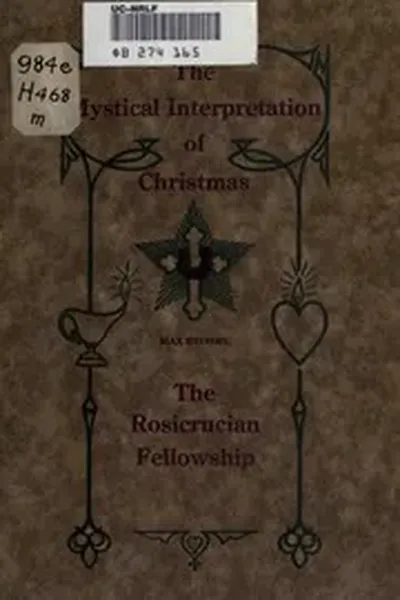
Maximi Confessoris Mystagogia

 75
75

Maximi Confessoris Mystagogia
The Mystagogia of Maximus Confessor is a demanding but immensely rewarding text for those who approach it with diligence. Its strength lies in its systematic and profound articulation of the ascent of the soul towards God, grounding spiritual experience in rigorous theological understanding. The intricate explanation of divine energies versus divine essence, for instance, provides a conceptual framework that has shaped Eastern Orthodox spirituality for centuries. However, the sheer density of its philosophical and theological language can present a significant barrier. A reader unfamiliar with patristic thought or Neoplatonic influences might struggle to grasp the nuances without extensive prior study or commentary. The section detailing the stages of prayer, moving from sensible to intellectual and finally to supra-intellectual contemplation, is particularly striking in its depiction of the soul's journey. Ultimately, Mystagogia stands as a foundational text for understanding the contemplative tradition within Christianity.
📝 Description
75
Maximus Confessor's Mystagogia, written around the 7th century, explains spiritual ascent and divine union.
Maximus Confessor's Mystagogia is a theological treatise on Christian mystical theology. It details spiritual ascent and union with God, focusing on prayer, contemplation, and the effects of divine grace. Rather than a narrative, it is a structured exposition intended to help readers understand divine mysteries more deeply. The work is best suited for those with a background in Patristic theology and Orthodox Christian spirituality. Readers interested in the historical development of mystical thought, particularly within ascetical and contemplative traditions, will find its systematic approach valuable. Those seeking straightforward meditation techniques may find the dense theological language requires prior study.
Maximus Confessor, who lived from approximately 580 to 662 AD, was a significant figure in 7th-century Byzantine theology. His writings, including Mystagogia, engaged with Neoplatonic philosophy while remaining grounded in Nicene orthodoxy. He was active during a period of intense Christological debate, which eventually led to his exile and martyrdom. His theological contributions greatly influenced later Eastern Christian thought, especially within Byzantine monasticism and mystical theology.
This text belongs to the tradition of Christian mysticism, particularly within the Eastern Orthodox Church. It engages with concepts of spiritual purification and ascent towards God, a common theme in ascetical literature. Maximus grounds these mystical experiences in established orthodox theology, distinguishing it from purely philosophical speculation. The work touches on the idea of *theosis*, or deification, which is the ultimate goal of the spiritual life for many mystics, understood as a participation in the divine nature through grace.
💡 Why Read This Book?
• Gain a detailed theological framework for the Christian concept of deification (theosis), as articulated by Maximus Confessor, moving beyond simplistic notions of spiritual attainment. • Understand the intricate relationship between divine energies and divine essence, a concept central to Eastern Orthodox theology and Maximus's own Christological debates. • Explore the stages of prayer and contemplation described by Maximus, offering a structured path for deepening one's spiritual life, distinct from purely psychological approaches.
⭐ Reader Reviews
Honest opinions from readers who have explored this book.
❓ Frequently Asked Questions
What is the primary theological focus of Maximi Confessoris Mystagogia?
The primary focus is the mystical ascent of the soul towards union with God, exploring prayer, contemplation, and the transformative process of deification (theosis) through divine grace.
Who was Saint Maximus the Confessor and when did he live?
Saint Maximus the Confessor was a 7th-century Byzantine monk and theologian, a key figure in Christological debates, who lived approximately from 580 to 662 AD.
What philosophical influences can be found in Mystagogia?
The work shows engagement with Neoplatonic philosophical concepts, integrating them into a distinctly Christian theological framework, particularly concerning the nature of the divine and the soul's journey.
Is Mystagogia a practical guide to meditation?
While it describes stages of prayer and contemplation, it is fundamentally a dense theological treatise. It is best suited for those with a theological background rather than as a beginner's practical meditation manual.
What is the significance of 'divine energies' in Maximus's thought?
Maximus distinguishes between God's unknowable essence and His knowable divine energies, through which humanity can participate in God's uncreated life and achieve theosis.
What does 'Mystagogia' mean in the context of this book?
Mystagogia refers to an 'initiation' or 'instruction' into sacred mysteries, indicating the book's purpose to guide readers into a deeper understanding and experience of divine realities.
🔮 Key Themes & Symbolism
Theosis and Divine Union
Mystagogia intensely focuses on the concept of theosis, or deification, presenting it not as mere imitation but as a genuine participation in the divine life through God's uncreated energies. Maximus outlines a spiritual trajectory wherein the human person, through grace and ascetical practice, is transformed and united with God, becoming 'god by grace.' This process involves purifying the mind and heart, ascending through various stages of prayer, and ultimately experiencing the divine presence in a supra-rational manner.
Divine Energies vs. Essence
A crucial distinction made within the work is between God's inaccessible essence and His accessible energies. This doctrine, central to Maximus's apologetics and mystical theology, allows for the possibility of communion with God without reducing the divine mystery to human comprehension. The divine energies are the means by which God interacts with creation and by which creation can partake in the divine nature, forming the basis for theosis.
The Ascent of Prayer
Maximus details a sophisticated understanding of prayer, moving from the sensible and vocal to the intellectual and finally to a state of spiritual repose beyond thought. This ascent involves the purification of the passions and the concentration of the mind on God. The ultimate goal is a state of constant, unceasing prayer, where the intellect is divinely illumined and rests in the contemplation of God, reflecting the transformative power of grace.
Spiritual Anthropology
The book explores a profound vision of human nature, created in the image of God and destined for deification. Maximus addresses the effects of the fall and the spiritual disciplines required to restore that image. He emphasizes the synergy between divine grace and human will in the salvific process, highlighting the capacity of the human person to be a vessel for divine indwelling and transformation.
💬 Memorable Quotes
Direct passages from the work, attributed to the author.
“The mind, purified by prayer, ascends to the contemplation of God.”
— This succinctly captures the core ascetic and contemplative path outlined in Mystagogia, where disciplined prayer is the engine for spiritual ascent and divine apprehension.
“The soul moves from sensible prayer to intellectual prayer, and finally to spiritual repose.”
— This describes the graduated stages of prayer described by Maximus, illustrating a movement from outward expression to inner stillness and direct divine experience.
“God's essence is unknowable, but His energies are accessible.”
— This expresses the crucial distinction Maximus makes, allowing for communion with God while preserving His transcendent mystery, foundational to his theological system.
“Through grace, the human person is transformed and united with the divine.”
— This emphasizes the passive and active components of salvation as presented by Maximus: transformation initiated by divine grace, which the human person then cooperates with.
💡 Key Ideas
Editorial paraphrase of the work's core concepts — not direct quotes.
We become God by grace, participating in His uncreated energies.
This paraphrase highlights the central doctrine of theosis, emphasizing that union with God is a gift received through participation in His divine, uncreated operations, not a natural achievement.
🌙 Esoteric Significance
Tradition
Mystagogia is a core part of Eastern Christian contemplative tradition, deeply rooted in the ascetic and mystical theology of the early Church Fathers. While not fitting neatly into Western categories like Hermeticism or Kabbalah, it shares with Gnosticism an emphasis on direct apprehension of the divine and the transformative journey of the soul. However, it firmly rejects Gnosticism's dualism, grounding its spiritual path in orthodox Trinitarian theology and the Incarnation.
Symbolism
The book utilizes the symbolism of light extensively, representing divine presence, illumination, and the uncreated energies of God. The ascent of the mind to God can be seen as a movement towards this divine light. Another motif is the transformation of the human person into an icon of Christ, reflecting the divine image that was marred by the fall and is restored through grace and spiritual discipline.
Modern Relevance
Contemporary Orthodox theologians and spiritual writers continue to draw heavily on Maximus's Mystagogia for understanding prayer, asceticism, and the nature of God. His concepts of theosis and divine energies are foundational in modern discussions of Orthodox spirituality. Thinkers influenced by his work often explore the integration of theology and lived experience, finding in Maximus a profound articulation of the spiritual life accessible through rigorous intellectual and ascetical practice.
👥 Who Should Read This Book
• Students of Patristic theology and Christian mysticism seeking foundational texts from the Byzantine era. • Ascetics and contemplatives interested in historical theological frameworks for spiritual development and prayer. • Scholars of comparative religion and philosophy exploring the intersection of Neoplatonism and Christian doctrine in late antiquity.
📜 Historical Context
Maximus the Confessor’s Mystagogia emerged from the fertile, yet contentious, theological field of the 7th-century Byzantine Empire. This era was dominated by Christological disputes, particularly the Monothelite controversy, which debated the nature of Christ's will. Maximus, a staunch defender of Chalcedonian orthodoxy, vigorously opposed Monothelitism, a stance that ultimately led to his persecution, torture, and exile in 661 AD, making him a martyr for his faith. His work engaged deeply with the philosophical currents of the time, particularly Neoplatonism, yet he rigorously reinterpreted these ideas through the lens of Nicene Christian doctrine. He stood in intellectual opposition to figures like Patriarch Sergius I of Constantinople. While contemporary Western thought was grappling with its own theological developments, Maximus's contributions were primarily formative for Eastern Christian spirituality and theology, influencing generations of monks and theologians, particularly within the Orthodox tradition.
📔 Journal Prompts
The purification of the mind described by Maximus: what passions currently obscure your inner vision?
Maximus's concept of divine energies: how might you perceive God's uncreated operations in your daily life?
The stages of prayer: reflect on your own prayer journey and where it aligns with Maximus's ascent.
Theosis as 'becoming God by grace': what does this profound transformation mean for your understanding of human potential?
Contemplation of divine light: how can you cultivate a greater awareness of God's informative presence?
🗂️ Glossary
Theosis
The process of deification or becoming 'god by grace,' a central concept in Eastern Christian theology, representing the ultimate goal of human spiritual life: union with God.
Divine Energies
The uncreated operations or powers through which God interacts with creation and makes Himself known, distinct from His transcendent and unknowable essence.
Asceticism
Spiritual discipline involving rigorous self-denial and training, aimed at purifying the body and soul, overcoming passions, and fostering spiritual growth.
Contemplation
A state of deep, wordless prayer and spiritual awareness, involving direct apprehension of divine realities, often considered the highest form of prayer.
Neoplatonism
A philosophical system originating from Plato, emphasizing a hierarchical structure of reality emanating from a supreme, ineffable 'One,' which influenced many later religious and mystical traditions.
Monothelitism
A 7th-century Christological doctrine asserting that Christ had only one (divine) will, which Maximus the Confessor vehemently opposed, arguing for two wills (divine and human) in Christ.
Intellectual Prayer
A stage of prayer where the mind is focused internally on God, moving beyond external distractions, often characterized by internal dialogue or conceptualization of divine truths.
🔮 Readers Also Liked
Browse all →




More Free Mysticism & Contemplation Books
View all →