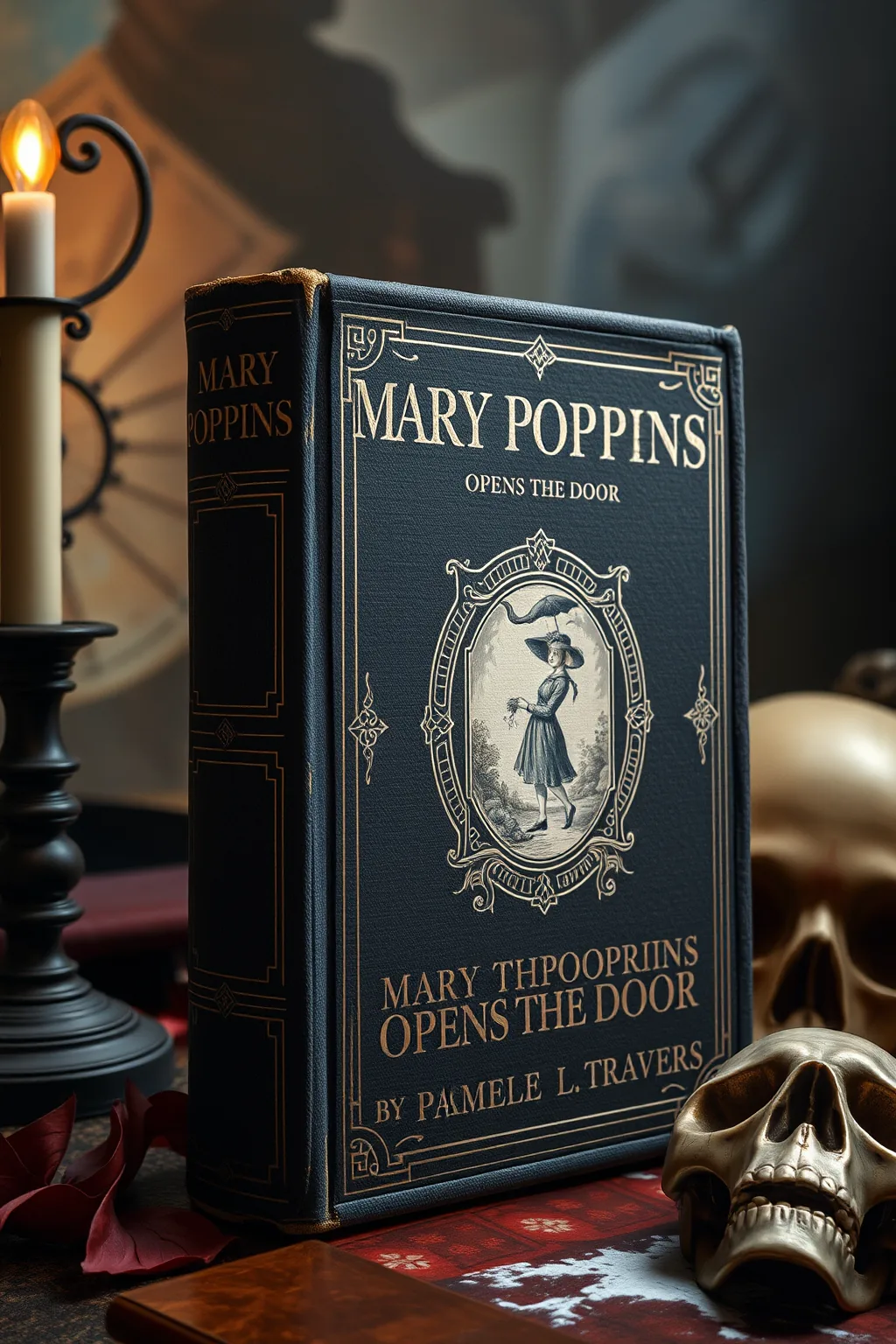
Mary Poppins Opens the Door
 72
72

Mary Poppins Opens the Door



Review by Lorelei Sage (Contemplative Literature Editor) — 'Mary Poppins Opens the Door' transcends its juvenile classification, offering a profound exploration of liminality and the subtle arts of enchantment. Travers masterfully weaves esoteric threads through whimsical narratives, revealing Mary Poppins as an archetypal figure guiding us toward innate magical potential. The book's strength lies in its ability to impart complex philosophical concepts through accessible, imaginative scenarios. It's a potent reminder that the most profound transformations often begin with the simplest of acts, guided by an unseen, yet ever-present, wisdom. Ideal for seekers of all ages yearning to reconnect with the wonder of the unseen.
📝 Description
72
Pamela L. Travers published 'Mary Poppins Opens the Door' in 1943, presenting her most mystical Mary Poppins story.
Pamela L. Travers' 1943 novel, 'Mary Poppins Opens the Door,' continues the adventures of the magical nanny. This installment moves beyond simple childcare to actively engage with spiritual and unseen forces. Mary Poppins becomes less a governess and more a guide, facilitating encounters with the uncanny and the deeply personal. The narrative weaves ordinary domestic life with extraordinary occurrences, suggesting that a hidden order underlies everyday reality.
The book invites readers to perceive the world with renewed wonder. Travers uses Mary Poppins's presence to reveal the magic inherent in the mundane, showing how perception shapes reality. It is a story about awakening to the subtle energies and symbolic meanings that permeate existence. The interactions Mary has with the Banks children and their world act as catalysts for recognizing the extraordinary within the ordinary.
Published in 1943, 'Mary Poppins Opens the Door' reflects a period when esoteric ideas were gaining traction in popular culture. Travers, who had a known interest in spiritualism and Jungian psychology, imbues this novel with themes that resonate with concepts of the collective unconscious and archetypal figures. Mary Poppins herself can be seen as an archetype, a guide who helps characters, and by extension readers, access deeper layers of awareness. The book subtly suggests that the unseen world is not separate from our own but is an integral part of existence, accessible through a shift in consciousness and a willingness to believe.
💡 Why Read This Book?
This volume beckons to the seeker who recognizes the extraordinary within the ordinary. It is an invitation to unlock the hidden doors of perception, to understand the subtle magic that underpins our reality, and to embrace the transformative power of wonder. Ideal for practitioners of manifestation, scholars of comparative mythology, and anyone on a journey of spiritual awakening seeking profound insights cloaked in delightful narrative.
⭐ Reader Reviews
Honest opinions from readers who have explored this book.
❓ Frequently Asked Questions
What are the primary esoteric themes explored in 'Mary Poppins Opens the Door'?
The book delves into themes of perception, the nature of reality, the power of belief, and the manifestation of desires through subtle, often overlooked, forces. It explores the idea that magic is not external, but an inherent quality accessible through a shift in consciousness.
How does Mary Poppins embody esoteric principles?
Mary Poppins acts as a guide, embodying wisdom, patience, and an understanding of universal laws. Her seemingly effortless interventions suggest a mastery of subtle energies and a deep connection to the intuitive realm, mirroring the practices of many esoteric traditions.
Is this book suitable for adult readers interested in metaphysics?
Absolutely. While presented as a children's story, its rich symbolism and allegorical depth offer profound insights for adults exploring spiritual and metaphysical concepts. It encourages a re-engagement with childlike wonder and intuitive understanding.
What makes this book a valuable addition to an esoteric library?
Its unique blend of accessible narrative and profound symbolic meaning makes it a powerful tool for understanding esoteric principles through relatable characters and imaginative scenarios. It bridges the gap between simple storytelling and deeper metaphysical exploration.
Does the book offer practical applications of magical thinking?
While not a manual, the book implicitly teaches the power of perspective, positive affirmation, and the interconnectedness of thoughts and reality. It encourages readers to observe and harness the subtle energies that influence their lives.
🔮 Key Themes & Symbolism
The Alchemy of Perception
Travers masterfully illustrates how shifting one's perspective can transmute the ordinary into the extraordinary. The book suggests that true magic lies not in external spells, but in the internal re-framing of reality. This 'alchemy of perception' is central to many esoteric paths, where the practitioner learns to see the divine spark in all things and to influence outcomes through conscious awareness and intention. The children's ability to embrace Mary Poppins' unusual methods mirrors the esoteric student's journey of shedding preconceived notions to embrace new paradigms of understanding and experience.
The Unseen Architect: Guidance and Intuition
Mary Poppins herself serves as a potent symbol of the guiding principle, an unseen architect orchestrating events with subtle wisdom. Her presence suggests the benevolent forces that govern the cosmos, accessible through intuition and openness. Esoteric traditions often speak of spirit guides, higher selves, or divine intelligences that offer subtle nudges and profound lessons. The children's willingness to trust Mary Poppins, even when her methods are perplexing, reflects the importance of surrendering to a higher wisdom and embracing the intuitive whispers that lead to growth and understanding.
The Enchantment of the Everyday
This narrative champions the idea that magic is not confined to fantastical realms but is woven into the fabric of our daily lives. Through whimsical adventures and transformative moments, Travers reveals the inherent enchantment that resides within the mundane. This resonates deeply with esoteric philosophies that seek to find the sacred in the profane, to recognize the divine presence in all aspects of existence. The book encourages a mindful engagement with the world, prompting readers to seek out and cultivate the magic that awaits discovery in the most unexpected places.
💬 Memorable Quotes
Direct passages from the work, attributed to the author.
“It was one of those bleak and chilly mornings that remind you winter is coming.”
— This opening sets a tone of transition and potential transformation, mirroring the esoteric concept of liminal spaces where change and revelation are most potent.
“A day is a day, and it must be lived.”
— An affirmation of presence and engagement with the unfolding moment, emphasizing the importance of conscious experience and embracing the present reality.
“There never was a child who was too good to be true.”
— A evidence of the inherent purity and potential within every individual, aligning with the esoteric belief in the divine spark residing within all beings.
“It is the way of things, you see, to be both good and bad.”
— An acknowledgment of duality and balance, a fundamental concept in many esoteric systems that recognizes the interplay of opposing forces in the universe.
“The wind, the rain, the sun – they all have their own part to play.”
— Highlights the interconnectedness of all elements and the idea of a cosmic order, where each component contributes to the greater whole, a core tenet of hermetic philosophy.
🌙 Esoteric Significance
Tradition
The work draws parallels with Hermeticism, particularly the principle of 'As Above, So Below,' suggesting that the microcosm (the family, the individual) reflects the macrocosm (the universe). It also aligns with Neoplatonic ideals of emanation and the benevolent guiding forces that influence human existence. The emphasis on inner transformation and the power of belief echoes Alchemical principles of spiritual refinement. Mary Poppins can be seen as an archetype of the divine feminine, a Sophia figure embodying wisdom and intuitive understanding.
Symbolism
Mary Poppins herself is a potent symbol of the Higher Self, the archetype of the wise guide, and the animating principle of magic. Her carpet bag represents the boundless potential and hidden resources within the unconscious mind. The chimney sweeps symbolize transformation and ascension, while the various magical occurrences reflect the manifestation of intention and the subtle manipulation of energetic currents. The changing seasons mirror cycles of spiritual growth and renewal, and the house itself can be seen as a vessel for the soul's journey.
Modern Relevance
In an age often dominated by materialism and rationalism, 'Mary Poppins Opens the Door' serves as a vital reminder of the power of imagination, intuition, and the unseen forces that shape our lives. Its message of finding magic in the everyday encourages a more mindful and enchanted existence. For modern seekers, it offers a playful yet profound exploration of consciousness, personal power, and the interconnectedness of all things, providing a gentle yet potent antidote to cynicism and disconnection.
👥 Who Should Read This Book
This volume is a wide range woven for multiple threads of readers. For **beginners** in metaphysical studies, it offers an accessible and delightful introduction to the concept of magic as an inherent force. **Scholars** of literature and comparative mythology will find fertile ground for analyzing archetypal symbolism and allegorical depth. **Seekers** on a spiritual journey will be drawn to its exploration of intuition, perception, and the guiding principles of the universe. **Practitioners** of esoteric arts will appreciate its subtle lessons on intention, manifestation, and the transformative power of perspective. Essentially, anyone who yearns to reconnect with their inner sense of wonder and explore the luminous possibilities beyond the mundane will find profound resonance here.
📜 Historical Context
Published in the mid-20th century, a period marked by significant societal shifts and a burgeoning interest in the psychological and spiritual aspects of life. The post-war era saw a renewed appreciation for childhood innocence and imagination, often used as a sanctuary from the harsh realities of the world. Travers' work tapped into this cultural undercurrent, offering a fantastical escape while simultaneously exploring profound psychological and philosophical themes. The enduring appeal of Mary Poppins can be attributed to its ability to resonate with a universal human desire for wonder, order, and the gentle guidance of a benevolent, yet mysterious, force, reflecting a deeper, often unarticulated, spiritual yearning.
📔 Journal Prompts
What 'door' in my life feels closed, and how might a shift in perspective open it?
In what everyday moments can I detect a sense of enchantment or subtle magic?
How does my current perception of reality limit or expand my potential for growth?
What 'unseen architect' or guiding force do I feel influences my life, and how can I better attune to its wisdom?
If I were to approach a challenging situation with Mary Poppins' blend of wisdom and whimsy, how might my response differ?
🗂️ Glossary
Liminal Space
A threshold or transitional state, often associated with heightened intuition and potential for transformation. In the book, these are moments of change and uncertainty where magic can unfold.
Archetype
A universal, archaic pattern of thought or image derived from the collective unconscious and appearing in art and literature. Mary Poppins is a powerful archetype of the wise guide.
Esoteric
Intended for or likely to be understood by only a small number of people with a specialized knowledge or interest. It refers to hidden or secret doctrines.
Manifestation
The act of bringing something into existence through conscious thought, intention, and belief. The book suggests that desires can be 'manifested' through a shift in perspective.
Hermeticism
A philosophical and religious tradition based on the purported teachings of Hermes Trismegistus. Its core principle is 'As Above, So Below,' implying a connection between the spiritual and material realms.
This book appears in 2 collections
🔮 Readers Also Liked
Browse all →







More by Pamela L. Travers
All books →

From the “Ceremonial Magic” Collection
View all →






More Free Magic & Ritual Books
View all →







![The book of magickal [sic] and occult rites and ceremonies](/img/thumb/the-book-of-magickal-sic-and-occult-rites-and-ceremonies-richard-dea-morelli.webp)
