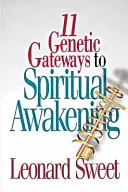
11 Genetic Gateways to Spiritual Awakening
 72
72

11 Genetic Gateways to Spiritual Awakening
Sweet's "11 Genetic Gateways to Spiritual Awakening" presents a bold, if occasionally strained, metaphor for examining the spiritual DNA of Wesleyanism. The ambition to map the "genetic code" of a religious movement is intriguing, moving beyond conventional historical analysis. The workbook format, with its exercises and questions, is a distinct strength, encouraging active engagement with the material rather than passive consumption. However, the extended genetic analogy sometimes overshadows the theological substance, leading to moments where the metaphor feels more like a stylistic flourish than a truly illuminating interpretive tool. A particular strength lies in the section exploring "epigenetics" of faith, suggesting how environmental and experiential factors can activate dormant spiritual potentials, a concept Sweet handles with notable nuance. While the book offers a unique lens, readers seeking purely systematic theology might find the allegorical approach less direct. Overall, it's a stimulating, if sometimes overly specialized, exploration of spiritual inheritance.
📝 Description
72
Leonard Sweet's 1998 book uses genetic metaphors to analyze Wesleyan spiritual traditions.
Leonard Sweet's "11 Genetic Gateways to Spiritual Awakening," published in 1998, uses a metaphor of genetic mapping to examine the spiritual dynamics within Wesleyanism. The book functions as a workbook, posing questions and offering exercises to help readers identify the core "genes" and "genetic codes" that characterize the spiritual tradition John Wesley pioneered. It goes beyond a historical overview to consider the inner workings and potential of this specific Christian fellowship.
This work is for individuals interested in the foundational principles of spiritual movements, especially those within or curious about the Wesleyan tradition. It speaks to theologians, church leaders, and laypeople who want a deeper grasp of spiritual inheritance and the processes of spiritual growth. The workbook format suggests an audience ready for self-study or group discussions on faith traditions.
The book appeared in 1998, a time of considerable theological and sociological examination of American Christianity. The "genetic mapping" metaphor was current, reflecting a growing interest in using scientific frameworks for cultural and religious subjects. Sweet's focus on Wesleyanism places the book within ongoing conversations about how historical denominations remain relevant and adaptable in a changing spiritual context, engaging with John Wesley's legacy.
This book fits within contemporary spiritual literature that draws analogies from scientific fields, particularly biology, to explain religious and mystical concepts. By applying the structure of genetics to a specific Christian tradition, Sweet connects with a broader trend of seeking underlying patterns and foundational "codes" within human experience and belief systems. It aligns with movements that view spiritual development not just as a matter of faith, but as a process rooted in inherent spiritual "DNA" that can be understood and activated.
💡 Why Read This Book?
• Gain a unique interpretive framework for understanding spiritual traditions through the metaphor of genetic mapping, a concept introduced by Leonard Sweet in this 1998 work, allowing for a fresh perspective on inherited faith. • Engage with practical exercises designed to identify the core "genes" of spiritual movements, providing concrete tools for self-reflection and community analysis beyond generic spiritual advice. • Explore the concept of "epigenetics" in faith, learning how external factors and experiences can influence and activate latent spiritual potentials, a nuanced idea presented in the book's specific explorations.
⭐ Reader Reviews
Honest opinions from readers who have explored this book.
❓ Frequently Asked Questions
What is the central metaphor used in "11 Genetic Gateways to Spiritual Awakening"?
The book uses the metaphor of genetic mapping to explore the spiritual dynamics and core components of the Wesleyan movement, akin to understanding a biological genetic code.
Who was John Wesley and why is he relevant to this book?
John Wesley (1703-1791) was an English cleric and theologian who founded the Methodist movement. Sweet uses him as the foundational figure whose spiritual legacy is examined through the book's genetic metaphor.
Is "11 Genetic Gateways to Spiritual Awakening" a purely academic theological text?
No, while it engages with theological concepts, it functions as a workbook with exercises and uses a metaphorical approach (genetic mapping) rather than a strictly academic, systematic theological format.
What does the book mean by "genetic code" in a spiritual context?
In this context, the "genetic code" refers to the essential, foundational elements, principles, and dynamics that define a spiritual tradition like Wesleyanism, influencing its expression and growth.
What kind of exercises can I expect in this book?
The exercises are designed to help readers identify and analyze the "genes" of spiritual traditions, prompting reflection on personal faith and the inherited characteristics of religious movements.
When was the book originally published?
"11 Genetic Gateways to Spiritual Awakening" was first published in 1998.
🔮 Key Themes & Symbolism
Spiritual Genetics
This theme applies the concept of genetic mapping to understanding religious traditions, particularly Wesleyanism. Sweet posits that spiritual movements possess a "genetic code" composed of essential "genes" or core principles. By analyzing this code, individuals can understand the inherited dynamics of their faith, much like a biologist studies DNA. The book explores how these spiritual "genes" influence belief, practice, and the potential for spiritual awakening, offering a novel lens for theological and personal exploration beyond conventional studies.
The Wesleyan Tradition
The work focuses intently on dissecting the spiritual essence of the movement founded by John Wesley. It seeks to identify the specific "genes" that constitute this tradition, examining its historical trajectory and inner spiritual dynamics. Sweet questions what makes Wesleyanism unique and how its "genetic makeup" contributes to spiritual vitality. This exploration is not merely historical but aims to uncover the living essence of the tradition for contemporary relevance and personal application.
Spiritual Awakening & Transformation
The ultimate goal presented is spiritual awakening, facilitated by understanding the "genetic gateways." These gateways represent points of access or activation within the spiritual code of a tradition. By mapping these pathways, the book suggests individuals can unlock deeper spiritual experiences and personal transformation. The workbook format encourages active participation, guiding readers to apply these insights to their own spiritual journeys and potential for growth.
Metaphorical Interpretation
Central to the book's approach is its sustained use of the genetic metaphor. This literary device serves as the primary tool for analysis, allowing Sweet to explore complex theological and spiritual ideas in a fresh, accessible manner. The effectiveness of the metaphor in useful the intricacies of faith and tradition is a key element, framing the entire discussion around biological analogies for spiritual phenomena.
💬 Memorable Quotes
Direct passages from the work, attributed to the author.
“What is the genetic code of the Wesleyan movement?”
— This question captures the book's core inquiry, framing the exploration of Wesleyanism through the lens of genetic inheritance and fundamental principles.
“What "genes" are contained in this movement and fellowship pioneered by John Wesley?”
— This probes the essential elements and foundational components that define the spiritual DNA of the Wesleyan tradition, seeking to identify its core building blocks.
“What keys unlock the inner spiritual dynamics of the Wesleyan tradition?”
— This highlights the book's aim to provide practical insights and methods for accessing the deeper spiritual life and energies inherent within this specific religious lineage.
“This workbook contains questions and exercises on the "genetic codes" for the Wesley-way to God.”
— This statement clarifies the book's format and purpose: it is an interactive tool designed for active learning and application of the genetic metaphor to understand spiritual paths.
💡 Key Ideas
Editorial paraphrase of the work's core concepts — not direct quotes.
Mapping the "genetic" possibilities and shortfalls of Wesleyanism.
This paraphrased concept suggests an analysis that considers both the potential strengths and inherent limitations or challenges within the spiritual framework of Wesleyanism.
🌙 Esoteric Significance
Tradition
While not strictly adhering to a single established esoteric lineage like Kabbalah or Gnosticism, Sweet's work draws from a broader Western esoteric current that seeks underlying universal principles and hidden structures within manifest reality. The application of a scientific metaphor (genetics) to spiritual dynamics aligns with Hermetic principles of "As Above, So Below," suggesting that macrocosmic patterns (like genetics) can inform microcosmic understanding (individual spirituality). It departs from traditional esoteric systems by creating its own unique symbolic language rather than directly interpreting established ones.
Symbolism
The primary symbolic motif is the "genetic code" itself, representing the fundamental blueprint or essence of a spiritual tradition. "Genes" symbolize core doctrines, practices, or spiritual energies. The "gateways" function as symbolic access points or portals through which spiritual potential is unlocked or activated. The overall metaphor of mapping and decoding suggests a process of uncovering hidden knowledge and understanding the underlying structures of spiritual life, akin to alchemical processes of refinement.
Modern Relevance
Sweet's metaphorical approach to spiritual inquiry speaks to contemporary interest in interdisciplinary studies and the application of diverse frameworks (science, psychology) to understand spirituality. Thinkers and practitioners exploring consciousness studies, integral theory, or even certain branches of New Age spirituality that blend scientific concepts with metaphysical ideas might find his work a precursor. His focus on the "epigenetics" of faith—how spiritual potential can be activated by environment and experience—is particularly relevant to modern discussions on spiritual formation and psychological well-being.
👥 Who Should Read This Book
• Students of religious movements and comparative theology interested in novel analytical frameworks, particularly those examining the historical and spiritual underpinnings of Wesleyanism. • Individuals engaged in personal spiritual growth who seek structured methods for introspection and understanding their own faith inheritance beyond conventional approaches. • Leaders and members within the Methodist or broader Wesleyan tradition curious about the foundational "genes" of their spiritual heritage and how to foster contemporary vitality.
📜 Historical Context
Published in 1998, Leonard Sweet's "11 Genetic Gateways to Spiritual Awakening" emerged during a time when postmodern thought was influencing religious studies, and there was a growing interest in applying scientific frameworks to understand cultural and spiritual phenomena. The book's use of genetic mapping as a metaphor for analyzing religious traditions reflects this trend. It engaged with ongoing discussions about the vitality and future of denominations like Methodism, a lineage stemming from John Wesley's work. While Sweet's approach was unique, it existed within a broader field of theological inquiry that included more traditional historical and systematic analyses of Christian movements. The late 1990s saw various scholars re-examining foundational figures and traditions, making Sweet's work a distinctive contribution to the discourse on religious identity and spiritual evolution in contemporary America.
📔 Journal Prompts
The "genetic code" of your personal spiritual journey.
Identify one "gene" of the Wesleyan tradition that you find most compelling.
Reflect on the "epigenetic" factors influencing your current spiritual state.
What "keys" might unlock deeper spiritual dynamics within your community?
Map the "shortfalls" or challenges within a spiritual practice you follow.
🗂️ Glossary
Wesleyanism
A tradition within Protestant Christianity stemming from the teachings and practices of John Wesley, characterized by an emphasis on personal faith, social holiness, and the possibility of entire sanctification.
Genetic Code
In the context of this book, a metaphor representing the fundamental principles, doctrines, and dynamics that form the essential structure of a spiritual tradition.
Genes
Analogous to biological genes, these are the core elements or building blocks that constitute the "genetic code" of a spiritual movement.
Genetic Gateways
Metaphorical access points or pathways within a spiritual tradition's "genetic code" that facilitate spiritual awakening and transformation.
Epigenetics (of Faith)
The concept, adapted metaphorically, suggesting how external factors, experiences, and environment can influence the expression and activation of latent spiritual potentials within an individual or tradition.
Spiritual Dynamics
The underlying forces, energies, and patterns of movement within a spiritual tradition or an individual's spiritual life.
Wesley-way to God
A phrase used to denote the specific path or method of spiritual pursuit and connection to the divine as understood within the Wesleyan tradition.
This book appears in 1 collection
🔮 Readers Also Liked
Browse all →








From the “Spiritual Awakening” Collection
View all →








More Free Magic & Ritual Books
View all →