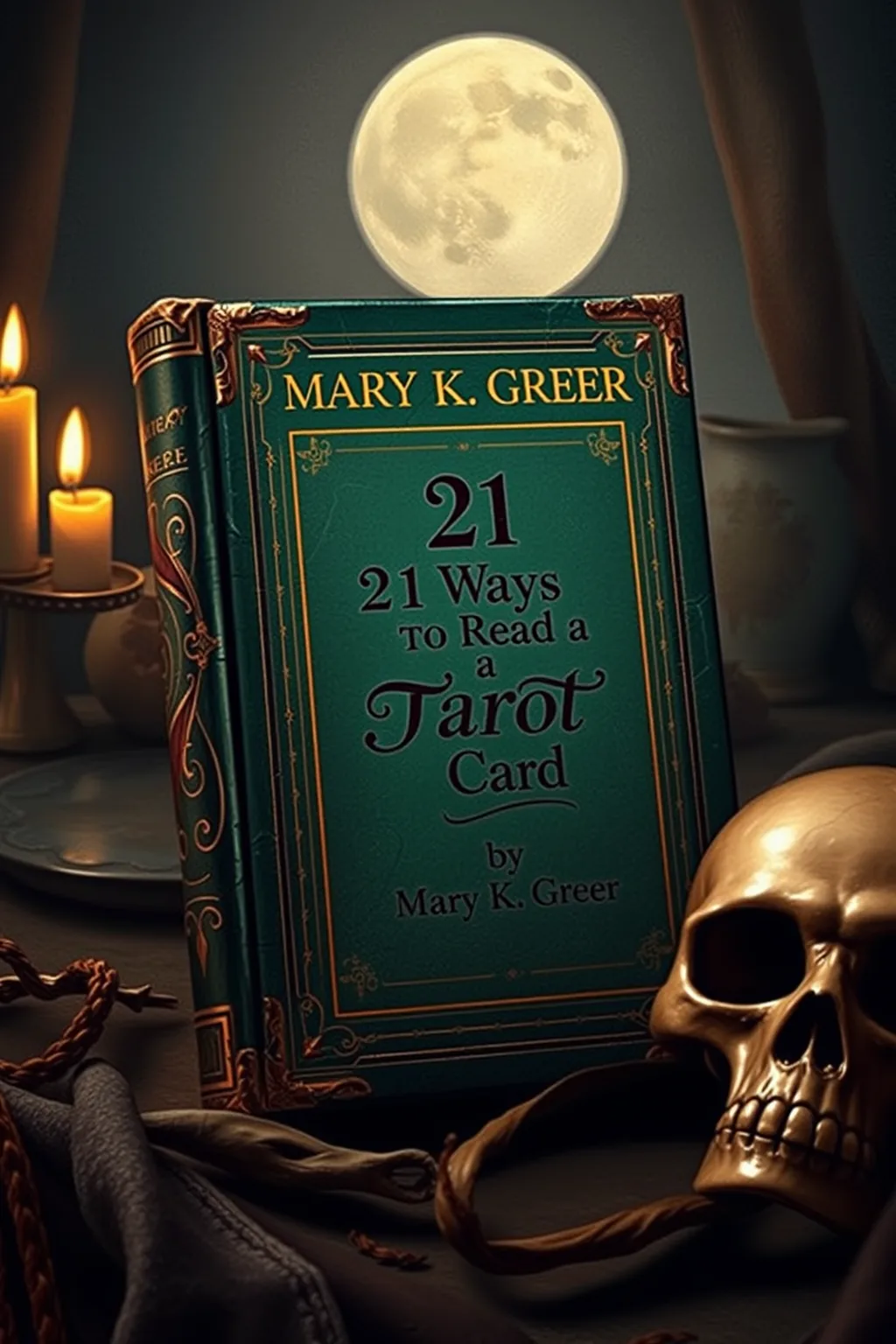
Mary K. Greer's 21 Ways to Read a Tarot Card
 61
61

Mary K. Greer's 21 Ways to Read a Tarot Card



Silas Hawthorne (Hermetic Studies Editor) — Mary K. Greer’s "21 Ways to Read a Tarot Card" is an indispensable text for any serious student of the divinatory arts. Greer masterfully demystifies the Tarot, offering a nuanced approach that transcends simplistic memorization of keywords. Her methods encourage a deeper, more intuitive connection with the cards, revealing their potent symbolism and psychological depth. This book is a beacon for practitioners seeking to elevate their readings from predictive exercises to profound explorations of the soul's journey. It is a testament to the Tarot's enduring power as a tool for self-knowledge and spiritual insight, essential for both neophytes and seasoned adepts.
📝 Description
61
Mary K. Greer's 21 Ways to Read a Tarot Card, published in 1989, teaches methods beyond standard card meanings.
Mary K. Greer's "21 Ways to Read a Tarot Card" presents methods for interpreting Tarot beyond simple keyword associations. Greer, a recognized figure in Tarot study, guides readers to engage with the cards' symbolic language on a deeper, intuitive level. The book encourages a shift from seeing Tarot as a predictive tool to understanding it as a means of self-dialogue and spiritual growth.
This work is intended for those serious about deepening their Tarot practice. It aims to help readers connect with the subconscious through the archetypal imagery of the cards. The goal is to transform the reader's relationship with the Tarot, moving from viewing cards as static images to recognizing them as dynamic sources of insight. It fosters a philosophical understanding of divination as a tool for personal discovery.
This book fits within the Western Esoteric tradition's approach to divination as a form of psychological or spiritual inquiry. Rather than focusing solely on predictive outcomes, it aligns with traditions that view Tarot as a mirror to the subconscious and a map for inner development. Greer's methods resonate with psychological approaches to archetypes and symbolism, connecting the cards to internal states and personal growth, a common theme in modern esoteric thought.
💡 Why Read This Book?
This book unlocks the latent potential of the Tarot, transforming your readings from superficial pronouncements to profound dialogues with your inner wisdom. It empowers you to connect with the cards on a deeper, intuitive level, fostering self-discovery and spiritual growth. Ideal for seekers seeking authentic guidance, practitioners aiming to refine their craft, and scholars interested in the esoteric philosophy of divination.
⭐ Reader Reviews
Honest opinions from readers who have explored this book.
❓ Frequently Asked Questions
What makes this book different from other Tarot guides?
Greer emphasizes intuitive and symbolic interpretation over rigid meanings, encouraging a dynamic, personal connection with the cards. It goes beyond rote memorization to foster a deeper, more profound understanding.
Is this book suitable for absolute beginners?
Yes, while it offers depth for experienced readers, its clear explanations and progressive approach make it highly accessible for those new to the Tarot.
How does this book enhance my intuitive abilities?
Through structured exercises and insightful perspectives, the book guides you to trust your intuition, recognize symbolic patterns, and develop a personal language with the Tarot.
Can I use this book with any Tarot deck?
Absolutely. The principles and methods presented are universal and can be applied to any Tarot deck, encouraging you to explore the unique symbolism of your chosen deck.
What kind of insights can I expect from applying Greer's methods?
You can expect deeper self-awareness, clarity on complex life situations, enhanced problem-solving skills, and a richer connection to your spiritual path.
🔮 Key Themes & Symbolism
Intuitive Interpretation & Symbolic Resonance
This book champions a shift in thinking in Tarot reading, moving beyond the deterministic approach of keyword memorization. Greer guides readers to cultivate an intimate, intuitive relationship with the cards, encouraging them to perceive the potent symbolism as a living language. It explores how archetypes within the Tarot mirror the human psyche, offering useful insights into our inner landscapes and external circumstances. By fostering a deeper connection to the symbolic, readers learn to access a wellspring of personal wisdom, transforming the act of reading into a sacred dialogue.
The Tarot as a Mirror of the Psyche
Mary K. Greer posits the Tarot not merely as a tool for prediction, but as a profound mirror reflecting the intricate range of the human psyche. Each card, imbued with rich archetypal imagery, serves as a portal to understanding our deepest desires, fears, and motivations. The book studies how these universal symbols resonate with individual consciousness, offering a pathway to self-awareness and integration. By exploring the psychological underpinnings of the Tarot, readers are empowered to confront their shadow aspects and embrace their full potential for growth and transformation.
Cultivating a Personal Divinatory Practice
"21 Ways to Read a Tarot Card" is a call to action for practitioners to forge their own unique relationship with the Tarot. Greer provides a framework for developing a personalized divinatory practice, emphasizing the importance of personal experience and intuitive discernment. The book encourages experimentation and a playful exploration of different reading techniques, allowing individuals to discover what resonates most deeply with their spiritual path. This fosters a sense of empowerment and ownership over one's practice, moving beyond prescribed methods to embrace authentic and meaningful engagement with the cards.
💬 Memorable Quotes
Direct passages from the work, attributed to the author.
“The cards are not speaking to you, but through you.”
— This profound statement highlights the interpretive nature of Tarot. It suggests that the wisdom revealed is not external dictation, but an emergent understanding drawn from the reader's own subconscious and intuition, facilitated by the cards.
“Learn to trust your gut feelings.”
— A direct encouragement to prioritize intuitive knowing. It underscores that while knowledge of card meanings is useful, the most potent insights often arise from an inner sense of knowing, a vital component of authentic divination.
“Every card has many faces.”
— Emphasizes the complex nature of Tarot symbolism. It encourages a nuanced and contextual approach, recognizing that a card's meaning shifts based on its position, surrounding cards, and the question asked.
“The journey is the destination.”
— A philosophical reminder that the process of learning and engaging with the Tarot is as valuable as any outcome. It encourages patience, continuous learning, and finding meaning in the unfolding of one's divinatory path.
💡 Key Ideas
Editorial paraphrase of the work's core concepts — not direct quotes.
The Tarot is a language of the soul.
This quote elevates the Tarot beyond simple fortune-telling, positioning it as a divinely inspired system that speaks directly to our deepest spiritual essence and inner truths.
🌙 Esoteric Significance
Tradition
While not strictly adhering to a single esoteric school, Greer's work draws heavily from Jungian psychology, archetypal symbolism, and the contemplative traditions found within Western esotericism. It aligns with the Hermetic principle of "As Above, So Below," viewing the Tarot as a microcosm reflecting macrocosmic principles and the human soul. The emphasis on symbolic language and inner dialogue also echoes Kabbalistic principles of spiritual ascent through understanding divine correspondence.
Symbolism
The core of the book lies in unlocking the strong symbolism of the Tarot. Greer guides readers to see beyond literal interpretations, revealing the archetypal figures, cosmic elements, and narrative arcs embedded within the cards. Key symbols like the Fool's journey, the balanced scales of Justice, and the transformative power of the Tower are explored not just as individual images, but as interconnected components of a grander cosmic and psychological drama.
Modern Relevance
In an age saturated with information, "21 Ways to Read a Tarot Card" offers a vital counterbalance by promoting deep introspection and intuitive discernment. Its teachings on symbolic language and psychological mirroring are more relevant than ever, providing tools for navigating personal challenges and fostering emotional intelligence. The book empowers individuals to find meaning and guidance within themselves, making it a timeless resource for anyone seeking authentic self-knowledge and spiritual connection.
👥 Who Should Read This Book
This key work is a rich source for a diverse audience. **Beginners** will find a clear, accessible entry point into the profound world of Tarot, guided by Greer's patient and insightful methods. **Intermediate practitioners** seeking to deepen their understanding and move beyond rote memorization will discover innovative techniques for intuitive reading and symbolic interpretation. **Scholars of esotericism** will appreciate the book's psychological depth and its contribution to the philosophical discourse surrounding divination. **Spiritual seekers** yearning for tools of self-discovery and personal empowerment will find the Tarot transformed into a powerful ally on their journey.
📜 Historical Context
Published in 1996, Mary K. Greer's "21 Ways to Read a Tarot Card" emerged during a period of burgeoning interest in esoteric studies and personal growth movements. The late 20th century saw a significant resurgence of occult and metaphysical literature, with Tarot finding a prominent place within this revival. Greer's work tapped into this zeitgeist, offering a sophisticated and psychologically informed approach that resonated with a generation seeking deeper meaning and spiritual exploration beyond traditional religious frameworks. It built upon decades of Tarot scholarship, particularly the work of figures like A.E. Waite and Pamela Colman Smith, while forging a distinct path that emphasized intuition and personal connection, reflecting the era's growing focus on individual empowerment and subjective experience. The book became a starting point for a more modern, introspective style of Tarot practice.
📔 Journal Prompts
Reflect on a recurring symbol in your dreams or waking life, and consider its potential connection to a Tarot card.
Choose a card that feels challenging to you, and explore its 'shadow' aspects. What fears or resistances does it bring up?
How can the archetype of the 'Magician' be applied to manifest a specific goal in your life right now?
Consider a recent life event and choose three cards that represent its past, present, and potential future. Journal your intuitive interpretations.
If the Tarot is a language, what is a word or phrase you've learned from a recent reading that speaks to your soul?
🗂️ Glossary
Archetype
In Jungian psychology, universal, archaic patterns and images that derive from the collective unconscious and are the psychic counterpart of a myth. In Tarot, these are the fundamental human experiences and figures represented by the cards.
Divination
The practice of seeking knowledge of the future or the unknown by supernatural means. In the context of Tarot, it's viewed as a method of accessing subconscious wisdom and understanding energetic patterns.
Intuition
The ability to understand something immediately, without the need for conscious reasoning. In Tarot reading, it's the direct knowing or gut feeling that guides interpretation beyond learned meanings.
Symbolism
The use of symbols to represent ideas or qualities. Tarot cards are rich in symbolism, with each image, color, and gesture holding layers of meaning intended to communicate profound truths.
Psyche
The human soul, mind, or spirit. In this context, it refers to the totality of the unconscious and conscious elements of an individual's mental life, which the Tarot can illuminate.
This book appears in 3 collections
🔮 Readers Also Liked
Browse all →
More by Mary K. Greer
All books →
From the “Tarot” Collection
View all →
More Free Divination & Tarot Books
View all →