✍️ Author Biography
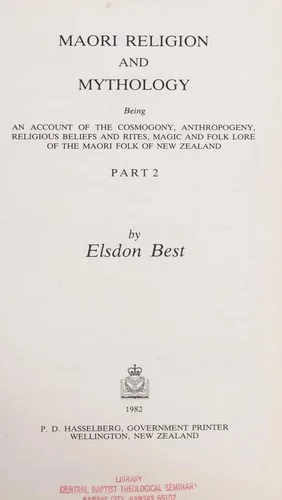
Elsdon Best
🌍 English
📚 2 free books
⭐ Known for: The Lore of the Warewananga (1913)
Elsdon Best was a key ethnographer whose translations and writings illuminated Māori mythology, particularly Rarohenga, and its cultural significance.
Elsdon Best was an influential ethnographer whose work significantly contributed to the understanding and documentation of Māori oral traditions and mythology. His translations and interpretations, particularly concerning the subterranean realm of Rarohenga, provided insights into Māori beliefs about the afterlife and the spiritual origins of cultural practices. Best's writings highlight Rarohenga not just as a dwelling place for spirits but as a source of divine wisdom that influenced human arts and societal development.
His work also sheds light on the impact of 19th-century colonisation and missionary influence on Māori traditions. Best noted how the introduction of Christian scriptures led to alterations and adaptations in the recording of Māori myths, sometimes blending indigenous beliefs with European concepts of good and evil. This process, often occurring during translation by non-Māori scholars, resulted in variations and a perceived loss of cultural integrity in the documented folklore.
Elsdon Best and Māori Mythology
Elsdon Best, an ethnographer, played a crucial role in documenting and interpreting Māori oral traditions. His focus on Rarohenga, the subterranean realm of the deceased, revealed its significance beyond a mere afterlife destination. Best's accounts detail Rarohenga as a place of peace and light, ruled by Hine-nui-te-pō, and inhabited by various spiritual beings. He emphasized that this realm was not a place of darkness or punishment, but a source of profound knowledge and cultural inspiration for the living world. His translations conveyed that the origin of essential Māori cultural practices like tattooing, weaving, and carving could be traced back to interactions with entities from Rarohenga.
Rarohenga's Influence on Cultural Practices
According to traditional Māori beliefs, as documented and interpreted by Elsdon Best, key cultural arts were not indigenous to the human world. Instead, they were gifts bestowed upon humanity through the journeys of mythological heroes to realms like Rarohenga. Best's translations of teachings from Tohunga suggest that the wisdom emanating from Rarohenga fostered a deep connection between Māori and the spiritual world, influencing quintessential Māori identity. This spiritual influx aimed to elevate the human experience through ethical conduct and creative endeavors, as exemplified in the myth of Mataora, underscoring the integral role of Rarohenga's deities and spirits in contemporary Māori culture.
Impact of Colonisation on Mythological Records
Elsdon Best's scholarship also addresses the profound impact of 19th-century colonisation on the preservation and transmission of Māori mythology. He observed that the introduction of missionary scriptures led to substantial modifications and reinterpretations of traditional beliefs. Best noted that Māori adapted Christian myths, leading to the incorporation of concepts like spirits of evil descending to the underworld and good spirits ascending to heaven, which were previously alien to their pre-missionary worldview. He critically described this as a 'transcultural interlocution,' where translators often infused European ethnocentrism and assimilative motives, resulting in variations and a perceived erosion of the original cultural integrity of Māori oral history.
Key Ideas
- Rarohenga: Māori subterranean realm of the deceased, depicted as a place of peace and light.
- Spiritual Origin of Arts: Belief that cultural practices like tattooing, weaving, and carving originated from Rarohenga.
- Cultural Adaptation: Influence of colonisation and missionary work on the recording and alteration of Māori myths.
- Ethical and Creative Elevation: The role of spiritual wisdom from Rarohenga in enhancing human experience.
Notable Quotes
“It is a place where darkness is unknown.”
“This is the reason why, of all spirits of the dead since the time of Hine-ahuone..., not a single one has ever returned hither to dwell in this world”
“Māori folk adapted the myths and teachings of Christianity. This is where ideas of the spirits of the evil person going to the underworld, and those good ascending to the heavens, crept into statements. Such beliefs were unbeknown to the Māori in pre-missionary days”