Mandalas, Candles, and Prayer

 81
81

Mandalas, Candles, and Prayer
Sharon Seyfarth Garner’s "Mandalas, Candles, and Prayer" approaches spiritual practice with a commendable directness, sidestepping New Age platitudes for actionable guidance. The strength of the book lies in its clear articulation of how to use mandalas not just as aesthetic objects, but as active tools for prayer and meditation. Garner’s instruction on integrating candle symbolism is equally precise, offering a practical framework for ritual. However, the work occasionally feels limited by its very practicality; the depth of esoteric lore associated with mandalas across different traditions, for instance, is touched upon but not fully explored. A passage detailing the creation of a 'personal intention mandala' effectively illustrates the book's blend of artistic creation and spiritual purpose, highlighting its accessible methodology. It’s a useful primer for those who prefer doing over abstract theorizing.
📝 Description
81
Sharon Seyfarth Garner's 2017 book maps concrete methods for spiritual practice using mandalas and candles.
Mandalas, Candles, and Prayer, published in 2017, presents a structured method for spiritual engagement. The book moves past general ideas to offer specific ways to work with sacred geometry and devotional rituals. It is a guide for anyone wanting to deepen their spiritual connection through focused intention and symbolic tools. Garner details how to create and use mandalas for meditation and prayer. She also gives advice on using candles symbolically in rituals. This book is for people exploring personal spirituality, especially those interested in visual and ritualistic devotion. It will appeal to practitioners who find connection at the intersection of art, meditation, and prayer. Readers interested in the psychological and spiritual effects of sacred geometry, like mandalas, will find practical uses here. It is also useful for those aiming to build or improve a personal prayer or meditation practice using a structured, symbolic system.
Garner's 2017 work appeared during a time of increasing interest in contemplative practices and mindfulness, fitting into a broader trend of incorporating Eastern spiritual ideas into Western life. While not directly tied to one historical movement, the book connects with a long history of devotional art and practice across cultures. Its approach shares elements with traditions that use sacred images for spiritual growth, echoing perennialist ideas that find commonalities across different religious expressions.
💡 Why Read This Book?
• Gain practical techniques for using mandalas to focus prayer and meditation, moving beyond aesthetic appreciation to active spiritual engagement, as demonstrated in the book's guidance on creating personal intention mandalas. • Learn the symbolic significance of candle placement and color within ritual, providing a structured method for enhancing devotional practices described in the text. • Develop a more integrated approach to personal spirituality by combining the geometric principles of mandalas with the focused energy of candle-lit prayer, as advocated by Garner's holistic methodology.
⭐ Reader Reviews
Honest opinions from readers who have explored this book.
❓ Frequently Asked Questions
What is the primary focus of Mandalas, Candles, and Prayer?
The book focuses on practical methods for spiritual growth through the use of mandalas as meditative tools and the symbolic application of candles in prayer and ritual, as outlined in its 2017 publication.
Who is Sharon Seyfarth Garner?
Sharon Seyfarth Garner is the author of Mandalas, Candles, and Prayer, first published in 2017, who offers practical guidance on integrating sacred geometry and ritual into personal spiritual practice.
Are there specific techniques for creating mandalas in the book?
Yes, the book provides detailed instructions and guidance on the creation and use of mandalas as tools for spiritual focus and intention, making it a hands-on guide for practitioners.
How does the book approach candle symbolism?
It explores the symbolic meanings and practical applications of using candles within prayer and ritual settings to amplify intention and create sacred space, offering specific methods.
What kind of spiritual background is assumed for the reader?
No specific religious background is strictly required, but the book is most beneficial for individuals interested in contemplative practices, sacred geometry, and symbolic ritual, regardless of their tradition.
When was Mandalas, Candles, and Prayer first published?
The book was first published in 2017, positioning it within contemporary discussions on mindfulness and personal spiritual development.
🔮 Key Themes & Symbolism
Mandala as Spiritual Tool
The book presents the mandala not merely as an artistic expression but as a profound spiritual instrument. It details how the precise geometric patterns can serve as focal points for meditation, aiding in the cultivation of inner peace and clarity. Garner guides readers through understanding the symbolic language inherent in mandala construction, emphasizing its role in representing cosmic order and facilitating a connection to universal energies. The process of creation itself is framed as a devotional act, allowing practitioners to imprint their intentions into the sacred geometry.
The Power of Candle Ritual
Candles are explored for their inherent symbolism of light, transformation, and divine presence. The text provides practical advice on incorporating candles into prayer and meditation practices, discussing aspects such as color symbolism, placement, and the significance of the flame. This section aims to equip readers with methods to enhance their rituals, using the focused energy of candlelight to amplify intentions and create consecrated spaces conducive to spiritual communion. It emphasizes the ritualistic use of light as a tangible representation of spiritual aspiration.
Integrating Art and Devotion
A core theme is the seamless integration of artistic creation with devotional practice. The book suggests that the act of drawing, coloring, or contemplating a mandala, coupled with the ritualistic use of candles, can form a holistic approach to spiritual development. This fusion acknowledges that many find spiritual connection through creative expression and sensory engagement. By combining these elements, Garner offers a pathway for individuals to engage their minds, bodies, and spirits in a unified practice of prayer and contemplation.
Focused Intention and Prayer
The work underscores the importance of focused intention in prayer and meditation. It posits that by utilizing structured visual aids like mandalas and symbolic elements like candles, individuals can achieve a deeper state of concentration. The book guides readers on how to direct their mental and spiritual energies effectively, transforming prayer from a passive request into an active, potent engagement with the spiritual dimensions of existence. This emphasis on directed consciousness is central to its practical approach.
💬 Memorable Quotes
Direct passages from the work, attributed to the author.
“The mandala's structure mirrors the universe; its completion, a moment of divine connection.”
— This concept highlights the esoteric belief that sacred geometry, embodied in the mandala, is a reflection of cosmic principles and that engaging with it can facilitate a direct experience of the divine.
“Candle flame transforms darkness, just as focused prayer transforms the inner landscape.”
— This analogy emphasizes the transformative power of focused spiritual practice, likening the steady flame of a candle to the directed energy of prayer in clear and altering one's consciousness.
“Creating a mandala is an act of prayer; each line, a whispered intention.”
— This phrase suggests that the physical act of artistic creation can be imbued with spiritual significance, where the process itself becomes a form of devotional expression and manifestation.
“The circle of the mandala and the light of the candle define sacred space.”
— This highlights the fundamental role of these two elements in establishing a consecrated environment for spiritual work, creating a boundary for focused practice.
“Inner harmony is reflected in the balanced geometry of the sacred circle.”
— This interpretation links the external visual order of the mandala to the internal state of the practitioner, suggesting that achieving balance in one's life is mirrored in the balanced design.
🌙 Esoteric Significance
Tradition
While not strictly adhering to a single lineage, the work draws heavily from traditions that utilize sacred geometry and contemplative visualization, such as aspects of Tibetan Buddhism (for mandalas) and Western ceremonial magic (for candle ritual). It bridges these influences by presenting them in an accessible, non-denominational framework, focusing on universal principles of intention and focus applicable to a broad range of spiritual practitioners.
Symbolism
The primary symbols are the mandala and the candle. The mandala, with its concentric circles and geometric precision, symbolizes the cosmos, the self, and the path to spiritual integration. The candle's flame represents divine light, consciousness, transformation, and the purification of space, serving as a focal point for prayer and intention.
Modern Relevance
Contemporary mindfulness instructors, art therapists, and spiritual counselors often incorporate principles similar to those in Garner's book. Practices involving mandalas for stress reduction and self-exploration are common, and the use of candles in guided meditations or personal altars reflects the book's accessible approach to ritual. It appeals to modern seekers looking for tangible methods to deepen their spiritual lives outside of traditional religious structures.
👥 Who Should Read This Book
• Individuals new to contemplative practices seeking structured methods for meditation and prayer. • Artistically inclined spiritual seekers interested in integrating creative expression with devotional work. • Practitioners looking to deepen their understanding and use of sacred geometry and symbolic ritual in their personal spiritual path.
📜 Historical Context
Sharon Seyfarth Garner's "Mandalas, Candles, and Prayer" (2017) emerged in an era marked by a widespread resurgence of interest in mindfulness, contemplative practices, and holistic wellness, often drawing inspiration from Eastern spiritual traditions. While not directly affiliated with a specific historical esoteric movement, its approach echoes perennialist philosophies that seek common ground across diverse spiritual paths. The book found its audience amidst a cultural landscape where figures like Eckhart Tolle were popularizing accessible forms of spiritual inquiry. Its emphasis on practical application and personal empowerment aligns with a broader trend in self-help and spiritual literature that gained traction throughout the early 21st century. Unlike more academic explorations of religious symbolism, Garner's work focuses on direct experiential engagement, differentiating it from purely theoretical studies prevalent in religious studies departments.
📔 Journal Prompts
Reflection on the balanced geometry of a personal mandala design.
Consideration of the candle's flame as a symbol of divine presence during prayer.
Exploration of how the act of creating a mandala can serve as a form of focused intention.
Analysis of the defined sacred space created by mandala and candle elements.
Connecting inner harmony with the balanced design of a completed mandala.
🗂️ Glossary
Mandala
A geometric configuration of symbols, typically in a circular form, used in various spiritual traditions as a tool for meditation, focusing attention, and representing the cosmos or the self.
Sacred Geometry
The study of geometric shapes and patterns that are found in nature and are believed to have divine or mystical significance, often used in spiritual art and architecture.
Ritual
A set of actions performed, usually in a prescribed order, for their symbolic value or as part of a religious or ceremonial practice.
Intention
A conscious aim or purpose, particularly in a spiritual context, where it is directed towards manifesting a desired outcome or spiritual state.
Devotion
Love, loyalty, or enthusiasm for a person, cause, or activity; in a spiritual context, it refers to deep commitment and worship towards a deity or spiritual principle.
Contemplation
The action of looking thoughtfully for a long time at something; in a spiritual context, it involves deep reflective thought or meditation on spiritual matters.
Sacred Space
An area set apart for religious or spiritual purposes, often consecrated through ritual, where practitioners feel a connection to the divine or transcendent.
🔮 Readers Also Liked
Browse all →








More by Sharon Seyfarth Garner
All books →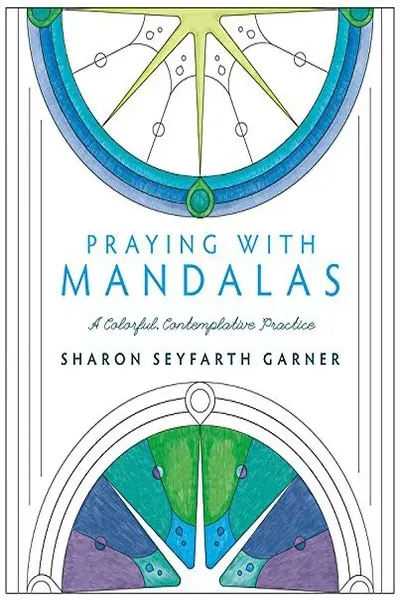
More Free Occult Philosophy Books
View all →