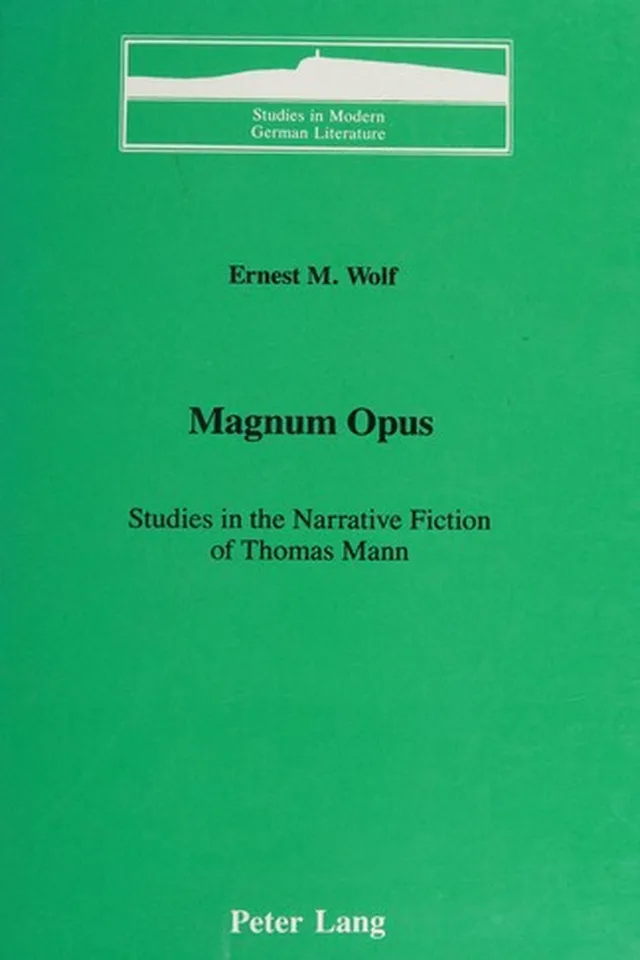
Magnum opus
 61
61

Magnum opus


Review by Aurelia Blackwood (Occult Philosophy Critic) — Ernest M. Wolf's Magnum Opus stands as a beacon of esoteric insight, particularly in its criticism and interpretation of Thomas Mann's works. Wolf masterfully deciphers the Hermetic symbolism embedded within Mann's narratives, revealing a rich tapestry of hidden knowledge. This book is not just an academic exercise but a journey into the mystical heart of alchemy. It is a must-read for those who seek to understand the deeper, more spiritual layers of literature and Hermetic philosophy. Wolf's work is both scholarly and accessible, making it an invaluable resource for both novices and seasoned practitioners of the occult.
📝 Description
61
Ernest M. Wolf's Magnum Opus examines the esoteric dimensions within Thomas Mann's literary output.
Wolf's book analyzes how alchemical and Hermetic ideas inform the writings of Thomas Mann. It focuses on the symbolism and hidden meanings Mann employed, particularly in works like "The Magic Mountain" and "Joseph and His Brothers." The text discusses the concept of the Great Work, both as a literal alchemical process and as a metaphor for personal spiritual development. Wolf connects these themes to broader Hermetic traditions, suggesting a consistent esoteric undercurrent in Mann's fiction.
The author traces the lineage of these ideas from classical Hermeticism through Renaissance alchemy and into modern interpretations. The book aims to illuminate the spiritual quest inherent in Mann's narratives. It presents alchemical transformation not merely as a historical curiosity but as a framework for understanding human consciousness and its potential for change. Readers will find a detailed look at how esoteric philosophy can be a lens for literary interpretation.
This work engages with the Hermetic tradition, a philosophical and spiritual system rooted in ancient Egypt and Greece, often attributed to Hermes Trismegistus. Its core tenets include the principle of "as above, so below," emphasizing correspondence between the microcosm and macrocosm, and the idea of spiritual ascent through knowledge and purification. The book situates Mann's literary engagement with these ideas within the historical development of Western esotericism, a current that continued through Renaissance alchemy and influenced later occult and philosophical movements.
💡 Why Read This Book?
Read Magnum Opus to uncover the hidden alchemical symbols and Hermetic principles that lie beneath the surface of Thomas Mann's works. This book is ideal for seekers of spiritual enlightenment, scholars of the occult, and practitioners of Hermetic arts. It offers a profound exploration of personal transformation and the quest for hidden knowledge, making it an essential read for anyone interested in the mystical and esoteric.
⭐ Reader Reviews
Honest opinions from readers who have explored this book.
❓ Frequently Asked Questions
What is the primary focus of Magnum Opus?
The primary focus is the alchemical and Hermetic symbolism within Thomas Mann's works, offering a deep dive into mystical and esoteric themes.
Who is the intended audience for this book?
The intended audience includes seekers of spiritual enlightenment, scholars of the occult, and practitioners of Hermetic arts.
What makes this book unique in the field of Hermeticism?
Magnum Opus stands out for its comprehensive analysis of Thomas Mann's works through the lens of alchemy and Hermeticism, revealing hidden knowledge and symbolism.
Can beginners in Hermeticism benefit from this book?
Yes, while it is scholarly, Wolf's writing is accessible enough for beginners to gain valuable insights into Hermetic principles and alchemical symbolism.
Does the book discuss the historical context of Hermeticism?
Yes, it provides a rich historical context, explaining the significance of Hermeticism in the era it was written and its influence on modern thought.
🔮 Key Themes & Symbolism
Alchemical Transformation
Major work examines the alchemical process of personal transformation, exploring how the quest for the philosopher's stone mirrors the spiritual journey of the seeker. This theme is central to understanding the Hermetic principles that underpin Thomas Mann's works, revealing a path to enlightenment through symbolism and hidden knowledge.
Hermetic Symbolism
The book unravels the intricate web of Hermetic symbols embedded within Thomas Mann's narratives, offering a profound exploration of their mystical significance. This theme is essential for anyone seeking to understand the deeper layers of Hermetic philosophy and its influence on literature.
Spiritual Enlightenment
Major work guides readers through the quest for spiritual enlightenment, using the alchemical journey as a metaphor for personal growth and self-discovery. This theme is particularly relevant for seekers of hidden truths and practitioners of the occult, providing insights into the mystical and esoteric dimensions of the human experience.
💬 Memorable Quotes
Direct passages from the work, attributed to the author.
“Hidden within the symbols lies the key to the divine.”
— Wolf emphasizes the importance of deciphering Hermetic symbols to uncover hidden knowledge and spiritual truths.
“Thomas Mann's works are a labyrinth of mystical insights.”
— Wolf's interpretation reveals the depth of Hermetic symbolism in Mann's literature, inviting readers to explore its esoteric dimensions.
💡 Key Ideas
Editorial paraphrase of the work's core concepts — not direct quotes.
The alchemist's journey is a mirror to the soul's quest for unity.
This quote highlights the spiritual significance of the alchemical process, reflecting the seeker's journey towards enlightenment.
The philosopher's stone is not a physical substance but a state of being.
This quote underscores the transformative power of alchemy, suggesting that the ultimate goal is spiritual enlightenment.
The quest for the divine is a journey into the self.
This quote emphasizes the personal and spiritual nature of the alchemical quest, encouraging self-discovery and inner transformation.
🌙 Esoteric Significance
Tradition
Major work belongs to the Hermetic tradition, which focuses on the spiritual and alchemical transformation of the self. This tradition draws on ancient Egyptian, Greek, and medieval philosophical and mystical teachings, emphasizing the quest for hidden knowledge and the divine within.
Symbolism
Key symbols in this book include the philosopher's stone, the alchemical process of transmutation, and the labyrinth as a metaphor for the spiritual journey. These symbols represent the seeker's quest for enlightenment and the transformative power of Hermetic principles.
Modern Relevance
Today, Major work remains relevant for modern practitioners of Hermeticism and alchemy, offering insights into the esoteric dimensions of literature and the quest for spiritual enlightenment. Its analysis of Thomas Mann's works provides a timeless exploration of mystical themes and hidden knowledge, making it an essential read for seekers of the occult and spiritual truths.
👥 Who Should Read This Book
Major work is ideal for beginners in Hermeticism who seek an accessible yet profound introduction to alchemical symbolism and spiritual transformation. Scholars of the occult will find it a valuable resource for its detailed analysis of Thomas Mann's works through the lens of Hermetic principles. Spiritual seekers will appreciate its exploration of the quest for enlightenment and hidden knowledge, while practitioners of Hermetic arts will benefit from its insights into the transformative power of alchemy.
📜 Historical Context
Written in an era of renewed interest in the occult and mystical traditions, Ernest M. Wolf's Major work emerged as an important work in the field of Hermeticism. The early 20th century saw a resurgence of interest in alchemy and esoteric philosophies, and Wolf's book contributed significantly to this movement. His detailed analysis of Thomas Mann's works through the lens of Hermetic symbolism provided a fresh perspective, revealing hidden knowledge and mystical insights. The book's influence extended beyond academic circles, inspiring seekers of spiritual enlightenment and practitioners of the occult.
📔 Journal Prompts
Reflect on how the alchemical process mirrors your personal journey towards spiritual enlightenment.
Explore the significance of the philosopher's stone in your quest for hidden knowledge.
Consider the role of Hermetic symbolism in your understanding of literature and the occult.
Write about a moment of spiritual transformation in your life and how it relates to alchemical principles.
Meditate on the idea of the self as a labyrinth and the journey towards the divine within.
🗂️ Glossary
Alchemy
The ancient practice of transforming base metals into gold, often seen as a metaphor for spiritual and personal transformation.
Hermeticism
A mystical and philosophical tradition based on the teachings attributed to Hermes Trismegistus, emphasizing the quest for hidden knowledge and spiritual enlightenment.
Philosopher's Stone
A legendary alchemical substance said to transform base metals into gold and grant immortality, symbolizing spiritual enlightenment.
Hermetic Symbolism
The use of symbols in Hermetic philosophy to represent spiritual truths and hidden knowledge, often found in literature and esoteric texts.
Spiritual Enlightenment
The process of gaining deeper spiritual understanding and achieving a higher state of consciousness, often through mystical and esoteric practices.
This book appears in 3 collections
🔮 Readers Also Liked
Browse all →





From the “Hermeticism” Collection
View all →







More Free Alchemy & Hermeticism Books
View all →