Maat Tarot
 61
61

Maat Tarot



By Aurelia Blackwood (Occult Philosophy Critic) — Julie Cuccia-Watts' Maat Tarot is a monumental achievement in modern esoteric cartomancy. Eschewing superficiality, it plunges into the very bedrock of cosmic order, drawing directly from the potent symbolism of ancient Egypt. The artwork is breathtaking, imbued with a palpable spiritual energy that elevates each card beyond mere imagery into a focal point for meditation and gnosis. Cuccia-Watts' deep understanding of hermetic principles is evident, offering profound insights into the interconnectedness of all things. This deck is a sacred text for the serious practitioner, a powerful ally for those seeking to align themselves with the universal laws of Ma'at and cultivate inner harmony. It demands engagement, rewarding the dedicated seeker with unparalleled clarity and wisdom.
📝 Description
61
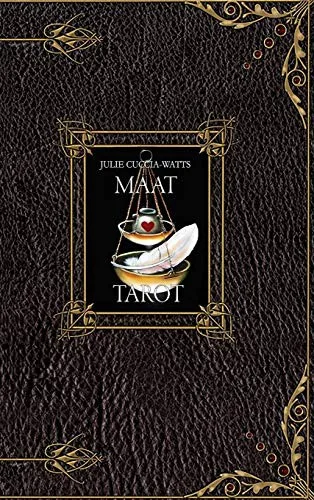
Julie Cuccia-Watts's Maat Tarot deck, published in 2010, grounds divination in ancient Egyptian principles of truth and order.
The Maat Tarot by Julie Cuccia-Watts is a system of divination that draws heavily on ancient Egyptian cosmology and hermetic philosophy. It presents the core concepts of Ma'at – truth, balance, order, and justice – as fundamental principles that govern existence. Each card in the deck is designed to reflect these ideas through potent symbolism, aiming to connect celestial order with earthly experience. The deck is intended not just for fortune telling, but as a visual philosophical text.
Cuccia-Watts intends for the Maat Tarot to facilitate a deeper understanding of universal order and one's place within it. It invites users to engage with archetypal forces and discover insights within this structure. The work is suited for serious students of the occult, spiritual seekers, and experienced tarot practitioners who desire a more profound connection with the cards and a path toward inner balance.
This deck situates itself within the Western esoteric tradition, specifically linking tarot symbolism to ancient Egyptian religious and philosophical concepts. It extends the hermetic interpretation of tarot, which often draws parallels between the cards and Kabbalistic or alchemical ideas, by focusing on the principles of Ma'at. This approach suggests a connection between these ancient Egyptian ideals and the universal archetypes often found in tarot imagery, proposing a framework for understanding cosmic order and personal alignment.
💡 Why Read This Book?
Unveil the ancient secrets of cosmic balance and divine order. The Maat Tarot offers a unique lens through which to explore universal truths, moving beyond simple divination to a profound philosophical inquiry. Ideal for seekers of esoteric wisdom, scholars of ancient traditions, and practitioners aiming to deepen their connection to the archetypal forces that govern existence. Discover a pathway to inner harmony and enlightened understanding.
⭐ Reader Reviews
Honest opinions from readers who have explored this book.
❓ Frequently Asked Questions
What is the core philosophy behind the Maat Tarot?
The Maat Tarot is deeply rooted in the ancient Egyptian concept of Ma'at, representing truth, cosmic order, balance, and justice. It guides practitioners to understand and align with these fundamental principles in their lives and readings.
Who is the intended audience for this deck?
This deck is designed for serious seekers of esoteric knowledge, scholars of ancient Egyptian metaphysics, and tarot practitioners who desire a deeper, more philosophical approach to divination and self-discovery.
What makes the artwork unique?
The artwork is meticulously crafted, drawing inspiration from ancient Egyptian iconography and hermetic symbolism. Each illustration is imbued with spiritual depth, designed to evoke a sense of sacred resonance and facilitate intuitive understanding.
How does Ma'at Tarot differ from traditional Tarot decks?
Unlike decks focused solely on personal fortune, the Maat Tarot emphasizes universal laws and cosmic balance, offering a framework for spiritual growth, ethical living, and alignment with divine order.
Can beginners use the Maat Tarot?
While it offers profound depth for experienced practitioners, beginners willing to engage with its philosophical underpinnings and symbolic language will find it a rich and rewarding learning tool, fostering a unique perspective on the Tarot.
🔮 Key Themes & Symbolism
The Cosmic Law of Ma'at
This theme studies the profound concept of Ma'at, the ancient Egyptian principle of truth, balance, order, and justice. It explores how this fundamental law governs the universe and individual lives, providing a framework for ethical conduct, spiritual alignment, and the maintenance of harmony. The deck illuminates how understanding and living by Ma'at can lead to inner peace and a profound connection to the divine order, transcending mere fortune-telling into a philosophy of existence.
Egyptian Cosmology and Archetypes
The Maat Tarot is steeped in the collection of Egyptian cosmology, drawing upon its powerful deities, sacred symbols, and mythological narratives. It presents an opportunity to connect with ancient archetypes that represent fundamental aspects of the human psyche and the universal forces at play. Through evocative imagery and deep symbolism, the deck invites practitioners to explore these primal energies, understanding their influence on our paths and unlocking hidden wisdom from one of history's most spiritually advanced civilizations.
The Journey of the Soul and Inner Truth
Central to the Maat Tarot is the exploration of the soul's journey, its inherent quest for truth, and the process of achieving inner equilibrium. The cards serve as illuminated signposts, guiding the seeker through the complexities of life's challenges and triumphs, always pointing towards the rectification of imbalances and the attainment of higher consciousness. It emphasizes self-awareness, integrity, and the courageous pursuit of one's authentic path, fostering a profound understanding of personal destiny within the grand cosmic design.
💬 Memorable Quotes
Direct passages from the work, attributed to the author.
“Balance is not a static state, but a dynamic dance of forces.”
— This interpretation suggests that balance is not about rigidity, but about the continuous and fluid interplay of opposing energies, a constant adjustment towards harmony.
“Justice is the cosmic equilibrium that corrects all imbalances.”
— This highlights the active role of justice within the Ma'at framework, portraying it as the inherent mechanism that restores order and rectifies discord in the universe.
“Order is the divine blueprint, the silent song of the cosmos.”
— This interpretation frames order as more than just structure; it's seen as the underlying, harmonious pattern inherent in creation, a divine design unfolding.
💡 Key Ideas
Editorial paraphrase of the work's core concepts — not direct quotes.
Truth is the foundation upon which all creation rests.
This quote emphasizes the paramount importance of Ma'at, highlighting truth as the fundamental principle from which all existence emanates and is sustained.
Seek the light of Ma'at within, and you shall find your path.
This quote offers a direct call to introspection, suggesting that true guidance and clarity are found by aligning oneself with the principles of Ma'at internally.
🌙 Esoteric Significance
Tradition
The Maat Tarot is deeply rooted in the esoteric traditions of ancient Egyptian religion and Hermeticism. It directly engages with the concept of Ma'at, the personification of cosmic order, truth, and justice, which was central to Egyptian spiritual philosophy. This tradition emphasizes the interconnectedness of the cosmos, the divine, and humanity, seeking to understand the underlying principles that govern existence and guide the soul's journey towards enlightenment and alignment.
Symbolism
The symbolism within the Maat Tarot is rich and multi-layered, drawing heavily from hieroglyphic inscriptions, Egyptian mythology, and hermetic principles. Key symbols include the ankh (life), the scarab beetle (rebirth), the Eye of Horus (protection and healing), and various deities representing cosmic forces. These symbols are not merely decorative; they are conduits of divine energy and profound philosophical concepts, intended to facilitate intuitive understanding and spiritual transformation for the practitioner.
Modern Relevance
In an era often characterized by chaos and disconnection, the Maat Tarot offers a vital pathway to understanding and cultivating inner and outer balance. Its emphasis on truth, order, and justice provides a timeless ethical compass for navigating personal challenges and societal complexities. For modern seekers, it serves as a powerful tool for self-reflection, spiritual growth, and aligning one's life with universal principles, fostering a sense of purpose and inner harmony in a rapidly changing world.
👥 Who Should Read This Book
The Maat Tarot is a rich source for a diverse range of spiritual explorers. For the seasoned tarot practitioner, it offers a profound expansion of their practice, introducing a deeply philosophical and cosmologically rich system. Beginners, particularly those drawn to ancient wisdom and archetypal psychology, will find its structured approach and evocative imagery an useful entry point into deeper esoteric study. Scholars of ancient Egypt and comparative religion will appreciate its meticulous research and authentic representation of core principles. Ultimately, any seeker yearning for a divinatory tool that transcends mere prediction, offering useful insights into universal order, personal truth, and spiritual alignment, will find immense value within its pages.
📜 Historical Context
The Maat Tarot emerges from a rich lineage of esoteric thought, drawing heavily on the spiritual and philosophical traditions of ancient Egypt, a civilization renowned for its advanced understanding of cosmology, metaphysics, and the divine order. Its creation is also influenced by the Hermetic tradition, which flourished in Hellenistic Egypt and later across Europe, blending Egyptian, Greek, and Jewish mystical philosophies. The late 20th and early 21st centuries have witnessed a resurgence of interest in ancient wisdom traditions and their application to modern spiritual seeking. Julie Cuccia-Watts' work sits within this contemporary revival, seeking to reinterpret and recontextualize these potent, timeless principles for a modern audience. The deck's design and thematic focus reflect a growing desire for divinatory tools that offer not just predictive insights, but also profound philosophical guidance and a pathway to spiritual integration, connecting the individual to universal truths.
📔 Journal Prompts
Reflect on a recent situation where you felt out of balance. How can the principles of Ma'at guide you towards restoration?
Consider the concept of 'truth' in your life. What personal truths are you currently living by, and are there any you are avoiding?
How does the 'order' of the universe manifest in your daily life, both in subtle and obvious ways?
Meditate on the meaning of 'justice' as it applies to your interactions with others and yourself. Where can you cultivate greater fairness?
What steps can you take today to embody the principles of Ma'at more fully in your personal and professional life?
🗂️ Glossary
Ma'at
The ancient Egyptian concept representing truth, cosmic order, balance, harmony, law, morality, and justice. It is the fundamental principle governing the universe and human conduct, personified as a goddess.
Hermeticism
A philosophical and religious tradition based primarily upon writings attributed to Hermes Trismegistus, a syncretic figure combining Greek god Hermes and Egyptian god Thoth. It emphasizes esoteric knowledge, the interconnectedness of all things, and the pursuit of divine wisdom.
Archetype
In Jungian psychology and esoteric thought, a universal, archaic pattern or image that derives from the collective unconscious and is the psychic counterpart of an instinct. Archetypes manifest in myths, symbols, and dreams.
Cosmology
The study of the origin, evolution, and eventual fate of the universe. In esoteric contexts, it refers to the understanding of the structure and order of the spiritual and material realms.
Gnosis
Knowledge of spiritual mysteries, often attained through intuition or mystical experience. It is a form of direct, experiential knowing that transcends intellectual understanding.
This book appears in 3 collections
🔮 Readers Also Liked
Browse all →
From the “Tarot” Collection
View all →
More Free Divination & Tarot Books
View all →