Lucid dreaming
 71
71

Lucid dreaming
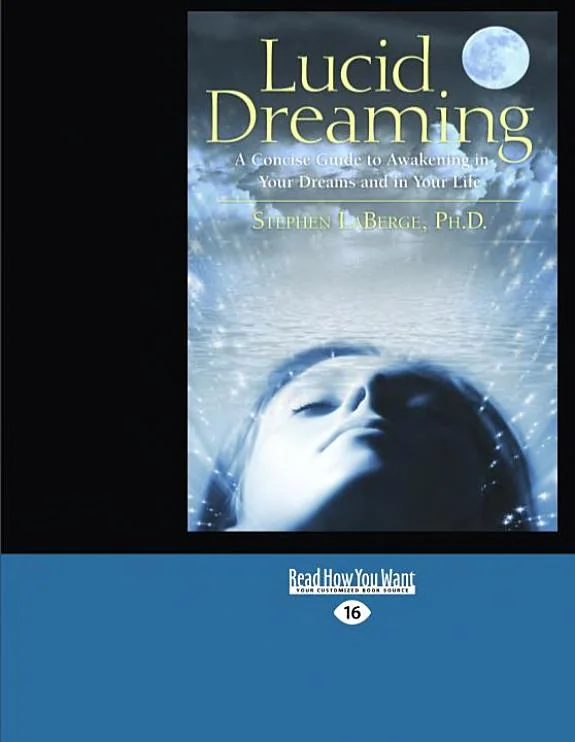
Stephen LaBerge’s Lucid Dreaming offers a rigorously scientific yet deeply accessible guide to a fascinating aspect of human consciousness. The strength of the book lies in its empirical foundation; LaBerge, a psychophysiologist, grounds the often-mystical experience of lucid dreaming in verifiable techniques and research, notably his own pioneering work at Stanford. He methodically breaks down the process of becoming aware within a dream, making the seemingly impossible feel attainable. For instance, his detailed explanation of the Mnemonic Induction of Lucid Dreams (MILD) technique, which involves setting an intention before sleep, is both clear and compelling. A potential limitation for some readers might be the book's consistent emphasis on scientific methodology, which, while a strength, might leave those seeking purely esoteric or spiritual interpretations wanting more emphasis on the subjective experience itself. Despite this, LaBerge provides an invaluable manual for anyone wishing to explore their inner world with unprecedented clarity. It remains a definitive text on achieving lucidity in dreams.
📝 Description
71
Stephen LaBerge published "Lucid Dreaming" in 1985, bringing dream awareness into scientific study.
This book details the experience of knowing one is dreaming while the dream unfolds. LaBerge's research, conducted at Stanford in the 1980s, used electroencephalography to link eye movements with dream reports, moving lucid dreaming from fringe ideas to empirical study. The text explains how this state can allow a dreamer a measure of control over the dream's story, characters, and setting.
It is written for anyone curious about the mind's capacity during sleep. Readers interested in consciousness, altered states, personal growth, problem-solving, or creative insights will find value here. The book also addresses those in psychology or neuroscience, and even skeptics, by presenting verifiable techniques for achieving and maintaining lucidity within dreams.
While lucid dreaming has ancient roots in Tibetan Buddhist practices and classical Greek philosophy, LaBerge's work in the 1980s provided systematic, empirical methods for its study and induction. This approach distinguished itself from earlier, less structured inquiries and placed the phenomenon within the broader scientific interest in consciousness studies of that era. LaBerge's focus was on verifiable techniques and scientific observation, aiming to demystify the experience.
💡 Why Read This Book?
• Learn verifiable techniques like Mnemonic Induction of Lucid Dreams (MILD) to increase your chances of becoming aware you're dreaming, directly from the researcher who popularized them. • Understand the scientific basis of lucid dreaming, including how LaBerge used electroencephalography (EEG) in his Stanford studies to confirm dream lucidity. • Gain practical methods for maintaining awareness and control within the dream state, moving beyond passive observation to active participation in your dream.
⭐ Reader Reviews
Honest opinions from readers who have explored this book.
❓ Frequently Asked Questions
What is the earliest scientific research Stephen LaBerge conducted on lucid dreaming?
Stephen LaBerge's significant scientific contributions began in the early 1980s while he was pursuing his Ph.D. at Stanford University. His work there, often involving collaborations and the use of electroencephalography (EEG), established key methodologies for studying lucid dreaming empirically.
Can anyone learn to have a lucid dream using the techniques in this book?
While the book provides practical, science-based techniques like MILD and reality testing, individual success can vary. LaBerge emphasizes consistent practice and patience, suggesting that most people can learn to achieve lucidity with dedication.
What is the difference between MILD and WILD techniques discussed by LaBerge?
Mnemonic Induction of Lucid Dreams (MILD) involves setting a strong intention to remember you are dreaming upon falling asleep. Wake-Initiated Lucid Dreams (WILD) aims to maintain awareness as your body falls asleep, transitioning directly from wakefulness into a dream state.
How does LaBerge’s work connect to earlier studies of dreaming?
LaBerge built upon earlier psychological and philosophical explorations of dreams. While figures like Freud focused on dream interpretation, LaBerge's contribution was to scientifically validate and systematically study the *experience* of lucidity itself, using empirical methods.
Are lucid dreams safe to have?
According to LaBerge's research and the general consensus in the field, lucid dreaming is considered safe. The techniques described aim to enhance consciousness within the dream state, not to induce distress or harm.
What are 'reality tests' in the context of lucid dreaming?
Reality tests are actions performed during waking life and potentially within dreams to determine one's state of consciousness. Examples include trying to push a finger through your palm or checking a clock twice to see if the time changes, as described by LaBerge.
🔮 Key Themes & Symbolism
The Science of Awareness
LaBerge meticulously bridges the gap between subjective experience and objective measurement. He details how his research at Stanford University in the 1980s utilized electroencephalography (EEG) to correlate specific eye movements within dreams with the dreamer's reported awareness. This scientific rigor explains lucid dreaming, presenting it not as a mystical phenomenon but as an achievable state of consciousness rooted in neurological processes. The focus is on developing critical awareness, a skill transferable from waking life to the dream state, enabling the dreamer to recognize the illusory nature of their surroundings while still immersed within them.
Induction Techniques
Central to the practice of lucid dreaming are the methods LaBerge developed and refined. The book provides step-by-step guidance on techniques like Mnemonic Induction of Lucid Dreams (MILD), which leverages intention and prospective memory, and Wake-Initiated Lucid Dreams (WILD), requiring a delicate balance of relaxation and awareness to enter a dream directly. These techniques are presented as practical tools, encouraging readers to experiment and discover what works best for them, moving beyond passive observation to active engagement with the dream world.
Control and Exploration
Becoming lucid is often the first step; the subsequent exploration and potential control within the dream form another key theme. LaBerge discusses how a stable lucid dream allows for conscious interaction with dream characters, environments, and narratives. This exploration can serve various purposes, from overcoming nightmares to engaging in creative problem-solving or simply experiencing the boundless possibilities of the subconscious mind. The book frames lucid dreaming as a powerful tool for self-discovery and personal growth.
Reality Testing
A core part of LaBerge's methodology is the consistent practice of reality testing. This involves training the mind to question the nature of reality through specific actions performed both during waking hours and within dreams. By repeatedly performing checks—such as attempting to push a finger through a solid object or examining text or a clock twice—individuals can habituate themselves to critical inquiry. This habit, when carried into a dream, often triggers the realization that the dream state is not real, thus initiating lucidity.
💬 Memorable Quotes
Direct passages from the work, attributed to the author.
“The dreamer becomes aware that they are dreaming.”
— This concise statement expresses the fundamental definition of a lucid dream. It highlights the shift in consciousness from passive experience to active recognition, the core achievement LaBerge's work aims to facilitate through scientific methods and practical techniques.
“Intend to remember that you are dreaming.”
— This phrase directly reflects the core principle of the Mnemonic Induction of Lucid Dreams (MILD) technique. It emphasizes the power of focused intention and prospective memory in triggering lucidity, suggesting that a clear mental directive before sleep is a powerful catalyst.
“Look back and forth between the clock and your hands.”
— This describes a specific type of reality test. LaBerge suggests that in dreams, time displayed on clocks often behaves erratically, and visual details can be unstable. Repeatedly checking these elements can reveal the dream's instability, prompting lucidity.
“The goal is to maintain awareness as the body falls asleep.”
— This refers to the Wake-Initiated Lucid Dream (WILD) technique. It points to the challenge and objective of WILD: preserving conscious thought processes while the physical body enters the sleep state, allowing for a direct transition into a lucid dream.
“Recognize the dream state as a product of the mind.”
— This interpretation emphasizes the philosophical and psychological implication of lucidity. It's about understanding that the dream world, however vivid, originates internally, fostering a deeper appreciation for the mind's creative capacities and the nature of subjective reality.
🌙 Esoteric Significance
Tradition
While LaBerge’s work is fundamentally scientific, lucid dreaming itself has deep roots in esoteric traditions, particularly Tibetan Buddhism’s 'dream yoga' (Milam). These practices sought to achieve clarity and spiritual insight within the dream state, viewing it as a potent vehicle for liberation. LaBerge’s contribution lies in providing a modern, empirical framework for these ancient concepts, validating the subjective experiences described for centuries through scientific methodology, thus bridging the empirical and the esoteric.
Symbolism
Within the context of lucid dreaming, the dream itself can be seen as a symbolic landscape. The ability to recognize the dream as a construct of the mind is akin to understanding the illusory nature of the material world in many esoteric paths (like Maya in Hinduism). The dreamer’s capacity to interact with and potentially reshape dream elements symbolizes the magician's will or the yogi's mastery over consciousness, transforming the internal psychic theater into a space for exploration and transformation.
Modern Relevance
LaBerge's work continues to influence contemporary fields far beyond traditional esotericism. It informs therapeutic approaches for treating PTSD and phobias (e.g., using lucid dreams to confront fears), enhances creativity and problem-solving techniques, and is integrated into mindfulness and consciousness exploration practices. Neuroscientists, psychologists, and even technologists exploring virtual reality draw inspiration from his rigorous approach to understanding and interacting with altered states of consciousness.
👥 Who Should Read This Book
• Aspiring practitioners interested in verifiable techniques for achieving dream awareness, directly applying LaBerge's MILD and reality testing methods. • Psychologists and neuroscientists studying consciousness, altered states, and the brain's function during sleep, seeking empirical data and foundational research. • Individuals exploring personal growth, creativity, or overcoming nightmares who wish to harness the untapped potential of their dream state in a structured way.
📜 Historical Context
Stephen LaBerge's research in the 1980s emerged during a period of burgeoning interest in consciousness studies, yet his approach was markedly empirical. While figures associated with the counterculture like Timothy Leary explored altered states, LaBerge focused on scientific validation, using tools like electroencephalography (EEG) to study lucid dreaming. This distinguished his work from earlier, more speculative explorations or purely anecdotal accounts. His establishment of the Lucidity Institute in 1987 provided a dedicated platform for research and education. LaBerge's systematic methods, particularly the MILD technique, offered reproducible ways to achieve lucidity, differentiating his contributions from the more esoteric or parapsychological traditions that had previously touched upon the subject. His work gained traction within academic circles, gradually legitimizing the study of phenomena once relegated to the fringes.
📔 Journal Prompts
Reflect on the MILD technique's intention-setting process. How might setting a clear goal before sleep influence your dream recall?
Consider the concept of critical awareness. How can you cultivate this quality during waking hours to better recognize dream states?
Analyze the purpose of reality tests. Which specific tests described by LaBerge seem most practical for you to implement daily?
Explore the potential of controlling dream elements. What is one aspect of a dream you would most like to influence or change?
Imagine the transition from waking to dreaming using the WILD technique. What mental state would be most conducive to maintaining awareness?
🗂️ Glossary
Lucid Dream
A dream during which the dreamer is aware that they are dreaming. This awareness can range from brief recognition to sustained consciousness within the dream state.
MILD (Mnemonic Induction of Lucid Dreams)
A technique developed by Stephen LaBerge involving setting a strong intention to remember that one is dreaming, often combined with visualizing oneself becoming lucid in a dream.
WILD (Wake-Initiated Lucid Dream)
A method of entering a lucid dream directly from the waking state, requiring the preservation of consciousness as the body falls asleep.
Reality Testing
A practice of performing specific actions (e.g., checking a clock, pushing a finger through a wall) regularly during waking life to develop a habit of questioning reality, which can then carry over into dreams.
Prospective Memory
The ability to remember to perform a planned action or recall a planned intention at some future point in time. Crucial for MILD technique.
EEG (Electroencephalography)
A neurophysiological monitoring method to record electrical activity of the brain. LaBerge used EEG in his research to correlate dream states with brainwave patterns.
Dream Sign
An unusual or recurring element within a dream that, when recognized, can alert the dreamer to the fact that they are dreaming.
🔮 Readers Also Liked
Browse all →









More by Stephen LaBerge
All books →


More Free Occult Philosophy Books
View all →