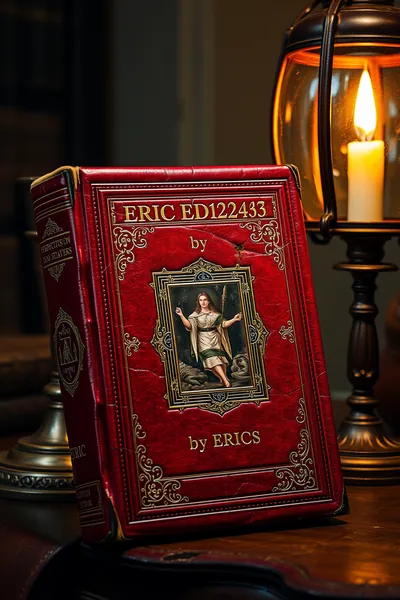
Lucid dreaming. Secrets of the ancients

 75
75

Lucid dreaming. Secrets of the ancients
Victoria Socolova’s "Lucid Dreaming: Secrets of the Ancients" attempts a daring synthesis, positioning the scientific interest in lucid dreaming alongside its ancient esoteric antecedents. The book's strength lies in its ambition to connect these disparate fields, drawing a compelling thread from modern neurobiology to historical oneiromancy. However, the execution occasionally falters; the "secrets of the ancients" feel more like inferred possibilities than concrete historical revelations. A particularly potent section discusses the dreamscape as a distinct yet accessible reality, a concept echoed across numerous mystical traditions. While the text champions the esoteric view, it sometimes underplays the rigorous scientific methodology that has illuminated aspects of REM sleep and consciousness during dreaming. Ultimately, Socolova offers a valuable perspective for those seeking to understand dreams as more than mere psychological ephemera, though readers seeking direct ancient techniques might desire more granular instruction.
📝 Description
75
Victoria Socolova's 2017 book connects scientific dream analysis with ancient spiritual practices.
Lucid Dreaming: Secrets of the Ancients examines the intersection of scientific dream study and esoteric spiritual traditions. Socolova argues that dreams are more than subconscious activity; they are a fundamental aspect of consciousness that can grant access to realities beyond our waking lives. The book bridges the gap between those who analyze dreams for psychological understanding and those who seek prophetic insight or spiritual connection within them.
This work is for serious practitioners of esoteric arts, philosophers of consciousness, and anyone interested in the deeper dimensions of the dreaming state. It appeals to those who feel their dreams go beyond simple psychological processing and suspect a more significant, perhaps even prophetic, meaning. It is suitable for the skeptic open to exploring the fringes of experience and the mystic looking for validation of their inner world. Socolova's text considers consciousness as fluid, capable of transcending physical limits in dreams. She introduces the dreamscape as a navigable reality, separate from but linked to our waking world. The core idea is that dream lucidity is not a new concept but an ancient technique used for self-discovery, prophecy, and spiritual growth.
The exploration of dreams as portals to other realities has a long history, predating modern psychology. Ancient cultures, from Mesopotamian dream interpretation to the oneiromancy of the Greeks and Romans, viewed dreams as divine messages or glimpses into the future. Socolova's work situates lucid dreaming within this ancient tradition. She suggests that modern scientific interest in the phenomenon often overlooks its deep historical roots in spiritual and divinatory practices, a lineage that includes figures like Artemidorus of Daldis.
💡 Why Read This Book?
• Gain an understanding of how ancient traditions viewed dream states as literal other realities, moving beyond modern psychological interpretations. This book specifically references the practices of oneiromancy. • Learn to see lucid dreaming not just as a modern phenomenon but as a continuity of ancient spiritual disciplines, referencing the historical role of dream interpretation in cultures predating the Common Era. • Explore the concept of the dreamscape as a navigable dimension, distinct from waking life, drawing parallels between ancient esoteric teachings and contemporary explorations of consciousness.
⭐ Reader Reviews
Honest opinions from readers who have explored this book.
❓ Frequently Asked Questions
What is the difference between lucid dreaming and prophetic dreams according to Victoria Socolova?
Socolova distinguishes lucid dreaming as a state of conscious awareness within the dream, often explored by scientists, from prophetic dreams, which are seen by mystics and esotericists as messages or glimpses into future events.
Does "Lucid Dreaming: Secrets of the Ancients" offer practical techniques for achieving lucidity?
While the book focuses on the conceptual and historical aspects, it implies that understanding the nature of the dreamscape and its connection to ancient wisdom is foundational to developing control and lucidity within dreams.
What ancient traditions are referenced in the book regarding dreams?
The book alludes to the practices of ancient cultures, including oneiromancy, and the general historical view of dreams as divine messages or spiritual journeys, suggesting these are precursors to modern lucid dreaming exploration.
Is "Lucid Dreaming: Secrets of the Ancients" suitable for beginners in dream study?
It is suitable for beginners who are philosophically or esoterically inclined and wish to understand the deeper implications of dreaming beyond basic dream journaling or psychological analysis.
When was "Lucid Dreaming: Secrets of the Ancients" first published?
Victoria Socolova's work was first published on October 14, 2016, positioning it within contemporary discussions on consciousness and dream research.
What is the core argument of "Lucid Dreaming: Secrets of the Ancients"?
The core argument is that lucid dreaming, often studied scientifically, is deeply rooted in ancient esoteric traditions that viewed dreams as significant spiritual or divinatory experiences, not just subconscious activity.
🔮 Key Themes & Symbolism
The Dreamscape as Reality
The work posits the dreamscape not as an illusion but as a distinct plane of existence accessible through altered states of consciousness. It draws parallels between ancient mystical accounts of journeys into spirit worlds and modern descriptions of lucid dream experiences, suggesting a consistent understanding across millennia that dreams offer tangible encounters with non-physical realities, a concept explored by various Gnostic traditions.
Lucidity as Ancient Practice
Socolova argues that the ability to become aware and exert control within dreams, often termed lucid dreaming, is not a recent psychological discovery but a sophisticated technique practiced by ancient esotericists. These traditions, it is suggested, utilized lucidity for spiritual growth, divination, and communion with higher realms, implying a lineage of practice predating modern scientific inquiry into REM sleep.
Bridging Science and Esotericism
A central theme is the reconciliation of the scientific study of dreams with the philosophical and spiritual interpretations found in esoteric traditions. The book suggests that while science maps the physiological aspects of dreaming, it often overlooks the profound subjective reality and potential wisdom that ancient cultures consistently attributed to dream states, such as those documented in the works of figures like Artemidorus.
Prophecy and Premonition
The book explores the ancient belief in prophetic dreams as a category distinct from merely lucid experiences. It posits that these divinatory dreams were not random occurrences but could be accessed and potentially guided through an understanding of the dream realm's nature, aligning with historical practices of oneiromancy and seeking divine guidance through nocturnal visions.
💬 Memorable Quotes
Direct passages from the work, attributed to the author.
“No one ever considered them [lucid and prophetic dreams] to be two equal types of dreams.”
— This statement highlights the central thesis: the historical and philosophical divergence between dreams of conscious control (lucidity) and dreams of foreknowledge (prophecy), and the book's aim to re-unify their understanding within an esoteric framework.
“The world of our dreams is something more than our reality.”
— This asserts the profound significance of the dream state, elevating it beyond mere subconscious processing to a reality with its own laws and potentials, a view consistent with many metaphysical philosophies.
“It is in a dream where we can find ourselves in any point of space and time...”
— This points to the unbound nature of consciousness within dreams, suggesting that the dream state allows for experiences of temporal and spatial transcendence, a concept explored in various mystical and occult traditions.
“...where we learn secrets of the part, essence of the present and possibilities of the future.”
— This interpretation of dream function suggests that dreams are not just personal reflections but sources of profound knowledge, offering insight into hidden truths, the core of current circumstances, and potential future pathways.
💡 Key Ideas
Editorial paraphrase of the work's core concepts — not direct quotes.
One state is of interest for scientists and pragmatists; the other is for mystics, philosophers and esotericists.
This quote expresses the perceived dichotomy the book seeks to bridge – the objective, empirical study of dreams versus the subjective, spiritual exploration, suggesting that both perspectives hold valuable truths about the dream world.
🌙 Esoteric Significance
Tradition
This work aligns with traditions that view the inner planes and dream states as tangible realities, such as Hermeticism and certain branches of Gnosticism. It posits that the dream realm is a spiritual landscape, navigable through conscious intent, echoing the Hermetic principle of 'As Above, So Below' by suggesting that inner states reflect outer realities and vice versa. It departs from purely psychological interpretations by emphasizing the objective reality of the dreamscape.
Symbolism
The text implicitly engages with the symbolism of thresholds and journeys, common in esoteric thought. The act of entering a lucid dream can be seen as crossing a threshold from the mundane to the sacred, a concept found in shamanic traditions. The dream itself becomes a symbolic landscape where personal archetypes and universal forces manifest, allowing for the decoding of life's 'secrets' and 'possibilities' as alluded to in the blurb.
Modern Relevance
Contemporary thinkers exploring consciousness, such as those within the field of transpersonal psychology or proponents of non-duality, find resonance in Socolova's work. Practices like dream yoga, found in Tibetan Buddhism, share the emphasis on conscious awareness within dreams. The book's perspective also appeals to modern occultists and practitioners of ceremonial magic seeking to integrate dream work into their broader spiritual disciplines.
👥 Who Should Read This Book
• Aspiring practitioners of esoteric dream work seeking to understand the historical context of lucid dreaming beyond modern scientific paradigms. • Philosophers of consciousness interested in comparing ancient metaphysical views of reality with contemporary theories on subjective experience. • Individuals who have experienced vivid or meaningful dreams and are looking for a framework to interpret them as more than mere psychological phenomena.
📜 Historical Context
Published in 2016, Victoria Socolova's "Lucid Dreaming: Secrets of the Ancients" emerged during a period of renewed popular and academic interest in consciousness studies and altered states. The work situates itself against the backdrop of modern psychology's engagement with lucid dreaming, particularly the research pioneered by figures like Stephen LaBerge in the late 20th century. Socolova, however, deliberately steers away from a purely scientific or Jungian psychoanalytic approach, which dominated much of the 20th-century discourse on dreams. Instead, she anchors her exploration in ancient traditions, referencing practices like oneiromancy, prevalent in Greco-Roman and Near Eastern antiquity, where dreams were considered direct conduits for divine communication or prophecy. The book implicitly contrasts its esoteric perspective with the materialist interpretations often favored by contemporary neuroscience, arguing that the 'secrets' of dream manipulation and interpretation were well-understood by esoteric practitioners long before the advent of scientific methodologies.
📔 Journal Prompts
The dreamscape as a distinct reality: Contrast your waking perception with potential dream-state experiences.
Ancient oneiromancy: Explore historical methods of dream interpretation and their relevance today.
The essence of the present: How might dreams offer clarity on current life situations?
Secrets of the part: Reflect on hidden aspects of yourself that emerge in dreams.
Possibilities of the future: Consider dream imagery that suggests potential paths or outcomes.
🗂️ Glossary
Lucid Dreaming
A state of consciousness during sleep where the dreamer becomes aware that they are dreaming and can, to varying degrees, exert control over the dream's narrative, environment, and characters.
Prophetic Dreams
Dreams believed to foretell future events, often interpreted as messages from a divine source or insights into unfolding temporal realities.
Oneiromancy
The practice of divination through dreams, historically employed by various ancient cultures to gain insight into the future, divine will, or hidden knowledge.
Dreamscape
The imagined or perceived environment and reality experienced within a dream, considered by some esoteric traditions to be a distinct plane of existence.
Esotericism
A broad category of spiritual or mystical traditions that are usually secret, or coded, and accessible only to initiated practitioners or those with specific knowledge.
Pragmatists
Individuals who tend to approach situations logically and realistically, focusing on practical outcomes and observable phenomena, often contrasted with those who explore subjective or spiritual realms.
Consciousness
The state of being aware of and responsive to one's surroundings; in esoteric contexts, often viewed as a fundamental aspect of reality that can extend beyond the physical body.
This book appears in 1 collection
🔮 Readers Also Liked
Browse all →








From the “Lucid Dreaming” Collection
View all →








More Free Occult Philosophy Books
View all →