The Exorcist
 76
76

The Exorcist
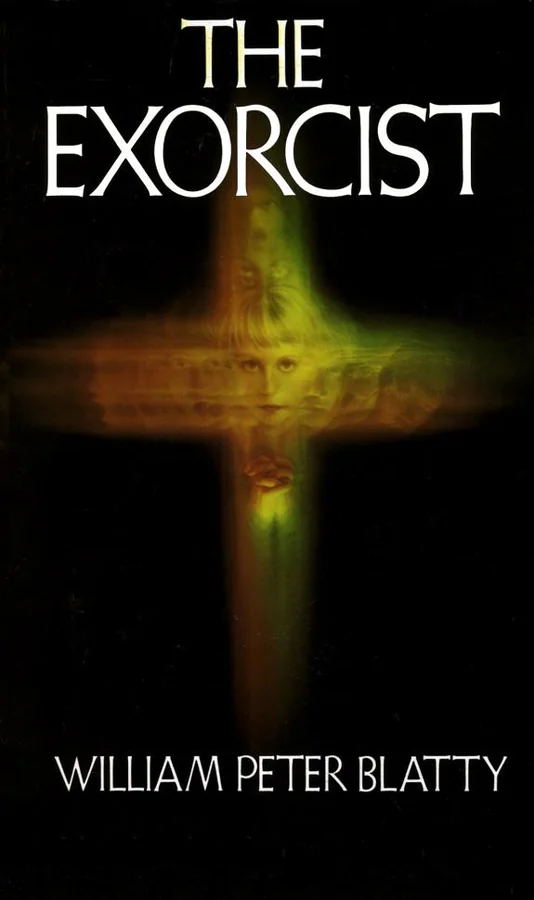
William Peter Blatty's *The Exorcist* is more than a simple horror novel; it’s a profound examination of faith tested by extremity. The book’s strength lies in its unflinching portrayal of spiritual warfare, grounding the supernatural horror in the very real anxieties of its characters, particularly the mother, Chris MacNeil. Blatty masterfully contrasts the mundane struggles of a film production in Georgetown with the escalating demonic infestation of her daughter, Regan. One limitation, however, is that the theological debates, while central, can sometimes feel didactic, slowing the narrative’s visceral impact. The scene depicting the attempted exorcism, where Father Karras grapples not only with the demon but his own internal crises, remains a powerful distillation of the book’s thematic core: the battle for a soul, fought on both spiritual and psychological planes. The work stands as a significant entry in occult literature for its detailed, albeit fictionalized, exploration of demonic possession and Catholic rites.
📝 Description
76
William Peter Blatty's 1971 novel, The Exorcist, details the possession of a young girl and the priests who attempt an exorcism.
Published in 1971, William Peter Blatty's novel follows the terrifying possession of Regan MacNeil, a young girl whose mother seeks help from two Catholic priests. The narrative details their desperate struggle against a malevolent entity. The book emerged during a time of cultural questioning and spiritual uncertainty, resonating with a public still captivated by themes of demonic influence.
Blatty's work grapples with fundamental theological questions. It examines the conflict between good and evil, the nature of faith when confronted with inexplicable suffering, and the psychological toll of extreme trauma. The story also incorporates historical aspects of Catholic exorcism rituals, merging supernatural events with deeply human experiences of fear and hope.
The Exorcist engages with occult and spiritual traditions that posit the existence of malevolent spiritual forces capable of influencing human lives. Within Catholic demonology, exorcism is a ritual for expelling such entities, rooted in centuries of belief and practice. Blatty's novel draws on this specific theological framework, presenting a dramatic account of a spiritual battle waged within the confines of a modern family's home, touching upon the persistent human fascination with entities beyond the material world.
💡 Why Read This Book?
• Understand the theological underpinnings of spiritual warfare as explored through the specific Catholic rite of exorcism, offering a counterpoint to purely psychological interpretations of possession. • Experience the narrative tension created by contrasting the secular world of filmmaking in 1971 Georgetown with the intensely spiritual crisis faced by the MacNeil family. • Analyze the psychological depth of Father Damien Karras, whose personal faith crisis is interwoven with the external battle against demonic forces, revealing the human element in spiritual conflict.
⭐ Reader Reviews
Honest opinions from readers who have explored this book.
❓ Frequently Asked Questions
When was The Exorcist first published and by whom?
The Exorcist was first published in 1971 by William Peter Blatty, becoming a significant cultural phenomenon.
What is the primary setting for The Exorcist?
The novel is primarily set in Georgetown, Washington D.C., a location that provides a stark contrast to the supernatural events.
Who are the main characters involved in the exorcism?
The central characters are Regan MacNeil, the possessed child; her mother, Chris MacNeil; and the two Catholic priests, Father Damien Karras and Father Lankester Merrin, who perform the exorcism.
What makes The Exorcist relevant to esoteric studies?
Its detailed depiction of demonic possession, rites of exorcism, and the theological conflict between good and evil offers a unique case study for those examining religious beliefs and occult phenomena.
Did The Exorcist face any controversy upon its release?
Yes, the book and its subsequent film adaptation generated considerable controversy and were subject to debate regarding their graphic content and theological implications.
What is the significance of the year 1971 in relation to the book?
1971 marks the initial publication year of William Peter Blatty's novel, a period when such explicit explorations of demonic forces were particularly impactful and debated.
🔮 Key Themes & Symbolism
The Nature of Evil
The Exorcist presents a stark confrontation with malevolent spiritual forces, personified by the entity possessing Regan MacNeil. This is not merely psychological disturbance but an external, intelligent evil seeking to corrupt and destroy. The novel posits evil as an active agent, capable of manipulating the physical and spiritual realms, challenging the reader to consider its presence beyond human constructs and its impact on innocent lives. The struggle against this force is depicted as a direct spiritual battle, requiring divine intervention.
Faith Under Duress
Central to the narrative is the testing of faith, particularly for Father Damien Karras. His personal spiritual crisis, marked by doubt and grief, mirrors the external crisis of Regan's possession. The book explores how faith is not a passive state but an active, often agonizing, struggle, especially when confronted with inexplicable suffering and the apparent silence of divine power. The exorcism ritual itself becomes a crucible for testing the resilience of belief against overwhelming despair.
The Catholic Rite of Exorcism
Blatty meticulously researched and incorporated elements of the Catholic Church's rites of exorcism, lending a degree of verisimilitude to the narrative. The novel examines the theological framework and practical application of these rites, positioning them as a specific spiritual weapon against demonic influence. This detailed portrayal offers a window into a formal, institutionalized approach to confronting what is believed to be supernatural evil, highlighting the interplay between doctrine and lived spiritual experience.
Psychology vs. Spirituality
The novel constantly negotiates the boundary between psychological affliction and genuine demonic possession. While medical and psychiatric explanations are initially considered for Regan's condition, the escalating events push the narrative firmly into the supernatural. This tension forces characters and readers alike to question the limits of rational understanding when faced with phenomena that defy empirical explanation, suggesting that some battles require spiritual, not just psychological, tools.
💬 Memorable Quotes
Direct passages from the work, attributed to the author.
“The Devil loves games. He is a bad loser.”
— This interpretation of the demon's nature suggests a cunning and persistent adversary. It frames the struggle not just as an act of malevolence but as a contest with a sentient, strategic opponent who relishes torment.
“When I was a boy, I used to think that if I prayed enough, I could make bad things happen to me so that my parents wouldn't have to suffer.”
— This is an interpretation of Father Karras's internal monologue, revealing his deep-seated guilt and a child-like belief in magical thinking as a means to protect loved ones, hinting at his complex psychological landscape.
“The greatest evil is the absence of God.”
— This is an interpretation of a theological concept explored in the book, framing evil not as a positive force but as a void, a spiritual vacuum created by God's withdrawal or absence, suggesting a profound spiritual desolation.
“We are not the same. We are not the same.”
— This is an interpretation of the demon's taunt to Father Karras, emphasizing the profound spiritual chasm and the alien, non-human nature of the entity compared to the human priest.
💡 Key Ideas
Editorial paraphrase of the work's core concepts — not direct quotes.
The demon replied, 'It does not matter what you do. We will not leave.'
This quote captures the relentless nature of the entity's hold on Regan. It highlights the overwhelming power and seemingly insurmountable challenge faced by the priests, underscoring the deep spiritual battle at play.
🌙 Esoteric Significance
Tradition
While not directly aligned with a specific, codified esoteric lineage like Kabbalah or Theosophy, *The Exorcist* draws heavily on the Catholic tradition's understanding of spiritual warfare and demonology. Its esoteric significance lies in its detailed, albeit dramatized, depiction of a formal religious rite—the exorcism—as a metaphysical intervention. It engages with concepts of spiritual possession and expulsion that echo across various Gnostic and folk magical traditions, presenting a case study of how one major Western religion addresses perceived external spiritual corruption.
Symbolism
The possessed child, Regan, serves as a potent symbol of corrupted innocence and the vulnerability of the human soul. The demon's vulgarity and blasphemy symbolize the desecration of the sacred and the inversion of divine order. The crucifix used in the ritual, when desecrated, represents the profound violation of faith and the spiritual battleground where sacred symbols become instruments of torment or tools for expulsion, highlighting the charged nature of religious iconography.
Modern Relevance
Contemporary interest in *The Exorcist* within esoteric circles often centers on its exploration of psychic assault and energetic manipulation, even when framed within a religious context. Modern occultists and practitioners of spiritual deliverance sometimes reference the book's narrative as an example of confronting and expelling negative entities. Its enduring popularity also fuels discussions on the psychology of belief, the power of ritual, and the persistent human fascination with the darker aspects of the spiritual or unseen world.
👥 Who Should Read This Book
• Students of comparative religion and demonology: To analyze a fictionalized but detailed account of Catholic exorcism practices and theological perspectives on evil. • Practitioners of spiritual warfare or deliverance ministries: To examine narrative representations of spiritual conflict, possession, and ritualistic expulsion of negative entities. • Readers interested in the intersection of psychology and the supernatural: To explore how Blatty frames extreme phenomena that challenge purely rational or medical explanations.
📜 Historical Context
William Peter Blatty's *The Exorcist*, published in 1971, arrived during a period of significant cultural and spiritual flux in the United States. The late 1960s and early 1970s saw widespread questioning of traditional authorities, including religious institutions, alongside a burgeoning interest in alternative spiritualities and the occult. The novel tapped into a vein of public fascination with demonic lore that had persisted through centuries but gained new traction amidst anxieties about social disintegration and the perceived rise of secularism. While the Catholic Church itself was undergoing internal reform following the Second Vatican Council, the public imagination remained captivated by its more traditional, and often darker, elements, such as the ancient rite of exorcism. The book's reception was notable; it became a bestseller, sparking widespread discussion and controversy. It presented a stark counter-narrative to the era's more optimistic or humanistic philosophies, directly engaging with theological concepts of good and evil in a way that few contemporary mainstream novels dared. Its success, and that of its 1973 film adaptation, demonstrated a powerful public appetite for exploring the boundaries of faith and the existence of supernatural malevolence.
📔 Journal Prompts
Regan MacNeil's descent into possession, the physical and psychological manifestations.
Father Damien Karras's internal conflict, faith, and guilt.
The symbolic meaning of the desecrated crucifix in the context of spiritual warfare.
The contrast between secular life in 1971 Georgetown and the supernatural crisis.
The theological arguments presented by Father Merrin and Father Karras regarding the nature of the demon.
🗂️ Glossary
Exorcism
A religious rite or ritual performed to expel a demon or evil spirit from a person or place, believed to be possessed.
Demonic Possession
The belief that an evil spirit or demon has taken control of a person's body and mind, often exhibiting abnormal behavior or supernatural abilities.
Georgetown
A historic neighborhood in Washington, D.C., serving as the primary setting for the novel, juxtaposing mundane urban life with supernatural horror.
R.C.I.A.
Rite of Christian Initiation of Adults. While not explicitly detailed in the book, it represents the formal path to Catholic conversion and spiritual grounding that contrasts with Regan's possession.
Psychological Trauma
A mental health condition triggered by experiencing or witnessing a terrifying event. The novel explores this as a potential, though ultimately insufficient, explanation for Regan's condition.
Theodicy
The branch of theology and philosophy that defends God's goodness and omnipotence in view of the existence of evil. The book engages with this concept through the characters' struggles.
Spiritual Warfare
The concept of fighting against evil spiritual forces. The exorcism ritual is depicted as a direct engagement in this type of conflict.
🔮 Readers Also Liked
Browse all →








More by William Peter Blatty
All books →




More Free Occult Philosophy Books
View all →