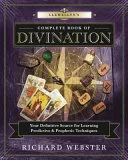
Llewellyn's Complete Book of Divination
 79
79

Llewellyn's Complete Book of Divination
Richard Webster’s *Llewellyn's Complete Book of Divination* presents a commendable attempt to gather a vast array of divinatory practices under one cover. Its strength lies in its sheer breadth, offering accessible introductions to over thirty different methods, from the well-trodden paths of Tarot and Astrology to the more obscure I Ching and automatic writing. The how-to instructions are generally clear, making it a useful starting point for novices. However, the book’s ambition to cover so much ground results in a certain superficiality. While it introduces concepts, it rarely achieves the depth required for true mastery of any single system. For instance, the section on Palmistry, while informative, lacks the nuanced detail one might find in a dedicated text. The work’s primary limitation is its encyclopedic rather than pedagogical approach; it informs broadly but doesn't deeply train. Webster succeeds in demystifying a wide range of practices for the uninitiated, but seasoned practitioners may find it lacking in advanced technique or original perspective. It serves best as a comprehensive directory and initial exploration.
📝 Description
79
Richard Webster's 2005 volume examines over thirty methods of divination.
This book offers a thorough survey of more than thirty different divinatory arts. It traces techniques from ancient celestial observation to modern introspective practices, aiming to make potentially obscure methods accessible. The focus is on practical instruction, explaining how each system works.
Llewellyn's Complete Book of Divination is useful for beginners learning basic principles and steps for tools like tarot and pendulums. It also serves experienced practitioners by gathering information on less common practices, such as automatic writing or the I Ching. The book appeals to those interested in esoteric studies, self-reflection, and the history of foresight across cultures.
It places divination within its historical and cultural contexts, showing how these methods connect with religious beliefs and philosophical systems. By covering a range of techniques from Western palmistry to Eastern I Ching, the book highlights the widespread human desire for meaning and guidance.
This work engages with the long human tradition of seeking knowledge beyond ordinary perception. It acknowledges that divination is not a fringe activity but a recurring element in societal structures and personal quests for understanding. By detailing various methods, the book reflects a persistent interest in interpreting signs and symbols to gain insight into personal futures or universal patterns.
💡 Why Read This Book?
• Gain practical, step-by-step instructions for over thirty different divination methods, including Tarot and Pendulums, allowing you to begin practicing immediately. • Understand the historical and cultural context of divination, recognizing its place alongside movements like Theosophy, broadening your esoteric knowledge. • Develop intuitive skills and explore self-discovery through accessible techniques like Automatic Writing, offering personal insights beyond conventional methods.
⭐ Reader Reviews
Honest opinions from readers who have explored this book.
❓ Frequently Asked Questions
What is the origin of Llewellyn's Complete Book of Divination?
First published on December 8, 2017, this comprehensive guide by Richard Webster aims to consolidate a wide range of divinatory practices, drawing from historical traditions and contemporary applications.
Which divination methods are covered in the book?
The book explores over thirty methods, including major systems like Tarot, Astrology, Palmistry, Numerology, Pendulums, and the I Ching, alongside less common techniques such as Automatic Writing.
Is this book suitable for beginners in divination?
Yes, the book is designed for both beginners and experienced practitioners, offering clear how-to instructions and foundational knowledge for various divinatory arts.
What is Richard Webster's background in writing about divination?
Richard Webster is a prolific author known for his extensive work in the New Age and esoteric fields, with numerous bestselling books on topics including psychic development and divination.
Does the book explain the theory behind divination?
The book touches upon underlying principles like synchronicity and symbolic language, framing divination as a tool for self-discovery and accessing intuition, rather than solely predictive mechanics.
Where does Llewellyn's Complete Book of Divination fit into esoteric literature?
Published by Llewellyn Worldwide, a prominent publisher in the esoteric and New Age sphere since 1901, the book aligns with their catalog of practical guides to spiritual and occult practices.
🔮 Key Themes & Symbolism
Breadth of Divinatory Systems
The book excels in its comprehensive cataloging of diverse divinatory practices. It moves beyond the commonly known systems like Tarot and Astrology to include methods such as Scrying, Rune casting, and Physiognomy. Each system is presented with a brief historical overview and practical instructions, demonstrating the vast array of techniques humanity has employed to seek guidance and understand patterns in life. This broad scope highlights the universal human desire for knowledge beyond the obvious, presenting a panorama of esoteric traditions.
Practical Application and Intuition
A core theme is the emphasis on practical application. Webster provides step-by-step guidance, enabling readers to engage directly with tools like pendulums or numerology charts. The work frames divination not just as prediction but as a pathway to developing intuition and self-awareness. By engaging with symbolic systems, readers are encouraged to connect with their inner wisdom, fostering personal growth and aiding in decision-making processes. This duality of practical instruction and inner development is central to the book’s utility.
Symbolism and Archetypal Language
The book implicitly explores the power of symbolism as a universal language across various divinatory methods. Whether interpreting the archetypal imagery of Tarot cards, the symbolic configurations of the I Ching, or the lines on a palm, readers are guided to understand how symbols function as conduits for meaning. This focus on symbolic interpretation underscores the idea that these systems tap into a deeper, perhaps collective, understanding of human experience and the cosmos, bridging the conscious and subconscious.
Historical and Cultural Roots
Webster situates the practice of divination within its historical and cultural contexts, acknowledging its presence across different civilizations and eras. From ancient Babylonian astrology to modern interpretations of the Tarot, the book traces the evolution and persistence of these practices. This historical perspective adds depth, showing how divination has served various societal roles, from religious oracles to personal guidance systems, reflecting enduring human concerns about fate, destiny, and the nature of reality.
💬 Memorable Quotes
Direct passages from the work, attributed to the author.
“Explore the incredibly wide variety of divination systems from around the world.”
— This statement expresses the book's primary objective: to serve as an expansive compendium, presenting a broad spectrum of methods for understanding and predicting future events or gaining insight into current circumstances.
“Discover in-depth information and how-to instruction for more than thirty divination practices.”
— This highlights the practical value of the text, promising not just theoretical exploration but actionable guidance on a significant number of divinatory techniques, empowering readers to begin their own practice.
“Answer Questions and Predict the Future with this Comprehensive Collection of Proven Tips and Techniques”
— This phrase frames divination as a practical skill set, suggesting that the methods presented are effective and reliable tools for addressing inquiries and gaining foresight through structured approaches.
“Explore the Profound Wisdom and Fascinating Secrets of Divination”
— This suggests that the book uncovers deeper, perhaps hidden, layers of understanding within divinatory practices, appealing to the reader's curiosity about esoteric knowledge and its potential to reveal profound truths.
“Richard Webster, one of the world's bestselling new age authors...”
— This positions the author as an established authority in the field, lending credibility to the content and assuring readers that they are learning from an experienced and popular voice in esoteric literature.
🌙 Esoteric Significance
Tradition
This work fits within the broad umbrella of Western Esotericism, particularly its contemporary New Age manifestation. It draws from diverse historical streams, including Hermeticism (through Astrology and Numerology), ancient Greek philosophies (influencing Physiognomy), and Taoist thought (I Ching). It departs from strictly traditional lineages by synthesizing these disparate elements into a single, accessible guide, prioritizing practical utility and psychological interpretation over strict adherence to any single arcane doctrine.
Symbolism
Key symbols include the Tarot's archetypal imagery, representing universal human experiences and stages of spiritual development. Numerology's numbers are treated as symbolic keys to understanding personality and destiny, reflecting Pythagorean and Kabbalistic influences. The book also engages with the symbolism of celestial bodies in Astrology, where planetary positions are seen as symbolic indicators of earthly events and individual character traits, illustrating the principle of 'as above, so below'.
Modern Relevance
Contemporary practitioners of self-help, mindfulness, and personal development often draw upon the accessible divinatory techniques presented in this book. Its approach aligns with modern psychological interpretations of divination as a tool for self-reflection and accessing subconscious insights. Thinkers in fields ranging from Jungian psychology to contemporary witchcraft practices might utilize Webster's work as a reference for understanding the breadth of divinatory traditions and their symbolic languages.
👥 Who Should Read This Book
• Novice occultists and spiritual seekers looking for a foundational overview of various divinatory arts, from Tarot to Pendulums, to identify practices that resonate with them. • Experienced practitioners of a single divinatory system who wish to broaden their knowledge by exploring complementary or contrasting methods like the I Ching or Automatic Writing. • Comparative religion scholars or cultural historians interested in understanding the diverse ways humanity has historically sought knowledge and guidance through symbolic interpretation and foresight.
📜 Historical Context
Published in December 2017, *Llewellyn's Complete Book of Divination* emerged during a period of renewed interest in esoteric practices, often driven by online communities and a search for alternative forms of guidance. The early 21st century saw a proliferation of New Age literature, with publishers like Llewellyn Worldwide, a significant player since its founding in 1901, continuing to be central hubs for such works. Webster's book entered a landscape where established traditions like Tarot and Astrology coexisted with a growing fascination for more eclectic methods. It offered a consolidated resource in contrast to the fragmented information often found online. Unlike earlier comprehensive works that might have focused on a single tradition, Webster’s approach aimed for breadth, touching upon systems with roots stretching back to ancient Mesopotamia (Astrology) and China (I Ching), while also acknowledging contemporary developments. The reception within the broader esoteric community was generally positive, recognizing its utility as an introductory text, though some critics noted its encyclopedic nature might preclude deep mastery of any single system.
📔 Journal Prompts
Automatic writing exploration of subconscious guidance.
The symbolism of the Major Arcana in Tarot readings.
Numerology's connection to personal life path numbers.
Interpreting celestial patterns in astrological charts.
The philosophical underpinnings of I Ching hexagrams.
🗂️ Glossary
Divination
The practice of seeking knowledge of the future or the unknown by supernatural means. It involves interpreting signs, symbols, or omens through various methods and tools.
Tarot
A deck of cards featuring symbolic imagery, used for divination and introspection. It typically includes Major and Minor Arcana, each with specific meanings and interpretations.
Astrology
The study of the movements and relative positions of celestial bodies interpreted as having an influence on human affairs and the natural world.
Palmistry
A divinatory practice involving the study of the palm of the hand, including its lines, mounts, and shape, to interpret character and predict future events.
Numerology
A system that assigns a meaning to numbers and studies their influence on human life. It often involves reducing names and dates to single digits or master numbers.
Pendulum
A weighted object, often a crystal or metal charm, suspended from a chain or string, used as a divinatory tool to answer yes/no questions or detect energies.
I Ching
An ancient Chinese divination text, also known as the Book of Changes, which uses a system of hexagrams derived from coin or yarrow stalk throws to offer guidance.