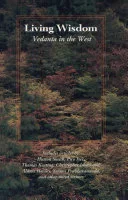
Living Wisdom
 71
71

Living Wisdom
Pravrajika Vrajaprana’s Living Wisdom offers a considered, if somewhat uneven, entry into the ongoing dialogue between Vedanta and Western seekers. The strength of the collection lies in the caliber of its contributors, including Huston Smith and Pico Iyer, whose essays provide a robust intellectual framework. Smith’s reflections on the perennial philosophy, for instance, offer a valuable perspective. However, the book occasionally suffers from a lack of cohesive voice, a common pitfall in essay compilations. While the 1994 publication date grounds it, some sections feel less immediate than others. A particularly insightful passage discusses the concept of *neti neti* (not this, not that) as a method for discerning the true self from its limiting identifications. Overall, Living Wisdom serves as a useful, if not revolutionary, anthology for those already familiar with Vedanta's foundational texts.
📝 Description
71
Living Wisdom, published in 1994, illuminates Vedanta's core principles through essays from 20th-century spiritual thinkers.
This collection of essays, originally published in 1994, expands on the foundational philosophy of Vedanta. It draws inspiration from the earlier work "Vedanta for the Western World" and gathers perspectives from significant spiritual thinkers of the 20th century. The book aims to provide a clear path for Western readers interested in understanding Eastern spiritual thought, particularly Vedanta. It appeals to those who value thoughtful discussions on spirituality and recognize the contributions of notable contemporary writers in this field. The essays seek to connect Eastern philosophical insights with Western perspectives.
Living Wisdom addresses the practical application of Vedanta philosophy in daily life. It examines core concepts such as Brahman, the ultimate reality; Atman, the true self; Maya, the nature of illusion; and Moksha, the path to liberation. The authors discuss how these ancient ideas can support personal development, ethical behavior, and the search for meaning in a world often perceived as secular. A key emphasis is placed on the universal nature of spiritual truths, transcending cultural and religious differences.
Living Wisdom emerged in 1994 during a time of growing Western engagement with Eastern traditions. It follows the lineage of "Vedanta for the Western World," a key text that introduced Vedanta to a broader audience in the mid-20th century. The book's inclusion of figures like Huston Smith situates it within the academic and popular study of comparative spirituality. While engaging with the broader spiritual currents of the era, it maintains a link to established philosophical streams.
💡 Why Read This Book?
• Gain a practical framework for understanding Vedanta's core tenets, such as Brahman and Atman, as presented in the context of "Vedanta for the Western World," aiding your personal spiritual inquiry. • Explore diverse spiritual perspectives from notable thinkers like Huston Smith, offering unique insights into comparative religion and the universality of spiritual truths, enriching your worldview. • Discover how concepts like *neti neti* can be applied to daily life for self-discernment, providing actionable methods for spiritual practice beyond theoretical knowledge.
⭐ Reader Reviews
Honest opinions from readers who have explored this book.
❓ Frequently Asked Questions
What is the primary philosophical tradition explored in Living Wisdom?
The book's primary focus is Vedanta, a major school of Hindu philosophy. It specifically draws from and expands upon "Vedanta for the Western World," aiming to make these complex ideas accessible to a Western readership.
Who are some of the notable contributors to Living Wisdom?
Living Wisdom features essays by prominent spiritual writers and thinkers such as Huston Smith, Fr. Thomas Keating, Pico Iyer, and Rabbi Asher Block, offering diverse viewpoints on spiritual inquiry.
When was Living Wisdom first published?
Living Wisdom was first published in 1994, placing it within the late 20th-century discourse on spirituality and Eastern philosophies in the West.
How does Living Wisdom relate to "Vedanta for the Western World"?
Living Wisdom is presented as a spiritual successor or companion volume, building upon the foundational work of "Vedanta for the Western World" by offering further exploration and contemporary perspectives on its themes.
What kind of spiritual concepts does the book address?
The book addresses fundamental Vedantic concepts including Brahman (ultimate reality), Atman (the self), Maya (illusion), and the paths to spiritual realization, interpreted for a contemporary, Western audience.
Is Living Wisdom suitable for beginners in spiritual philosophy?
Yes, while it features contributions from respected scholars, the book aims to interpret complex Vedantic ideas for a Western audience, making it accessible to those new to the subject but seeking depth.
🔮 Key Themes & Symbolism
Vedanta for the Modern Seeker
The collection centers on making the profound philosophy of Vedanta accessible and relevant to contemporary Western readers. It moves beyond purely academic discourse to explore the practical implications of concepts like Brahman and Atman for daily life. By referencing "Vedanta for the Western World," the book establishes a lineage of bridging Eastern wisdom with Western understanding, offering seekers tools for self-discovery and a more integrated spiritual life.
The Perennial Philosophy
Living Wisdom engages with the idea that underlying all diverse religious and spiritual traditions are universal truths. Contributors like Huston Smith, a renowned scholar of world religions, articulate how Vedanta shares common ground with other spiritual paths. This theme encourages a comparative approach to spirituality, highlighting shared human aspirations for meaning and connection beyond sectarian boundaries.
Self-Inquiry and Discernment
A significant focus is placed on the practice of self-inquiry, particularly through Vedantic methods. The concept of *neti neti* (not this, not that) is explored as a means of peeling away false identifications and superficial layers of the ego to realize the true nature of the self (Atman). This theme offers practical guidance for introspection and mental discipline.
Integration of East and West
The book actively seeks to synthesize Eastern spiritual insights with Western philosophical and psychological frameworks. It addresses the challenges and opportunities of translating complex Sanskrit terms and concepts into English and Western cultural contexts. Contributors like Fr. Thomas Keating, known for Christian contemplative traditions, offer points of dialogue, suggesting a potential for cross-traditional understanding.
💬 Memorable Quotes
Direct passages from the work, attributed to the author.
“Essays examine the concept of Brahman as the underlying reality of all existence.”
— This points to a central Vedantic tenet, emphasizing that the ultimate divine or absolute consciousness is not separate from the universe but is its very substance, a unifying principle.
“The book discusses the method of *neti neti* for distinguishing the real from the unreal.”
— This refers to a specific spiritual practice within Vedanta, involving negation or denial of all that is not the true Self, as a way to arrive at self-knowledge by eliminating false notions.
“Contributors like Huston Smith discuss the universality of spiritual principles across cultures.”
— This highlights the book's engagement with the perennial philosophy, suggesting that despite diverse expressions, fundamental spiritual truths are shared across various religious traditions.
“Pravrajika Vrajaprana's compilation bridges ancient wisdom with contemporary Western thought.”
— This interpretation emphasizes the book's function as a translator and mediator, making the profound philosophical and spiritual insights of Vedanta accessible and applicable to the modern Western mindset.
💡 Key Ideas
Editorial paraphrase of the work's core concepts — not direct quotes.
The work explores how Vedanta offers a path to understanding the deepest self, beyond fleeting experiences.
This paraphrased concept highlights Vedanta's core aim: to guide the reader toward recognizing their essential nature, which is unchanging and distinct from the impermanent phenomena of the mind and world.
🌙 Esoteric Significance
Tradition
Living Wisdom is rooted in the Advaita Vedanta tradition, a prominent school within Hinduism. While Advaita Vedanta is a philosophical and spiritual system rather than an 'esoteric' discipline in the Western sense (like Hermeticism or Kabbalah), its emphasis on the non-dual nature of reality (Brahman) and the identity of the individual soul (Atman) with that reality holds profound esoteric implications for self-realization and understanding the cosmos.
Symbolism
The text implicitly engages with core Vedantic symbols, though not always overtly esoteric. Brahman, often described as Sat-Chit-Ananda (Existence-Consciousness-Bliss), functions as the ultimate, ineffable reality. Atman represents the individual spark of divine consciousness within each being, symbolizing the hidden, eternal self. The concept of Maya, or illusion, symbolizes the veiling power that obscures the true nature of reality, akin to veils of ignorance in other mystical traditions.
Modern Relevance
The work's emphasis on non-duality and self-realization continues to resonate with contemporary spiritual seekers and thinkers interested in mindfulness, consciousness studies, and contemplative practices. Figures exploring integrated spirituality, consciousness research, and transpersonal psychology often draw upon Vedantic principles. The book's approach to translating these ancient ideas for a Western audience remains relevant for modern educators and spiritual guides seeking to bridge Eastern and Western thought.
👥 Who Should Read This Book
• Students of comparative philosophy and religion seeking to understand the core tenets of Vedanta as interpreted for a Western context, benefiting from the historical and intellectual perspectives offered. • Individuals interested in non-dual philosophies and contemplative practices who wish to explore concepts like Brahman and Atman through accessible essays by respected thinkers. • Seekers looking for practical applications of spiritual wisdom in daily life, particularly those drawn to methods of self-inquiry and discernment, finding guidance in essays discussing concepts like *neti neti*.
📜 Historical Context
Published in 1994, Living Wisdom arrived at a time when Western engagement with Eastern philosophies, particularly Vedanta, had moved beyond fringe movements into more mainstream intellectual and spiritual circles. It built upon the legacy of "Vedanta for the Western World," a significant publication from the mid-20th century that introduced Swami Vivekananda's teachings to a broad audience. The era saw a growing interest in comparative religion and spirituality, fueled in part by scholars like Huston Smith, whose work on world religions was widely respected. Living Wisdom tapped into this intellectual current, offering a curated selection of essays that explored Vedantic principles. While it engaged with the broader New Age movement, its contributors often brought a more grounded, philosophical, and sometimes academic perspective, differentiating it from purely esoteric or pop-psychological approaches. The reception of such works generally reflected a growing appetite for diverse spiritual traditions, though often framed within a Western cultural lens.
📔 Journal Prompts
The nature of Brahman as the underlying reality of all existence.
The practice of *neti neti* for self-discernment.
Huston Smith's perspectives on the perennial philosophy.
The integration of Vedantic principles with Western thought.
Distinguishing the Atman from ego-identifications.
🗂️ Glossary
Vedanta
A school of Hindu philosophy based on the Upanishads, exploring the nature of reality, consciousness, and the self. It seeks to understand the relationship between the individual soul and the ultimate reality.
Brahman
In Vedanta, the supreme, unchanging, infinite reality that is the source and substance of all existence. It is often described as formless, eternal, and all-pervading consciousness.
Atman
The individual self or soul, considered in Vedanta to be identical with Brahman. It represents the true, eternal essence of a being, beyond the physical body and mind.
Maya
A Sanskrit term in Vedanta referring to illusion or cosmic deception. It is the power that conceals the true nature of reality (Brahman) and projects the world of multiplicity.
Neti Neti
A Sanskrit phrase meaning 'not this, not that.' It is a method of spiritual inquiry used in Vedanta to arrive at self-knowledge by negating all that is not the true Self.
Upanishads
Ancient Sanskrit texts that form the theoretical basis of Vedanta philosophy. They contain philosophical dialogues and teachings on the nature of reality, the soul, and liberation.
Pravrajika
A title for a female renunciate or nun in certain Hindu monastic orders, signifying a life dedicated to spiritual practice and study.