LIBER LXXVIII
 80
80

LIBER LXXVIII

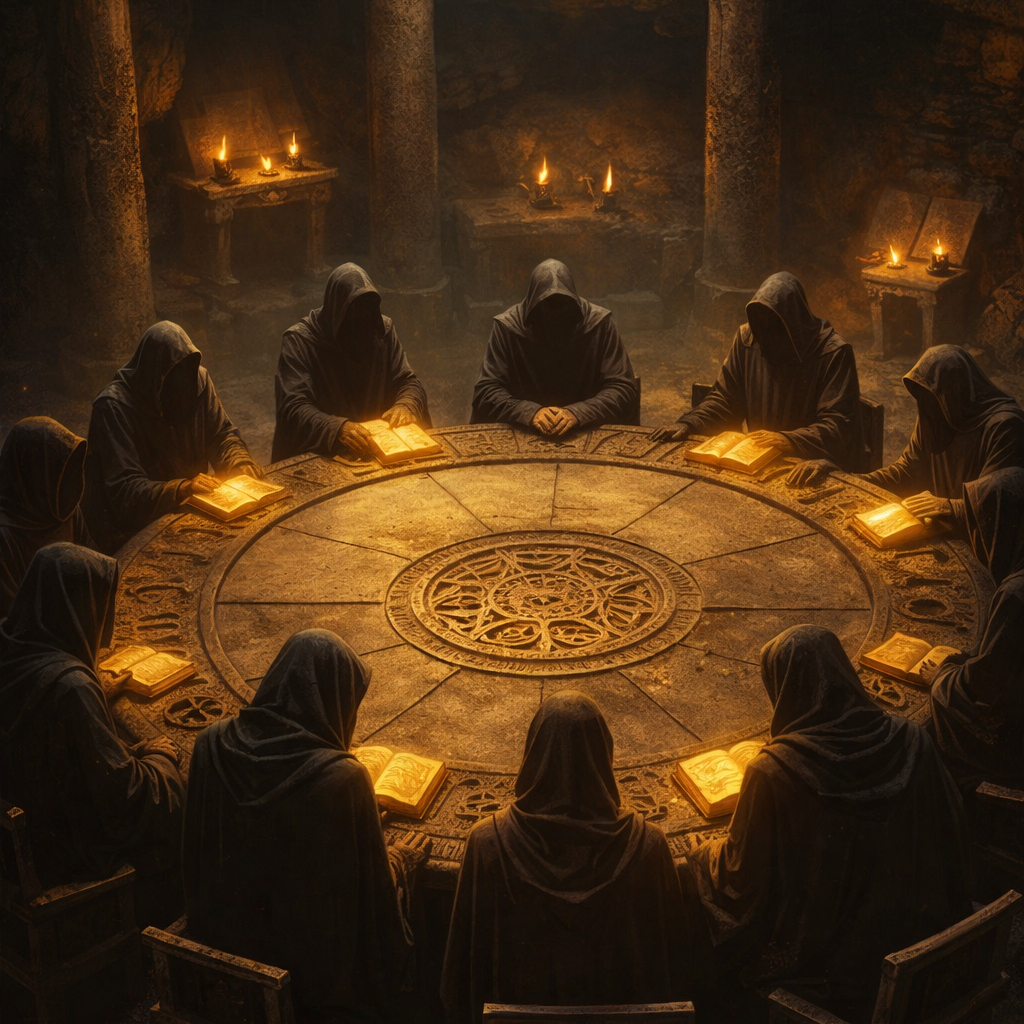

Ophelia Vance, Mystical Literature Reviewer— LIBER LXXVIII, presented by 'THEIR USE,' is a masterful unveiling of Masonic esoteric currents. This text does not simply describe; it initiates the reader into a deeper understanding of the symbolic language and philosophical underpinnings of Freemasonry and affiliated secret orders. Its strength lies in its sophisticated articulation of concepts that often remain opaque to the uninitiated, providing a rare glimpse into the spiritual and occult dimensions of these ancient brotherhoods. It is an indispensable resource for serious students of esotericism, occult history, and comparative religion, offering profound insights into the quest for higher consciousness and the hidden forces at play in the universe. Recommended for seasoned practitioners and dedicated scholars.
📝 Description
80
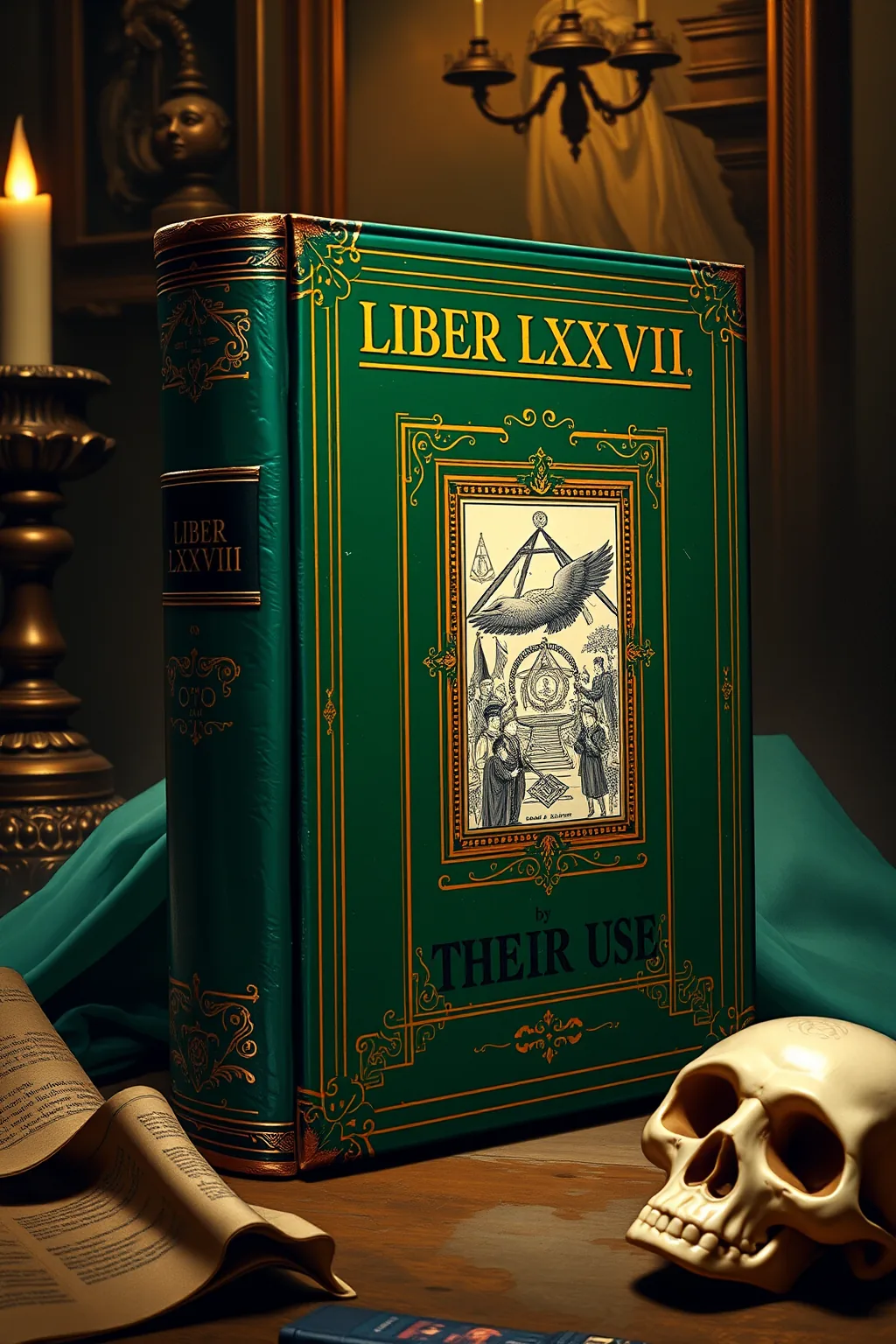
Published in 1912, LIBER LXXVIII examines Freemasonry's esoteric dimensions.
LIBER LXXVIII, attributed to 'THEIR USE,' details the esoteric aspects of Freemasonry and related secret societies. The book goes beyond simple history to discuss complex symbolism, secret rites, and the search for hidden knowledge. It is written for individuals interested in the hidden forces that influence power structures and spiritual growth, which are not obvious in everyday life. Inside, the text presents a philosophical path where external appearances hide internal realities. Ancient stories and obscure statements guide the reader toward spiritual understanding. The book creates a mood of quiet respect, encouraging personal reflection and serious thought about life's enduring questions and the universe's structure. LIBER LXXVIII requires focused attention; it acts as an introduction, urging the reader to look past superficial appearances and comprehend the deep secrets that form human fate and the unseen framework of existence. It is for those who know that genuine understanding is often found in obscurity, awaiting discovery by dedicated and knowledgeable individuals.
This work fits within the tradition of Hermeticism and Rosicrucianism, which often explore the hidden correspondences between the physical and spiritual worlds. It engages with concepts common in Western esotericism, such as allegorical interpretation of myths and rituals to reveal deeper truths about the cosmos and human potential. The book's focus on 'hidden gnosis' aligns with the Gnostic pursuit of salvation through direct, intuitive knowledge of the divine.
💡 Why Read This Book?
LIBER LXXVIII offers a rare and potent distillation of Masonic esoteric wisdom. Read it to unlock profound symbolism, understand the hidden architecture of secret societies, and embark on a journey of inner transformation. Ideal for seekers of arcane knowledge, students of occult history, and practitioners who wish to deepen their understanding of spiritual progression through ancient rites and philosophies.
⭐ Reader Reviews
Honest opinions from readers who have explored this book.
❓ Frequently Asked Questions
What is the primary focus of LIBER LXXVIII?
LIBER LXXVIII primarily focuses on the esoteric and mystical dimensions of Freemasonry and other secret societies, exploring their symbolic language, rituals, and philosophical underpinnings.
Who is 'THEIR USE' as an author?
'THEIR USE' is a pseudonym or collective designation for the author(s) of LIBER LXXVIII, implying a focus on the practical application or transmission of knowledge rather than individual authorship.
Is this book suitable for beginners in esotericism?
While offering profound insights, LIBER LXXVIII is best suited for those with some foundational knowledge of esoteric concepts and symbolism, as it delves into complex themes.
What kind of knowledge can one expect to gain from this text?
Readers can expect to gain a deeper understanding of allegory, hermeticism, numerology, and the philosophical quest for self-knowledge and spiritual enlightenment as practiced within secret traditions.
Does the book discuss specific Masonic degrees or rituals?
The book likely alludes to and interprets the symbolic meaning behind Masonic degrees and rituals, rather than providing a procedural guide, focusing on their esoteric significance.
🔮 Key Themes & Symbolism
The Veiled Architecture of Initiation
This theme explores the profound concept of initiation as a process of gradual unveiling, akin to constructing a spiritual edifice within the individual. It looks at how secret societies use symbolic architecture and ritualistic progression to guide neophytes through stages of understanding, transforming their perception of reality and their place within the cosmos. The emphasis is on the internal, transformative journey that mirrors the external structures and allegories presented.
Symbolic Language and Hermetic Resonance
LIBER LXXVIII meticulously dissects the body of symbols employed by Freemasonry and other esoteric orders. This theme examines how seemingly simple emblems and gestures carry profound philosophical and spiritual meanings, acting as keys to unlock deeper truths. It highlights the hermetic principle of 'as above, so below,' demonstrating how celestial patterns and earthly manifestations are interconnected through a universal symbolic language that speaks to the seeker's inner consciousness.
The Pursuit of Gnosis Beyond Dogma
This central theme addresses the core esoteric quest for direct, experiential knowledge (Gnosis) that transcends rigid dogma and external authority. LIBER LXXVIII suggests that secret societies provide a framework and a method for this personal discovery, encouraging self-reliance and inner revelation. It frames the pursuit of wisdom not as an intellectual exercise alone, but as a transformative process that leads to a profound understanding of divine principles and the nature of the soul.
💬 Memorable Quotes
Direct passages from the work, attributed to the author.
“The compass points not merely to direction, but to the divine.”
— Here, the Masonic tool of the compass is reinterpreted as a symbol of spiritual guidance, representing the alignment of one's life with higher principles and cosmic order.
“Every stone laid in the temple is a step towards the infinite.”
— This suggests that every action, effort, or stage of development within a spiritual or initiatory path contributes to a grander, unending journey towards universal understanding.
“The silence between words speaks louder than the pronouncements.”
— This highlights the importance of intuition, contemplation, and the unspoken wisdom found in moments of quiet reflection, often more profound than explicit teachings.
“Shadows are but the absence of a greater light.”
— This philosophical statement reframes perceived negativity or ignorance not as inherent evil, but as a lack of spiritual illumination, suggesting that light is the fundamental reality.
💡 Key Ideas
Editorial paraphrase of the work's core concepts — not direct quotes.
True sight is not granted, but earned through inward sight.
This quote emphasizes that genuine spiritual understanding and perception are not passive gifts but the result of diligent inner work and self-cultivation.
🌙 Esoteric Significance
Tradition
This work is deeply rooted in the Western Esoteric Tradition, drawing heavily from Hermeticism, Kabbalah, Alchemy, and Neoplatonic philosophy. It represents the perennial wisdom that seeks to understand the divine order of the cosmos and humanity's place within it through symbolic interpretation and inner transformation, particularly as channeled through the framework of Freemasonry and its related secret societies.
Symbolism
The text is replete with detailed symbolism, employing Masonic tools (compass, square, level) and architectural metaphors (temple, rough ashlar, perfect ashlar) to represent spiritual development, ethical conduct, and the construction of the inner self. It likely also incorporates alchemical imagery and Kabbalistic concepts to illustrate processes of transformation and divine emanation, urging the reader to decode these visual and conceptual keys.
Modern Relevance
In an age often characterized by superficiality and information overload, LIBER LXXVIII offers a profound antidote, guiding readers towards introspection and the pursuit of authentic, transformative knowledge. Its emphasis on symbolic language and inner work remains highly relevant for contemporary seekers grappling with meaning, purpose, and the desire for a deeper connection to the sacred, providing a framework for working through the complexities of modern life with wisdom and clarity.
👥 Who Should Read This Book
LIBER LXXVIII is an essential read for dedicated students of Western Esotericism, particularly those interested in the philosophical and mystical dimensions of Freemasonry and secret societies. Scholars of occult history, comparative religion, and symbolic studies will find it an invaluable primary source for understanding initiatory traditions. For the seasoned spiritual seeker or practitioner, it offers clear insights and contemplative material to deepen their personal journey of self-discovery and gnosis. It is less suited for casual readers or those seeking simple historical accounts, but for the earnest inquirer, it is a rich source of veiled wisdom.
📜 Historical Context
LIBER LXXVIII emerges from a rich historical milieu where secret societies flourished as repositories of ancient wisdom and esoteric knowledge, particularly during the Enlightenment and its subsequent eras. The late 18th and 19th centuries saw a surge in interest in Freemasonry, Rosicrucianism, and other mystical orders, often viewed as bastions of philosophical inquiry, social reform, and spiritual exploration in a world increasingly shaped by rationalism. These groups provided a sanctuary for those who felt disenfranchised by conventional religious or political structures, offering a path to self-improvement and a deeper understanding of the universe. The text likely reflects the intellectual currents of its time, blending hermetic traditions, Kabbalistic thought, Neoplatonism, and alchemical symbolism. Its very existence speaks to a desire to codify and disseminate, albeit in veiled language, the clear insights gleaned from centuries of occult study and initiatory practice.
📔 Journal Prompts
Reflect on a time you felt you were 'born blind' in understanding a situation. What did you do to gain 'sight'?
How do the symbols of Freemasonry, as described in this text, resonate with or challenge your current understanding of spiritual tools?
Consider a personal 'temple' you are building within yourself. What 'stones' have you laid, and what are the foundations?
Explore a concept or belief you once held dogmatically. How did you move towards a more personal, experiential understanding?
In what areas of your life do you find yourself seeking 'light' in the 'shadows'?
🗂️ Glossary
Gnosis
A Greek term meaning 'knowledge,' particularly referring to spiritual or mystical knowledge, often obtained through direct experience or intuition rather than empirical observation or dogma.
Hermeticism
A philosophical and religious tradition based on the writings attributed to Hermes Trismegistus, emphasizing wisdom, magic, and the interconnectedness of the cosmos, often summarized by the principle 'As Above, So Below.'
Kabbalah
A system of Jewish mysticism that explores the divine nature and the creation of the universe through symbolic interpretation of scripture and esoteric doctrines, often involving the Tree of Life.
Ashlar
In Freemasonry, refers to a stone, particularly a perfectly dressed stone (perfect ashlar) or a rough stone (rough ashlar), symbolizing the human soul's transformation from its natural to its perfected state through education and morality.
Esotericism
Teachings or practices that are not meant for everyone, often reserved for a select group of initiates or those who have undergone specific training, focusing on spiritual knowledge and inner transformation.
This book appears in 2 collections
🔮 Readers Also Liked
Browse all →









From the “Secret Societies” Collection
View all →![Proofs Of A Conspiracy [Against All The Religions And Governments Of Europe, Carried On In The Secret Meetings Of Freemasons, Illuminati And Reading Societies].pdf (PDFy mirror)](/img/thumb/proofs-of-a-conspiracy-against-all-the-religions-and-governments-of-europe-carried-on-in-the-secret-meetings-of-freemasons-illuminati-and-reading-societies-pdf-pdfy-mirror.webp)




More Free Freemasonry & Secret Societies Books
View all →