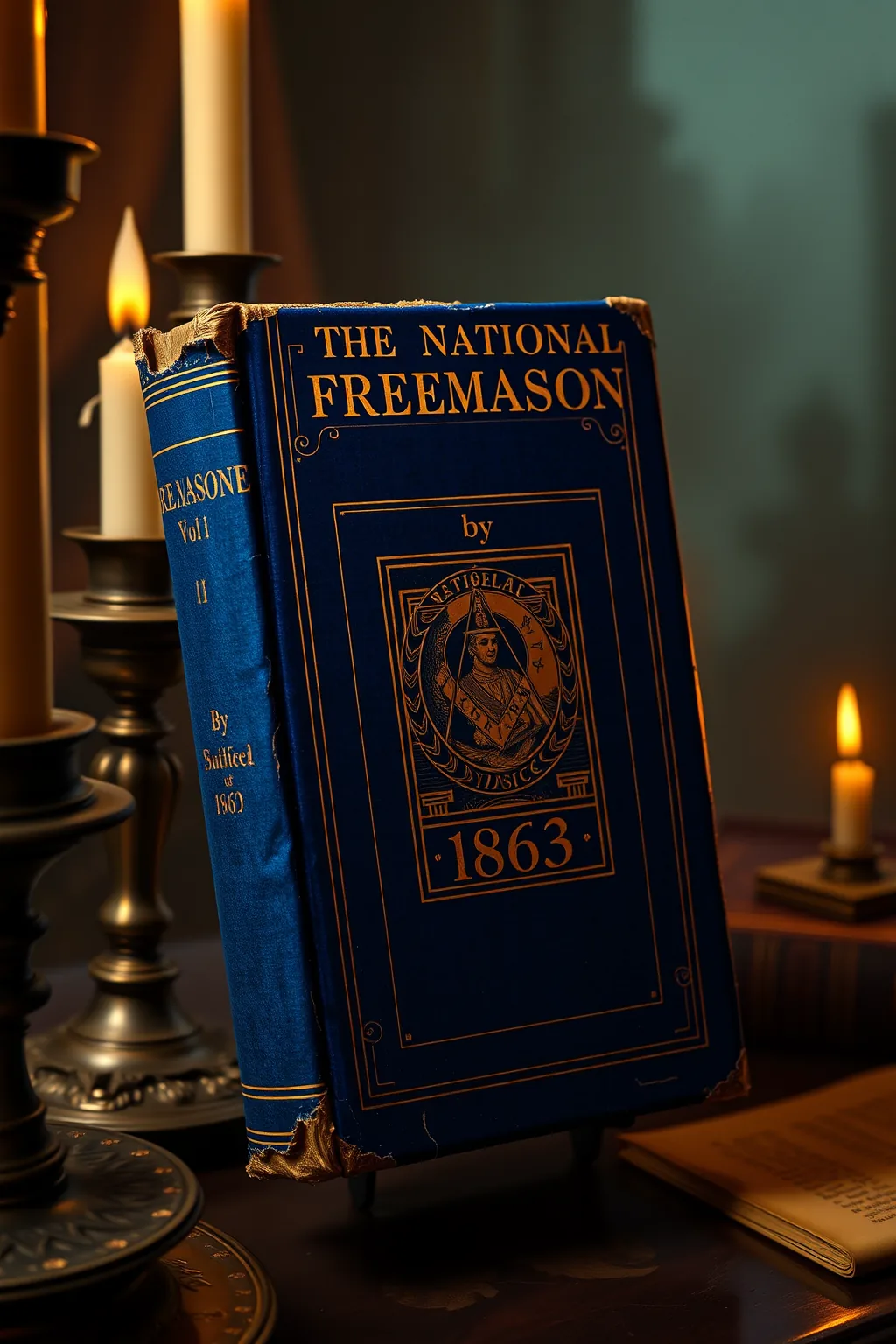
The National Freemason Vol I & II 1863
 73
73

The National Freemason Vol I & II 1863


Sophia Crane (Associate Editor) — "The National Freemason Vol I & II 1863" is a treasure for serious students of esoteric traditions. It offers an unfiltered look into the intellectual and spiritual currents of mid-19th century Freemasonry, revealing its deep engagement with philosophy and ancient wisdom. The text, though historical, is rich with symbolic language and moral instruction, providing fertile ground for discovering the underlying metaphysical principles. For practitioners and scholars seeking to understand the roots of Masonic thought and its enduring quest for light, this collection is an authoritative and illuminating source, shedding essential context on the Craft's deeper meanings. It is a foundational text for anyone delving into the secrets of fraternal orders.
📝 Description
73
The National Freemason Vol I & II, published in 1863, presents Masonic teachings through allegory and philosophical discussion.
This 1863 collection, The National Freemason Vol I & II, goes beyond simple records of Masonic events. It contains allegorical stories and philosophical discussions meant to reveal deeper meanings within Freemasonry. The text weaves together ancient symbols, Hermetic ideas, and the search for spiritual understanding.
It aims to help those interested in Freemasonry's philosophical basis and its spiritual structure. The book provides a look into a past time, but its questions about morality, personal growth, and the universe still hold relevance. It invites those new to these ideas to learn more.
Published in 1863, The National Freemason aligns with the 19th-century interest in esoteric traditions and secret societies. This period saw a rise in publications examining symbolism and philosophy within groups like Freemasonry. The text reflects a desire to interpret rituals and teachings not just as social practices, but as systems carrying deeper spiritual and philosophical weight, often drawing on Hermeticism and Kabbalistic ideas prevalent in esoteric circles of the time.
💡 Why Read This Book?
Dive into the foundational texts of a 19th-century Masonic journal to unlock profound insights into symbolism, ethics, and the pursuit of hidden knowledge. Ideal for seekers of esoteric wisdom, historians of secret societies, and practitioners aiming to deepen their understanding of Masonic philosophy and its enduring spiritual quest.
⭐ Reader Reviews
Honest opinions from readers who have explored this book.
❓ Frequently Asked Questions
What is the primary focus of "The National Freemason Vol I & II 1863"?
This collection primarily focuses on the philosophical, symbolic, and moral teachings of Freemasonry during the mid-19th century, offering insights into its esoteric underpinnings and historical context.
Is this book suitable for beginners interested in Freemasonry?
While historical, the text offers foundational insights. Beginners may find it dense but rewarding with dedicated study, especially when approached alongside introductory Masonic literature.
What kind of knowledge can one expect to find within these volumes?
Readers can expect to find discourses on Masonic rituals, allegorical interpretations, philosophical inquiries, ethical guidance, and discussions on the symbolism embedded within Masonic practices.
Who is the anonymous author of this work?
The author is officially listed as 'Unknown.' This anonymity is common in esoteric literature, often suggesting a collective wisdom or a desire to focus on the teachings rather than an individual personality.
Does this book contain actual Masonic rituals or secrets?
While it discusses Masonic principles and symbolism extensively, it does not typically contain verbatim rituals or secrets that are intended for internal lodge use. Its value lies in the exposition and interpretation of these elements.
🔮 Key Themes & Symbolism
The Architect and the Divine Plan
This theme examines the Masonic concept of the 'Great Architect of the Universe,' exploring how it served as a central metaphor for divine order, cosmic creation, and the inherent intelligibility of existence. The text illustrates how Masonic teachings aimed to guide individuals towards understanding this grand design through moral rectitude and intellectual pursuit, emphasizing a universal spirituality that transcended sectarian dogma. It highlights the symbolic representation of construction and blueprint as metaphors for personal development and the building of a just society, rooted in timeless principles.
Symbolism as a Key to Inner Truths
Central to these volumes is the profound exploration of Masonic symbolism as a language of the soul, a system designed to convey complex metaphysical and ethical truths through visual and allegorical means. The book unpacks the meanings behind tools, geometric figures, and ancient motifs, illustrating how they serve as conduits for accessing deeper levels of consciousness and understanding the human condition. It argues that through diligent contemplation of these symbols, the aspirant can unlock personal transformation and achieve greater spiritual illumination, mirroring the alchemical process of refining the self.
The Path of Moral and Spiritual Cultivation
This theme underscores Freemasonry's commitment to the personal growth of its members, presenting a rigorous path of moral development and spiritual refinement. The texts emphasize the cultivation of virtues such as temperance, fortitude, prudence, and justice, portraying them as essential building blocks for both individual well-being and societal harmony. It details how Masonic principles encourage self-discipline, continuous learning, and the pursuit of wisdom, framing the fraternal journey as a lifelong endeavor to 'square' one's actions and 'level' one's perspectives, ultimately leading to a more enlightened existence.
💬 Memorable Quotes
Direct passages from the work, attributed to the author.
“Light is the pursuit, darkness the ignorance we strive to banish.”
— Expresses the core Masonic quest for knowledge and enlightenment, portraying the journey as a struggle against the shadows of misunderstanding and spiritual unawareness.
“The rough ashlar awaits the sculptor's patient hand.”
— A powerful metaphor for human potential, suggesting that individuals, like unrefined stones, possess inherent worth but require diligent work, discipline, and wisdom to reveal their true, perfected form.
“Brotherhood, a temple built not of stone, but of shared virtue.”
— Highlights the spiritual and ethical foundation of Freemasonry, emphasizing that the strength and sanctity of the fraternity lie in the moral character and mutual respect of its members.
“Ancient wisdom whispers through the lodges.”
— Suggests that Masonic teachings are not new inventions but are imbued with the profound knowledge and spiritual insights passed down through generations of esoteric traditions, accessible within the fraternal setting.
💡 Key Ideas
Editorial paraphrase of the work's core concepts — not direct quotes.
The square and compasses, not mere tools, but divine instructors.
This quote elevates the iconic Masonic symbols beyond their physical form, suggesting they are conduits for spiritual wisdom and moral guidance, hinting at a deeper, divinely inspired meaning.
🌙 Esoteric Significance
Tradition
This work is deeply rooted in the Western Esoteric Tradition, particularly drawing from Hermeticism, Gnosticism, and Kabbalistic thought, all of which influenced the development of Freemasonry. It reflects the Hermetic principle of 'As Above, So Below,' linking the microcosm of the individual human being to the macrocosm of the universe. The emphasis on allegory, symbolism, and moral allegory aligns with Gnostic quests for hidden knowledge and spiritual liberation. Kabbalistic concepts of divine emanation and the structure of the cosmos often find echoes in Masonic symbolism and degrees.
Symbolism
The text is replete with potent Masonic symbols, each carrying layers of esoteric meaning. The Square and Compasses, representing morality and the limits of human action, are fundamental. The Blazing Star symbolizes divine providence and spiritual illumination, while the Rough and Perfect Ashlars represent the unrefined and perfected human soul, respectively. Geometric shapes, architectural elements, and celestial bodies are employed as metaphors for spiritual principles, cosmic order, and the journey of self-transformation, inviting deeper contemplation beyond their literal interpretations.
Modern Relevance
Despite its historical origins, "The National Freemason Vol I & II 1863" offers enduring relevance for contemporary seekers of esoteric knowledge. Its exploration of universal moral principles, the pursuit of wisdom, and the symbolic language of self-improvement appeals to modern spiritual disciplines and personal development philosophies. In an age often characterized by fragmentation and superficiality, the book provides a compelling reminder of the value of introspection, ethical conduct, and the search for deeper meaning, offering a timeless framework for navigating life's complexities and fostering personal growth.
👥 Who Should Read This Book
This collection is essential for Masonic scholars and historians seeking primary source material on 19th-century Masonic thought. Esoteric practitioners and occultists will find value in its detailed exploration of symbolism and philosophical underpinnings. Philosophical seekers interested in the historical evolution of Western esoteric thought will discover rich intellectual content. Beginners to Freemasonry may find it a challenging but rewarding deep dive, best approached after gaining a foundational understanding of Masonic basics.
📜 Historical Context
Published in 1863, "The National Freemason Vol I & II" emerges from a central era in American history, amidst the Civil War, a time of profound societal upheaval and introspection. Freemasonry, already a well-established institution, served as a significant social and philosophical anchor for many. This period saw a robust exchange of ideas within fraternal orders, reflecting broader Victorian intellectual currents that grappled with science, religion, and the human condition. The journals of this era often served as a vital platform for Masonic discourse, philosophical debate, and the dissemination of moral and spiritual teachings, aiming to provide a sense of order and purpose amidst national turmoil. The content reflects a society deeply engaged with self-improvement, civic duty, and the search for timeless truths, often drawing inspiration from ancient mystery traditions and Enlightenment philosophies.
📔 Journal Prompts
Reflect on the symbolism of the Square and Compasses in your own life. How do they guide your actions and aspirations?
Consider the concept of the 'Great Architect of the Universe.' What does this term signify to you, and how does it relate to your personal understanding of reality?
Analyze the metaphor of the Rough Ashlar. What aspects of yourself do you feel are unrefined, and what 'sculptor's tools' (virtues, practices) can you employ for improvement?
The text speaks of 'banishing darkness.' What personal 'darkness' (ignorance, fear, vice) are you currently striving to overcome, and what 'light' are you seeking?
How can the principle of 'shared virtue' in brotherhood be applied to your relationships outside of any formal fraternity?
🗂️ Glossary
Ashlar
In Freemasonry, an ashlar is a stone, typically a block of stone used in building. The 'Rough Ashlar' represents the unrefined state of humanity, while the 'Perfect Ashlar' symbolizes the perfected individual after moral and spiritual development.
Great Architect of the Universe (G.A.O.T.U.)
A non-denominational term used in Freemasonry to represent the divine creator or supreme being, allowing individuals of various faiths to participate without compromising their personal religious beliefs.
Hermeticism
A philosophical and religious tradition based on the purported teachings of Hermes Trismegistus. It emphasizes occult sciences, astrology, alchemy, and the interconnectedness of the spiritual and material realms.
Kabbalah
A mystical tradition within Judaism that explores the divine nature and the creation of the universe through a complex system of symbolism, esoteric interpretations of scripture, and the concept of divine emanations (Sefirot).
Allegory
A story, poem, or picture that can be interpreted to reveal a hidden meaning, typically a moral or political one. Masonic teachings often employ allegory to convey complex spiritual and ethical concepts.
This book appears in 2 collections
🔮 Readers Also Liked
Browse all →




From the “Secret Societies” Collection
View all →



More Free Freemasonry & Secret Societies Books
View all →