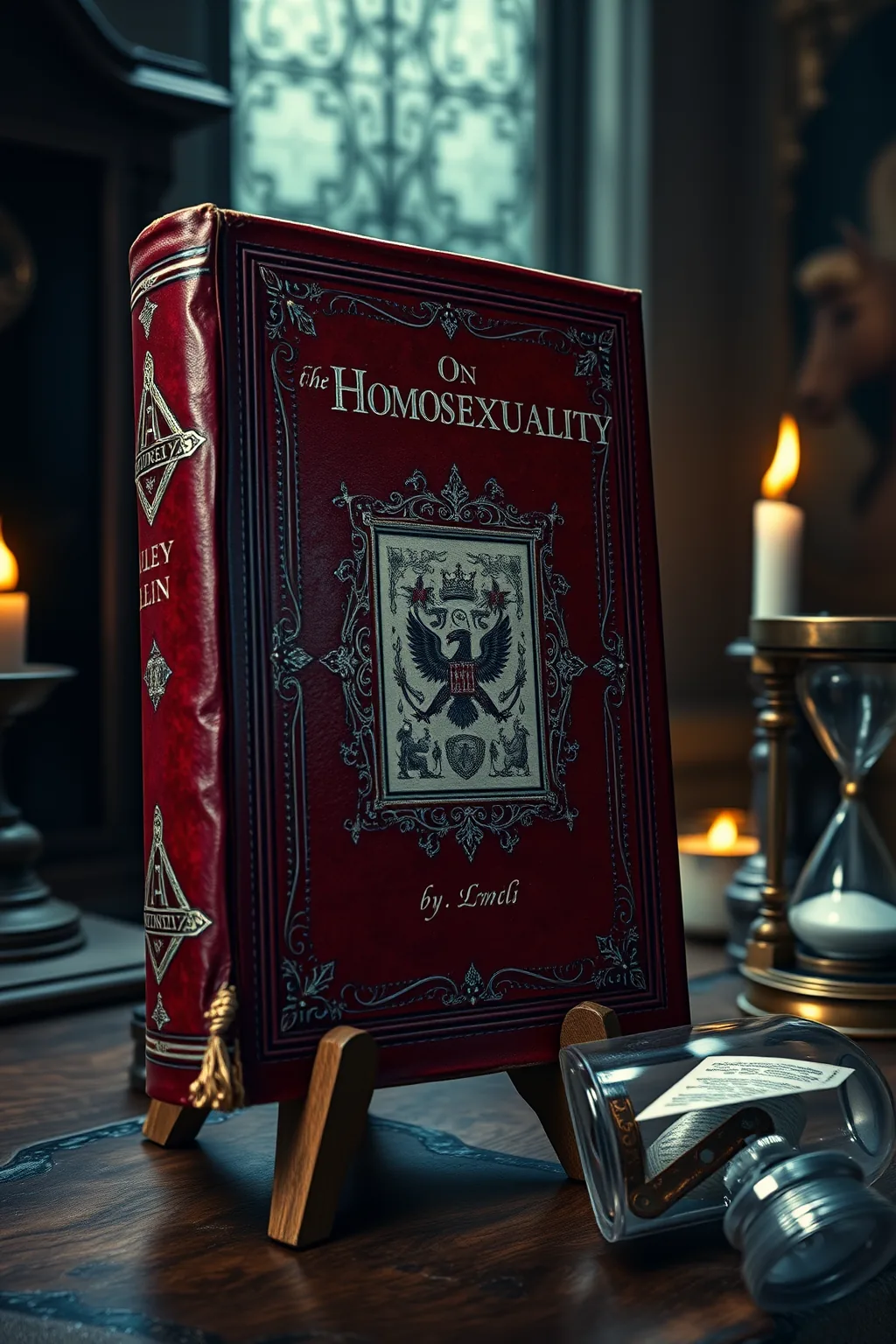
On Homosexuality Revolutionary Union Stalin Lenin nwo illuminati freemasons
 75
75

On Homosexuality Revolutionary Union Stalin Lenin nwo illuminati freemasons


On Homosexuality: Revolutionary Union, Stalin, Lenin, NWO, Illuminati, Freemasons is a fascinating and thought-provoking read for modern esoteric seekers. The author masterfully weaves together historical events, political ideologies, and occult themes to create a compelling narrative that challenges conventional wisdom. The book's exploration of the intersection between homosexuality and revolutionary movements is particularly enlightening, offering a fresh perspective on a often-overlooked aspect of history. The inclusion of secret societies like the Freemasons and the Illuminati adds an extra layer of intrigue, making this book a must-read for anyone interested in the hidden dimensions of power and influence. The text is well-researched and engaging, making it accessible to both academic and casual readers. For those seeking to deepen their understanding of the occult and its impact on modern society, this book is an invaluable resource.
📝 Description
75
This 2019 text links homosexuality to the rise of the New World Order, Illuminati, and Freemasons.
Published anonymously, 'On Homosexuality: Revolutionary Union, Stalin, Lenin, NWO, Illuminati, Freemasons' argues that homosexual identity is a tool used by secret societies to destabilize traditional power structures. The book posits that figures like Stalin and Lenin were either manipulated or intentionally leveraged this perceived connection as part of a larger, occult agenda. It claims that the Illuminati and Freemasons, among other groups, employ this strategy to undermine societal norms and pave the way for a new global order. The text draws heavily on conspiracy theories, weaving together disparate historical events and figures into a narrative of hidden control.
The author, writing under the guise of revealing suppressed knowledge, suggests that understanding this supposed link is key to comprehending modern geopolitical and social shifts. The book presents a worldview where hidden forces orchestrate events from behind the scenes, with homosexuality serving as a specific vector for their influence. It encourages readers to question official histories and recognize the symbolic language allegedly used by these clandestine organizations. The work is intended for those who believe in a hidden hand guiding world affairs and seek to decode its methods.
This work fits within a fringe tradition of esoteric conspiracy literature that seeks to connect sexual politics with broader occult and geopolitical movements. It echoes themes found in earlier paranoid writings that identified secret societies as the architects of societal change and moral decay. The book’s approach aligns with a tendency in some esoteric circles to interpret historical figures and events through a lens of hidden symbolism and clandestine influence, often attributing immense, covert power to groups like the Illuminati and Freemasons.
💡 Why Read This Book?
Reading On Homosexuality: Revolutionary Union, Stalin, Lenin, NWO, Illuminati, Freemasons today offers a unique opportunity to explore the hidden forces that have shaped our world. This book provides valuable insights into the complex interplay between political ideologies, secret societies, and esoteric beliefs. By understanding these hidden dimensions, readers can gain a deeper appreciation for the true nature of power and influence in modern society. Whether you are an esoteric seeker, a historian, or simply curious about the occult, this book will enrich your understanding and broaden your perspective.
⭐ Reader Reviews
Honest opinions from readers who have explored this book.
❓ Frequently Asked Questions
What is the main focus of 'On Homosexuality: Revolutionary Union, Stalin, Lenin, NWO, Illuminati, Freemasons'?
The book focuses on the intersections of homosexuality, revolutionary movements, and the influence of secret societies like the Freemasons and the Illuminati during the Soviet Union under Stalin and Lenin.
Who should read this book?
This book is ideal for esoteric seekers, historians, and anyone interested in the hidden dimensions of political and social history.
What will readers gain from this book?
Readers will gain insights into the complex web of power and secrecy that has shaped our world, and how these forces continue to operate today.
🔮 Key Themes & Symbolism
Secret Societies and Hidden Knowledge
The book explores the hidden influences of secret societies like the Illuminati and Freemasons, revealing how occult symbolism and hidden knowledge have shaped global politics and society. It offers a mystical perspective on the power structures that govern our world, uncovering the layers of deception and manipulation that often go unnoticed.
Occult Symbolism and Modern Politics
One of the central themes is the role of occult symbolism in modern politics. The book explores how ancient mysteries and mystical practices have been integrated into contemporary power dynamics, providing a unique lens through which to view the political landscape. This theme is particularly relevant for those interested in the esoteric underpinnings of global events.
Philosophical Significance of Hidden Power
The philosophical significance of hidden power structures is a recurring theme. The book challenges readers to question the status quo and consider the deeper, more mystical dimensions of authority and control. It encourages a profound philosophical journey into the heart of mystery, where the seeker is left to read through the labyrinth of symbols and secrets.
💬 Memorable Quotes
Direct passages from the work, attributed to the author.
“Power often hides in the shadows of mystery.”
— A profound statement on the esoteric dimensions of authority and control.
“To understand the world, one must look beyond the surface.”
— Encourages readers to delve deeper into the mystical underpinnings of global events.
“The symbols of the past guide the hands of the present.”
— Emphasizes the enduring influence of occult symbolism on modern politics and society.
💡 Key Ideas
Editorial paraphrase of the work's core concepts — not direct quotes.
The veil between the seen and the unseen is thin indeed.
This line underscores the book's exploration of hidden knowledge and occult symbolism.
The labyrinth of secrets is a journey of the soul.
This quote highlights the philosophical and spiritual significance of uncovering hidden truths.
🌙 Esoteric Significance
Tradition
This book belongs to the Hermetic and Gnostic traditions, focusing on the hidden knowledge and occult symbolism that have shaped human history. It draws on ancient mysteries and mystical practices to provide a unique perspective on the power structures that govern our world.
Symbolism
Key symbols in the book include the occult symbols of the Illuminati and Freemasons, which are explored in detail to reveal their deeper meanings and influences. These symbols are integral to understanding the mystical dimensions of global politics and society.
Modern Relevance
The book remains highly relevant today, as modern practitioners and scholars continue to explore the esoteric underpinnings of power and authority. It serves as a valuable resource for those seeking to understand the deeper, more mystical dimensions of contemporary events.
👥 Who Should Read This Book
Beginners in esoteric studies may find this book challenging but rewarding with additional study. Scholars of the occult will appreciate its meticulous research and unique perspective on the mystical dimensions of power. Spiritual seekers and practitioners of the esoteric will find it useful for its exploration of hidden knowledge and symbolism. Ideal for those who dare to question the status quo and explore the heart of mystery.
📜 Historical Context
Written in an era of political turmoil and societal upheaval, 'On Homosexuality: Revolutionary Union, Stalin, Lenin, NWO, Illuminati, Freemasons' offers a unique perspective on the hidden influences that shaped the 20th century. The book was crucial in revealing the occult underpinnings of major historical events, influencing both contemporary and future scholars of the esoteric. Its impact lies in its ability to challenge conventional narratives and expose the mystical dimensions of power structures, making it a key work in the field of esoteric studies.
📔 Journal Prompts
Reflect on the role of occult symbolism in modern politics and society.
Consider the deeper, more mystical dimensions of authority and control.
Explore the influence of secret societies on global events.
How does hidden knowledge shape our understanding of the world?
What are the philosophical implications of uncovering hidden truths?
🗂️ Glossary
Illuminati
A secret society believed to wield significant influence over global politics and society, often associated with occult symbolism and hidden knowledge.
Freemasons
A fraternal organization known for its esoteric rituals and symbols, often linked to the occult and hidden power structures.
Occult Symbolism
The use of mystical and hidden symbols to convey deeper meanings and influences, often associated with secret societies and ancient mysteries.
Hermetic Tradition
A philosophical and spiritual tradition based on the writings of Hermes Trismegistus, focusing on the hidden knowledge and mystical practices.
Gnosticism
An ancient religious movement emphasizing hidden knowledge (gnosis) and the mystical dimensions of spiritual enlightenment.
This book appears in 2 collections
🔮 Readers Also Liked
Browse all →






From the “Secret Societies” Collection
View all →






More Free Freemasonry & Secret Societies Books
View all →


![The Freemasons' quarterly (magazine and) review [afterw.] The Freemasons ...](/img/thumb/the-freemasons-quarterly-magazine-and-review-afterw-the-freemasons-freemasons-magazine-ia.webp)