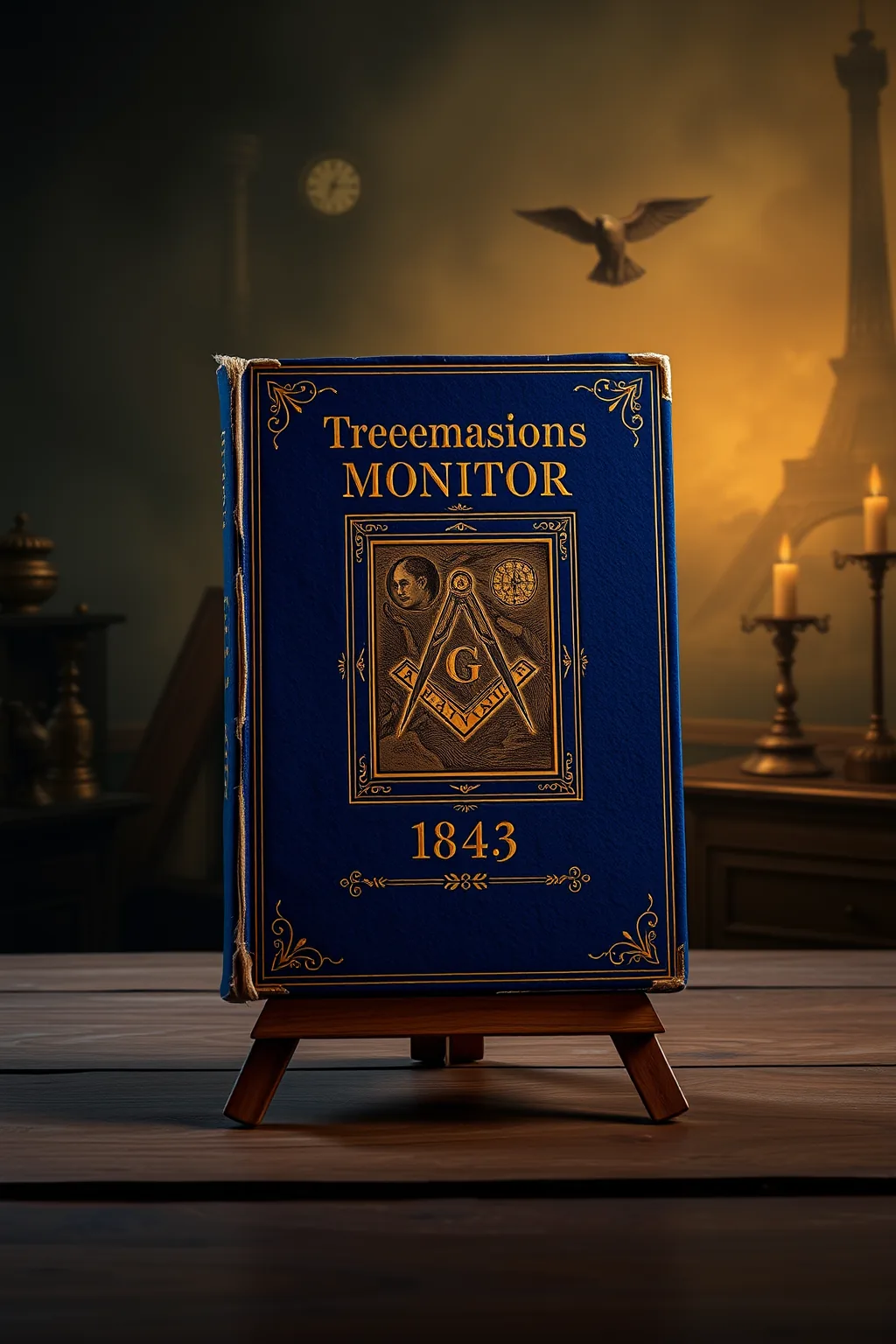
Davis Z A The Freemasons Monitor 1843
 80
80

Davis Z A The Freemasons Monitor 1843

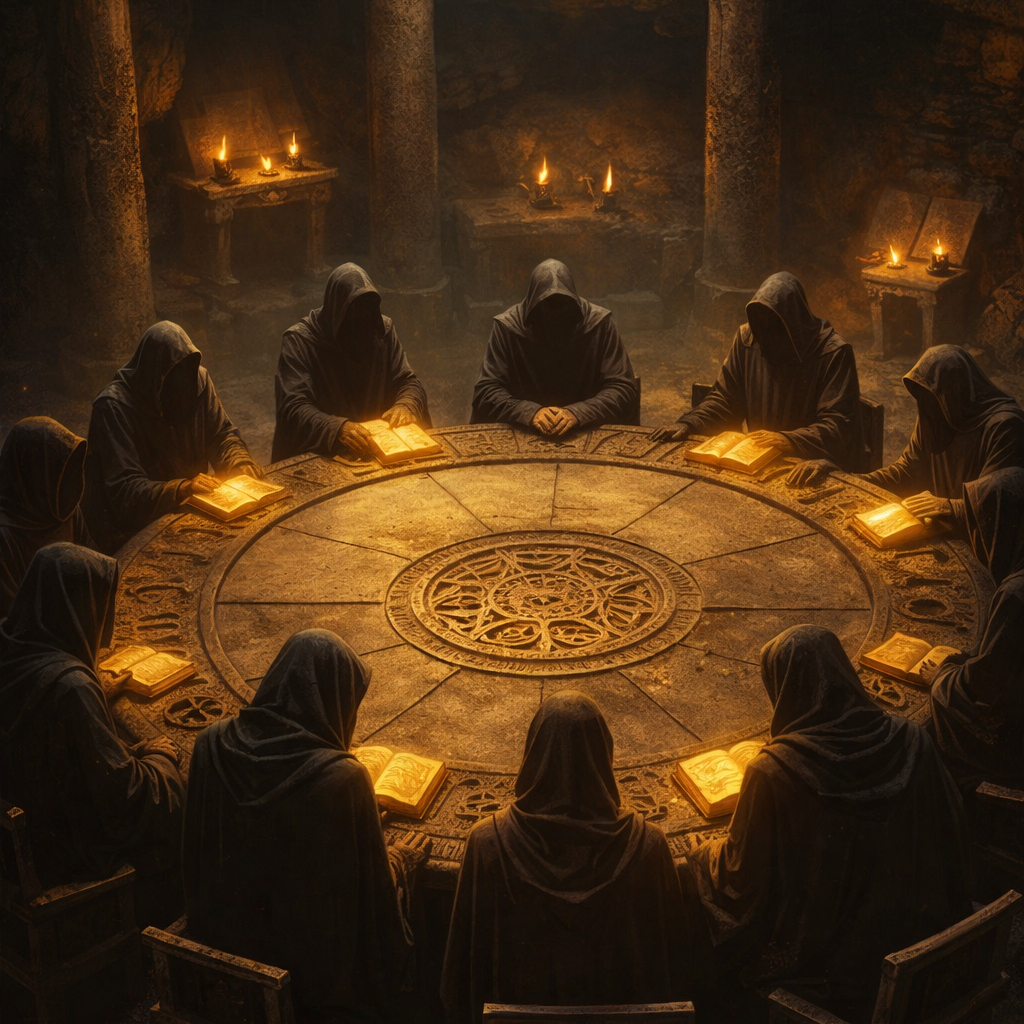

Silas Hawthorne (Hermetic Studies Editor) — 'The Freemasons Monitor' from 1843 is a potent distillation of Masonic esoteric doctrine, offering a rare glimpse into the symbolic language and philosophical depth of the Craft. While the author remains elusive, the text itself speaks with authority, meticulously dissecting the allegorical meanings embedded within degrees and rituals. It serves as an invaluable resource for understanding the Hermetic and alchemical undercurrents that have long been associated with Freemasonry. For scholars of secret societies and serious practitioners seeking to deepen their comprehension of initiatory traditions, this monitor is an essential, illuminating read that bridges historical practice with enduring spiritual principles.
📝 Description
80
Published in 1843, 'The Freemasons Monitor' examines the symbolic language of Freemasonry.
This 1843 text offers an interpretation of Masonic symbolism, moving beyond simple ritual descriptions. It addresses the allegorical meanings and hidden layers within Masonic practices, intended for those seeking a deeper understanding of the fraternity's philosophical and mystical aspects. The book discusses the symbolic architecture and philosophical foundations of Freemasonry, presenting them with seriousness. It aims to illuminate the concealed significance within Masonic degrees, gestures, and the use of sacred geometry. This work is directed toward serious students of Freemasonry and esoteric traditions, rather than casual readers. It encourages introspection and the perception of universal truths within Masonic practice, linking the earthly and divine through its symbolic language.
Emerging in the early 19th century, 'The Freemasons Monitor' aligns with a period of increased interest in esoteric interpretations of fraternal orders. It reflects a broader trend of seeking mystical and philosophical depth within established institutions, connecting Masonic symbolism to universal spiritual principles. The book's focus on hidden meanings and symbolic language places it within traditions that interpret rituals and architecture as vehicles for spiritual growth and understanding.
💡 Why Read This Book?
Unravel the profound symbolism and hidden philosophical meanings within Freemasonry. Ideal for seekers of esoteric knowledge, students of secret societies, and practitioners looking to deepen their understanding of ancient wisdom. Discover the allegorical layers that elevate ritual to a path of spiritual enlightenment. 'The Freemasons Monitor' is your gateway to the deeper mysteries of the Craft.
⭐ Reader Reviews
Honest opinions from readers who have explored this book.
❓ Frequently Asked Questions
What is the primary purpose of 'The Freemasons Monitor'?
Its primary purpose is to illuminate the symbolic and philosophical meanings embedded within Masonic rituals and degrees, offering a guide to the esoteric teachings of Freemasonry rather than just a procedural manual.
Who is the intended audience for this book?
The intended audience includes Freemasons seeking a deeper understanding of their Craft, scholars of esotericism and secret societies, and individuals fascinated by historical mystical traditions.
What historical period does this book represent?
This book originates from 1843, a period when Masonic literature was actively exploring and codifying its philosophical and symbolic interpretations, influenced by Enlightenment thought and earlier mystical traditions.
Does the book require prior knowledge of Freemasonry?
While prior knowledge can enhance comprehension, the book is structured to guide readers through its symbolic language, making it accessible to dedicated newcomers interested in esoteric interpretations.
Is this book a primary source for Masonic ritual?
It is a secondary interpretation and exploration of the symbolic and philosophical aspects of Masonic rituals prevalent in the mid-19th century, rather than an official or verbatim ritualistic text.
🔮 Key Themes & Symbolism
The Language of Symbols
'The Freemasons Monitor' treats symbols not as mere decorative elements but as potent vehicles of profound truth. It meticulously unpacks the allegorical significance of Masonic emblems, tools, and gestures, revealing how they serve as a universal language to convey spiritual and philosophical concepts. Each symbol, from the square and compasses to the checkered pavement, is presented as a key to unlocking higher understanding, urging the reader to move beyond the literal and engage with the deeper, often hidden, meanings that foster personal growth and connection to the cosmos.
The Path of Initiation
This text frames Masonic practice as a sacred journey of initiation, a process of gradual enlightenment and self-discovery. It emphasizes that the degrees are not just sequential steps but transformative stages, designed to peel back layers of ignorance and reveal the inherent divinity within the individual. The monitor guides the reader through the symbolic representation of death and rebirth, darkness and light, highlighting the alchemical process of spiritual refinement and the quest for moral and intellectual perfection, mirroring ancient mystery school traditions.
Cosmic Harmony and Moral Architecture
Central to 'The Freemasons Monitor' is the concept of Freemasonry as a reflection of cosmic order and a blueprint for building a virtuous character. The book explores how Masonic teachings align with principles of universal law, celestial mechanics, and the divine geometry that underpins creation. It posits that by understanding and applying these principles in their lives, individuals can achieve personal harmony and contribute to the construction of a more just and enlightened society, embodying the ideal of the 'temple of humanity'.
💬 Memorable Quotes
Direct passages from the work, attributed to the author.
“The tools of the Craft are keys to understanding.”
— Emphasizes that Masonic implements are not merely utilitarian but symbolic tools, each holding a specific lesson for the practitioner's moral and spiritual development.
“Seek not without, but within, the true temple.”
— A profound call to introspection, directing the seeker's attention inward to discover spiritual truths and divine presence, rather than relying solely on external structures.
“Allegory bridges the mortal and the divine.”
— Highlights the power of symbolic storytelling and metaphor as a means to grasp and communicate transcendent concepts that transcend ordinary human language.
“Order is the silent law of the universe.”
— Reflects the Masonic belief in a structured, harmonious cosmos and the importance of aligning one's life with these fundamental, universal principles.
💡 Key Ideas
Editorial paraphrase of the work's core concepts — not direct quotes.
Light dawns upon the searching soul.
This quote expresses the initiatory journey, suggesting that understanding and spiritual awakening are gradual processes, illuminated by diligent inquiry and inner reflection.
🌙 Esoteric Significance
Tradition
This work is deeply rooted in the Hermetic and Rosicrucian traditions, viewing Freemasonry as a continuation of ancient mystery schools. It emphasizes the alchemical process of spiritual transformation, the pursuit of gnosis, and the belief in a divinely ordered cosmos accessible through symbolic understanding and personal purification.
Symbolism
The monitor deciphers the complex symbolic language of Freemasonry, interpreting tools like the square and compasses as moral guides, architectural elements as reflections of divine order, and rituals as allegorical representations of the soul's journey from darkness to light, and ignorance to enlightenment.
Modern Relevance
In an age often characterized by superficiality, 'The Freemasons Monitor' offers a timeless invitation to introspection and the pursuit of inner wisdom. Its exploration of universal symbols and ethical principles remains relevant for anyone seeking personal growth, a deeper connection to ancient wisdom traditions, and an understanding of the enduring human quest for meaning.
👥 Who Should Read This Book
This monitor is essential for Freemasons seeking to move beyond rote memorization and engage with the profound philosophical and spiritual dimensions of their fraternity. Scholars of comparative religion, occult history, and secret societies will find it an invaluable primary resource for understanding mid-19th-century Masonic thought. For seekers of esoteric knowledge and practitioners of contemplative traditions, it provides a collection of symbolism and allegory that can illuminate their own paths toward self-mastery and spiritual insight.
📜 Historical Context
Published in 1843, 'The Freemasons Monitor' emerges from a rich tradition of Masonic literature that flourished throughout the 18th and 19th centuries. This era was marked by a fervent interest in esoteric knowledge, occultism, and the philosophical underpinnings of secret societies, heavily influenced by the Enlightenment's rationalism and Romanticism's embrace of mysticism. Freemasonry, having spread widely, was seen not just as a fraternal organization but as a repository of ancient wisdom, drawing connections to Hermeticism, Kabbalah, and Rosicrucianism. Authors of this period often sought to synthesize these diverse streams of thought, presenting Masonic symbolism as a universal language capable of revealing profound truths about man, nature, and the divine. 'The Freemasons Monitor' stands as a evidence of this intellectual and spiritual milieu, offering a meticulously crafted interpretation of Masonic tenets for a discerning readership eager to explore its deeper meanings.
📔 Journal Prompts
Reflect on a personal symbol that holds deep meaning for you. How does its meaning evolve over time?
Consider the concept of 'building' in your life. What spiritual or moral 'temples' are you constructing?
How can the principles of 'order' and 'harmony' be applied to bring balance to your daily life?
Describe a personal 'initiation' or transformative experience you have undergone. What did you learn about yourself?
Explore the idea of 'light' and 'darkness' in your own journey. When have you experienced moments of profound illumination or significant challenge?
🗂️ Glossary
Allegory
A story, poem, or picture that can be interpreted to reveal a hidden meaning, typically a moral or political one. In Freemasonry, it's a primary method for conveying complex spiritual truths.
Gnosis
Knowledge of spiritual mysteries, often considered a direct, intuitive understanding of the divine, central to many esoteric traditions.
Hermeticism
A religious, philosophical, and esoteric tradition based on writings attributed to Hermes Trismegistus, emphasizing divine wisdom, the interconnectedness of all things, and the potential for human spiritual ascent.
Initiation
A ritual or ceremony marking a person's entry into a new stage of life, a society, or a state of spiritual understanding, often involving symbolic acts and teachings.
Symbolism
The use of symbols to represent ideas and qualities by giving them meanings that are different from their literal sense. In esoteric contexts, symbols are seen as keys to unlocking deeper realities.
This book appears in 2 collections
🔮 Readers Also Liked
Browse all →






From the “Secret Societies” Collection
View all →





More Free Freemasonry & Secret Societies Books
View all →