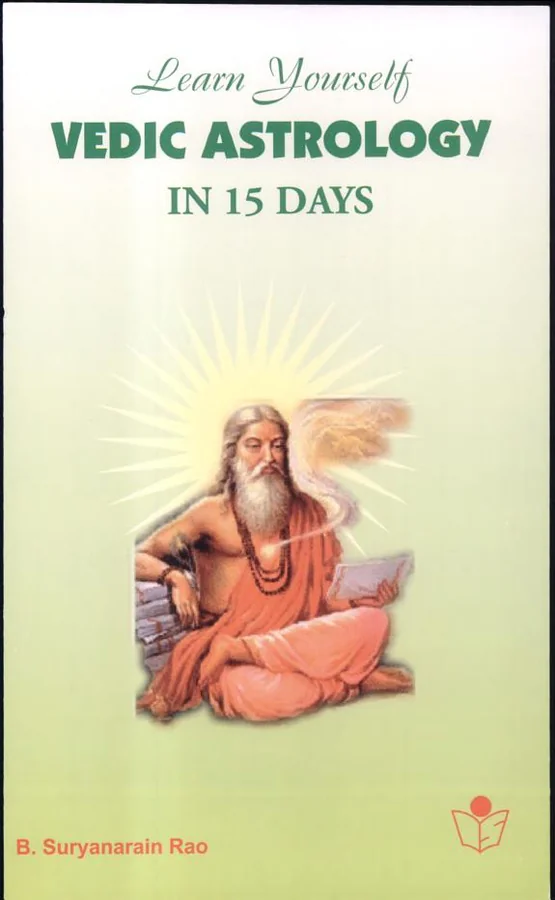
Learn yourself vedic astrology in 15 days
 83
83

Learn yourself vedic astrology in 15 days
B. Suryanarain Rao’s 'Learn Yourself Vedic Astrology in 15 Days' offers a streamlined, if somewhat dated, approach to Jyotish. The book’s strength lies in its direct, instructional format, which attempts to demystify chart calculation for beginners. However, the promise of mastery in 15 days is ambitious, potentially leading to superficial understanding if not supplemented. The section on planetary strengths, detailing exaltations and debilitations, provides a solid, verifiable anchor for interpretation, a crucial element often glossed over in introductory texts. A limitation is the relative lack of engagement with the philosophical underpinnings of Vedic astrology, focusing almost exclusively on mechanical interpretation. Despite this, for a reader seeking a quick primer on chart mechanics from a respected traditional author, it serves as a functional starting point.
📝 Description
83
B. Suryanarain Rao's 2006 guide aims to teach Vedic astrology principles in 15 days.
Learn Yourself Vedic Astrology in 15 Days is a practical manual for understanding Jyotish, the traditional Hindu system of astrology. The book focuses on teaching readers how to calculate and interpret astrological charts within a short period. It covers the mechanics of chart calculation alongside the initial interpretation of planetary positions, zodiac signs, and houses. This work serves as an accessible introduction for those interested in Vedic astrology.
It is intended for individuals new to Vedic astrology seeking a structured method for self-study. The book suits readers who prefer a direct, hands-on approach to learning astrological skills. Those interested in analyzing their birth charts for personal insight or exploring astrological systems beyond Western traditions will find its instruction direct and useful.
Published in 2006, this book reflects a growing accessibility of Eastern spiritual traditions in the West. B. Suryanarain Rao, an Indian astrologer, authored this work to simplify complex Jyotish knowledge for a contemporary audience. It bridges classical astrological concepts with modern self-help interests, making the system more digestible.
💡 Why Read This Book?
• Gain practical skills in calculating and interpreting basic Vedic astrological charts, understanding the significance of the Lagna (Ascendant) as introduced in the early chapters. • Learn the fundamental meanings of the twelve zodiac signs (Rashis) and nine planets (Grahas) as presented in the book’s core curriculum. • Acquire a foundational understanding of astrological houses (Bhavas) and planetary aspects (Drishti) to begin analyzing natal chart configurations.
⭐ Reader Reviews
Honest opinions from readers who have explored this book.
❓ Frequently Asked Questions
Is 'Learn Yourself Vedic Astrology in 15 Days' suitable for absolute beginners with no prior astrological knowledge?
Yes, the book is designed for complete novices. It starts with fundamental concepts like the zodiac signs and planets, aiming to build understanding step-by-step over its 15-day structure.
What is the historical significance of B. Suryanarain Rao's work in Vedic astrology?
B. Suryanarain Rao was a prominent astrologer and scholar of Jyotish. His writings, like this book (first published in 2006), helped popularize and explain Vedic astrology to a wider audience, particularly in the late 20th and early 21st centuries.
Does the book cover advanced astrological techniques or only basic chart interpretation?
The book focuses on foundational elements. It aims to teach readers how to cast and interpret a basic natal chart, including planetary positions, signs, and houses, rather than delving into complex predictive techniques.
Are there any specific astrological concepts unique to this book's approach?
While it covers standard Jyotish concepts like Grahas, Rashis, and Bhavas, the book's unique aspect is its compressed 15-day learning framework, making these traditional concepts accessible quickly.
Can I learn to cast a Vedic chart manually after reading this book?
The book provides the necessary instructions and principles for manual chart calculation, enabling readers to understand the process of determining planetary positions for a specific birth time and location.
What makes this book different from other Vedic astrology guides?
Its primary distinction is its self-imposed 15-day learning schedule, offering a structured, accelerated path to understanding basic Jyotish principles. It emphasizes practical application from the outset.
🔮 Key Themes & Symbolism
Foundational Jyotish Principles
The core of this work lies in systematically introducing the building blocks of Vedic astrology. It details the twelve zodiac signs (Rashis) and their inherent qualities, the nine celestial bodies (Grahas) and their significations, and the twelve houses (Bhavas) that map life domains. Understanding the interplay between these elements, particularly as they manifest in a natal chart, is presented as the essential first step for any aspiring Jyotish practitioner. The book emphasizes a practical, step-by-step approach to learning these components.
Natal Chart Interpretation
Central to the book's methodology is the interpretation of the natal chart, or Janma Kundali. It guides readers through the process of casting a chart, with a particular focus on the Ascendant (Lagna) as the primary reference point. The text explains how to identify planetary positions within specific signs and houses, and how these placements influence personality and life events. The aim is to provide a functional framework for initial chart readings, enabling self-analysis.
Accelerated Learning Framework
The distinctive feature of this book is its ambitious 15-day structure, designed to condense the learning process. This framework encourages disciplined study and practical application over an extended period. By breaking down complex information into daily lessons, the book aims to make the study of Vedic astrology more approachable and less intimidating for those with limited time or prior exposure to the subject matter.
Planetary Strengths and Debilities
A critical component of astrological interpretation involves assessing the strength of planets within a chart. This book covers fundamental concepts such as exaltation (Uchcha), debilitation (Neecha), and own sign (Swa Rashi) placements. Understanding these states is crucial for determining how effectively a planet can express its significations. The text provides clear explanations of these conditions, forming a basis for nuanced chart analysis.
💬 Memorable Quotes
Direct passages from the work, attributed to the author.
“The Lagna, or the Ascendant, is the most important point in the horoscope.”
— This highlights the foundational role of the Ascendant in Vedic astrology, serving as the primary lens through which the entire chart is viewed and interpreted, dictating the house placements.
“Each Graha has a natural significance and a lordship over certain houses.”
— This statement underscores the dual nature of planets in Jyotish: their inherent meanings and their specific rulerships over different areas of life represented by the houses.
“The houses represent the different departments of human life.”
— This concisely explains the function of the astrological houses, framing them as a map of life experiences and circumstances that the planets and signs will illuminate.
“Planets in exaltation give beneficial results.”
— This interprets the concept of planetary exaltation, indicating that a planet in its sign of exaltation is considered strong and likely to manifest positive influences.
“A Rashi is a sign of the zodiac, and there are twelve such signs.”
— This provides a fundamental definition of a Rashi, establishing the basic framework of the zodiac as understood within the Vedic astrological system.
🌙 Esoteric Significance
Tradition
This work is rooted in the Jyotish tradition, a system of astrology that has been integral to Hindu culture for millennia. It is part of a broader Indic spiritual and philosophical framework, often intertwined with Vedic cosmology and concepts of karma and reincarnation. While not strictly Hermetic or Kabbalistic, Jyotish shares with these traditions a focus on celestial correspondences influencing terrestrial events and human destiny. This book serves as an entry point into this ancient lineage, emphasizing its practical application for self-understanding.
Symbolism
Key symbols in Vedic astrology, as presented in this book, include the Grahas (planets), such as Surya (Sun) representing the soul and authority, and Chandra (Moon) symbolizing the mind and emotions. The Rashis (zodiac signs) like Mesha (Aries) and Vrishabha (Taurus) represent archetypal energies. The Bhavas (houses) are symbolic divisions of the sky representing life areas, with the Lagna (Ascendant) symbolizing the self and outward personality. These symbols are not merely astronomical markers but carry deep mythological and psychological significance.
Modern Relevance
Contemporary practitioners of Vedic astrology, often integrating Jyotish with other spiritual disciplines like Yoga and Ayurveda, draw on foundational texts like this one. Modern Vedic astrologers, including those who focus on psychological astrology or predictive techniques, still rely on understanding the core principles of planets, signs, and houses outlined here. The accessibility of this book supports the ongoing global interest in Eastern wisdom traditions and their application to modern life for personal growth and insight.
👥 Who Should Read This Book
• Aspiring Jyotish practitioners seeking a structured, 15-day curriculum to grasp core Vedic astrological concepts. • Individuals interested in comparative astrology who wish to understand the differences and unique elements of the Sidereal zodiac system. • Self-study enthusiasts looking for a practical, hands-on guide to casting and interpreting their own birth chart using traditional Indian methods.
📜 Historical Context
This book, first published in 2006, emerged during a significant period of popularization for Vedic astrology in the West. The late 20th and early 21st centuries witnessed a surge in interest, moving Jyotish beyond niche academic circles and esoteric communities. Authors like K. N. Rao and B. V. Raman were instrumental in translating and explaining complex Indian astrological traditions. Suryanarain Rao's work fits into this trend by offering a structured, accessible guide. It countered the more complex, multi-volume treatises often associated with traditional Jyotish, aiming for a modern audience seeking self-instruction. While Western Tropical astrology had its own established schools, the increasing availability of texts on the Sidereal zodiac and Nakshatras, fundamental to Jyotish, presented a distinct system for comparative study or adoption.
📔 Journal Prompts
The Lagna's placement in relation to the Sun and Moon.
The significance of a debilitated planet (Neecha) in your birth chart.
How the ruler of the Lagna influences your personality.
The general signification of the 7th House (descendant) in life partnerships.
Planetary aspects (Drishti) between two specific Grahas in your chart.
🗂️ Glossary
Jyotish
The traditional Hindu system of astrology, also known as Vedic astrology. It is a complex system used for understanding karma, destiny, and auspicious timing.
Graha
Literally 'seizer' or 'planet' in Sanskrit. Refers to the nine celestial bodies used in Vedic astrology: Sun, Moon, Mars, Mercury, Jupiter, Venus, Saturn, Rahu, and Ketu.
Rashi
A zodiac sign in Vedic astrology. There are twelve Rashis, corresponding to the twelve divisions of the ecliptic, based on the Sidereal zodiac.
Bhava
An astrological house in Vedic astrology. There are twelve Bhavas, each representing a different sphere of life and experience.
Lagna
The Ascendant. It is the zodiac sign that was rising on the eastern horizon at the exact moment and location of birth. It is the most crucial point in a natal chart.
Drishti
Planetary aspect in Vedic astrology. Planets cast specific aspects onto other houses and planets, influencing their expression and significations.
Uchcha
Exaltation. A state where a planet is considered to be in a position of maximum strength and beneficence within a specific zodiac sign.
This book appears in 1 collection
🔮 Readers Also Liked
Browse all →









From the “Vedic Astrology” Collection
View all →







More Free Astrology & Cosmology Books
View all →