Language of Tarot
 61
61

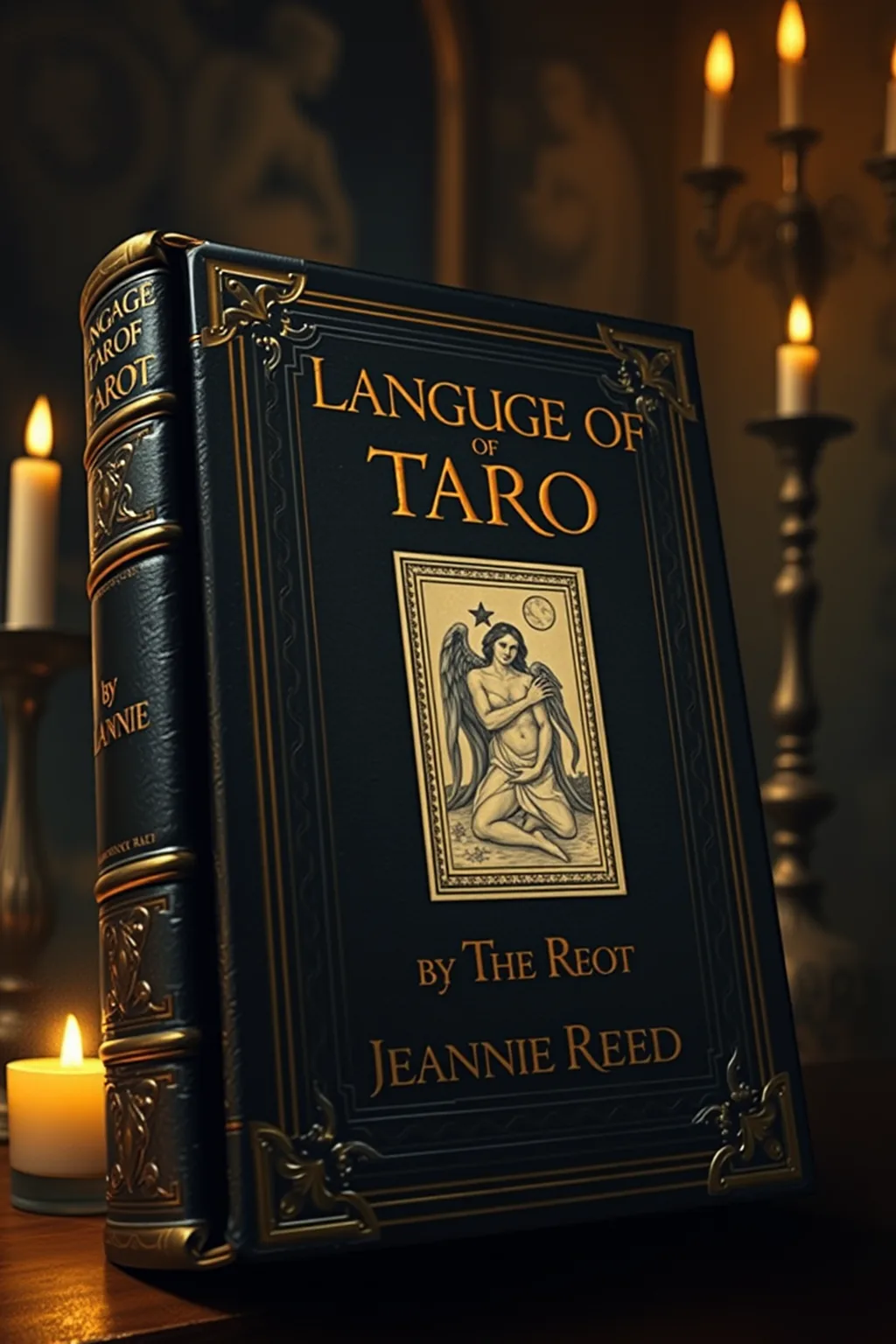
Language of Tarot



Jeannie Reed's 'Language of Tarot' is a luminous addition to the Esoteric Library's esteemed collection. Reed masterfully navigates the esoteric depths of the Tarot, presenting its symbolism with both scholarly rigor and intuitive grace. This is not a book for the casual dabbler; it is a profound exploration for those who recognize the Tarot as a living repository of ancient wisdom, a codified language of the soul's journey. Reed's insights into the archetypal resonances and their connection to hermetic principles are particularly striking. She offers practitioners a richer, more nuanced understanding, transforming mere card-reading into a potent form of spiritual dialogue. For anyone seeking to deepen their connection to the Tarot's mystical power, this work is indispensable.
📝 Description
61
Jeannie Reed's 'Language of Tarot' (2018) presents the cards as a cosmic mirror, not just a divinatory tool.
Jeannie Reed's 'Language of Tarot' moves beyond simple card meanings to examine the Tarot's deeper esoteric structure. Reed frames the Tarot as a reflection of universal energies and the human psyche, rather than solely a predictive system. The book illuminates the symbolic language of each card, suggesting paths toward hidden understanding and personal growth. It details how numerology, astrology, and Kabbalistic concepts are integrated within the Major and Minor Arcana.
This work encourages a connection with ancient wisdom, aiming to help readers decipher the dialogue between the cosmos and their inner selves. It is intended for those who wish to approach the Tarot as a serious philosophical and spiritual practice, enhancing intuition and revealing patterns of fate. The book serves as a guide for understanding this symbolic system, unlocking insights into universal truths through individual card study.
This book situates itself within the Western esoteric tradition, which often interprets the Tarot as a symbolic system encoding spiritual and philosophical truths. It aligns with approaches that view the cards as a map of consciousness, influenced by practices that blend Kabbalah, astrology, and numerology. Reed's work follows a lineage that sees the Tarot not just for fortune telling, but as a tool for self-knowledge and understanding cosmic principles.
💡 Why Read This Book?
Unlock the profound symbolic language of the Tarot beyond superficial interpretation. 'Language of Tarot' offers a deep dive into its esoteric and mystical underpinnings, perfect for seekers of hidden knowledge, students of divination, and practitioners aiming for a more spiritual and philosophical connection with the cards. Discover the archetypal energies and cosmic resonances that make the Tarot a timeless tool for self-discovery and spiritual growth.
⭐ Reader Reviews
Honest opinions from readers who have explored this book.
❓ Frequently Asked Questions
What makes this book's approach to Tarot unique?
This book emphasizes the Tarot as an esoteric language, focusing on its deep symbolic, philosophical, and mystical dimensions rather than just predictive methods, offering a pathway to profound self-understanding.
Is this book suitable for beginners?
Yes, while it delves deeply into esoteric concepts, Jeannie Reed guides readers with clarity, making the profound accessible to those new to serious Tarot study and spiritual exploration.
What kind of esoteric traditions are explored?
The book draws upon numerology, astrology, Kabbalistic principles, and general hermetic philosophy to illuminate the Tarot's rich symbolic tapestry, connecting it to ancient wisdom streams.
Can this book enhance my existing Tarot practice?
Absolutely. It provides a framework for a more intuitive and spiritually grounded practice, encouraging a deeper dialogue with the cards and their archetypal wisdom.
What is the philosophical significance of the Tarot as presented here?
The book positions the Tarot as a microcosm of the universe and a map of the soul's journey, offering insights into the nature of consciousness, destiny, and the interconnectedness of all things.
🔮 Key Themes & Symbolism
The Tarot as a Sacred Alphabet
This theme explores the Tarot not as a collection of disparate images, but as a unified, symbolic language. Each card is presented as a glyph, a letter within a cosmic alphabet that spells out the fundamental truths of existence. The book looks at how these symbols, drawing from archetypal imagery and ancient traditions, form a coherent system of communication between the conscious mind and the deeper domains of intuition and the collective unconscious. Understanding this language allows one to decipher the subtle energies at play in life's unfolding narrative, revealing hidden patterns and cosmic correspondences.
Archetypal Journeys and the Soul's Evolution
Reed frames the Tarot's narrative, particularly the Major Arcana, as a symbolic representation of the human soul's evolutionary path. The Fool's journey from innocence to wisdom, the Magician's mastery of manifestation, and the Hermit's quest for inner truth are presented as archetypal stages we all traverse. This theme emphasizes the Tarot's role as a mirror to our inner development, highlighting the challenges and triumphs inherent in spiritual growth. By understanding these archetypes, readers are empowered to recognize their own journey, navigate its complexities, and accelerate their personal transformation towards greater wholeness and self-awareness.
The Alchemical Dance of Light and Shadow
This theme investigates the inherent duality within the Tarot, reflecting the alchemical principle of 'as above, so below' and the interplay of opposing forces. The book examines how both the seemingly 'positive' and 'negative' cards represent necessary aspects of the soul's refinement process. Light and shadow, spirit and matter, conscious and unconscious are explored as integral components of a dynamic whole. Understanding this balance allows for a more profound acceptance of life's inherent complexities, transforming perceived obstacles into catalysts for spiritual alchemy and deeper wisdom. It encourages integration rather than division, fostering a holistic view of existence.
💬 Memorable Quotes
Direct passages from the work, attributed to the author.
“Each card whispers secrets of the cosmos, if only we learn to listen.”
— This highlights the idea that the Tarot holds profound, hidden knowledge accessible through intuition and focused attention, urging the reader to cultivate a receptive and attentive state of mind.
“The journey through the Arcana is the soul's odyssey mapped in symbols.”
— This emphasizes the narrative and spiritual journey inherent in the Tarot, presenting the sequence of cards as a symbolic representation of the soul's growth, challenges, and ultimate transformation.
“To read the Tarot is to commune with the ancient elements of wisdom.”
— This suggests that engaging with the Tarot connects us to a timeless tradition and a vast reservoir of accumulated spiritual knowledge, placing it within a lineage of esoteric thought.
“The true magic lies not in the cards, but in the consciousness that perceives them.”
— This profound statement shifts the focus from external objects to the reader's inner state, asserting that personal awareness, intuition, and understanding are the true conduits for magical insight and transformation.
💡 Key Ideas
Editorial paraphrase of the work's core concepts — not direct quotes.
The Tarot is not a crystal ball, but a mirror to the soul's unfolding.
This quote reframes the Tarot from a predictive tool to a reflective instrument for introspection and self-awareness, emphasizing its role in understanding internal states rather than external events.
🌙 Esoteric Significance
Tradition
This work is deeply rooted in the Western Esoteric Tradition, drawing heavily from Hermeticism, Kabbalistic philosophy, and archetypal psychology. It views the Tarot as a microcosm of the universe and a symbolic map of the soul's journey, echoing the hermetic principle of 'as above, so below.' The intricate symbolism of the cards is interpreted through the lens of spiritual alchemy, numerology, and astrological correspondences, positioning the Tarot as a sacred text for personal transformation and cosmic understanding.
Symbolism
The symbolism in 'Language of Tarot' goes beyond superficial meanings. Reed explores the archetypal figures, elemental associations, and numerological values embedded within each card. The Major Arcana are presented as stages of spiritual evolution, while the Minor Arcana depict the unfolding of life's experiences. Key symbols like the Tree of Life, the four elements, and planetary correspondences are woven into the interpretations, revealing the Tarot's profound connection to ancient cosmologies and its function as a visual language for the mysteries of existence.
Modern Relevance
In an age often characterized by fragmentation and disconnection, 'Language of Tarot' offers a powerful antidote by providing a framework for understanding life's interconnectedness and one's place within the cosmic dance. It equips readers with tools for enhanced intuition, self-awareness, and spiritual discernment, transforming the Tarot into a dynamic partner for navigating personal challenges and fostering inner growth. The book's emphasis on archetypes and universal human experiences ensures its timeless relevance for anyone seeking deeper meaning, purpose, and a more profound connection to the spiritual dimensions of life.
👥 Who Should Read This Book
This book is a treasure for the dedicated seeker of esoteric knowledge, the serious student of divination, and the seasoned Tarot practitioner looking to deepen their understanding. Beginners who are drawn to the mystical dimensions of the Tarot and wish to approach it with a philosophical and spiritual mindset will find it an invaluable guide. Scholars interested in the historical and symbolic underpinnings of Western esoteric traditions will appreciate its depth. Ultimately, anyone who perceives the Tarot as more than a predictive tool, but as a profound language of the soul and a map for spiritual evolution, will benefit immensely from Jeannie Reed's insightful work.
📜 Historical Context
The 'Language of Tarot' emerges from a rich lineage of esoteric thought that flourished particularly in the late 19th and early 20th centuries, a period often referred to as the 'occult revival.' During this era, scholars and mystics like Eliphas Lévi, Papus, and A.E. Waite sought to codify and reinterpret ancient wisdom traditions, including Kabbalah, Hermeticism, and Freemasonry, often finding their symbolic language reflected in systems like the Tarot. These thinkers viewed the Tarot not merely as a game of cards, but as a powerful mnemonic device and a philosophical text, capable of transmitting complex spiritual and psychological insights. Reed's work stands on the shoulders of these pioneers, offering a contemporary interpretation that bridges historical esoteric frameworks with modern psychological and spiritual understanding, making these ancient keys accessible to today's seekers.
📔 Journal Prompts
Reflect on a Major Arcana card that speaks to your current life path. What lessons does its archetype offer?
Choose a Minor Arcana suit and explore how its elemental energy is manifesting in your daily life this week.
Consider the concept of 'as above, so below' in relation to a recent challenge you faced. How did external events mirror internal states?
Meditate on a card that often feels difficult to interpret. What new insights emerge when you approach it with curiosity rather than judgment?
How can the archetypal journey depicted in the Tarot inform your personal goals and aspirations for the coming year?
🗂️ Glossary
Archetype
Universal, archaic patterns and images that derive from the collective unconscious and are the psychic counterpart of instinct. In Tarot, these are represented by the figures and situations depicted on the cards.
Esoteric
Intended for or likely to be understood by only a small number of people with specialized knowledge or interest; relating to or concerned with the occult or mystical.
Hermeticism
A religious, philosophical, and esoteric tradition based primarily upon writings attributed to Hermes Trismegistus, emphasizing the unity of all things and the potential for human spiritual enlightenment through understanding cosmic laws.
Kabbalah
A system of Jewish mysticism, especially the medieval Kabbalah that taught the secret knowledge of God by means of interpretation of the Hebrew scriptures. It often involves a symbolic diagram called the Tree of Life.
Divination
The practice of seeking knowledge of the future or the unknown by supernatural means, often through the use of tools like the Tarot, runes, or astrology.
This book appears in 3 collections
🔮 Readers Also Liked
Browse all →
From the “Tarot” Collection
View all →
More Free Divination & Tarot Books
View all →