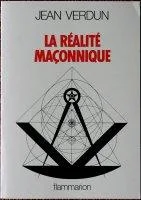
La Réalité maçonnique
 74
74

La Réalité maçonnique
Jean Verdun's 'La Réalité maçonnique' is a commendable, albeit dense, exploration of the esoteric heart of Freemasonry. Verdun resists the urge to present Masonic rituals as mere historical curiosities, instead focusing on their potential as vehicles for spiritual development. He meticulously dissects symbols like the square and compass, linking them to broader Hermetic principles. A particular strength lies in his detailed exegesis of the Master Mason degree, which he frames as a profound allegory for overcoming mortality. However, the book’s dense prose and reliance on a specific, often esoteric, vocabulary can present a significant barrier to entry for those not already conversant with Masonic symbolism or Western occult traditions. While it offers substantial insights, a more accessible introduction to its core concepts would have been beneficial. Ultimately, it is a valuable resource for the dedicated student of Masonic esotericism.
📝 Description
74
Jean Verdun's 2000 book, La Réalité maçonnique, investigates the hidden esoteric meanings within Masonic symbolism and ritual.
La Réalité maçonnique, published in 2000, examines the esoteric dimensions often concealed within Masonic symbolism and ritual. Jean Verdun moves beyond the common perception of Freemasonry as a purely social or charitable organization, proposing a deeper, spiritual architecture that underpins its practices. The work aims to decode the symbolic language employed by the Craft, suggesting that its degrees and allegories serve as initiatory pathways. This text is intended for Freemasons seeking a more profound understanding of their tradition, particularly those curious about the philosophical and esoteric underpinnings of the rituals they perform. It also appeals to scholars of Western Esotericism, comparative religion, and secret societies interested in how symbolic systems function within organized groups. Individuals with a background in Hermeticism, Kabbalah, or Rosicrucianism will find familiar conceptual frameworks.
Verdun's work emerged at the turn of the millennium, a time of renewed interest in esoteric studies. It contributed to a broader re-examination of Freemasonry's historical claims and its relationship with mystical traditions. The early 2000s saw numerous publications attempting to synthesize or demystify Masonic lore, often engaging with earlier scholars like Manly P. Hall. Verdun's approach sought to offer a more structured interpretative lens on these symbols.
💡 Why Read This Book?
• Gain a structured interpretation of Masonic symbols like the Temple of Solomon, understanding its function as a spiritual blueprint, a concept central to Verdun's analysis. • Appreciate the degrees of Freemasonry not just as ritualistic steps but as progressive initiatory stages mirroring alchemical transformation, a core argument presented by Verdun. • Understand the 'Great Architect of the Universe' as a symbolic representation of divine order accessible through specific practices, as detailed in the book's examination of Masonic cosmology.
⭐ Reader Reviews
Honest opinions from readers who have explored this book.
❓ Frequently Asked Questions
What is the primary focus of Jean Verdun's 'La Réalité maçonnique'?
The book primarily focuses on the esoteric and symbolic dimensions of Freemasonry, interpreting its rituals and allegories as pathways to spiritual understanding and initiation, rather than solely as social or charitable practices.
When was 'La Réalité maçonnique' first published?
'La Réalité maçonnique' by Jean Verdun was first published in the year 2000.
Who would benefit most from reading this book?
Freemasons seeking deeper meaning in their tradition, scholars of Western Esotericism, and students of comparative religion or secret societies would find this book particularly beneficial.
Does the book discuss specific Masonic symbols?
Yes, the book delves into the interpretation of key Masonic symbols, such as the Temple of Solomon and the square and compass, explaining their esoteric significance within the Masonic framework.
Is 'La Réalité maçonnique' accessible to non-Masons?
While accessible to anyone interested in esoteric traditions, the book's depth and reliance on specific Masonic terminology may be more easily navigated by those with some prior familiarity with the subject matter.
What is Verdun's perspective on Masonic rituals?
Verdun views Masonic rituals as symbolic enactments designed to facilitate spiritual transformation and personal initiation, presenting them as a structured system for accessing deeper truths.
🔮 Key Themes & Symbolism
Symbolic Architecture
The work posits that Masonic lodges and rituals are not merely physical spaces or ceremonial acts but symbolic representations of a cosmic order. Verdun interprets the Temple of Solomon, a recurring motif, as a blueprint for constructing the inner temple of the adept. This architectural symbolism is presented as a key to understanding the progression through Masonic degrees, each step unveiling a new layer of this spiritual edifice.
Initiatory Pathways
Verdun frames the Masonic journey as an initiatory process analogous to ancient mystery schools and alchemical transformation. The allegories and teachings within the Craft are seen as tools for the 're-integration' of the individual soul with the divine. The book emphasizes the transformative potential inherent in Masonic practice, moving beyond the social aspects to highlight its role in spiritual evolution.
The Great Architect
The concept of the 'Great Architect of the Universe' is explored not as a simple deistic creator but as a symbolic representation of the inherent intelligence and order within the cosmos. Verdun suggests that through Masonic symbolism, practitioners can gain a direct, experiential understanding of this divine principle, moving from intellectual assent to intuitive apprehension.
Hermetic Resonance
The book frequently draws parallels between Masonic teachings and core tenets of Western Esotericism, particularly Hermeticism. Concepts such as 'as above, so below' and the principles of spiritual alchemy are presented as foundational to understanding the deeper meanings embedded within Masonic symbolism and ritual practices.
💬 Memorable Quotes
Direct passages from the work, attributed to the author.
“The symbols of Masonry are not decorative, but keys.”
— This statement captures Verdun's central thesis: that the visual and ritualistic elements within Freemasonry possess a profound, encoded meaning intended to unlock spiritual understanding for the initiated.
“Each degree is a step towards the light.”
— This interpretation suggests that the progression through Masonic degrees is not merely hierarchical but represents a sequential unveiling of esoteric knowledge, leading the aspirant closer to spiritual illumination.
“Order in the microcosm reflects order in the macrocosm.”
— This concept emphasizes the Hermetic principle underpinning Masonic philosophy, linking the individual's inner spiritual order to the greater cosmic order, suggesting that self-mastery leads to understanding universal laws.
“Allegory is the language of initiation.”
— Verdun posits that the narrative and symbolic stories within Freemasonry are not literal accounts but allegorical teachings designed to convey profound spiritual truths to those ready to receive them.
💡 Key Ideas
Editorial paraphrase of the work's core concepts — not direct quotes.
The true Temple is built within.
This paraphrased concept highlights the book's focus on the internal, spiritual development of the Mason. The external rituals and symbolic structures are presented as aids to constructing this inner sanctuary of consciousness.
🌙 Esoteric Significance
Tradition
This work aligns strongly with the Western Esoteric tradition, particularly its Hermetic and Rosicrucian currents. It interprets Masonic symbolism through the lens of spiritual alchemy and Kabbalistic principles, viewing the Craft as a modern manifestation of ancient mystery schools. Verdun positions Freemasonry not as a standalone system, but as a repository and transmission vehicle for perennial esoteric knowledge.
Symbolism
Key symbols examined include the Temple of Solomon, representing the ideal spiritual structure and the human body as a vessel for divine presence. The square and compass are interpreted as tools for balancing the material and spiritual realms, and for the 'rectification' of the self, aligning the individual will with divine will.
Modern Relevance
Contemporary practitioners of Western Esotericism, particularly those involved in Masonic research or comparative symbolic studies, continue to draw upon Verdun's interpretations. His work informs discussions within online esoteric forums and study groups focused on the philosophical underpinnings of ritual and symbol in organized spiritual traditions.
👥 Who Should Read This Book
• Freemasons seeking a deeper, philosophical interpretation of their ritual and symbolism, moving beyond the literal to explore esoteric meanings. • Students of Western Esotericism interested in how ancient mystery traditions and Hermetic principles have been preserved and transmitted within modern fraternal organizations. • Comparative religion scholars examining the function of ritual, allegory, and symbolic language in spiritual development and the construction of meaning within organized groups.
📜 Historical Context
Published in 2000, Jean Verdun's 'La Réalité maçonnique' arrived during a period of significant academic and popular re-engagement with esoteric traditions. The late 20th century had seen a revival of interest in Western Esotericism, spurred by figures and works that sought to synthesize diverse mystical systems. Verdun's book contributed to this trend by focusing specifically on Freemasonry, a subject often debated and mythologized. It emerged in dialogue with a long tradition of Masonic writers exploring its spiritual dimensions, from earlier figures like Albert Pike to contemporary esotericists. The work implicitly engaged with critiques that viewed Masonry solely as a social club, asserting its historical roots in older initiatory systems. This era also saw a more critical academic approach to secret societies, pushing authors like Verdun to provide detailed symbolic analysis rather than mere speculation.
📔 Journal Prompts
The symbolic architecture of the Temple of Solomon as an inner blueprint.
The allegorical journey through Masonic degrees as personal transformation.
Interpreting the 'Great Architect' as a personal symbol of cosmic order.
How the balance of square and compass relates to personal discipline.
Reflecting on the initiation process as a symbolic unveiling of truth.
🗂️ Glossary
Great Architect of the Universe
A symbolic term used in Freemasonry to represent the divine principle or cosmic intelligence that orders and sustains the universe, interpreted esoterically as the source of divine wisdom accessible through spiritual practice.
Temple of Solomon
In Masonic context, this refers not just to the biblical structure but symbolically to the inner temple of the human being, a sacred space to be constructed through moral and spiritual development.
Degrees
The stages or levels of initiation within Freemasonry, each associated with specific teachings, allegories, and symbols designed to progressively enlighten the candidate.
Allegory
A narrative or symbolic representation used in Masonic teachings to convey moral, philosophical, or spiritual truths indirectly, requiring interpretation to grasp the deeper meaning.
Hermeticism
A philosophical and religious tradition based on the purported teachings of Hermes Trismegistus, emphasizing principles like 'as above, so below' and spiritual transformation through knowledge.
Microcosm/Macrocosm
The principle that the human being (microcosm) reflects the structure and order of the universe (macrocosm), and vice versa, a fundamental concept in esoteric thought.
Initiation
A ritual or process of entering into a secret or mysterious set of knowledge or principles, typically involving symbolic acts and teachings designed to effect a transformation in the individual.
🔮 Readers Also Liked
Browse all →



More Free Freemasonry & Secret Societies Books
View all →