La franc-maçonnerie
 76
76

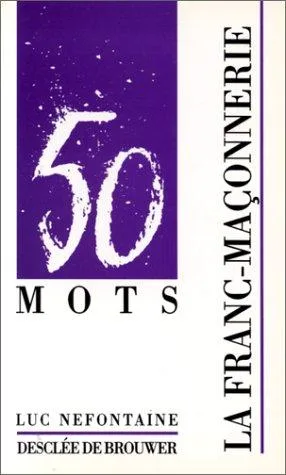
La franc-maçonnerie
Luc Nefontaine’s *La franc-maçonnerie* presents a sober, almost academic, dissection of the fraternity, eschewing sensationalism for a measured exploration of its structure and symbolism. Its strength lies in its systematic approach, carefully detailing the evolution of Masonic degrees and their associated philosophical tenets. The work is particularly effective in its treatment of the symbolic language derived from operative stonemasonry, illustrating how tools like the level and plumb rule are transmuted into ethical and spiritual metaphors. A notable limitation, however, is its somewhat dry prose, which, while precise, may not fully capture the animating spirit that draws many to the craft. The section detailing the allegorical journey through the Fellowcraft degree, for instance, is informative but lacks a certain evocative quality. Nefontaine’s work is a solid reference for those seeking a structured understanding of Masonic doctrine, but perhaps less so for those hoping for an initiation into its lived experience.
📝 Description
76
Luc Nefontaine's 1993 book examines Freemasonry beyond superficial portrayals.
Luc Nefontaine's *La franc-maçonnerie*, published in 1993, offers a detailed examination of Freemasonry. The work moves beyond common misconceptions to consider the philosophical foundations and historical development of this fraternal order. Nefontaine aims to clarify Masonic practices and symbolism for the public.
This book is for anyone seeking a thorough understanding of Freemasonry, especially its esoteric aspects. It suits students of religion, history enthusiasts, and those curious about secret societies and their influence on Western thought. Readers will find a factual inquiry into the subject.
*La franc-maçonnerie* appeared in the early 1990s, a time when interest in esoteric traditions and historical societies was growing. The book analyzes Freemasonry as a system of moral and spiritual instruction, drawing from earlier scholarship.
This book fits within a tradition of scholarship that views Freemasonry not just as a social organization but as a system for moral and spiritual teaching. It connects to earlier explorations of Masonic symbolism and philosophy, placing it within a lineage concerned with the esoteric dimensions of Western culture. The work addresses how Masonic symbolism, like the square and compasses, carries deeper meanings for initiates.
💡 Why Read This Book?
• Gain a structured understanding of Masonic ritual and symbolism, moving beyond popular misconceptions by examining the specific allegorical meaning of the operative mason's square and compasses, as detailed in the text. • Appreciate the historical trajectory of Freemasonry, tracing its development and the emergence of different rites since its early 18th-century formalization. • Explore the philosophical underpinnings of Masonic teachings, learning how concepts like the pursuit of light and moral perfection are conveyed through specific allegorical narratives.
⭐ Reader Reviews
Honest opinions from readers who have explored this book.
❓ Frequently Asked Questions
What is the primary focus of Luc Nefontaine's 'La franc-maçonnerie'?
The book's primary focus is a detailed examination of Freemasonry, exploring its historical development, philosophical underpinnings, and symbolic language. It aims to provide a comprehensive and demystified view of the fraternity's structure and teachings.
When was 'La franc-maçonnerie' first published?
'La franc-maçonnerie' by Luc Nefontaine was first published in 1993, positioning it as a contemporary analysis of Freemasonry informed by earlier historical scholarship.
Does the book discuss specific Masonic symbols?
Yes, the work delves into key Masonic symbols, such as the Temple of Solomon, the tools of operative masonry like the square and compasses, and the symbolism associated with the various degrees of initiation.
Is this book suitable for absolute beginners to Freemasonry?
It is suitable for beginners seeking a factual overview, as it systematically explains core concepts. However, its depth may appeal more to those with some prior interest or a desire for detailed historical and philosophical context.
What is the author's approach to Freemasonry?
Luc Nefontaine approaches Freemasonry with a scholarly and analytical perspective, aiming to demystify its practices and symbolism rather than engage in sensationalism or speculative interpretations.
Are there discussions on different Masonic rites?
Yes, the book touches upon the various rites and interpretations that have developed within Freemasonry across different jurisdictions and historical periods, offering a broader view of the fraternity's landscape.
🔮 Key Themes & Symbolism
Masonic Symbolism and Tools
The text systematically unpacks the rich symbolic language embedded within Freemasonry, particularly its foundation in the tools and practices of operative stonemasons. Nefontaine details how elements like the square, compasses, level, and plumb rule are transformed from physical implements into allegorical representations of moral conduct and spiritual development. The book explores how these symbols guide the initiate through a process of self-improvement, urging the construction of a moral edifice analogous to the building of King Solomon's Temple.
The Esoteric Journey of Initiation
Central to Nefontaine's analysis is the concept of Masonic initiation as a progressive journey. The book elucidates the symbolic narrative of each degree, illustrating how the candidate moves from a state of darkness towards enlightenment. This journey is presented not merely as a ritualistic performance but as a structured method for imparting moral philosophy and esoteric wisdom, encouraging the candidate to confront their own nature and strive for self-perfection.
Historical Evolution of the Craft
Nefontaine traces the historical lineage and development of Freemasonry, situating its formalization in the early 18th century within broader intellectual currents of the Enlightenment. The work examines how the fraternity evolved from its operative roots into a speculative order, absorbing and synthesizing various philosophical and religious ideas. This historical perspective helps to contextualize the diversity of Masonic rites and practices observed across different regions and eras.
Moral and Philosophical Instruction
Beyond its rituals and symbols, the book highlights Freemasonry's role as a system of moral and philosophical instruction. Nefontaine explains how the fraternity uses allegory and symbolism to teach virtues such as brotherly love, relief, and truth. The emphasis is on personal growth, the cultivation of reason, and the pursuit of a virtuous life, framed within a structure designed to foster fraternity and mutual support among its members.
💬 Memorable Quotes
Direct passages from the work, attributed to the author.
“The square and compasses are not merely tools of architecture but symbols of moral rectitude and the bounds of human conduct.”
— This statement captures the book's core thesis: that Masonic symbolism transcends its literal origins to convey profound ethical and philosophical lessons, guiding initiates toward virtuous living.
“Initiation is a symbolic death and rebirth, leading the candidate from ignorance to a greater understanding.”
— This highlights the transformative nature of Masonic ritual, presenting it as a structured process designed to awaken the candidate's consciousness and guide them toward esoteric knowledge and self-awareness.
“The allegorical construction of the Temple of Solomon serves as a blueprint for building the inner spiritual temple.”
— This interpretation emphasizes the esoteric application of Masonic narratives, suggesting that the external symbols and stories point towards an internal, spiritual work of self-construction and purification for the individual Mason.
“The degrees represent stages in a journey of moral and intellectual refinement.”
— This interpretation underscores the progressive nature of Masonic training, framing the distinct stages or degrees as carefully designed steps intended to foster the gradual development of the initiate's character and understanding.
💡 Key Ideas
Editorial paraphrase of the work's core concepts — not direct quotes.
Freemasonry's philosophical teachings are rooted in the pursuit of light and the betterment of oneself and society.
This paraphrased concept points to the overarching goal of Masonic practice: to achieve greater wisdom and understanding ('light') and to apply this knowledge to personal moral development and the improvement of the human community.
🌙 Esoteric Significance
Tradition
Nefontaine's work engages with the Western Esoteric Tradition, particularly its Hermetic and Kabbalistic underpinnings that have influenced Freemasonry. While not strictly a practitioner's manual, it positions Freemasonry as a vehicle for transmitting ancient wisdom, drawing parallels with Gnostic and Pythagorean ideas. The book fits within a lineage that views Masonic symbolism as a coded language for spiritual truths, distinct from purely historical or sociological analyses.
Symbolism
Key symbols explored include the Temple of Solomon, representing the ideal spiritual structure and the unified cosmos, and the operative tools like the square and compasses, which symbolize moral discipline and the harmonious integration of the material and spiritual realms. The 'rough and perfect ashlar' is also significant, illustrating the Masonic journey from a raw, unrefined state to one of polished perfection through diligent work and self-cultivation.
Modern Relevance
Contemporary practitioners of esoteric traditions, particularly those within Hermeticism, Rosicrucianism, and ceremonial magic, often reference foundational texts like Nefontaine's for understanding the symbolic framework of Freemasonry. It informs modern comparative studies of Western mystery schools and serves as a reference for individuals exploring the philosophical underpinnings of fraternal orders in the 21st century.
👥 Who Should Read This Book
• Aspiring students of Western Esotericism seeking to understand the symbolic language and philosophical framework of one of its most prominent expressions. • Historical researchers interested in the development of fraternal organizations and their intellectual lineage from the Enlightenment period onward. • Individuals curious about the ethical and moral teachings embedded within Masonic ritual and symbolism, looking for a structured and factual explanation.
📜 Historical Context
Luc Nefontaine's *La franc-maçonnerie* appeared in 1993, a period marked by a resurgence of interest in esoteric traditions and the history of secret societies, following earlier waves of occult revivalism. The book entered a landscape where works like those of Manly P. Hall from the mid-20th century had already established a popular esoteric interpretation of Freemasonry. Nefontaine's approach, however, aimed for a more systematic, less overtly mystical, analysis, situating Masonic symbolism within its historical and philosophical development. It engaged with scholarly debates about the origins of Freemasonry, which were active in the late 20th century, contrasting with more purely speculative or anti-Masonic literature. The reception of such works often involved navigating between academic skepticism and popular fascination with Masonic secrets.
📔 Journal Prompts
The symbolism of the square and compasses: how do these tools represent the balance between external conduct and internal discipline in your life?
Reflect on the concept of the 'inner temple' and its construction, using the Temple of Solomon as an analogy.
Consider the 'rough ashlar' and 'perfect ashlar' as metaphors for personal growth and self-refinement.
Analyze the progressive nature of Masonic initiation as depicted in the text; what stages of personal development does it mirror?
How does the pursuit of 'light' translate into tangible actions for self-improvement and societal contribution?
🗂️ Glossary
Operative Masonry
The historical practice of stonemasonry, from which speculative Freemasonry drew its initial symbolism, rituals, and architectural metaphors.
Speculative Masonry
Freemasonry as it exists today, focusing on moral and philosophical teachings rather than the physical construction of buildings, though it uses operative symbolism.
Ashlar
A term referring to a stone worked by a mason. The 'rough ashlar' symbolizes the unrefined human being, while the 'perfect ashlar' represents one who has achieved moral and spiritual refinement through Masonic instruction.
Temple of Solomon
The biblical Temple in Jerusalem, serving as a central allegorical structure in Masonic lore, symbolizing cosmic order, divine presence, and the ideal spiritual edifice.
Degree
A stage of initiation within Freemasonry, each marked by specific rituals, teachings, and symbolic lessons designed to impart moral and esoteric knowledge progressively.
Plumb Rule
A tool used by operative masons to ensure verticality, symbolizing uprightness of conduct and integrity in speculative Masonry.
Level
A tool used by operative masons to ensure horizontality, symbolizing equality and fraternity among Masons in speculative Masonry.
🔮 Readers Also Liked
Browse all →






More Free Freemasonry & Secret Societies Books
View all →