Both Sides of the Door
 77
77

Both Sides of the Door
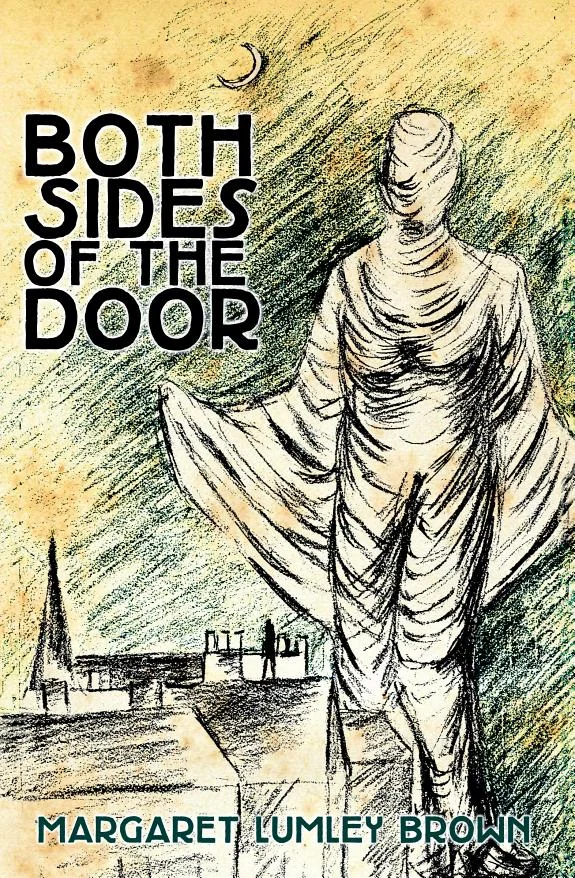
Margaret Lumley Brown's "Both Sides of the Door" offers a raw, unfiltered account of a terrifying personal haunting. The novella's strength lies in its immediacy; Brown doesn't sensationalize but rather details the unsettling progression of events from subtle shadow play to full poltergeist activity. Her description of the "odd patches of shadow and light" is particularly chilling, capturing a gradual escalation that feels authentic. While Sir Arthur Conan Doyle's endorsement highlights its perceived veracity, the text occasionally falters in its narrative pacing, sometimes feeling more like a detailed report than a flowing story. However, the directness with which Brown recounts her psychic upheaval in 1913 London provides a valuable, if disturbing, glimpse into the lived experience of alleged paranormal phenomena during the spiritualist heyday. It stands as a compelling, albeit stark, personal testimony.
📝 Description
77
Margaret Lumley Brown's 1918 novella recounts her 1913 experiences with a poltergeist in a London house.
Originally published in 1918, "Both Sides of the Door" details Margaret Lumley Brown's personal account of intense psychic disturbance. The narrative centers on events in 1913 within a reportedly haunted house in Bayswater, London. What began as a simple experiment with table-turning reportedly escalated into significant poltergeist activity. The book chronicles the author's subjective experience of fear and confusion as inexplicable forces manifest within her domestic environment.
This work appeals to readers interested in firsthand paranormal accounts, particularly from the early 20th-century spiritualist movement. It is suitable for those examining the psychological and spiritual aspects of hauntings. Individuals studying the history of psychical research and personal testimonies of uncanny events will find Brown's narrative of particular interest. The book's republication makes it accessible to a new generation of readers curious about early 20th-century accounts of the supernatural.
Published in 1918, "Both Sides of the Door" emerged during a period of widespread fascination with spiritualism, amplified by the losses of World War I. Many sought communication with the deceased, and figures like Arthur Conan Doyle publicly supported spiritualist societies. Brown's account contributes to this historical discourse, documenting personal encounters with phenomena attributed to psychic forces. It reflects a common interest in the boundary between the material and the spiritual, and how perceived breaches could affect individuals in their homes.
💡 Why Read This Book?
• Gain direct insight into early 20th-century poltergeist accounts, understanding the specific phenomena described by Margaret Lumley Brown during her 1913 Bayswater experience, which differs from modern interpretations of hauntings. • Explore the psychological impact of intense paranormal events as depicted by the author, offering a personal perspective on fear and confusion that standard occult texts often abstract. • Appreciate the historical context of spiritualism, evidenced by the novella’s initial 1918 publication and its reception by figures like Sir Arthur Conan Doyle, providing a specific touchstone for understanding the era's beliefs.
⭐ Reader Reviews
Honest opinions from readers who have explored this book.
❓ Frequently Asked Questions
What is the origin of Margaret Lumley Brown's "Both Sides of the Door"?
The novella was first published in 1918, detailing psychic events the author experienced in 1913. This 2011 re-issue makes it accessible to a modern audience interested in early 20th-century paranormal accounts.
Where did the events described in the book take place?
The narrative is set in a house in Bayswater, London, where Margaret Lumley Brown and her sister were living during the period of intense haunting described in the novella.
What triggered the haunting according to the book?
The book suggests that a "casual experiment with table-turning" initiated the terrifying haunting. This seemingly simple act is depicted as the catalyst for the subsequent poltergeist manifestations.
Who was Margaret Lumley Brown?
Margaret Lumley Brown was the author of the novella "Both Sides of the Door." The work is a fictionalized account of her personal experiences with psychic phenomena in 1913.
What kind of paranormal activity is described?
The novella details a progression of phenomena, beginning with subtle "odd patches of shadow and light" and escalating into what is described as a "full blown poltergeist manifestation."
Was the book well-received?
Sir Arthur Conan Doyle, a prominent figure in spiritualism, praised the work as "a unique experience," indicating a positive reception among those interested in psychical research at the time of its original publication.
🔮 Key Themes & Symbolism
Poltergeist Manifestations
The novella focuses on the progression of a poltergeist haunting, beginning with subtle visual disturbances and escalating to more overt physical phenomena. It presents a case study of how a seemingly ordinary domestic space can become a site of intense paranormal activity, triggered by specific actions like table-turning. The work emphasizes the subjective experience of the haunting, detailing the fear and confusion it induced in the inhabitants, particularly Margaret Lumley Brown herself.
Psychic Upheaval
Fundamentally, , "Both Sides of the Door" is an exploration of personal psychic upheaval. The narrative documents a period where the author's perceived reality is dramatically altered by inexplicable events. It studies the psychological toll such an experience takes, highlighting the struggle to maintain sanity and understanding when faced with forces that defy rational explanation. The book suggests a fragile boundary between the known and the unknown, easily disrupted.
The Threshold of the Unseen
The work posits the idea of a 'door' or threshold between the mundane world and a area of paranormal activity. The act of table-turning is depicted as a key that unlocks this door, allowing unseen forces to manifest. This concept of a permeable barrier between worlds is central to understanding the book's narrative arc, where a simple experiment leads to a profound and terrifying breach into the supernatural.
Early 20th Century Spiritualism
Published in 1918, the novella is a product of its time, reflecting the widespread interest in spiritualism and psychical research. It aligns with the era's fascination with mediumship, hauntings, and direct experiences of the paranormal, particularly in the aftermath of WWI. The endorsement by Sir Arthur Conan Doyle further situates it within the mainstream acceptance and investigation of such phenomena by prominent figures.
💬 Memorable Quotes
Direct passages from the work, attributed to the author.
“Beginning with odd patches of shadow and light.”
— This phrase vividly describes the initial, subtle manifestations of the haunting, illustrating a gradual escalation from minor visual anomalies to full-blown poltergeist activity.
“Soon developing into a full blown poltergeist manifestation.”
— This indicates the narrative's progression from initial unsettling experiences to overt, undeniable disturbances, signifying a complete breach of the ordinary into the paranormal.
“Sir Arthur Conan Doyle praised [it] as 'a unique experience'.”
— This external validation from a prominent figure in psychical research underscores the book's perceived significance and authenticity within the context of early 20th-century paranormal investigations.
“A fictionalised account of a psychic upheaval the young Margaret went through in 1913.”
— This clarifies the nature of the text as a personal testimony, grounded in a specific historical moment (1913) and authorial experience, yet presented through a literary lens.
💡 Key Ideas
Editorial paraphrase of the work's core concepts — not direct quotes.
A casual experiment with table-turning triggered an intense and terrifying haunting.
This line expresses the book's central premise: that ordinary actions can serve as catalysts for extraordinary and frightening paranormal events, shifting the perceived order of reality.
🌙 Esoteric Significance
Tradition
This work aligns loosely with the broader tradition of experiential occultism prevalent in the early 20th century, particularly within the milieu of psychical research and spiritualism. It doesn't adhere to a formal codified system like Hermeticism or Kabbalah but rather offers a personal testimony that speaks to the potential for unseen forces to interact with the material world, a concept explored across various esoteric paths.
Symbolism
The "door" itself serves as a potent symbol, representing the threshold between the mundane world and the paranormal. The "odd patches of shadow and light" symbolize the initial, ambiguous manifestations of unseen energies before they coalesce into more defined activity. The "table-turning" experiment functions as a ritualistic act, a symbolic key that breaches this threshold.
Modern Relevance
Contemporary practitioners of parapsychology and those interested in personal accounts of hauntings continue to draw from such firsthand narratives. The book's depiction of psychological impact and the gradual escalation of phenomena remains relevant for understanding subjective experiences within paranormal investigations and ghostlore studies.
👥 Who Should Read This Book
• Individuals fascinated by firsthand accounts of alleged paranormal activity, particularly poltergeist cases from the early 20th century. • Students of psychical research and the history of spiritualism seeking primary source material that reflects the era's beliefs and experiences. • Readers interested in the psychological and subjective dimensions of fear and unexplained phenomena within domestic settings.
📜 Historical Context
Originally published in 1918, Margaret Lumley Brown's "Both Sides of the Door" emerged during a period of intense spiritualist fervor in Britain. The aftermath of World War I, with its immense casualties, fueled a widespread desire to connect with the deceased, leading to a surge in interest in séances, mediums, and paranormal phenomena. This era saw prominent figures like Sir Arthur Conan Doyle actively promoting spiritualism, lending it a degree of public acceptance and scholarly investigation, albeit often controversial. The novella's account of a poltergeist haunting in Bayswater, London, aligns with the types of personal testimonies that circulated widely, contributing to a cultural landscape where the boundaries between the physical and spiritual realms were frequently explored. It stood in contrast to purely materialist scientific viewpoints, offering anecdotal evidence for psychic realities.
📔 Journal Prompts
The triggering of paranormal activity by a "casual experiment with table-turning".
The progression from "odd patches of shadow and light" to full manifestation.
The author's "psychic upheaval" in a disturbed house.
The concept of the "door" between the mundane and the supernatural.
The specific setting of Bayswater, London, in 1913.
🗂️ Glossary
Poltergeist
A type of ghost or paranormal phenomenon characterized by physical disturbances such as loud noises, objects being moved or thrown, and physical attacks. The term originates from German, meaning 'noisy ghost'.
Psychic Upheaval
A period of intense psychological or spiritual distress and disruption, often caused by extraordinary or unexplained experiences that challenge an individual's perception of reality.
Table-Turning
A spiritualist practice popular in the 19th and early 20th centuries, where participants would place their hands on a table and attempt to communicate with spirits, believing the table would move or rap to convey messages.
Manifestation
In an esoteric context, the appearance or materialization of a spiritual entity, force, or phenomenon in the physical world.
Spiritualism
A religious movement originating in the mid-19th century that asserts the possibility of communication between the living and the spirits of the dead. It gained significant traction in the early 20th century.
Bayswater
A district in West London, England, known historically as a residential area. The novella is set in a house within this specific London locale.
Novella
A work of fiction that is longer than a short story but shorter than a novel. This format allows for focused development of a single theme or narrative arc.
This book appears in 1 collection
🔮 Readers Also Liked
Browse all →









From the “Table Turning” Collection
View all →



More Free Occult Philosophy Books
View all →